Most homes in Kew Gardens Hills were built in the 1950s and demolishing them the right way means navigating asbestos surveys, NYC permits, and DEP filings before a single wall comes down. We handle all of it.
I needed a professional consultation explanation of procedure for safe removal of Asbestos in my apartment complex. Without having an account yet, I was very impressed with the caring, knowledgeable and generous advice offered by Jessica, and will look forward to doing business in the future. Thank you so much! I feel much more informed about a sometimes scary endeavor. Peace. Nancy Silva Mineola, NY.
Mia Munoz
Used this company to clean up some water flood in my house. They were fast and easy to work with.very professional, Would recommend to anyone!
Nini Valle
Great company, had a flood and they responded quickly and efficiently. Billed my insurance company directly. I highly recommend this company!
joe colapietro, jr
I had pipe freeze in my basement right before a snow storm and they made to within an hour to help start the clean up process. They we by our side throughout the entire process and even helped with the insurance company. They did such a great job with the cleanup, repair, remidiation, I contracted them to perform the repairs and finishes in the basement. They came with enough manpower and material to get the job done. Leo and Jessica were nothing but a pleasure to deal with!!
Cristian Arredondo c
I had some water damage in my home and Green Island was able to take care of my issue quickly and effectively. I am very pleased with the work they did. They responded quickly and were very professional.
Michael M
Outstanding service! From the office to the field crew everyone was friendly, helpful and responsive. I highly recommend Green Island Group.
A Clean Site, No Regulatory Surprises, and One Point of Contact
When you’re dealing with an aging postwar home in Kew Gardens Hills whether it’s a 1950s brick two-family on a narrow block or a semi-detached that’s been in the family for decades the demolition process is rarely straightforward. The NYC Department of Buildings won’t issue a permit until an asbestos assessment has been completed and filed with the DEP. That step alone stops a lot of projects before they start, especially when homeowners hire a demolition-only contractor who can’t handle the hazmat side.
We’re one of the few contractors in Queens that does both. Asbestos abatement, lead remediation, the DEP filings, the DOB permit application it’s all handled in-house, under one timeline, with one point of contact. You don’t get handed off to a subcontractor for the abatement and then wait for a separate crew to show up for the demolition. That gap is exactly where projects stall, budgets blow up, and homeowners end up holding a stop-work order they didn’t see coming.
For Kew Gardens Hills specifically, this matters more than most places. The neighborhood’s median construction year is 1956. Virtually every residential structure here predates 1978, and NYC’s own DEP rules require asbestos assessments on all pre-1987 buildings before any permit is issued. That’s not a maybe it’s the process, every time. Knowing that going in, and having a contractor who’s already built for it, is the difference between a project that moves and one that doesn’t.
12 Years In, 5,000 Projects Deep We Know Kew Gardens Hills
We’ve been doing demolition and environmental remediation work across Queens, Nassau, and Suffolk counties for over 12 years. More than 5,000 completed projects. Every permit type, every hazmat scenario, every borough-specific curveball the NYC DOB and DEP can throw we’ve seen it and worked through it.
For homeowners in Kew Gardens Hills, that experience has a specific kind of value. This is a dense residential neighborhood. Homes sit close together. Streets in the older sections near Main Street and Jewel Avenue are tight. A demolition crew that isn’t used to working in that environment can crack a neighbor’s foundation, generate DOB complaints, or trigger delays that cost you weeks. We work in these conditions regularly and our 4.7-star review record reflects what that actually looks like in practice.
We’re available 24 hours a day, seven days a week. Not a voicemail. Not a callback form. A real person who can get the process started the same day you call.
The Demolition Permit Process in Kew Gardens Hills
Here's What the Process Actually Looks Like in NYC
The first thing that happens when you call is a site assessment. We come out, walk the property, and give you a clear picture of what’s involved including whether asbestos or lead paint is likely present, which for any pre-1978 home in Kew Gardens Hills, it almost certainly is. That assessment drives everything that follows.
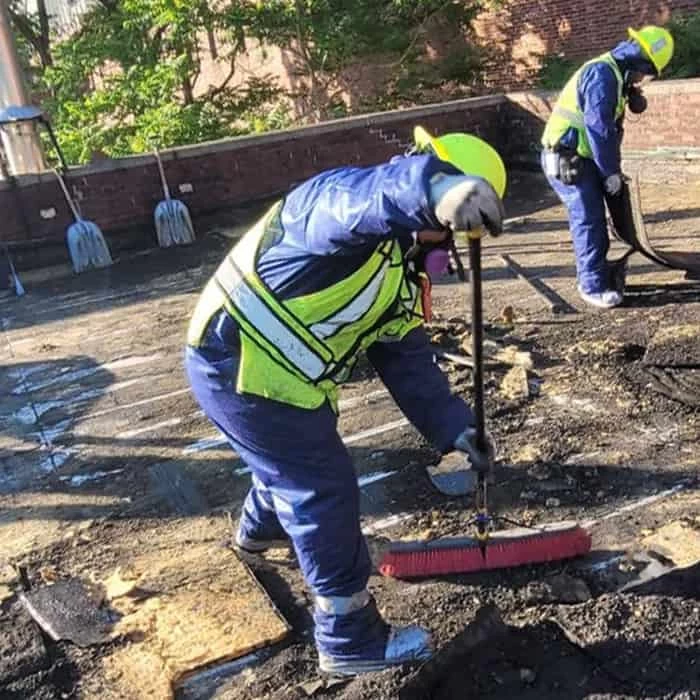
From there, a DEP-certified asbestos investigator surveys the structure. If asbestos-containing materials are found and in a 1950s Queens home, that often means vinyl floor tiles, pipe insulation, ceiling tiles, or roofing materials an ACP-7 form gets filed with the NYC DEP, abatement is scheduled, and the DEP receives the required seven-day advance notification before any abatement work begins. If the structure comes back clean, an ACP-5 is filed instead. Either way, that filing is what unlocks the next step.
Once the DEP paperwork is in order, the DOB demolition permit application goes in through the city’s DOB NOW portal. That process safety plan, neighbor notification, dust control plan typically takes four to eight weeks for a standard residential demolition in NYC. We handle all of that for you. When the permit is issued, utilities get disconnected, the site gets prepped, and the work begins. When it’s done, debris is removed and the site is cleared. You’re not left managing a pile of rubble or chasing down inspections on your own.
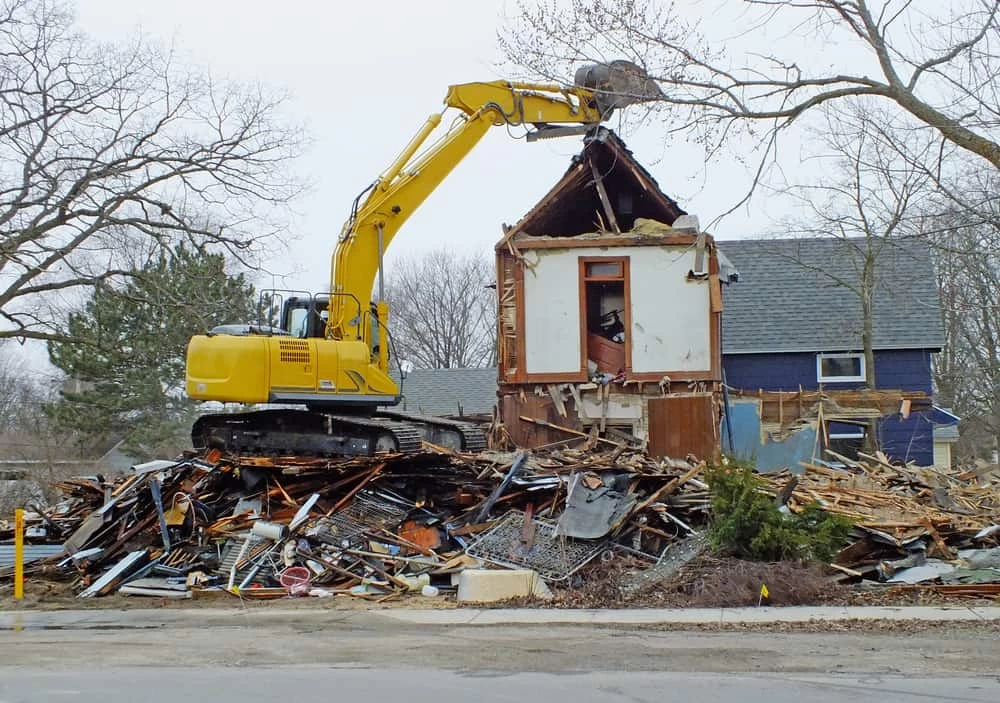
Full house demolition in Kew Gardens Hills isn’t just the physical teardown it’s everything the city requires before and after. We cover the asbestos survey and DEP filing, the abatement if needed, the DOB permit application, utility coordination, the demolition itself, and complete debris removal and site clearance. That’s the full scope, not a partial service that leaves you managing the rest.
For homeowners dealing with fire damage, burst pipes, or storm-related structural failure all common scenarios in a neighborhood with aging 1950s infrastructure we also work directly with insurance carriers. We handle the documentation and bill the insurer directly, so you’re not fronting the cost or navigating the claims process alone while your property sits unusable.
Partial demolition and interior demolition are also available for projects that don’t require a full teardown selective structural removal, gut renovations, or clearing a specific section of a property while the rest stays intact. Whether you’re a homeowner making a long-overdue decision about a deteriorating structure in Kew Gardens Hills, a developer clearing a lot along Parsons Boulevard, or someone dealing with an emergency at 11 p.m. on a Tuesday, the scope of service is built to fit the actual situation.
Do I need an asbestos survey before demolishing a house in Kew Gardens Hills?
Yes and in Kew Gardens Hills, this applies to virtually every residential property. NYC’s Department of Environmental Protection requires an asbestos assessment before the Department of Buildings will issue a demolition permit for any pre-1987 building. Given that the neighborhood’s median construction year is 1956, and that essentially no residential structure here postdates that threshold, an asbestos survey isn’t optional it’s the mandatory first step in the permit process.
What that means practically is that if you hire a demolition contractor who can’t perform or coordinate the asbestos assessment, your project stops before it starts. You’ll need to find a separate DEP-certified abatement firm, wait for their availability, and then re-sync timelines with your demolition crew. We handle the survey, the DEP filing, and the abatement in-house, so there’s no gap between those steps and no waiting on a third party to clear the way.
How long does it take to get a demolition permit in New York City?
For a standard residential demolition in NYC, the permit process through the Department of Buildings typically runs four to eight weeks from the time the application is submitted. That timeline assumes all the required documentation is in order when the application goes in asbestos clearance, a safety plan, neighbor notification records, and a dust control plan. Missing any of those pieces means the application gets kicked back, and the clock resets.
For Kew Gardens Hills homeowners planning a spring or summer project, that timeline matters a lot. If you want to break ground in June, you realistically need to start the asbestos assessment and permit process in late winter or early spring. Getting the process started early is the single biggest thing you can do to keep your project on schedule. We manage the full permit application, so nothing gets submitted incomplete.
What does house demolition typically cost in Queens, NY?
For a standard residential structure in Queens, full house demolition generally runs between $6,000 and $25,000, or roughly $4 to $17 per square foot depending on the size and complexity of the structure. That range accounts for the demolition itself, debris removal, and site clearance but it doesn’t automatically include asbestos abatement, which is a separate line item based on what the survey finds and how much material needs to be removed.
In Kew Gardens Hills specifically, it’s important to get an estimate that’s upfront about those potential add-ons from the start. Asbestos abatement in a 1950s Queens home isn’t a surprise it’s an expected part of the process. A contractor who doesn’t address it in the initial estimate isn’t giving you a real number. When we provide an estimate, the asbestos assessment is factored in from the beginning so you’re not hit with unexpected costs midway through the project.
What happens if I demolish a house in NYC without a permit?
Unpermitted demolition in New York City is treated seriously. The Department of Buildings can issue a Stop Work Order immediately, and civil fines start at $2,500 per violation with additional penalties for each day the violation continues. Beyond the fines, unpermitted demolition work can create title issues that complicate future sale or development of the property, and any damage to adjacent structures opens the property owner to direct liability.
In a dense neighborhood like Kew Gardens Hills, where homes sit close together and shared walls are common in semi-detached structures, the risk of adjacent property damage during demolition is real. Permitted work with a licensed contractor protects you, your neighbors, and your investment in the property.
Can Green Island Group handle demolition if my home has fire or flood damage?
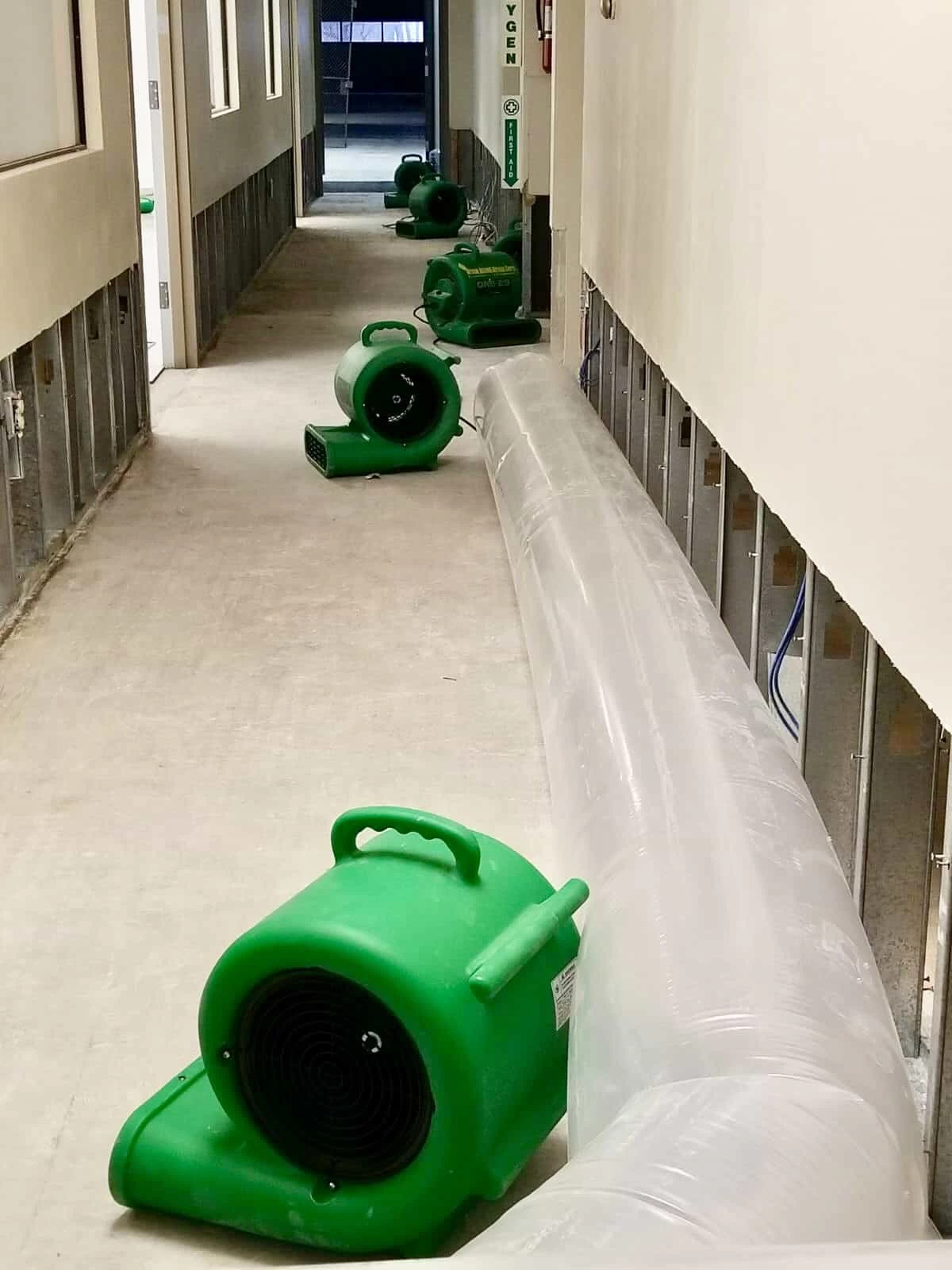
Yes and this is one of the more common scenarios in Kew Gardens Hills. The neighborhood’s aging postwar housing stock is particularly vulnerable to winter pipe failures and storm-related water damage. Queens experienced record-breaking flash flooding in September 2023, and burst pipes during cold snaps are a recurring issue in homes with original 1950s plumbing. When structural damage reaches the point where demolition is required, the situation is usually urgent and the insurance process is running simultaneously.
We’re available 24/7 for exactly these situations. We work directly with insurance carriers, handle the claims documentation, and bill the insurer directly so you’re not fronting costs out of pocket while waiting for reimbursement. If the damage requires an asbestos assessment before any structural work can begin (which it typically does in pre-1978 homes), that’s handled as part of the same process, not as a separate engagement you have to manage on your own.
How does demolition work when the property is close to neighboring homes?
This is one of the most important practical questions for anyone doing a demolition in Kew Gardens Hills. The neighborhood is dense many blocks have semi-detached homes sharing a wall, and setbacks between properties are often minimal, especially in the older sections near Main Street and the blocks between Union Turnpike and the Long Island Expressway. That physical reality changes how demolition has to be planned and executed.
NYC’s demolition permit process requires a neighbor notification protocol and a dust control plan specifically because of situations like this. Beyond the paperwork, the physical work equipment selection, debris containment, sequencing of structural removal has to account for the proximity of adjacent occupied homes. We’ve worked extensively in dense Queens neighborhoods and approach urban demolition differently than a suburban teardown. The goal is a clean, controlled project that doesn’t generate DOB complaints from next door or leave your neighbor with a cracked wall and a legal dispute on their hands.