Laurelton's Aging Homes Deserve More Than a Wrecking Crew
When your home was built in the 1950s and in Laurelton, most were tearing it down the right way means permits, asbestos surveys, and a contractor who actually knows NYC’s rules. Not just a crew with a sledgehammer.
I needed a professional consultation explanation of procedure for safe removal of Asbestos in my apartment complex. Without having an account yet, I was very impressed with the caring, knowledgeable and generous advice offered by Jessica, and will look forward to doing business in the future. Thank you so much! I feel much more informed about a sometimes scary endeavor. Peace. Nancy Silva Mineola, NY.
Mia Munoz
Used this company to clean up some water flood in my house. They were fast and easy to work with.very professional, Would recommend to anyone!
Nini Valle
Great company, had a flood and they responded quickly and efficiently. Billed my insurance company directly. I highly recommend this company!
joe colapietro, jr
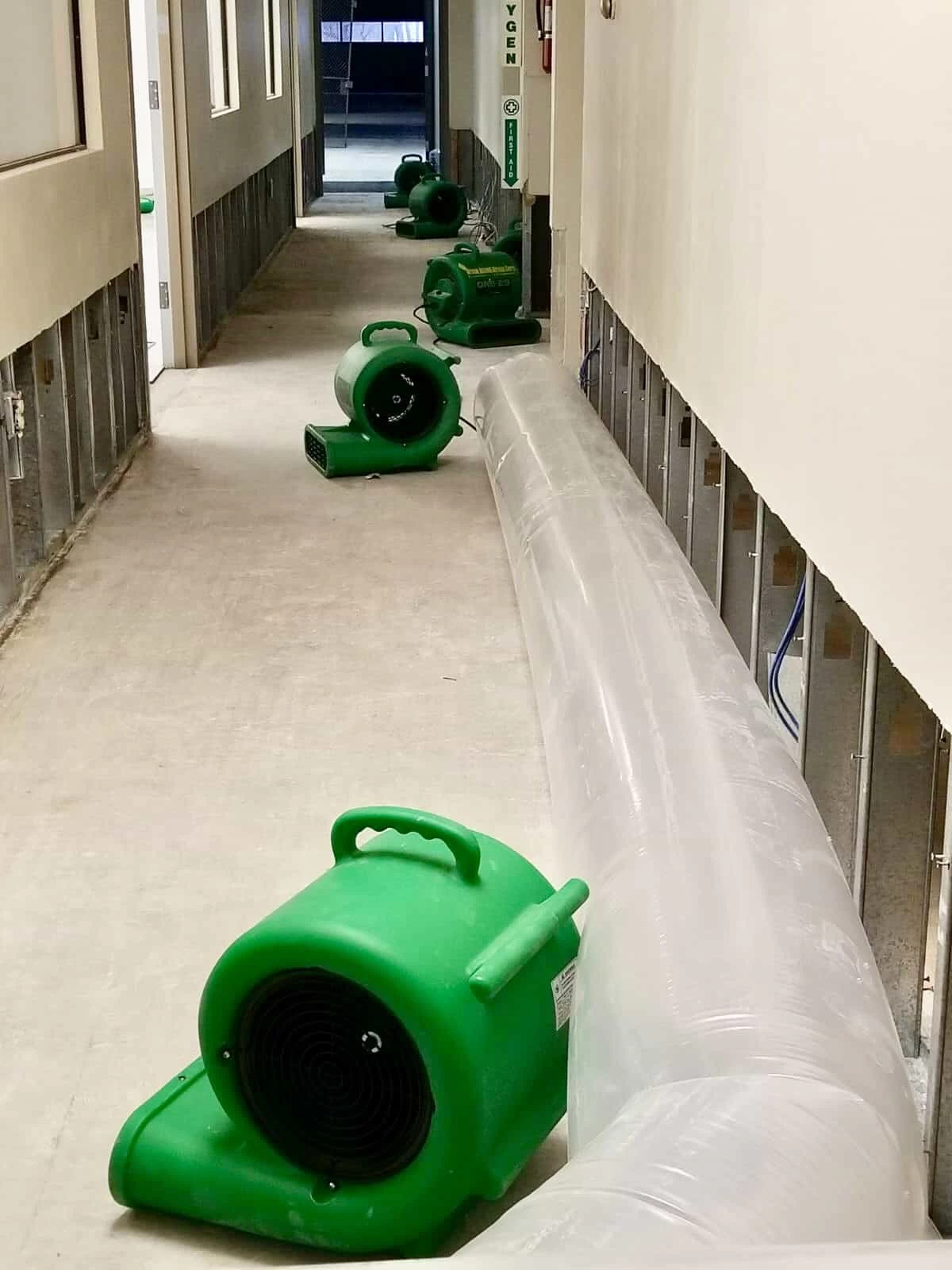
I had pipe freeze in my basement right before a snow storm and they made to within an hour to help start the clean up process. They we by our side throughout the entire process and even helped with the insurance company. They did such a great job with the cleanup, repair, remidiation, I contracted them to perform the repairs and finishes in the basement. They came with enough manpower and material to get the job done. Leo and Jessica were nothing but a pleasure to deal with!!
Cristian Arredondo c
I had some water damage in my home and Green Island was able to take care of my issue quickly and effectively. I am very pleased with the work they did. They responded quickly and were very professional.
Michael M
Outstanding service! From the office to the field crew everyone was friendly, helpful and responsive. I highly recommend Green Island Group.
Most demolition headaches in Laurelton don’t start with the teardown they start before it. A missing ACP-5 asbestos clearance form, a permit that wasn’t filed correctly through NYC DOB, a utility that wasn’t properly disconnected. Any one of those can stop your project cold and cost you thousands. When we handle the process right from the start, none of that becomes your problem.
The homes in Laurelton tell the story in the materials. Tudors and colonials built in the 1940s and 50s which describes most of this neighborhood’s housing stock were constructed with asbestos floor tiles, lead-painted trim, boiler insulation, and plaster walls. That’s not a hypothetical risk, it’s the reality of pre-1980 construction in Queens. Knowing how to handle it legally and safely is what separates us from someone who’ll create liability for you down the road.
When we do this right, you end up with a cleared, compliant site no Stop Work Orders, no DOB violations, no DEP fines waiting for you. Whether you’re rebuilding, selling, or finally getting rid of a structure that’s been a problem for years, the outcome should be clean and final.
We’ve been handling demolition and environmental remediation across New York City and Long Island for over 12 years. More than 5,000 completed projects. Every one of them under the same regulatory framework that governs your property in Laurelton NYC DOB, NYC DEP, NYS DOL, and USEPA. That’s not a resume line, it’s the reason your project doesn’t become a learning experience for your contractor.
What makes a real difference here is that everything is in-house. We handle asbestos abatement, lead paint removal, hazmat surveys, structural demolition, and debris removal one team, one timeline, one person accountable from start to finish. No subcontractors disappearing between phases. No gaps in the chain of responsibility.
Laurelton sits in Queens Community District 13, and every full demolition here goes through the NYC DOB Queens Borough Office. We know that process the permit filings, the DEP notification windows, the site safety requirements and we handle all of it so you don’t have to figure it out yourself.
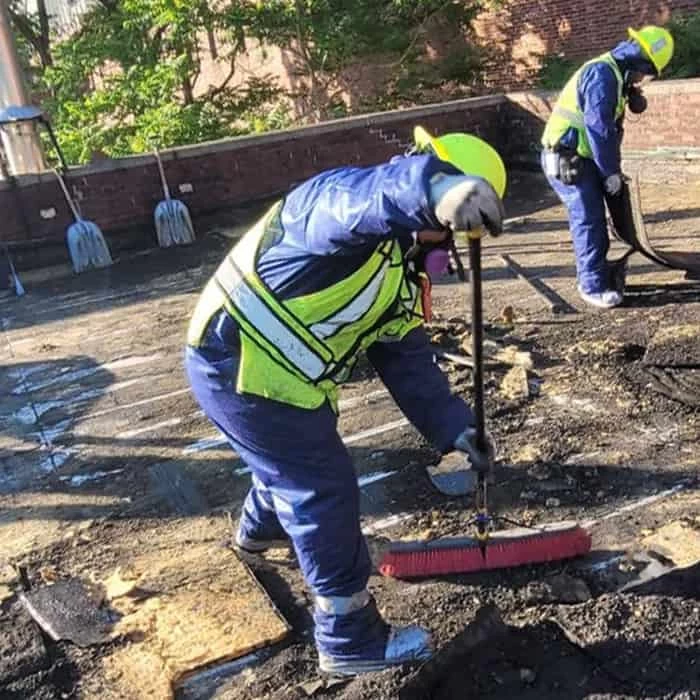
It starts with a site assessment. Before anything gets torn down, the property needs to be evaluated structure, materials, access, and hazmat risk. For a home built before 1980 in Laurelton, that means a mandatory asbestos survey. If asbestos-containing materials are found, abatement has to happen before any structural work begins. NYC DEP requires at least seven days’ notice before abatement activities start, so getting that survey done early matters.
Once the hazmat side is cleared, the permitting process moves forward. A full demolition in Queens requires a DM permit filed through DOB NOW, a Site Safety Plan, a dust control plan, rodent extermination certification, neighbor notification, and verified utility disconnections for gas, electric, and water. We manage all of this entirely. Permit timelines through the Queens DOB office typically run four to eight weeks under normal conditions which is exactly why you don’t want to start this process late.
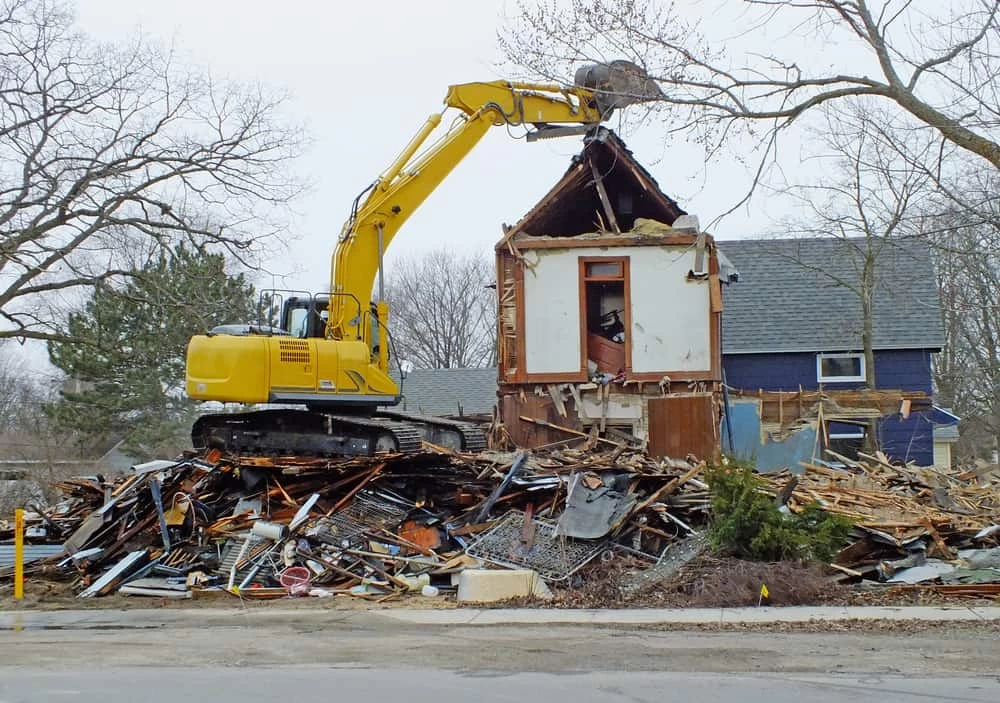
When the permit is in hand and the site is prepped, the structural demolition happens. We remove debris, clear the lot, and complete final documentation. You get a site that’s ready for whatever comes next whether that’s new construction, a sale, or just peace of mind.
House demolition in Laurelton isn’t a single service it’s a sequence of regulated steps, and every one of them has to be handled correctly. We cover the full scope: pre-demolition hazmat survey, NYS DOL-certified asbestos abatement (required for virtually every pre-1980 home in this neighborhood), lead paint assessment, NYC DOB permit filing, DEP notification, utility coordination, structural demolition, and complete debris removal. Nothing is handed off to a third party and nothing falls through the cracks.
If your project involves an insurance claim fire damage, water damage, a structure that’s been compromised and needs to come down we bill insurance directly and can help you navigate the claims process. That’s something our clients consistently mention in their feedback, and it’s genuinely useful when you’re already dealing with the stress of a damaged property.
For properties in Laurelton Estates or anywhere along the older residential blocks near Merrick Boulevard, the scope of a demolition project can vary significantly based on structure size, materials found during the hazmat survey, and site access. Every estimate we provide is built around your specific property not a flat number pulled from a general price list. Transparent, itemized, and clear before any work begins.
Do I need a permit to demolish a house in Laurelton, NY?
Yes and in New York City, the permit process is more involved than most people expect. A full demolition in Laurelton requires a Demolition (DM) permit filed through NYC DOB NOW, a Site Safety Plan, a dust control plan, rodent extermination certification, and documented utility disconnections for gas, electric, and water. Neighbor notification is also required as part of the process.
Before the DOB will even issue a permit, you need an ACP-5 asbestos clearance form which means a licensed asbestos inspector has to survey the property first. Given that the median construction year in Laurelton is 1954, nearly every home in the neighborhood requires this step. Skipping it isn’t just a code violation it’s a serious liability. Stop Work Orders and DOB fines start at $2,500 for a first offense and escalate from there. The right move is to have a licensed contractor who knows the Queens DOB process handle the entire permit chain from the start.
How much does house demolition typically cost in Queens, NY?
In New York City, house demolition costs generally run between $6,000 and $25,000 for a standard single-family home, with per-square-foot pricing typically landing between $4 and $17 depending on the scope. But that range can shift significantly once you factor in the NYC-specific requirements that don’t apply in Nassau or Suffolk County.
The ACP-5 asbestos survey is a required upfront cost. If asbestos-containing materials are found which is common in Laurelton’s pre-1960 housing stock abatement adds to the total. NYC DOB permit fees for demolition can reach $10,000 to $12,000 depending on the structure’s size and street frontage. Debris removal, utility disconnection coordination, and site preparation are also part of the real cost picture. A bid that doesn’t include these line items isn’t a lower price it’s an incomplete number that will catch up with you. Ask for an itemized estimate that covers the full scope before you commit to anyone.
Does my Laurelton home likely have asbestos, and what happens if it does?
If your home was built before 1980 and in Laurelton, the majority were there’s a real possibility that asbestos-containing materials are present somewhere in the structure. The most common locations are floor tiles (especially the 9×9 inch variety common in mid-century homes), pipe and boiler insulation, roofing materials, ceiling tiles, and joint compound used in drywall finishing. Asbestos wasn’t banned from most construction uses until the late 1970s, and it was widely used throughout the 1940s, 50s, and 60s.
Under NYC rules, a licensed asbestos inspector must survey the property before a demolition permit can be issued. If ACMs are found, a NYS DOL-certified abatement contractor has to remove and properly dispose of them before structural demolition begins. NYC DEP must be notified at least seven days before abatement activities start. We hold the NYS DOL asbestos abatement certification and handle this entire process in-house the survey, the abatement, the DEP notification, and the clearance documentation so there’s no gap between the hazmat phase and the demolition phase.
Can I use my homeowners insurance to cover demolition costs in Laurelton?
It depends on what caused the need for demolition. If your home sustained damage from a fire, a burst pipe, or a storm event situations that are covered under a standard homeowners policy demolition costs are often part of the covered scope, either under the dwelling coverage or a separate debris removal provision. What your policy covers, and how much, varies by carrier and policy terms, so reviewing your specific coverage with your adjuster is the right first step.
Where things get complicated is the claims process itself. Insurance companies have their own timelines, documentation requirements, and preferred scopes of work. Having a contractor who understands how to work within that process and who can bill the insurance carrier directly removes a significant burden from you during an already stressful situation. We have documented experience working directly with insurance carriers on demolition and remediation projects, and multiple clients have specifically noted how much that made the process easier. If you’re dealing with a damaged property in Laurelton and an open insurance claim, that’s worth asking about when you call.
How long does the house demolition process take from start to finish in NYC?
The timeline depends on a few variables, but for a standard single-family demolition in Laurelton, you should plan for the full process from first call to cleared lot to take anywhere from six to twelve weeks. The biggest variable is the permitting phase. NYC DOB demolition permits typically take four to eight weeks to process through the Queens Borough Office under normal conditions. That clock doesn’t start until the permit application is submitted with all required documentation, including the ACP-5 asbestos clearance form.
This is why the pre-demolition steps matter so much. Getting the asbestos survey done early, submitting a complete permit application the first time, and having all utility disconnections coordinated in advance keeps the timeline from stretching unnecessarily. Contractors who aren’t familiar with the NYC DOB process often cause delays simply by submitting incomplete applications or missing required documentation. If there’s a specific deadline driving your project a planned rebuild, a sale closing, or a code violation notice the earlier you start the process, the more control you have over the outcome.
What's the difference between full demolition and partial demolition for a Laurelton property?
Full demolition means the entire structure is taken down to the foundation or slab everything above grade is removed. This is the route most homeowners choose when they’re planning a teardown and rebuild, dealing with severe structural damage, or clearing a lot for a different use entirely. In Laurelton, where lot sizes typically run 40 by 100 feet and home values have risen significantly, full demolition ahead of new construction has become a more common decision as owners look to maximize what the land can support.
Partial demolition covers a narrower scope removing specific structural elements like interior bearing walls, exterior walls, floors, or sections of the building while leaving the rest intact. This is common in major gut renovations or when a portion of a structure has been compromised but the rest remains sound. Both full and partial demolition require NYC DOB permits, and both require an asbestos survey before any work begins. The permit pathway and site safety requirements differ between the two, which is another reason it helps to have a contractor who knows the distinction and can advise you on which approach fits your project before you’re committed to a plan.