Little Neck's Older Homes Deserve More Than a Wrecking Ball
When your home was built in the 1940s and it’s time to take it down, the process is more involved than most contractors will tell you upfront. We handle house demolition in Little Neck the right way permits, asbestos, and all.
I needed a professional consultation explanation of procedure for safe removal of Asbestos in my apartment complex. Without having an account yet, I was very impressed with the caring, knowledgeable and generous advice offered by Jessica, and will look forward to doing business in the future. Thank you so much! I feel much more informed about a sometimes scary endeavor. Peace. Nancy Silva Mineola, NY.
Mia Munoz
Used this company to clean up some water flood in my house. They were fast and easy to work with.very professional, Would recommend to anyone!
Nini Valle
Great company, had a flood and they responded quickly and efficiently. Billed my insurance company directly. I highly recommend this company!
joe colapietro, jr
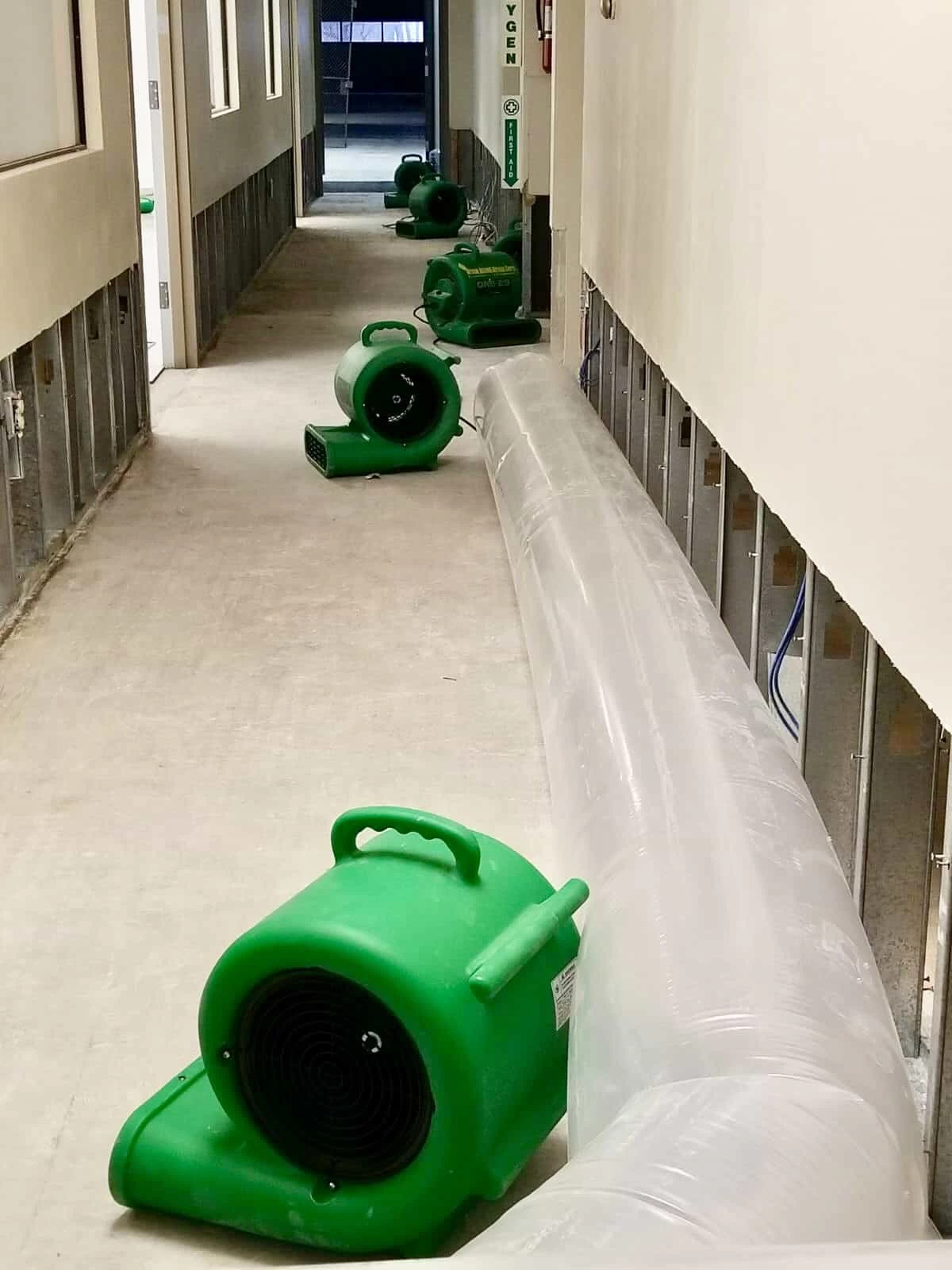
I had pipe freeze in my basement right before a snow storm and they made to within an hour to help start the clean up process. They we by our side throughout the entire process and even helped with the insurance company. They did such a great job with the cleanup, repair, remidiation, I contracted them to perform the repairs and finishes in the basement. They came with enough manpower and material to get the job done. Leo and Jessica were nothing but a pleasure to deal with!!
Cristian Arredondo c
I had some water damage in my home and Green Island was able to take care of my issue quickly and effectively. I am very pleased with the work they did. They responded quickly and were very professional.
Michael M
Outstanding service! From the office to the field crew everyone was friendly, helpful and responsive. I highly recommend Green Island Group.
Most demolition projects in Little Neck don’t fall apart during the teardown. They fall apart before it starts. That’s because the NYC Department of Buildings won’t issue a demolition permit without a completed ACP-5 Asbestos Assessment Report and most demolition-only contractors don’t have that capability in-house. So you end up managing two vendors, two timelines, and a permit that’s stuck in limbo while your project sits still.
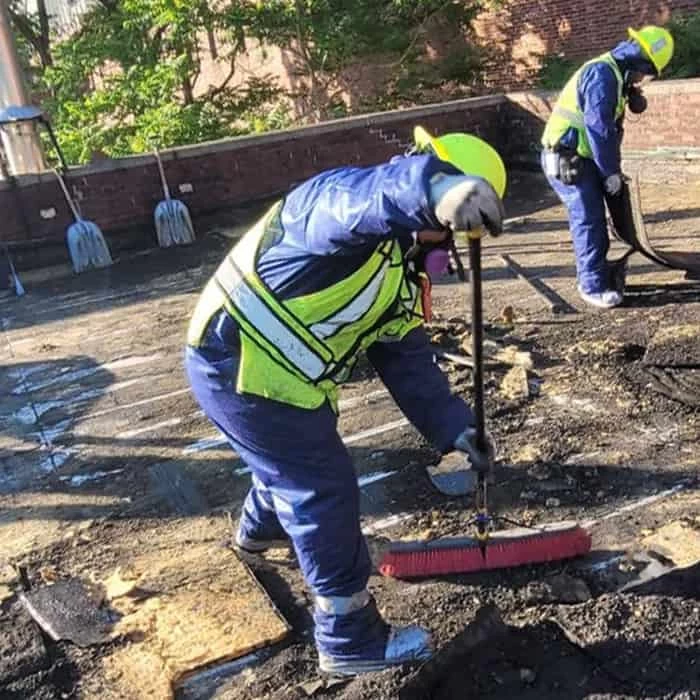
We’re both a licensed demolition contractor and a certified asbestos abatement company. That means the DEP-certified asbestos investigation, the ACP-5 filing, any required abatement, and the DOB permit application all happen under one roof. No handoffs. No gaps. No waiting on a second crew to show up before the first one can move.
That matters a lot in Little Neck specifically. The neighborhood’s housing stock Tudor and Colonial homes built largely between the 1920s and the 1960s almost universally predates the NYC pre-1987 asbestos threshold. These aren’t edge cases. Asbestos in pipe insulation, floor tiles, roofing material, and textured plaster is the norm here, not the exception. You need a contractor who already knows that and plans for it from day one.
12 Years In, and We Still Handle Every Little Neck Project Directly
We’ve been handling demolition and environmental remediation across New York City and Long Island for over 12 years. That includes hundreds of projects throughout Queens and the kind of hands-on familiarity with NYC DOB permit offices, DEP asbestos protocols, and the practical realities of working in residential neighborhoods that only comes from doing this work repeatedly, not just reading about it.
Little Neck sits right at the Queens-Nassau border, which gives it a character that’s different from most of the borough. The homes are detached, the lots are full, and the streets north of Northern Boulevard especially closer to Udalls Cove and Little Neck Bay require real planning around equipment access and debris staging. This isn’t a neighborhood where you send a crew that’s learning on the job.
With over 5,000 completed projects across New York State, a 4.7-star rating across verified reviews, and 24/7 availability, we’re the contractor Little Neck homeowners call when the project actually matters.
It starts with a site visit and assessment. Before anything else, our team walks the property, evaluates the structure, and determines the scope of work. For virtually every home in Little Neck given the pre-1960s construction era this includes a DEP-certified asbestos investigation. That assessment is not optional under NYC law. It’s the foundation of everything that follows.
Once the ACP-5 report is complete, the permit application goes to the NYC Department of Buildings. If asbestos abatement is required, the NYC DEP gets notified at least seven days before that work begins another step that’s built into the timeline, not added as a surprise. Utilities get disconnected and capped by the appropriate providers before any demolition equipment touches the structure.
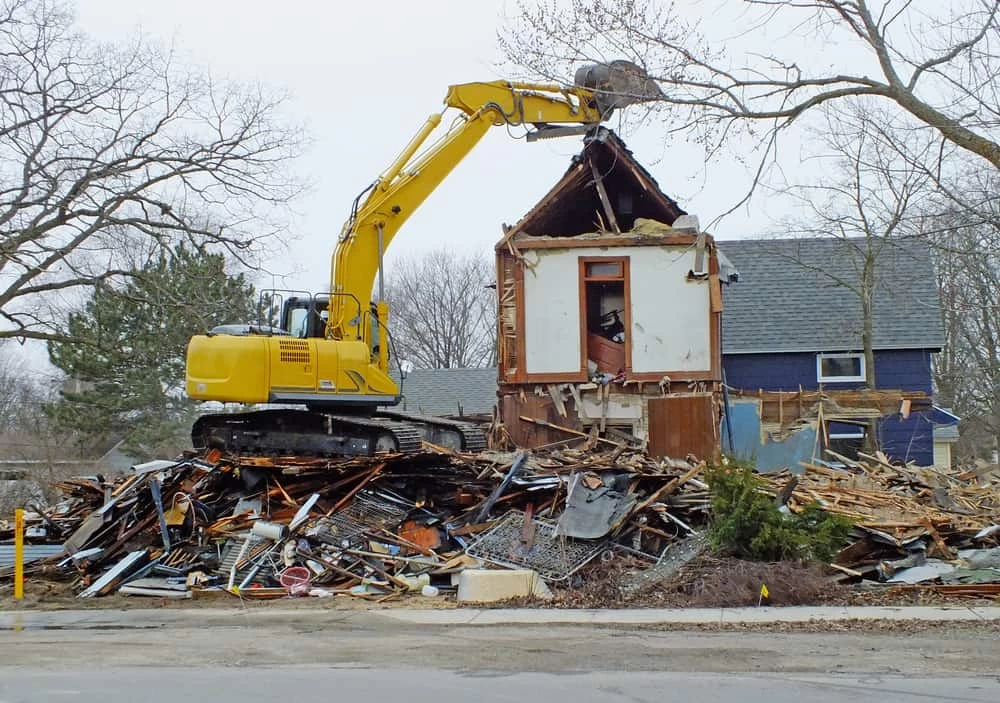
Then the actual demolition happens. Depending on the size and condition of the structure, a full residential teardown in Little Neck typically takes one to five days. Debris is removed, the site is cleared, and the lot is left ready for whatever comes next whether that’s new construction, a sale, or simply closing a chapter. Every step follows NYC, NYS, and EPA regulations. You’ll know what’s happening and when throughout the entire process.
Full Demolition, Hazmat Included Not Billed Separately Later
We handle the complete scope of residential and building demolition in Little Neck from the initial asbestos survey through final site clearance. That means the ACP-5 assessment, any required asbestos or lead abatement, the DOB permit process, the physical demolition, and debris removal are all part of one coordinated project. Nothing gets outsourced to a vendor you’ve never met.
For Little Neck homeowners dealing with post-storm damage a real scenario given the neighborhood’s exposure to nor’easters and coastal weather off Little Neck Bay we work directly with insurance carriers. We bill insurance companies directly and help navigate the claims process from the first call forward. Several homeowners have specifically cited this as the reason they didn’t have to manage the project alone during an already stressful situation.
Whether you’re planning a teardown-and-rebuild on a lot near Douglas Manor, managing an estate property on one of the older streets off Little Neck Parkway, or dealing with emergency structural damage, the scope of work is built around what your specific project actually requires. No upsells, no vague estimates. You get a clear picture of the full cost including NYC permit fees, which can run between $10,000 and $12,000 for a full demolition in the city before any work begins.
Do I need a permit to demolish a house in Little Neck, NY?
Yes and in Little Neck, the permit process involves more than just filing paperwork with the NYC Department of Buildings. Because Little Neck is inside New York City limits, every full demolition requires a DOB demolition permit. But the DOB won’t process that application without a completed ACP-5 Asbestos Assessment Report, signed by a DEP-certified asbestos investigator, confirming the building is either free of asbestos-containing materials or that any ACM has already been properly abated.
For Little Neck specifically, this matters more than in many other areas. The neighborhood’s housing stock was built predominantly between the 1920s and 1960s well before the NYC pre-1987 asbestos threshold. That means nearly every home requiring demolition here will trigger the ACP-5 requirement automatically. Skipping or shortcutting this step doesn’t just risk a fine. It means the DOB won’t issue your permit at all, and the project doesn’t move forward until it’s resolved. Getting this right from the start is the difference between a project that runs on schedule and one that stalls before the first wall comes down.
Does my Little Neck home likely have asbestos, and how do I find out?
If your home was built before 1987 which describes the overwhelming majority of Little Neck’s housing stock it should be treated as a likely candidate for asbestos-containing materials until a certified investigation says otherwise. The most common locations in homes of this era are pipe insulation, floor tiles (especially 9×9 vinyl tiles), roofing materials, textured plaster, and HVAC duct wrapping. In the Tudor and Colonial-style homes that define Little Neck’s architectural character, these materials appear frequently and in multiple locations throughout the structure.
The only way to know for certain is through a DEP-certified asbestos investigation, which produces the ACP-5 report required by the NYC DOB before a demolition permit can be issued. This isn’t something a general contractor can do it requires a certified asbestos investigator (CAI) licensed by the NYC DEP. We have that certification in-house, so the investigation, any required abatement, and the permit process all stay on one timeline rather than getting handed off between separate vendors.
How long does a full house demolition take in Little Neck, NY?
For a standard single-family home in Little Neck, the physical demolition itself typically takes one to five days once the permit is in hand and utilities are properly disconnected. The structure comes down, debris is removed, and the site is cleared. That part of the process is straightforward.
What takes longer and what most homeowners don’t fully account for when they’re planning is everything that happens before the equipment arrives. The DEP-certified asbestos investigation, the ACP-5 filing, any required asbestos abatement (which requires at least seven days’ advance notice to the NYC DEP before work begins), utility disconnection coordination, and the DOB permit review process can collectively add several weeks to the overall timeline. In Little Neck, where nearly every home of demolition age will require the full asbestos assessment and likely some level of abatement, building that lead time into your project schedule from the beginning is essential. A contractor who gives you a one-week turnaround without accounting for these steps is either skipping them or hasn’t done this in New York City before.
What does house demolition in Little Neck, NY typically cost?
Residential demolition costs vary based on the size of the structure, the scope of hazmat work required, and site-specific logistics. As a general range, full house demolition runs roughly $4 to $17 per square foot meaning a 2,000 square foot home might fall anywhere between $8,000 and $34,000 depending on conditions. In New York City, permit fees alone can add $10,000 to $12,000 to that figure, which is a cost that doesn’t exist for demolition projects in Nassau County or elsewhere outside city limits.
For Little Neck homeowners, the honest answer is that your project will likely sit toward the higher end of that range. The age of the housing stock means asbestos abatement is almost always part of the scope. The NYC permit stack DOB permit, DEP ACP-5 filing, DEP abatement notification adds both cost and timeline. And the suburban density of the neighborhood, with homes close together on residential streets, requires careful dust containment and debris management that less thorough contractors skip. What you should be looking for in an estimate is full transparency: every line item accounted for, including permit fees, hazmat handling, demolition, and site clearance before any work begins.
What happens if I demolish a house in NYC without a permit?
Unpermitted demolition in New York City carries real consequences. The NYC Department of Buildings can issue a Stop Work Order immediately upon discovery, and the minimum fine for a first offense starts at $2,500. If asbestos-containing materials were disturbed without proper abatement and EPA notification, fines under the federal RRP Rule can reach $43,000 per violation per day. Beyond the fines, unpermitted demolition creates title issues that can complicate a future sale, and your homeowner’s insurance may not cover any damage or liability that results from work done without proper permits.
In Little Neck, the risk is compounded by the age of the housing stock. A home built in the 1940s or 1950s almost certainly contains asbestos somewhere in the structure. Disturbing those materials without a DEP-certified investigation and proper abatement isn’t just a permit violation it’s a potential health hazard for your family, your crew, and your neighbors. The cost of doing it right is predictable and manageable. The cost of doing it wrong fines, remediation, legal exposure is not.
Can Green Island Group work directly with my insurance company for storm-related demolition?
Yes and for Little Neck homeowners, this comes up more than you might expect. The neighborhood’s position along Little Neck Bay and the tidal marshland at Udalls Cove creates real exposure to nor’easters and coastal storm events. When a storm compromises a structure’s integrity and the damage is covered under a homeowner’s policy, the last thing you want to manage is a three-way coordination between yourself, an insurance adjuster, and a contractor who doesn’t understand the claims process.
We bill insurance companies directly and have experience working through the claims process from the initial assessment forward. This means you’re not acting as the go-between while also trying to figure out what to do with a damaged property. Multiple homeowners have noted in verified reviews that this direct billing capability was a significant factor in choosing us not because it’s a perk, but because dealing with structural damage is already stressful enough without adding insurance paperwork to your plate. If your situation involves storm damage, fire, or any other insured event, mention that on your first call and our team will walk you through how the process works.