Long Island City is in the middle of one of the biggest development waves Queens has ever seen. If you have a structure that needs to come down whether it’s a pre-war row house in Dutch Kills, a warehouse near Newtown Creek, or a fire-damaged building off Vernon Boulevard we handle house demolition in Long Island City from permits through asbestos compliance to the final teardown. Getting the permits, the asbestos compliance, and the crew right the first time is how projects move without delays.
I needed a professional consultation explanation of procedure for safe removal of Asbestos in my apartment complex. Without having an account yet, I was very impressed with the caring, knowledgeable and generous advice offered by Jessica, and will look forward to doing business in the future. Thank you so much! I feel much more informed about a sometimes scary endeavor. Peace. Nancy Silva Mineola, NY.
Mia Munoz
Used this company to clean up some water flood in my house. They were fast and easy to work with.very professional, Would recommend to anyone!
Nini Valle
Great company, had a flood and they responded quickly and efficiently. Billed my insurance company directly. I highly recommend this company!
joe colapietro, jr
I had pipe freeze in my basement right before a snow storm and they made to within an hour to help start the clean up process. They we by our side throughout the entire process and even helped with the insurance company. They did such a great job with the cleanup, repair, remidiation, I contracted them to perform the repairs and finishes in the basement. They came with enough manpower and material to get the job done. Leo and Jessica were nothing but a pleasure to deal with!!
Cristian Arredondo c
I had some water damage in my home and Green Island was able to take care of my issue quickly and effectively. I am very pleased with the work they did. They responded quickly and were very professional.
Michael M
Outstanding service! From the office to the field crew everyone was friendly, helpful and responsive. I highly recommend Green Island Group.
In Long Island City, a demolition project isn’t just about knocking something down. It’s about clearing the path for what comes next and doing it without a stop-work order, a DEP violation, or a neighbor’s attorney showing up. When the job is done right, you walk away with a clean, permit-closed site that’s ready for whatever’s coming: new construction, a sale, or simply the end of a liability you’ve been carrying.
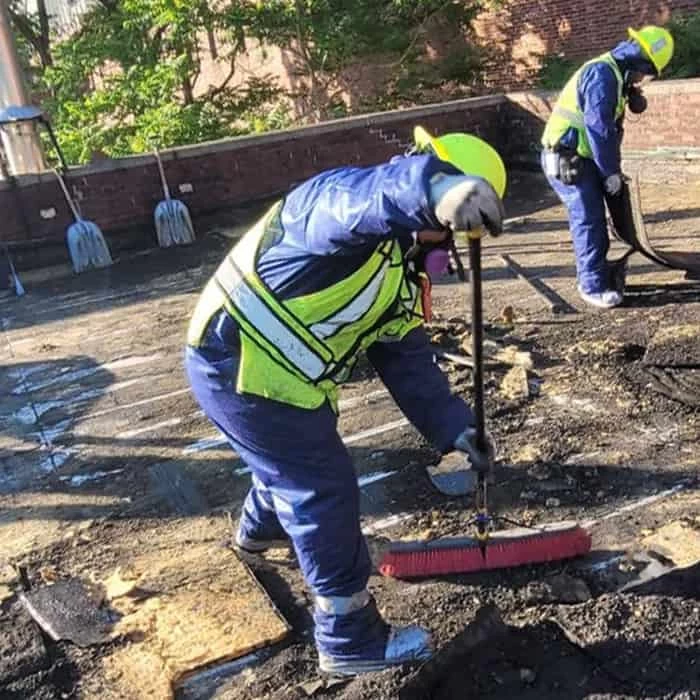
LIC’s building stock tells the whole story. Roughly a quarter of the homes here were built before 1940, and a good chunk of the industrial buildings that are being cleared right now went up before asbestos regulations existed. That means pre-demolition asbestos surveys aren’t a formality they’re a legal requirement the NYC Department of Buildings enforces before issuing any demolition permit. When we handle asbestos surveys and abatement in-house alongside the teardown, you’re not waiting on two separate schedules or managing two separate invoices.
The neighborhood’s East River exposure adds another layer. Whether it’s a structure compromised by storm flooding near Gantry Plaza or a fire-damaged building in Hunters Point, the timeline for emergency demolition in Long Island City can be tight. Having a contractor who handles asbestos abatement, permitting, and the physical teardown under one roof means the process moves faster and you’re not the one coordinating pieces that should already fit together.
Licensed Demolition Contractors in Long Island City
12 Years, 5,000 Projects, One Point of Contact
We’ve been doing demolition and environmental work across New York State for over 12 years. More than 5,000 completed projects. That’s not a marketing number it’s the kind of volume that means we’ve handled the full range of what Long Island City and Queens can throw at a demolition job: pre-war residential teardowns, industrial warehouse clearances, post-fire emergency work, and everything in between.
What makes the difference in a market like Long Island City is that we’re not a demolition company that subcontracts the asbestos piece to someone else. We’re a certified asbestos abatement contractor who also does the demolition. That distinction matters enormously when the NYC DOB won’t issue your permit until the ACP-5 form is filed and cleared. One contractor, one license, one timeline.
Owner Leo Torres runs the operation personally. If you’ve read the reviews, you’ll see his name come up repeatedly not because it’s scripted, but because he’s actually reachable. For a property owner in Long Island City navigating a rezoning-era teardown or an insurance-driven emergency, that kind of direct access isn’t something you take for granted.
Every demolition project in Long Island City starts the same way: a site assessment. We look at the structure, the age of the building, what’s adjacent to it, and what the site needs to look like when we’re done. For any building constructed before 1980 which covers a significant portion of LIC’s industrial and pre-war residential stock that assessment includes an asbestos survey. This isn’t optional in New York City. The NYC DEP requires it, and the DOB won’t move forward without the ACP-5 report on file.
Once the asbestos survey is complete and any abatement work is finished and cleared, we pull the demolition permit through the NYC Department of Buildings. Utility disconnections gas, electric, water, sewer get coordinated and certified before any physical work begins. In a neighborhood as densely built as Long Island City, where you might have an occupied building on one side and active subway infrastructure nearby, that coordination isn’t a box to check. It’s how you avoid a serious problem.
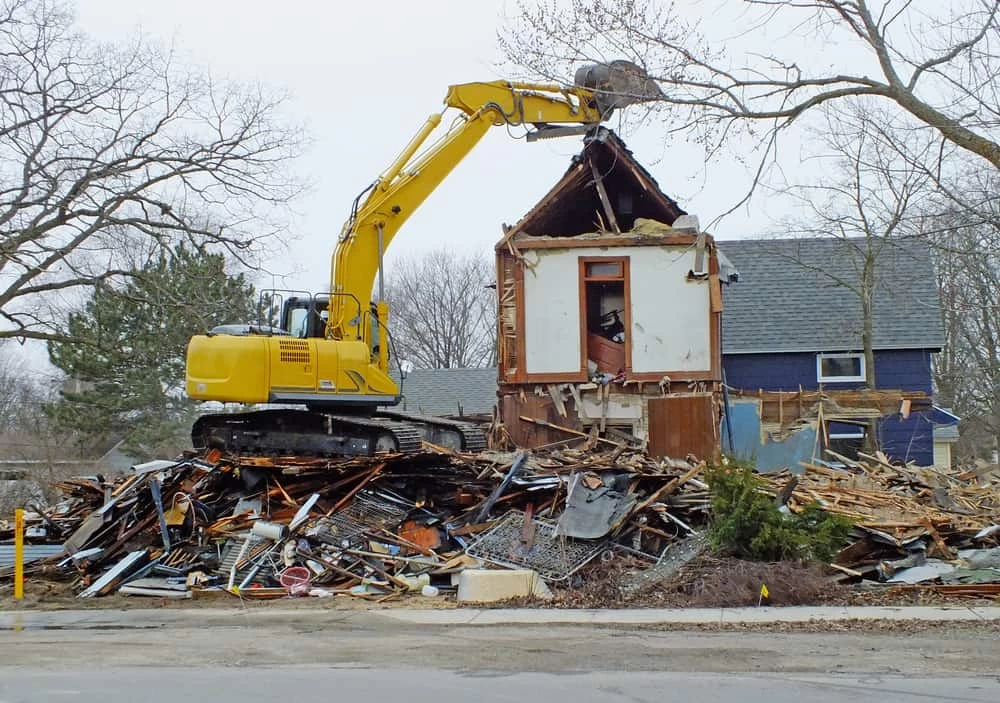
The physical demolition comes next. Depending on the scope, that’s anywhere from a selective interior teardown to a full structural demolition with site clearing and debris removal. When the work is done, you get a clean site and closed permits not a pile of rubble and an open DOB application.
Demolition in Long Island City covers more ground than most people expect when they first call. The physical teardown is one part of it. But in NYC, the work that happens before the first wall comes down the asbestos survey, the ACP-5 filing, the DEP notification, the permit application, the utility coordination is where projects stall when the contractor isn’t equipped to handle it.
We manage the full scope: residential house demolition, commercial building demolition, industrial structure teardowns, and interior selective demolition for properties being gutted rather than fully cleared. We serve the entire Long Island City area, including Hunters Point, Dutch Kills, Court Square, Ravenswood, Blissville, and the surrounding Queens neighborhoods. Whether you’re a developer working within the OneLIC rezoning corridor, a homeowner with a pre-war structure that’s past saving, or a property owner dealing with fire or flood damage, the process and the team are the same.
We also work directly with insurance carriers for damage-related demolition. If your project is tied to an insurance claim, we handle that communication directly which means you’re not stuck playing intermediary between your adjuster and your contractor while you’re already dealing with everything else. Available 24/7, including emergency response for structures that can’t wait.
Do I need a permit to demolish a house in Long Island City, NY?
Yes and in New York City, the permitting process for demolition is more involved than in most other places. The NYC Department of Buildings requires a demolition permit for any full structural teardown, and they will not issue that permit until an ACP-5 Asbestos Assessment Report has been filed by a DEP-certified asbestos investigator. That report documents whether asbestos-containing materials are present in the structure. If they are, a licensed abatement contractor must complete the removal and obtain clearance before demolition can proceed.
For Long Island City specifically, this matters a lot. A significant portion of the neighborhood’s building stock particularly the pre-war residential structures in Dutch Kills and the industrial buildings near Newtown Creek was built before asbestos regulations existed. That means the asbestos survey isn’t a formality. It’s often the step that determines how the rest of the project is sequenced and priced. Skipping it or hiring a contractor who treats it as an afterthought is how you end up with a stop-work order and a project that’s frozen mid-demolition.
How much does house demolition cost in Long Island City, NY?
The honest answer is that it depends on several factors the size of the structure, whether asbestos or lead paint is present, what the site access looks like, and how much debris needs to be hauled. For a standard residential teardown in Queens, costs typically range from $10,000 to $30,000 or more when you factor in everything: the asbestos survey, any required abatement, the DOB permit fees, the physical demolition, and debris removal.
In Long Island City, permit fees alone for a full demolition can reach $10,000 to $12,000 through the NYC DOB. If the building contains asbestos which is common in pre-1980 structures abatement costs can add anywhere from a few thousand dollars for a small residential job to $20,000 or more for a larger industrial building. The best way to get an accurate number is a site assessment, not a phone estimate. Any contractor giving you a firm price without seeing the property and understanding the permit scope is leaving something out.
What is an ACP-5 form and why does it matter for my demolition project?
The ACP-5 is an Asbestos Assessment Report that’s required by the NYC Department of Buildings before they’ll approve a demolition permit. It’s filed by a DEP-certified asbestos investigator after a formal survey of the property. The form either confirms that no asbestos-containing materials were found, or it documents what was found and what needs to be done before work can begin.
In practical terms, the ACP-5 is the gating document for your entire project. Without it, the DOB won’t move forward period. For properties in Long Island City that were built before 1987, the survey is mandatory regardless of whether you believe asbestos is present. Given LIC’s industrial history and the age of much of its existing building stock, it’s rarely a surprise when asbestos turns up. The key is having a contractor who handles the survey, the filing, and if needed the abatement, so the project doesn’t stall between steps.
Can the same contractor handle both asbestos removal and demolition in NYC?
They can, but only if they hold both certifications and most demolition contractors don’t. In New York City, asbestos abatement must be performed by a contractor licensed by the NYS Department of Labor and operating under a NYC DEP permit. That’s a separate credential from a general demolition license. Most demolition-only contractors will tell you to hire an abatement company separately, which means two contractors, two schedules, and a gap in the project timeline that can stretch for weeks.
We hold both certifications. The asbestos abatement and the demolition are handled by the same team, under the same project management, on the same timeline. For a property owner in Long Island City where the DOB, DEP, and FDNY are all involved in the permitting chain having one contractor who can move through that sequence without handoffs is a real practical advantage, not just a convenience.
How long does the house demolition process take in Long Island City?
The physical demolition of a residential structure typically takes one to three days depending on size and access. But the full timeline from initial assessment to closed permits is longer, and in New York City, the permitting phase is usually what determines the schedule.
In Long Island City, you’re working within NYC DOB and DEP jurisdiction, which means the asbestos survey, ACP-5 filing, DEP notification period, and permit approval all have to happen in sequence before any physical work begins. The DEP requires at least seven days’ notice before abatement activities start. DOB permit processing times vary, but they can add additional weeks depending on the complexity of the application and current processing volume. For projects tied to the OneLIC rezoning corridor or developer-driven teardowns where construction schedules are tight, starting the permitting process early before you think you need to is the single most effective way to avoid delays.
What happens to the debris and materials after a house is demolished in Queens?
Debris removal is part of the job, not an add-on you figure out afterward. After the structure comes down, all demolition debris concrete, wood, metal, drywall, and any other materials gets hauled from the site and disposed of properly. In New York City, construction and demolition debris disposal is regulated, and materials that were identified during the asbestos survey as containing ACM have to be handled, packaged, and transported under DEP protocols to licensed disposal facilities.
For Long Island City projects, site access is something we think about upfront. In a dense neighborhood where you might be working on a narrow street in Hunters Point or adjacent to an occupied building in Dutch Kills, debris staging and removal requires coordination not just a dumpster dropped at the curb. The goal is a clean, cleared site at the end of the job, with no open permits, no leftover materials, and no loose ends that become your problem six months later.