Oakland Gardens Teardowns Done Right From Asbestos Survey to Clean Site
Most homes in Oakland Gardens were built in the 1950s. That means before anything comes down, there’s a regulatory sequence that has to happen first and if your contractor doesn’t know it, your project stalls before it starts.
I needed a professional consultation explanation of procedure for safe removal of Asbestos in my apartment complex. Without having an account yet, I was very impressed with the caring, knowledgeable and generous advice offered by Jessica, and will look forward to doing business in the future. Thank you so much! I feel much more informed about a sometimes scary endeavor. Peace. Nancy Silva Mineola, NY.
Mia Munoz
Used this company to clean up some water flood in my house. They were fast and easy to work with.very professional, Would recommend to anyone!
Nini Valle
Great company, had a flood and they responded quickly and efficiently. Billed my insurance company directly. I highly recommend this company!
joe colapietro, jr
I had pipe freeze in my basement right before a snow storm and they made to within an hour to help start the clean up process. They we by our side throughout the entire process and even helped with the insurance company. They did such a great job with the cleanup, repair, remidiation, I contracted them to perform the repairs and finishes in the basement. They came with enough manpower and material to get the job done. Leo and Jessica were nothing but a pleasure to deal with!!
Cristian Arredondo c
I had some water damage in my home and Green Island was able to take care of my issue quickly and effectively. I am very pleased with the work they did. They responded quickly and were very professional.
Michael M
Outstanding service! From the office to the field crew everyone was friendly, helpful and responsive. I highly recommend Green Island Group.
A Clean, Permitted Site Ready for Whatever Comes Next
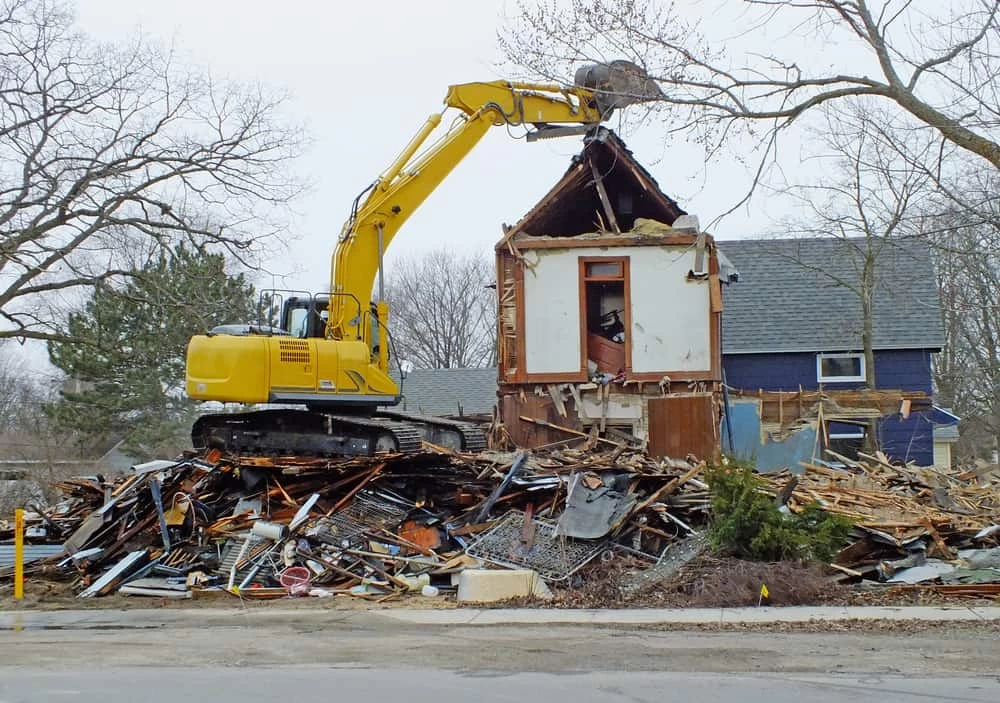
When a demolition project goes the way it should, you don’t think about it much. The structure comes down, the debris disappears, and the site is ready for your builder to move in. That’s the outcome. Getting there cleanly without a stop-work order, without a surprise asbestos violation, without weeks of permit delays is the part that actually requires the right contractor.
In Oakland Gardens, the housing stock tells the whole story. The median construction year here is 1956, and the NYC Department of Environmental Protection requires an asbestos survey on any building built before April 1, 1987, before a demolition permit can be issued. That’s not a technicality it’s a mandatory step that applies to virtually every home on every block in this neighborhood. If your contractor can’t handle that survey and the required ACP-5 filing in-house, you’re already looking at scheduling gaps, coordination headaches, and timeline risk before a single wall comes down.
There’s also the teardown-rebuild reality that’s become a defining pattern in Oakland Gardens. Multigenerational families many of them putting serious capital into a new custom build need a demolition phase that delivers a compliant, cleared site on a predictable schedule. A delay at the permit stage doesn’t just push back demolition. It pushes back everything. Getting this part right matters more than most people realize until it goes wrong.
12 Years In, and the Regulatory Stuff Is Second Nature
We’ve been handling demolition and environmental work across the New York metro area for over 12 years. More than 5,000 completed projects. A 4.7-star rating built on real reviews from real customers not volume, but consistency.
What makes a difference in Oakland Gardens is that we’re not a demolition-only crew that hands off the asbestos work to someone else. We’re a certified asbestos abatement contractor. We conduct the investigation, handle the ACP-5 filing with the NYC DEP, perform abatement if it’s needed, and manage the DOB permit process all under one roof. For homeowners near Cunningham Park or along the streets off Springfield Boulevard, that means one contractor, one timeline, and no finger-pointing between vendors if something comes up.
We also work directly with insurance companies. If your project is tied to storm damage, fire, or a flood loss, we handle the billing and documentation on our end so you’re not managing that on top of everything else.
Oakland Gardens Demolition Permit Process Explained
What Actually Happens Between Your Call and a Clear Site
The first step is an asbestos investigation. Because Oakland Gardens homes were built almost entirely before 1987, this isn’t optional it’s required by the NYC DEP before the Department of Buildings will process your demolition permit. A certified investigator surveys the structure, identifies any asbestos-containing materials, and signs off on the ACP-5 form that gets filed with the DOB. If abatement is required, we handle that too, along with the ACP-7 notification to the DEP at least seven days before work begins.
Once asbestos compliance is documented, the demolition permit application goes into the DOB NOW system. For a full residential teardown in Queens, expect the full permit sequence survey, ACP-5 filing, application, and DOB approval to take roughly four to eight weeks. That’s the reality of working inside New York City’s permitting environment, and it’s worth building into your timeline from the start. Homeowners in Oakland Gardens planning a spring construction start should ideally be initiating the asbestos survey process no later than late fall.
When permits are in hand, we coordinate utility disconnections gas, electric, and water all need formal sign-off before demolition begins and then the physical work starts. Debris removal and site clearance are part of the job. When we’re done, your site is clean, documented, and ready for your builder.
Building Demolition Services Oakland Gardens Queens
Everything the Job Requires Not Just the Part That's Easy
House demolition in Oakland Gardens isn’t just a wrecking job. It’s a compliance project that happens to involve heavy equipment. The NYC DOB requires a valid demolition permit. The NYC DEP requires an ACP-5 form certifying asbestos status before that permit gets issued. Utilities need to be formally disconnected and signed off. Neighbor notification is required. A safety and dust control plan has to be in place. Skipping or shortcutting any of these steps doesn’t save time it creates stop-work orders, fines starting at $2,500, and delays that cost far more than the permit fees ever would.
We handle the full scope: asbestos investigation, ACP-5 and ACP-7 filings, DOB permit application, utility coordination, physical demolition, debris removal, and final site clearance. Whether you’re doing a full teardown on a residential lot near Alley Pond Park, a partial structural demo before a major renovation, or an interior selective demolition, the process is managed start to finish.
For projects tied to insurance claims storm damage, fire, water loss we bill the insurance company directly and work with the adjuster on documentation. You shouldn’t have to manage a claims process and a demolition project at the same time, and with us, you don’t have to.
Do I need an asbestos survey before demolishing my Oakland Gardens home?
Yes and in Oakland Gardens, this applies to nearly every residential property. The NYC Department of Environmental Protection requires an asbestos survey on any building constructed before April 1, 1987, before the Department of Buildings will issue a demolition permit. Given that the median construction year in Oakland Gardens is 1956, and the vast majority of homes here were built between the 1940s and 1960s, there are very few properties in this neighborhood that fall outside that requirement.
The survey must be conducted by a DEP-Certified Asbestos Investigator. If asbestos-containing materials are found which is common in pre-1960s homes that frequently used asbestos in floor tiles, pipe insulation, ceiling materials, and roofing a licensed abatement contractor must complete removal before demolition can proceed. The results get documented on an ACP-5 form, which is filed with the DOB as part of the permit application. We handle both the investigation and the abatement, so you’re not coordinating two separate contractors on a process that has to happen in sequence.
How long does the demolition permit process take in New York City?
For a full residential demolition in New York City, the realistic timeline from initial asbestos survey to permit approval is four to eight weeks. That accounts for the survey itself, the ACP-5 filing with the NYC DEP, the demolition permit application through the DOB NOW system, and the DOB’s review and approval process. It does not include the physical demolition, which happens after permits are in hand.
This timeline matters especially for Oakland Gardens homeowners planning a teardown-rebuild. If your goal is to break ground on new construction in spring, you should be starting the asbestos survey and permit process no later than the fall before. Waiting until you’re ready to build to start the permit process is one of the most common and most costly scheduling mistakes in this market. The permit timeline is largely fixed by the city’s process, but an experienced contractor who files correctly the first time avoids the re-submission delays that can add weeks to an already fixed window.
What happens if I demolish a structure in Queens without a permit?
The NYC Department of Buildings takes unpermitted demolition seriously. If work begins without a valid permit, the DOB can issue an immediate Stop Work Order, which halts everything on the site until the violation is resolved and resolving it typically takes longer than getting the permit would have in the first place. First-offense civil fines start at $2,500, and if asbestos-containing materials were disturbed without proper survey and abatement documentation, you’re looking at additional DEP violations on top of that.
Beyond the fines, there’s personal liability exposure. If asbestos is disturbed during unpermitted demolition, the property owner can be held responsible for any resulting exposure. In a neighborhood like Oakland Gardens where pre-1960s construction is the norm and asbestos is a realistic finding in almost every older home this isn’t a remote risk. It’s a genuine one. The permit process exists for real reasons, and the cost of skipping it consistently outweighs the cost of doing it right.
Can a demolition contractor in Oakland Gardens handle the asbestos work too?
Most can’t or at least, most don’t. The typical scenario is that a demolition contractor subcontracts the asbestos investigation and abatement to a separate environmental firm, which means two contracts, two schedules, and a compliance sequence that depends on both parties being coordinated. When one falls behind or there’s a miscommunication about scope, the whole timeline slips.
We are both a certified asbestos abatement contractor and a licensed demolition contractor. The investigation, ACP-5 filing, abatement if required, ACP-7 DEP notification, and the demolition itself are all handled internally. For Oakland Gardens homeowners where the asbestos survey isn’t a maybe, it’s a certainty given the age of the housing stock having one contractor who manages the entire compliance sequence without handoffs is a meaningful practical advantage, not just a convenience. It’s fewer delays, clearer accountability, and a timeline that doesn’t depend on two companies staying in sync.
How much does house demolition typically cost in Oakland Gardens, NY?
The cost of a full residential demolition in Oakland Gardens depends on several factors: the size of the structure, the extent of asbestos-containing materials found during the survey, the complexity of utility disconnections, and the site conditions. For a standard single-family home in this area, total project costs including the asbestos survey, any required abatement, permit fees, physical demolition, and debris removal generally range from $15,000 to $40,000 or more depending on scope.
The asbestos component is often the variable that surprises homeowners most. A home built in 1955 with original flooring, plaster walls, and intact pipe insulation may have ACM in multiple locations, each requiring documented abatement before demolition can proceed. That’s not a cost that can be avoided it’s a legal requirement but it can be estimated accurately once the survey is complete. Getting a detailed scope from a contractor who handles both asbestos and demolition gives you a more accurate all-in number than pricing the two pieces separately.
Is the teardown-rebuild process in Oakland Gardens different from other Queens neighborhoods?
In practice, yes. Oakland Gardens has seen a sustained and documented pattern of multigenerational families many of them Korean-American and Chinese-American purchasing older midcentury homes, demolishing them, and building large custom residences designed for extended family living. Local real estate professionals who specialize in this area have noted this trend explicitly, and the DOB permit activity on streets like Cloverdale Boulevard, 67th Avenue, and 77th Avenue confirms it’s ongoing.
What that means for the demolition process is that the stakes are higher and the timeline pressure is real. These aren’t speculative teardowns they’re the first phase of a major construction investment, and the new build can’t start until the site is cleared, compliant, and ready. A permit delay or an unexpected abatement finding that wasn’t accounted for in the schedule can push a construction start by months. Contractors who work regularly in Oakland Gardens understand that this community’s teardown projects require precise regulatory execution, not just equipment. That’s a different standard than a one-off demo job, and it’s worth choosing a contractor who’s actually equipped for it.