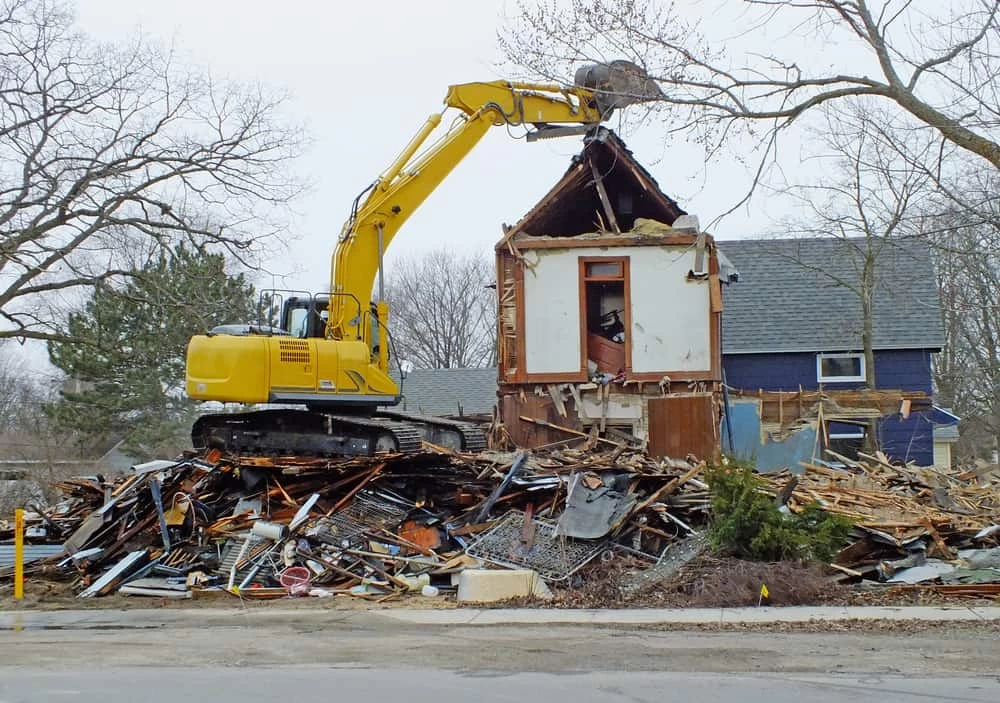
In Parkside, where most homes were built before 1939, house demolition isn’t just about tearing something down it’s about doing it legally, safely, and without the surprises that come with nearly a century of building materials. We handle the full process: asbestos surveys, DEP filings, NYC DOB permits, and the actual teardown. One team, one timeline, one point of contact from your first call to final site clearance.
I needed a professional consultation explanation of procedure for safe removal of Asbestos in my apartment complex. Without having an account yet, I was very impressed with the caring, knowledgeable and generous advice offered by Jessica, and will look forward to doing business in the future. Thank you so much! I feel much more informed about a sometimes scary endeavor. Peace. Nancy Silva Mineola, NY.
Mia Munoz
Used this company to clean up some water flood in my house. They were fast and easy to work with.very professional, Would recommend to anyone!
Nini Valle
Great company, had a flood and they responded quickly and efficiently. Billed my insurance company directly. I highly recommend this company!
joe colapietro, jr
I had pipe freeze in my basement right before a snow storm and they made to within an hour to help start the clean up process. They we by our side throughout the entire process and even helped with the insurance company. They did such a great job with the cleanup, repair, remidiation, I contracted them to perform the repairs and finishes in the basement. They came with enough manpower and material to get the job done. Leo and Jessica were nothing but a pleasure to deal with!!
Cristian Arredondo c
I had some water damage in my home and Green Island was able to take care of my issue quickly and effectively. I am very pleased with the work they did. They responded quickly and were very professional.
Michael M
Outstanding service! From the office to the field crew everyone was friendly, helpful and responsive. I highly recommend Green Island Group.
What Changes When You Hire a Contractor Who Knows Parkside
Parkside’s housing stock tells the whole story. Most homes were standing before World War II. That means asbestos in the walls, lead paint on every surface, and a permit process through the NYC Department of Buildings that doesn’t move until an asbestos assessment has been filed with the DEP. If your contractor doesn’t know what an ACP-5 form is, you’re already behind.
When you hire a demolition contractor who handles the asbestos survey, the abatement, the permit filing, and the actual teardown in-house, the project moves. There’s no waiting on a third-party hazmat subcontractor. No scheduling gap between the survey and the work. No finger-pointing when something gets delayed. We manage the entire scope under one roof, with one timeline, and one point of contact from start to finish.
In Parkside, where the median home value exceeds $1.1 million and properties sit close together on narrow lots, the cost of hiring the wrong contractor isn’t just an inconvenience it’s a stop-work order, a DEP fine, or structural damage to the house next door. Getting it right from the start is the only approach that makes sense here.
12 Years of Demolition Work Across Queens and Long Island
We’ve been handling demolition, asbestos abatement, and environmental remediation across New York City and Long Island for over 12 years. More than 5,000 completed projects. A 4.7-star rating across verified reviews. And a team that’s worked through the full range of what pre-war Parkside housing throws at us asbestos pipe insulation, lead paint on original trim, shared walls between semi-attached homes, and the NYC DOB permit process from start to finish.
Owner Leo Torres runs a hands-on operation. When a homeowner in Parkside, Forest Hills, or Rego Park calls after a fire or needs a teardown before a rebuild, our team picks up, shows up, and handles it including direct coordination with the insurance carrier when a claim is involved.
We’re a DEP-certified asbestos abatement contractor, hold active licenses verified through Nassau County, and carry the general liability and workers’ compensation coverage required for demolition work in New York City. These aren’t just credentials on a website they’re what legally allows the work to happen in Parkside and throughout Queens.
It starts with a site assessment. Before anything else, we evaluate the structure, identify the scope of work, and determine what hazardous materials are present. In Parkside, that last part is almost never a question of “if” it’s a question of how much. Virtually every structure in this neighborhood predates 1940, which means the asbestos survey isn’t optional. It’s the legal first step before the NYC DOB will issue a demolition permit.
Once our DEP-certified asbestos investigation is complete, the ACP-5 form gets filed with the Department of Buildings. If abatement is required and in most Parkside homes, it is we handle it in-house and notify the DEP at least seven days in advance, as required. Permit processing through the NYC DOB typically takes four to eight weeks, so the earlier you start, the better. We coordinate utility disconnections with Con Edison or PSEG as well, which has to happen before any demolition begins.
When the permits are in hand and the site is cleared of hazardous materials, the actual demolition work begins. We manage dust containment, debris removal, and site clearance paying close attention to adjacent structures, which in a dense neighborhood like Parkside are often just a few feet away. When the job is done, the site is clean, documented, and ready for whatever comes next.
We handle the full scope of residential and commercial demolition work in Parkside and the surrounding Forest Hills and Rego Park area. That includes full house demolition, selective interior demolition, partial structural teardowns, and post-casualty demolition for properties damaged by fire or water. For homeowners dealing with an insurance claim on top of a demolition project, we bill carriers directly and handle the documentation which matters when your home is worth over a million dollars and the claim needs to be done right.
Every project in Parkside involves the same regulatory foundation: DEP asbestos survey, ACP-5 filing, DOB demolition permit, utility coordination, and a dust and safety plan that accounts for the density of the neighborhood. These aren’t add-ons they’re built into every job because New York City requires them. Contractors who skip steps here don’t just do bad work; they expose you to fines that can reach thousands of dollars per day and stop-work orders that can freeze a project indefinitely.
We also handle lead paint compliance under the EPA’s RRP Rule, which applies to every pre-1978 structure and in Parkside, that’s essentially every structure on every block. From the first call to the final site photo, the process is documented, permitted, and done to code.
Do I need a permit to demolish a house in Parkside, NY?
Yes and in New York City, the permit process involves more than one agency. The NYC Department of Buildings issues the demolition permit, but before they’ll approve it, you need to submit an ACP-5 Asbestos Assessment Report, which has to be completed by a DEP-certified asbestos investigator. In Parkside specifically, where the vast majority of homes were built before 1939, this step applies to nearly every project without exception.
Beyond the asbestos filing, you’ll also need a safety plan, a dust control plan, and neighbor notification as part of the DOB application. Utility disconnections through Con Edison or PSEG have to be coordinated before work begins. The full permit process typically takes four to eight weeks from initial filing, so if you’re planning a spring or summer demolition, you’ll want to start the paperwork well in advance. Working with a contractor who has filed these permits in Parkside and Queens before and knows exactly what the DOB and DEP expect is the most reliable way to avoid delays.
How much does house demolition cost in Queens, NY?
The honest answer is that it depends on the size of the structure, the scope of hazardous materials present, and the complexity of the site. For a standard residential demolition in Queens, costs typically range from $10,000 to $30,000 or more when you factor in the asbestos survey, abatement (if required), permit fees, debris removal, and site clearance. NYC permit fees alone can reach $10,000 to $12,000 depending on the project.
In Parkside, the asbestos and lead paint components almost always add to the baseline cost because of the age of the housing stock. Any contractor quoting you a number that doesn’t account for the DEP certification process and potential abatement work is either leaving those costs out of the initial estimate or isn’t planning to handle them properly. Ask for an itemized estimate that breaks out the survey, abatement, permit fees, demolition labor, and debris disposal that’s the only way to compare quotes accurately.
What is an asbestos survey and why is it required before demolition in Parkside?
An asbestos survey formally called an asbestos investigation is an inspection conducted by a DEP-certified asbestos investigator to identify whether asbestos-containing materials are present in a building before any demolition or renovation work begins. The results are documented in an ACP-5 form, which must be submitted to the NYC Department of Buildings before a demolition permit will be issued. This is a legal requirement for all buildings in New York City, not a recommendation.
In Parkside, this requirement is essentially universal because the neighborhood’s housing stock is almost entirely pre-war. Asbestos was commonly used in pipe insulation, floor tiles, ceiling tiles, roofing materials, and wall compounds in buildings constructed before 1980. If asbestos is found during the survey, a licensed abatement contractor must remove it before demolition proceeds, and the DEP must be notified at least seven days in advance of abatement activities. Skipping this step or hiring a contractor who doesn’t have DEP certification can result in significant fines and a project that gets shut down before it starts.
How long does house demolition take from start to finish in New York City?
The physical demolition of a single-family home typically takes one to three days once the site is properly prepared and permits are in hand. But the full timeline from first call to cleared site is usually six to twelve weeks when you account for the asbestos survey, DEP filing, DOB permit processing, utility disconnections, and any abatement work that needs to happen before the structure comes down.
The permit stage is where most projects in Parkside slow down if they’re not managed carefully. The NYC DOB permit process takes four to eight weeks on average, and that clock doesn’t start until the ACP-5 form has been accepted. If the asbestos survey reveals materials that require abatement, that adds time before the permit application can even be filed. Planning ahead and working with a contractor who files permits regularly in Parkside and Queens and knows how to avoid common application errors is the most effective way to keep the timeline on track.
What happens to neighboring properties during demolition in a dense neighborhood like Parkside?
This is one of the most important questions to ask before hiring a demolition contractor in Parkside, and not enough homeowners ask it. In a neighborhood where homes are often attached, semi-attached, or separated by just a few feet, demolition carries real risk of vibration damage, dust infiltration, and structural impact on adjacent properties. A licensed contractor is required to have a safety plan in place that specifically addresses neighbor protection and that plan is reviewed as part of the NYC DOB permit process.
We use dust containment barriers, control debris removal to prevent spread onto neighboring lots, and monitor structural conditions throughout the work. Our general liability insurance required at a minimum of $2,000,000 for NYC demolition work covers adjacent property damage if something goes wrong. Before any work begins, we conduct a pre-demolition walkthrough to document the condition of neighboring structures, which protects both you and your neighbors in the event of a dispute. In a neighborhood as dense as Parkside, this kind of planning isn’t extra it’s standard practice.
Can Green Island Group handle demolition if my Parkside home was damaged by fire or flooding?
Yes, and this is actually one of the more common scenarios we handle in urban Queens neighborhoods. Fire and water damage can compromise a structure quickly, and in a dense area like Parkside where a damaged building affects the safety of adjacent homes getting a qualified demolition contractor on-site fast matters. We offer 24/7 availability for exactly this reason, and our team can mobilize quickly for emergency assessments and demolition when a structure is unsafe.
For insurance-related demolition, we bill carriers directly and help document the damage in a way that supports the claims process. When your home is worth over a million dollars, that documentation matters significantly. We handle fire debris removal, hazardous material remediation, and full or partial structural demolition depending on what the damage requires and we coordinate with your insurance adjuster throughout so you’re not managing two separate conversations at once. From the first emergency call to the final cleared site, the process is handled as one job, not handed off between multiple contractors.