Port Washington’s older homes sit on some of the most valuable land on Long Island’s North Shore — and when renovation costs more than starting over, you need a demolition team that handles everything from asbestos clearance to final cleanup without handing the headache back to you.
I needed a professional consultation explanation of procedure for safe removal of Asbestos in my apartment complex. Without having an account yet, I was very impressed with the caring, knowledgeable and generous advice offered by Jessica, and will look forward to doing business in the future. Thank you so much! I feel much more informed about a sometimes scary endeavor. Peace. Nancy Silva Mineola, NY.
Mia Munoz
Used this company to clean up some water flood in my house. They were fast and easy to work with.very professional, Would recommend to anyone!
Nini Valle
Great company, had a flood and they responded quickly and efficiently. Billed my insurance company directly. I highly recommend this company!
joe colapietro, jr
I had pipe freeze in my basement right before a snow storm and they made to within an hour to help start the clean up process. They we by our side throughout the entire process and even helped with the insurance company. They did such a great job with the cleanup, repair, remidiation, I contracted them to perform the repairs and finishes in the basement. They came with enough manpower and material to get the job done. Leo and Jessica were nothing but a pleasure to deal with!!
Cristian Arredondo c
I had some water damage in my home and Green Island was able to take care of my issue quickly and effectively. I am very pleased with the work they did. They responded quickly and were very professional.
Michael M
Outstanding service! From the office to the field crew everyone was friendly, helpful and responsive. I highly recommend Green Island Group.
More than a third of Port Washington’s homes were built before 1939. That means asbestos isn’t a remote possibility — it’s a near-certainty in the insulation, floor tiles, pipe wrap, or ceiling materials of most structures on this peninsula. When you hire a contractor who handles asbestos testing, certified abatement, permitting, and full demolition under one roof, you’re not just saving time. You’re avoiding the kind of compliance failure that stops a project cold and costs far more than the job itself.
Port Washington’s geography adds another layer most contractors don’t think about until they’re already on site. Equipment access runs through Port Washington Boulevard and Shore Road. Lots near Manhasset Bay and Hempstead Harbor carry real flood exposure — and if you’re dealing with storm damage on top of a teardown, you need a crew that’s handled coastal demolition before, not one learning on your property.
For homeowners in Sands Point, Manorhaven, Baxter Estates, or anywhere on this peninsula, the outcome you’re looking for isn’t just a demolished structure. It’s a cleared, certified, permit-closed site that’s ready for whatever comes next — whether that’s new construction, a sale, or simply moving on.
340 Projects Deep in Port Washington and Nassau County
We’ve been handling demolition, asbestos abatement, and environmental remediation across Port Washington, Nassau County, and New York City for over 12 years. That’s not a tagline — it’s 340-plus completed demolition projects, a 4.7-star verified rating, and reviews that name specific staff members because the experience was actually worth mentioning.
We know Port Washington’s permit structure from the inside out, including the village-level requirements that catch outside contractors off guard. Baxter Estates, for example, requires a licensed architect or engineer to prepare your demolition plan, a Nassau County Health Department rodent form, and certified asbestos clearance documentation before a permit is even issued. If your contractor doesn’t know that going in, your project doesn’t start on time.
We’re NYS and NYC M/WBE certified, fully insured, and available 24 hours a day, seven days a week — including for emergency response when a nor’easter or coastal flooding event does what it does on this peninsula.
It starts with a site assessment. We walk the property, evaluate the structure, and determine what hazardous materials testing is needed before anything else happens. Given Port Washington’s pre-1939 housing stock, asbestos testing is almost always part of this step — and we handle it with our own certified team, not a subcontractor you’ve never met.
Once testing is complete, we manage the permit process. That includes coordinating with the appropriate jurisdiction — whether that’s the Village of Baxter Estates, Port Washington North, Manorhaven, or Nassau County directly — and making sure every required document is in order before work begins. Utility disconnections, rodent clearance forms, site plan requirements — we’ve done this enough times in Port Washington that nothing gets missed.
When permits are in hand, demolition begins. We stage equipment through the peninsula’s primary access roads, contain the site to protect adjacent properties, and execute the teardown efficiently. After the structure is down, debris is removed, the site is graded, and you receive all documentation confirming proper disposal and regulatory compliance. From your first call to a cleared, certified site — one contractor, one point of contact, no gaps.
Everything the Job Requires, Nothing Left for You to Chase
House demolition in Port Washington isn’t a one-trade job. The regulatory requirements alone — asbestos abatement certification, village-level permit documentation, Nassau County Health Department sign-offs, utility coordination — require a contractor who’s done this in Port Washington and Nassau County specifically, not just somewhere on Long Island.
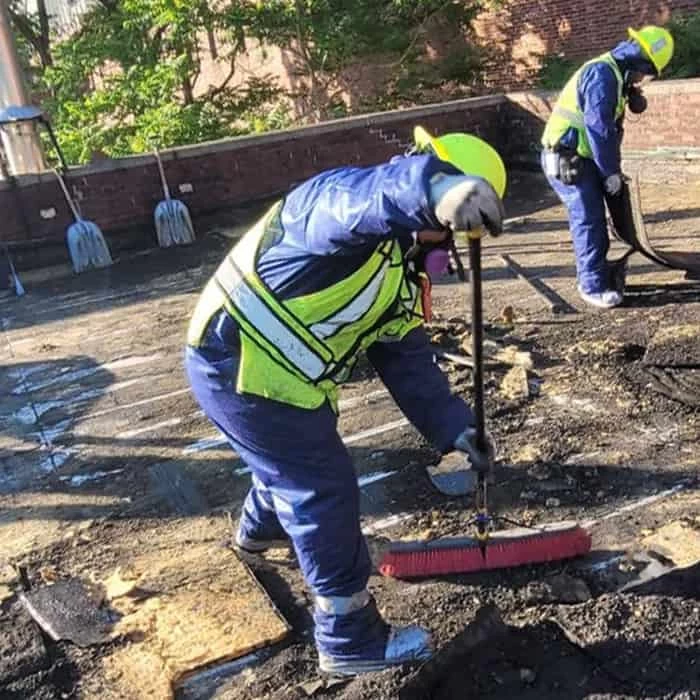
Our scope covers the full cycle: environmental testing and hazardous material identification, NYS DOH-licensed asbestos abatement, demolition permit acquisition across all Port Washington village jurisdictions, structural demolition, debris hauling and disposal, and complete site restoration. If you’re on a teardown-and-rebuild timeline and working with an architect or general contractor, we can coordinate directly with your team to hand off a clean, properly documented site on schedule.
For properties with storm or flood damage — particularly near the Manhasset Bay and Hempstead Harbor waterfront — we also navigate the insurance documentation side. Multiple clients have specifically noted that our team helped them understand what their insurer needed and how to move the claim forward while demolition was already underway. That’s not a service we advertise loudly, but it’s one that matters when you’re dealing with two stressful processes at once. One crew, one conversation, and a site that’s ready when the work is done.
Do I need an asbestos test before demolishing a house in Port Washington?
Yes — and in most Port Washington homes, it’s not a formality. More than a third of the housing stock here was built before 1939, and a significant additional portion was built between 1940 and 1979. Both eras relied heavily on asbestos in insulation, floor tiles, ceiling tiles, roofing shingles, pipe wrap, and joint compound. New York State law requires certified asbestos testing before any demolition work begins on a structure that may contain asbestos-containing materials, which in Port Washington covers the overwhelming majority of homes.
The Village of Baxter Estates makes this explicit in its demolition permit checklist — certified contractor documentation confirming asbestos removal is a required submission before a permit is issued. Other villages within Port Washington follow the same state-level requirements. Skipping this step doesn’t just create a compliance risk — it can result in a stop-work order, significant fines, and a project delay that pushes back your entire construction timeline. We handle testing and abatement with our own NYS DOH-licensed team, so there’s no gap between the asbestos phase and the demolition phase.
What permits are required to demolish a house in Port Washington, NY?
Port Washington’s permit requirements are more layered than most homeowners expect, because the area includes multiple incorporated villages — Baxter Estates, Sands Point, Manorhaven, Port Washington North, and Flower Hill — each with its own municipal government and permitting process. Where your property sits determines which jurisdiction you’re dealing with, and the requirements can differ between them.
In Baxter Estates, for example, the demolition permit application requires a site plan and demolition plan prepared by a New York State-licensed architect or engineer, proof of ownership, proof of paid taxes, a Nassau County Department of Health rodent form with an expiration date within 10 days of demolition, certified asbestos clearance, and documentation of utility disconnections. Utility companies working in the Village right-of-way also need to post a $5,000 surety bond and pay a $350 road opening fee. Nassau County-level requirements apply on top of village requirements for any work touching county roads or infrastructure. A contractor who isn’t familiar with Port Washington’s structure will discover the gaps after the project is already delayed.
How much does house demolition cost in Port Washington, NY?
Nationally, house demolition runs roughly $6,000 to $25,000, with most 2,000 square foot homes landing around $15,800. In the New York metro area, that baseline carries a 20 to 30 percent premium due to higher labor costs, stricter regulatory requirements, and the logistical realities of working in a dense residential environment. Port Washington adds further complexity — peninsula access constraints, near-universal asbestos abatement requirements given the age of the housing stock, and village-level permit processes that take more time and documentation than a standard Nassau County demolition.
For most Port Washington projects, the realistic range when you factor in asbestos abatement, permitting, demolition, and debris removal is going to sit toward the higher end of the regional spectrum. That said, for a teardown-and-rebuild on a lot worth $1,000,000 or more, demolition is a relatively small line item in the overall project budget. The more important number is the cost of a compliance failure — a stop-work order or an asbestos violation on a high-value property creates delays and liability that dwarf any savings from hiring a cheaper, less qualified crew. We provide straightforward quotes with no hidden fees after the initial site assessment.
Is it better to renovate or demolish an older home in Port Washington?
It depends on the structure and the land, but in Port Washington, the math often favors demolition more than people initially expect. When you’re dealing with a pre-1940 home — and more than a third of Port Washington’s housing stock falls into that category — renovation costs can escalate quickly. Lead paint, asbestos, outdated electrical, knob-and-tube wiring, foundation issues accelerated by coastal humidity and salt air exposure — these aren’t minor line items. They add up fast, and they often surface mid-project when it’s too late to change course.
Meanwhile, Port Washington land values frequently exceed $1,000,000. When the land is worth that much, the economics of tearing down a structurally compromised or outdated structure and building new can be more favorable than spending comparable money on a renovation that still leaves you with an old house. Real estate listings in Port Washington regularly market pre-war properties as teardown opportunities for exactly this reason. If you’re genuinely weighing the two options, a site assessment that identifies what’s in the existing structure — asbestos, lead, structural issues — gives you the clearest picture of what renovation would actually cost before you commit to it.
How does coastal flooding affect demolition timelines in Port Washington?
Port Washington’s peninsula sits between Manhasset Bay, Hempstead Harbor, and the Long Island Sound, which means properties in lower-lying areas near the waterfront carry real flood exposure. Nor’easters between October and April can bring storm surge into coastal neighborhoods, and the effects of major storms — including the kind of widespread damage seen across Nassau County’s coastline in events like Hurricane Sandy — can compromise structural integrity in ways that require demolition rather than repair.
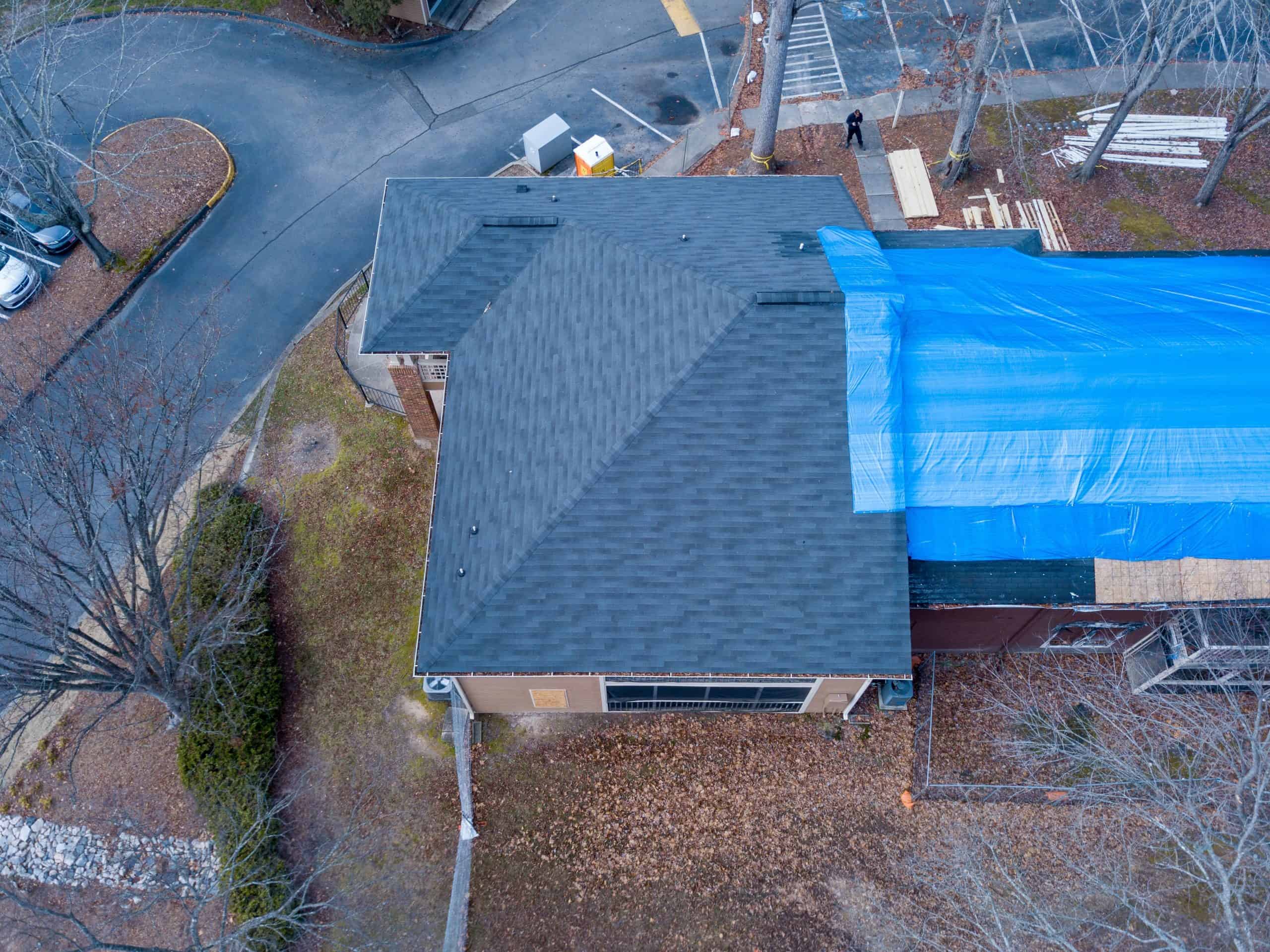
When flood or storm damage is the reason for demolition, the timeline is shaped by a few factors: the condition of the structure, the insurance claim process running in parallel, and the permit requirements that still apply even in an emergency situation. Nassau County and the incorporated villages within Port Washington don’t waive permit requirements for storm-damaged properties — asbestos testing, certified abatement, and proper documentation are still required before demolition can legally proceed. We’re available 24/7 for emergency response, and we’ve worked alongside homeowners navigating insurance claims at the same time as demolition — helping document conditions, coordinate with adjusters, and keep the project moving while the claim is still open.
Can Green Island Group handle both demolition and the rebuild in Port Washington?
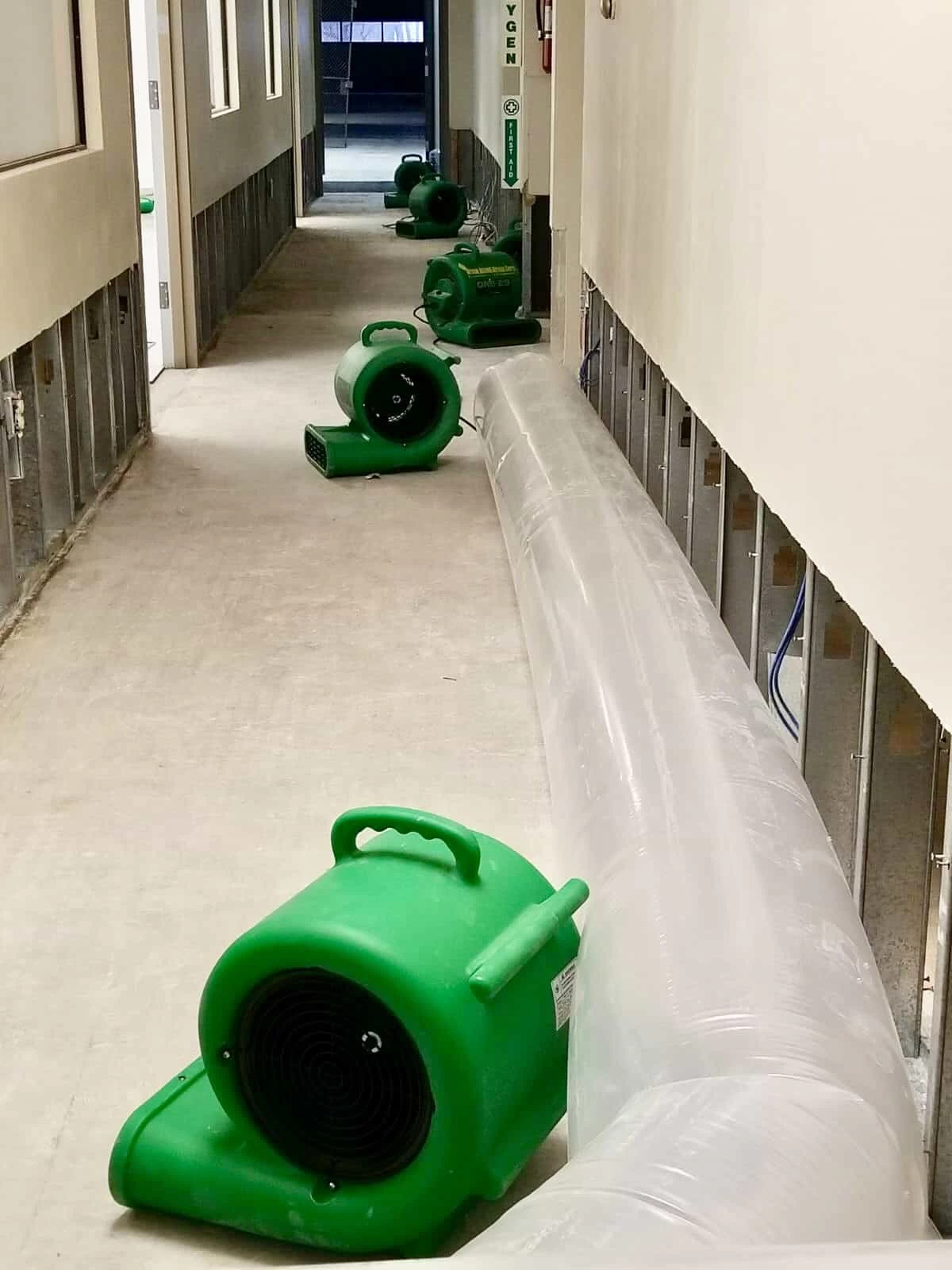
Yes. Our capabilities go beyond demolition. The full scope includes environmental testing, asbestos abatement, demolition, debris removal, structural drying, and complete site restoration and remodeling. For homeowners in Port Washington who are planning a full teardown-and-rebuild — which is a common scenario given the combination of high land values and aging housing stock on this peninsula — we can take the project from the initial asbestos inspection through a cleared, certified, permit-closed site that’s ready for your architect and general contractor to take over.
If you want one team to carry the project further, we handle that too. The advantage of keeping demolition and early-phase restoration under one contractor is continuity — no miscommunication between the demo crew and the next team, no documentation gaps, and no delays caused by handoff problems. For a teardown-and-rebuild on a Port Washington lot where construction timelines are tied to seasonal windows and contractor schedules, that continuity has real value. Reach out for a site assessment and we’ll walk you through exactly what the scope looks like for your specific property and location within Port Washington.