Every Building in Rochdale Village Was Built in 1963 That Changes Everything About Demolition
We handle the asbestos assessment, the NYC permits, and the full teardown for homes throughout Rochdale, so you don’t have to coordinate three different contractors just to get started. Every structure in Rochdale Village was built the same year and that year changes everything about how demolition has to be done. We know this community’s specific regulatory environment, and we know what it takes to get a demolition permitted and completed here.
I needed a professional consultation explanation of procedure for safe removal of Asbestos in my apartment complex. Without having an account yet, I was very impressed with the caring, knowledgeable and generous advice offered by Jessica, and will look forward to doing business in the future. Thank you so much! I feel much more informed about a sometimes scary endeavor. Peace. Nancy Silva Mineola, NY.
Mia Munoz
Used this company to clean up some water flood in my house. They were fast and easy to work with.very professional, Would recommend to anyone!
Nini Valle
Great company, had a flood and they responded quickly and efficiently. Billed my insurance company directly. I highly recommend this company!
joe colapietro, jr
I had pipe freeze in my basement right before a snow storm and they made to within an hour to help start the clean up process. They we by our side throughout the entire process and even helped with the insurance company. They did such a great job with the cleanup, repair, remidiation, I contracted them to perform the repairs and finishes in the basement. They came with enough manpower and material to get the job done. Leo and Jessica were nothing but a pleasure to deal with!!
Cristian Arredondo c
I had some water damage in my home and Green Island was able to take care of my issue quickly and effectively. I am very pleased with the work they did. They responded quickly and were very professional.
Michael M
Outstanding service! From the office to the field crew everyone was friendly, helpful and responsive. I highly recommend Green Island Group.
What Gets Resolved When You Hire the Right Crew in Rochdale
When demolition is done right in Rochdale, you’re not just removing a structure. You’re closing out a legal process, a hazmat assessment, a permit application, and a debris removal plan all at once. That’s what a complete job looks like here, and it’s a lot different from calling a crew with a sledgehammer and hoping for the best.
Every building in Rochdale Village was constructed in 1963. That’s not a guess it’s a fact that puts every single unit, wall, and mechanical room squarely inside the window for asbestos-containing materials and lead-based paint. Under NYC Department of Buildings rules, an asbestos assessment and ACP-5 clearance form are required before a demolition permit even gets processed. If the contractor you hire doesn’t handle that step, you’re the one sitting on a stalled project waiting for someone else to catch up.
The flooding risk in southeastern Queens, including Rochdale, is real and documented. Insurance costs at Rochdale Village have risen specifically because of climate-related flood exposure and when water gets into a 60-year-old building, the damage isn’t just cosmetic. Mold sets in fast, structural materials deteriorate, and what started as a water problem becomes a full remediation and selective demolition job. Having one contractor who handles all of it water damage, mold, hazmat, and demo means you’re not starting over every time the scope expands.
12 Years Working in Rochdale and Southeastern Queens
We’ve been doing this work across New York City and Long Island for over 12 years, with more than 5,000 completed projects. That includes demolition, asbestos abatement, mold remediation, water damage restoration, and oil tank removal handled in-house, not subcontracted out to whoever’s available that week.
We know southeastern Queens and Rochdale specifically. We’ve worked the permit offices, navigated cooperative building restrictions, and dealt with the specific regulatory requirements that come with pre-1987 construction throughout the Greater Jamaica area which is exactly the environment Rochdale Village sits in. When your project requires an ACP-5 filing, a NYS DOL-certified asbestos survey, and board approval from the cooperative before a single wall comes down, you want a contractor who has done all three before and knows the order they go in.
We’re available 24 hours a day, seven days a week. That’s not a tagline it’s confirmed in our reviews, where customers describe calls answered immediately and crews on-site within hours. In a community where deferred maintenance has been a front-page issue, that kind of response time matters.
No Surprises Here's How the Job Actually Unfolds in Rochdale
It starts with a site assessment. Before anything is scheduled or priced, we walk the property, evaluate the scope, and determine what the job actually involves. For any structure in Rochdale Village or on the surrounding residential streets where homes were built in the 1940s and 1950s that assessment includes an evaluation for asbestos-containing materials and lead-based paint. This isn’t optional. It’s required by both the NYC Department of Buildings and NYS DOL Industrial Code Rule 56 before any permit gets filed.
Once the hazmat picture is clear, permitting starts. In New York City, that means filing the PW1 form with the DOB, coordinating the ACP-5 asbestos clearance, and for work inside Rochdale Village’s cooperative buildings aligning with the board’s approval process before any work authorization is issued. We manage all of this. You don’t need to become an expert in NYC permit filing to get your project moving.
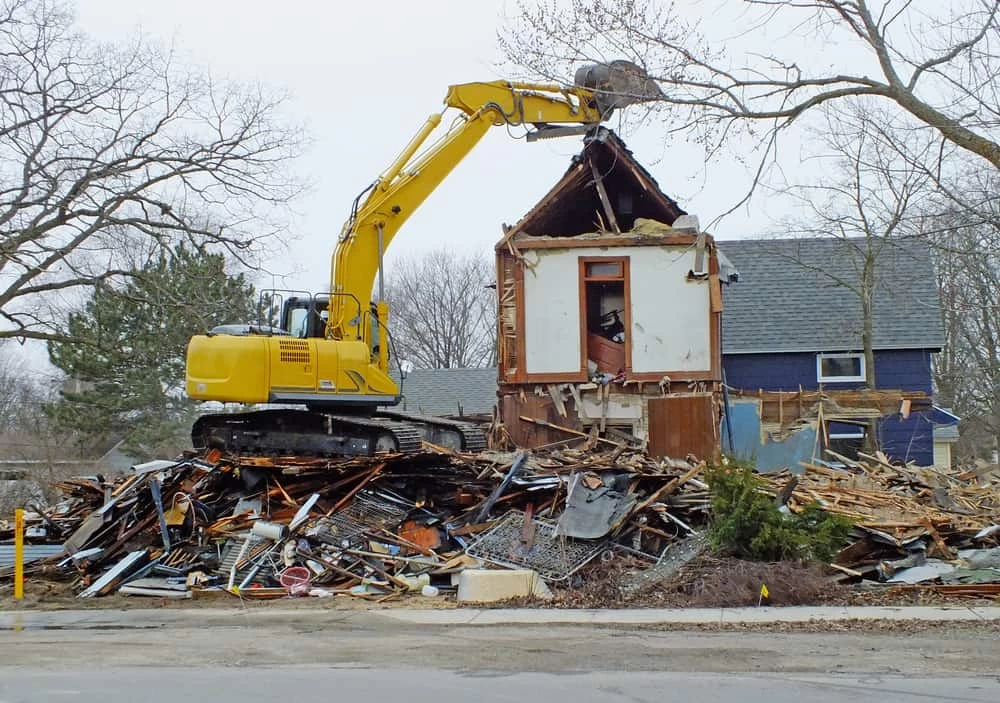
When clearances are in place, the physical work begins. Whether it’s a full structural teardown on a residential lot near Baisley Boulevard or a selective interior demolition inside a cooperative unit, our crew works according to strict containment and safety protocols especially where asbestos or lead is present. Debris is removed, the site is cleared, and you get documentation confirming the job was done in compliance with NYC DEP and NYS DOL requirements. That paperwork matters, especially in a cooperative where the board and future buyers will ask for it.
What's Actually Included When You Hire Us in Rochdale
The work we do in Rochdale covers the full range of what this community actually needs not just the physical demolition, but everything that has to happen before and after it. That includes the certified asbestos survey required by NYS DOL, the ACP-5 form preparation and filing for NYC DOB, lead paint assessment for pre-1978 structures, debris removal and disposal, and site clearance documentation. For cooperative unit work inside Rochdale Village, we’re also familiar with the internal approval process that shareholders have to navigate with the cooperative board before any contractor can begin.
For full structural demolitions on the older single-family and two-family homes on the streets surrounding the cooperative complex, many of which were built in the 1940s the process includes utility disconnection coordination, structural shoring where required, and full site clearance. These are properties where the age of the building stock virtually guarantees hazardous materials are present, and where skipping the assessment phase creates real legal and financial exposure for the property owner.
For interior selective demolition kitchen gut-outs, bathroom removals, water-damaged wall and floor demolition inside cooperative units we work within the constraints of an occupied high-rise building. That means respecting noise restrictions, coordinating shared utility shutoffs, and containing debris so it doesn’t affect adjacent units or common areas. We also handle direct insurance billing for demolition and remediation work that stems from a covered event, which takes one more thing off your plate when you’re already managing a difficult situation.
Do I need a permit for house demolition in Rochdale, NY?
Yes and in New York City, the permit process for demolition is more involved than most people expect. You’ll need to file a PW1 form with the NYC Department of Buildings, and for any full demolition, an ACP-5 form must also be submitted. That form confirms the building has been assessed for asbestos-containing materials and is signed by a DEP-Certified Asbestos Investigator. The DOB won’t move forward on the demolition permit until that clearance is in place.
For properties in Rochdale whether inside the cooperative complex or on the surrounding residential streets the pre-1987 construction date means an asbestos assessment is legally required before permits are issued, no exceptions. Performing demolition without the required permits in New York City results in a Stop Work Order and civil fines starting at $2,500 for a first offense. It can also freeze the entire project for weeks while the violation is resolved. Getting the permits right the first time isn’t just the legal path it’s the faster one.
Does asbestos have to be removed before demolition in Rochdale Village?
For any structure built before 1987 which includes every building in Rochdale Village, all constructed in 1963 New York City requires an asbestos assessment before a demolition permit is issued. If asbestos-containing materials are found, they must be abated by a NYS DOL-certified contractor before demolition proceeds. This applies whether you’re doing a full structural teardown or a selective interior demolition inside a cooperative unit in Rochdale.
Asbestos in 1963-era buildings is commonly found in floor tiles, ceiling tiles, pipe insulation, ductwork insulation, joint compounds, and roofing materials. The presence isn’t always visible, which is why the certified survey matters it identifies exactly what’s there and where, so the abatement scope is accurate and the ACP-5 clearance reflects the actual condition of the property. We perform asbestos abatement in-house as a certified contractor under NYS DOL requirements, which means you’re not waiting on a third party to complete this step before the demo crew can start.
How much does house demolition typically cost in Queens, NY?
For a standard residential structure in Queens, demolition costs generally run between $6,000 and $25,000, with the average for a 2,000 square foot home coming in around $15,800. That range shifts based on the size and construction type of the building, the extent of asbestos or lead paint abatement required, debris removal and disposal fees, and the cost of NYC permit filing which can reach $10,000 to $12,000 on its own depending on the project.
For interior selective demolition inside a Rochdale Village cooperative unit, the cost structure is different. Scope, access constraints, hazmat findings, and the complexity of working within an occupied high-rise all factor in. What matters most is getting a complete, itemized estimate upfront one that includes the asbestos survey, permit fees, abatement if required, and debris disposal so the number you agree to at the start is the number you pay at the end. Unusually low bids in this market almost always mean something is being left out of the scope, and that something usually shows up as an unexpected cost mid-project.
Can my Rochdale Village cooperative board affect my demolition project timeline?
Yes, and this is one of the most common things that catches Rochdale residents off guard when planning a renovation or demolition project. Unlike a fee-simple homeowner who only needs to navigate city permits, cooperative shareholders in Rochdale Village also need board approval before any significant demolition or renovation work can begin inside their unit. The cooperative board has its own review process, its own documentation requirements, and its own timeline which runs parallel to, not instead of, the NYC DOB permit process.
This means your project has two approval tracks running simultaneously: the city regulatory process and the cooperative’s internal process. A contractor who has never worked in a New York City cooperative building won’t know this going in, and that gap in experience can add weeks to your timeline. We’re familiar with the cooperative context in Rochdale and can help you understand what documentation the board will typically expect from a licensed contractor including proof of insurance, licensing credentials, and a clear scope of work so that part of the process moves as smoothly as the permit filing does.
What happens if flooding or storm damage triggers the need for demolition in Rochdale?
Southeastern Queens including Rochdale and the surrounding communities along the Belt Parkway corridor has documented flooding exposure that’s gotten worse with each major storm event in recent years. When water gets into a 1963-era building, the damage can escalate quickly: saturated insulation, compromised structural materials, and mold growth that sets in within 24 to 48 hours. What starts as a water damage call often becomes a mold remediation job, and in more serious cases, a selective or full demolition of the affected structural elements.
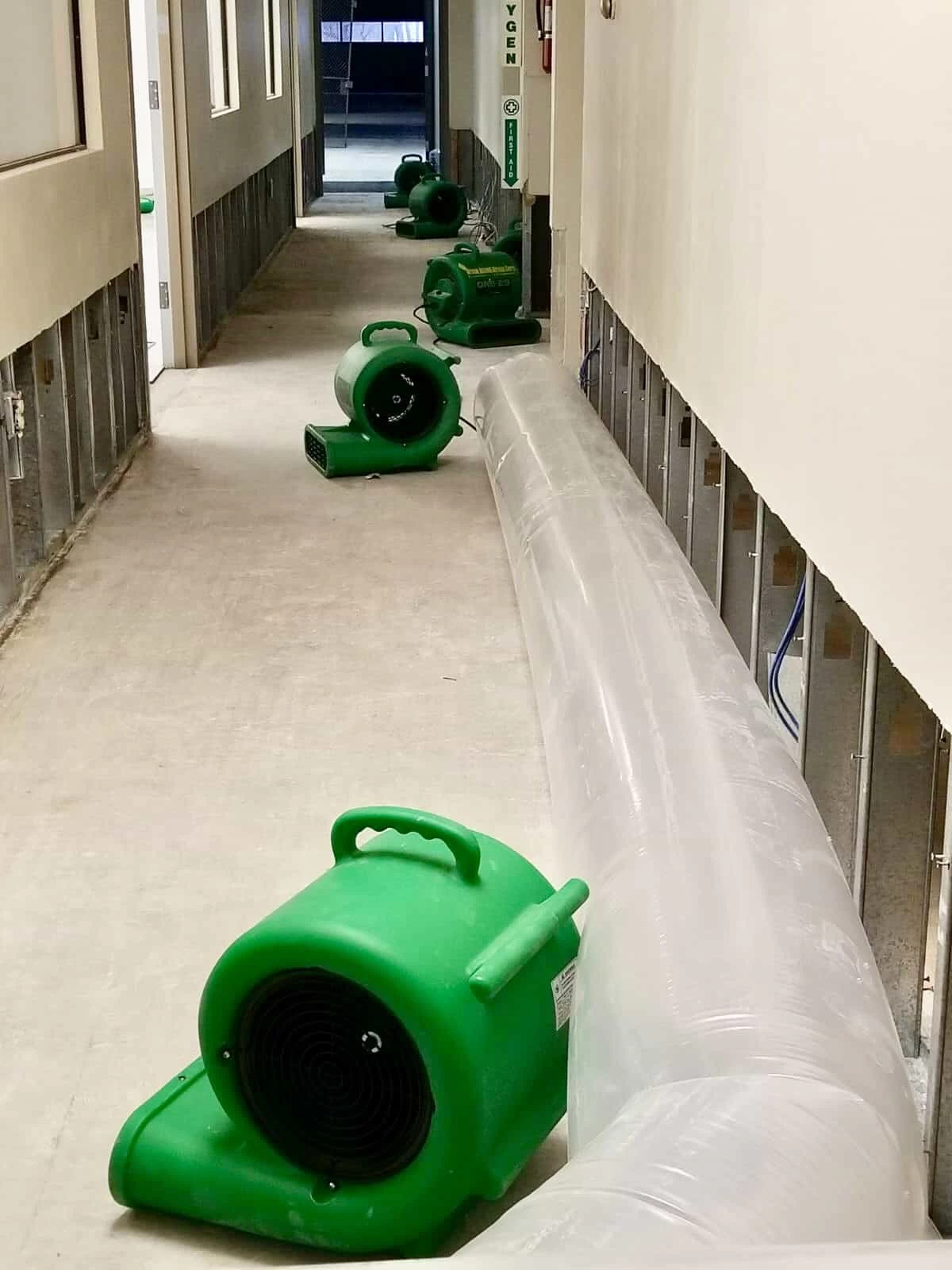
We handle the full sequence water extraction, drying, mold remediation, and demolition of damaged materials without handing you off to a different company at each stage. We also work directly with insurance carriers and can bill the insurance company on your behalf for covered work, which matters when you’re already managing temporary displacement or coordinating with Rochdale Village’s property management. If the event is covered, you shouldn’t have to fight that battle alone while also managing the physical damage.
How do I know if a demolition contractor is actually licensed to work in New York City?
This is worth verifying before you sign anything. New York City has specific licensing requirements for demolition work that go beyond a general contractor’s license, and the consequences of hiring an unlicensed contractor or one without proper insurance fall on the property owner, not just the contractor. That means Stop Work Orders, fines, and potential personal liability if something goes wrong on the job site.
For work in Rochdale specifically, you want to confirm that the contractor holds an active Home Improvement Contractors license, carries general liability insurance at a minimum of $2,000,000 coverage, has workers’ compensation in place, and critically is certified by the NYS DOL for asbestos abatement if your project involves a pre-1987 structure. Our licensing is active and verifiable, our insurance documentation is available before any contract is signed, and our asbestos abatement certification is current under NYS DOL requirements. If a contractor hesitates to provide any of that documentation upfront, that’s your answer about whether they’re the right fit for a project in New York City.