Setauket's Mid-Century Homes Deserve More Than a Wrecking Ball
Most houses in Setauket were built in an era when asbestos was standard. We handle the survey, the abatement, and the teardown under one contract that’s how it gets done right.
I needed a professional consultation explanation of procedure for safe removal of Asbestos in my apartment complex. Without having an account yet, I was very impressed with the caring, knowledgeable and generous advice offered by Jessica, and will look forward to doing business in the future. Thank you so much! I feel much more informed about a sometimes scary endeavor. Peace. Nancy Silva Mineola, NY.
Mia Munoz
Used this company to clean up some water flood in my house. They were fast and easy to work with.very professional, Would recommend to anyone!
Nini Valle
Great company, had a flood and they responded quickly and efficiently. Billed my insurance company directly. I highly recommend this company!
joe colapietro, jr
I had pipe freeze in my basement right before a snow storm and they made to within an hour to help start the clean up process. They we by our side throughout the entire process and even helped with the insurance company. They did such a great job with the cleanup, repair, remidiation, I contracted them to perform the repairs and finishes in the basement. They came with enough manpower and material to get the job done. Leo and Jessica were nothing but a pleasure to deal with!!
Cristian Arredondo c
I had some water damage in my home and Green Island was able to take care of my issue quickly and effectively. I am very pleased with the work they did. They responded quickly and were very professional.
Michael M
Outstanding service! From the office to the field crew everyone was friendly, helpful and responsive. I highly recommend Green Island Group.
When demolition is done right, you don’t hear about it after the fact. No stop-work orders. No permit closeout problems when your builder tries to pull a new construction permit. No neighbor complaints about dust or debris sitting on the curb for a week. You get a cleared, documented, inspection-ready site and you move on.
That matters especially in Setauket. A significant share of the housing stock in Setauket and East Setauket was built between the 1950s and 1970s, which means the odds of finding asbestos-containing materials floor tiles, pipe insulation, roofing, ceiling texture are high. When that discovery happens mid-project with a contractor who isn’t licensed to handle it, the job stops. You’re scrambling to find an environmental firm, the timeline blows up, and your builder is waiting. When the same contractor who does the teardown is also licensed for the asbestos survey and abatement, that scenario doesn’t happen.
The other thing worth knowing: the Town of Brookhaven issues demolition permits with a 90-day validity window. That clock starts the day the permit is issued, not the day work begins. Working with a contractor who understands Brookhaven’s process what documentation is required, what the closeout looks like, how to coordinate utility disconnections keeps that clock from becoming a problem.
Green Island Group is a full-service environmental and demolition contractor serving Long Island and the New York metro area. What separates us from most contractors in this space is the license stack: NYS Department of Labor Asbestos Contractor License, NYS DOL Mold Remediation Contractor License, EPA Lead RRP Certification, Suffolk County Home Improvement Contractor License, NYC BIC Trade Waste License, and IICRC and NADCA certifications. That’s not a list for the sake of a list it means every phase of your project, from the pre-demolition hazmat survey to the final debris removal, is handled legally and under one contract.
We’ve worked throughout the Three Village area and across Suffolk County, with direct experience navigating the Town of Brookhaven Building Division’s specific requirements. We know this jurisdiction. We know what Brookhaven’s inspectors look for at closeout, and we know how to keep a project on schedule when a builder is already waiting on the other side of the teardown.
What Actually Happens From First Call to Clean Site
It starts with a site visit and a pre-demolition environmental survey. Before any price is finalized, the property gets assessed for asbestos-containing materials, lead, and mold the things that, if found after a contract is signed, turn a straightforward teardown into a cost spiral. In Setauket, where a large portion of the housing stock dates to the mid-century construction boom, this step isn’t optional. It’s what makes the final number a real number.
Once the survey is complete and the scope is clear, we handle the permit application with the Town of Brookhaven Building Division. That includes coordinating utility disconnections gas, electric, water, sewer which have to be formally closed out before demolition begins and before the permit can be closed. If asbestos abatement is required, that work is completed and documented before the structural demolition starts, in full compliance with NYS DOL Industrial Code Rule 56.
The structural demolition and debris removal follow. All materials including any hazardous materials are disposed of at licensed facilities, and you receive the disposal documentation. That paperwork matters: it protects you from liability and it’s required for permit closeout. When the site is cleared, the final inspection is scheduled and the permit is closed. No loose ends.
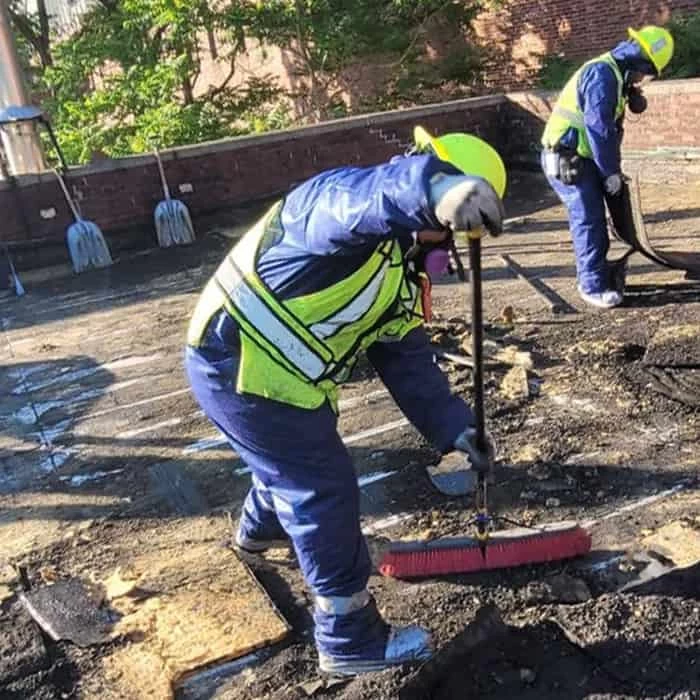
House demolition in Setauket isn’t just a structural job. The environmental piece the survey, the abatement if needed, the documented disposal is legally required and operationally inseparable from the teardown itself. We handle all of it: pre-demolition asbestos and mold survey, licensed abatement, full structural demolition, debris removal, and site preparation. Everything is documented for permit closeout and for your own records.
For properties in the Old Field or Conscience Bay areas, where older estate-era homes sit on larger lots with more complex structures, the survey scope may be broader and the abatement work more involved. For mid-century ranches and Capes in East Setauket, the most common findings are 9×9 vinyl floor tiles, pipe insulation, and boiler wrap all manageable when they’re identified before the excavator arrives. The point is that the scope is set honestly upfront, not revised after work begins.
Financing is available, including 0% APR options which matters for estate-settlement situations and for homeowners dealing with the aftermath of storm damage who need to move forward without waiting on insurance timelines. If you’re coordinating a teardown-rebuild and have a builder already engaged, the focus is on keeping the Brookhaven permit window and your builder’s schedule aligned from day one.
Do I need an asbestos survey before demolishing my house in Setauket?
Yes and this isn’t optional. New York State DOL Industrial Code Rule 56 requires a certified asbestos survey before any demolition or renovation that could disturb potential asbestos-containing materials, regardless of the building’s age or apparent condition. There’s no exemption for residential properties, and there’s no exemption based on the size of the project.
In Setauket and East Setauket, this requirement is especially relevant because a large portion of the housing stock was built between the 1940s and 1970s the peak era of asbestos use in U.S. residential construction. Common findings in homes of this era include 9×9 vinyl floor tiles, pipe and boiler insulation, roofing shingles, exterior siding, textured ceilings, and joint compound. The survey has to be conducted by a licensed inspector before any work begins. If asbestos-containing materials are found, abatement by a NYS DOL-licensed contractor is required before demolition proceeds. We hold that license and perform both the survey and the abatement, so the project doesn’t stall waiting on a separate environmental firm.
How much does house demolition cost in Setauket, NY?
For a standard single-family home in the Setauket area, full house demolition typically runs between $15,000 and $50,000, depending on the size of the structure, site access, and what the pre-demolition survey finds. That range exists because of one variable more than any other: hazardous materials. A home with minimal asbestos findings might come in at the lower end. A mid-century ranch with asbestos floor tiles, pipe insulation, and vermiculite in the attic is a different project.
That’s exactly why the pre-demolition survey happens before a final price is given. The survey findings determine the true scope of the abatement work, which is the most significant cost variable in any Setauket demolition project. Contractors who quote a flat number before surveying the property are either guessing or planning to add change orders later. We provide a number you can actually plan around one that accounts for what’s actually in the structure before the contract is signed.
How long is a demolition permit valid in Brookhaven, and what does closeout require?
The Town of Brookhaven issues demolition permits that are valid for 90 days from the date of issuance not from the date work starts, and not from the date the permit is picked up. That’s a shorter window than many homeowners expect, and it creates real pressure to have the project scoped, permitted, and executed without delays.
Permit closeout in Brookhaven requires more than just completing the demolition. You’ll need documentation of utility disconnections gas, electric, water, and sewer all have to be formally closed out. Lead solder testing, a new survey, and an electrical inspection are also part of the closeout process, along with approvals from other agencies depending on the specifics of the project. If you’re doing a teardown-rebuild, Brookhaven also requires a bond to guarantee demolition of the existing structure when new construction is being permitted simultaneously. A contractor who understands these requirements from the start not the ones who figure it out as they go is the difference between a permit that closes cleanly and one that sits open and causes problems at your next closing.
What happens if my contractor finds asbestos after demolition has already started?
This is one of the most common and most avoidable problems in residential demolition. If asbestos-containing materials are disturbed without proper abatement even accidentally the project has to stop immediately. Depending on the extent of the disturbance, you may be looking at an emergency remediation situation, regulatory notifications to the NYS Department of Labor, and significant added cost. The homeowner carries liability exposure in this scenario, not just the contractor.
The way to prevent it is straightforward: a thorough pre-demolition survey conducted by a licensed inspector before any work begins. In Setauket, where the housing stock heavily overlaps with the peak asbestos-use era, skipping or shortcutting the survey is a genuine risk not a theoretical one. Our standard process is to complete the survey, document all findings, and finalize the project scope before the contract is signed. If asbestos is found, abatement is completed and documented before structural demolition begins. That sequence is what keeps the project legally compliant and cost-predictable.
Can I demolish a house in Setauket if it's near a historic district?
Setauket has more historical depth than almost any other community in Suffolk County it was founded in 1655, and the Old Setauket Historic District includes structures and areas with protected or recognized historical significance. If your property is within or adjacent to a historic district, or if the structure itself has historical designation, there may be additional review requirements before demolition can proceed.
That said, most residential demolition projects in the Setauket area particularly mid-century homes in East Setauket or South Setauket are not in historically designated zones and don’t face those restrictions. The key is knowing the status of your specific property before you start the permitting process. The Town of Brookhaven Building Division is the permitting authority for Setauket, and they can confirm whether your property falls within any overlay district that would affect the demolition approval process. If there are additional review steps, knowing about them upfront prevents delays after the permit application is submitted.
Does Green Island Group handle demolition permits, or is that the homeowner's responsibility?
We handle the permit process with the Town of Brookhaven Building Division as part of the project. That includes preparing and submitting the permit application, coordinating the required documentation utility disconnection confirmations, asbestos survey results, contractor license information and managing the closeout requirements at the end of the project.
This matters more than it might seem. Brookhaven’s demolition permits are valid for only 90 days, and the closeout process has specific requirements that, if missed, leave you with an open permit. An open permit creates problems when you go to close on a property sale or when your builder tries to pull a new construction permit on the cleared site. Homeowners who manage the permit process themselves or work with contractors who hand it back to them often don’t find out about these requirements until they’re already in the way. Handling the full permit cycle is part of how we keep projects on schedule and avoid the downstream complications that tend to surface months after the demolition is finished.