When the Land Is Worth Millions, the Demo Has to Be Right
In Water Mill, you’re not just tearing down a structure you’re clearing the way for something worth protecting. We handle house demolition in Water Mill, NY from hazmat survey to clean site, under one contract.
I needed a professional consultation explanation of procedure for safe removal of Asbestos in my apartment complex. Without having an account yet, I was very impressed with the caring, knowledgeable and generous advice offered by Jessica, and will look forward to doing business in the future. Thank you so much! I feel much more informed about a sometimes scary endeavor. Peace. Nancy Silva Mineola, NY.
Mia Munoz
Used this company to clean up some water flood in my house. They were fast and easy to work with.very professional, Would recommend to anyone!
Nini Valle
Great company, had a flood and they responded quickly and efficiently. Billed my insurance company directly. I highly recommend this company!
joe colapietro, jr
I had pipe freeze in my basement right before a snow storm and they made to within an hour to help start the clean up process. They we by our side throughout the entire process and even helped with the insurance company. They did such a great job with the cleanup, repair, remidiation, I contracted them to perform the repairs and finishes in the basement. They came with enough manpower and material to get the job done. Leo and Jessica were nothing but a pleasure to deal with!!
Cristian Arredondo c
I had some water damage in my home and Green Island was able to take care of my issue quickly and effectively. I am very pleased with the work they did. They responded quickly and were very professional.
Michael M
Outstanding service! From the office to the field crew everyone was friendly, helpful and responsive. I highly recommend Green Island Group.
Most demolition projects in Water Mill don’t fall apart because of the demolition itself. They fall apart because someone discovered asbestos after the excavator was already scheduled, or because the permit wasn’t pulled correctly, or because three different contractors were pointing fingers at each other while your builder sat waiting. That’s the real risk in this market and it’s the one most people don’t think about until it’s already a problem.
Water Mill’s housing stock tells the story clearly. A significant portion of the structures here original Hamptons cottages, mid-century summer homes, farmhouses that predate the hamlet’s transformation into one of the three most expensive ZIP codes in the United States were built during the peak era of asbestos use. Floor tiles, pipe insulation, exterior siding panels, roofing materials: these are the places asbestos hides in older structures, and New York State law requires a survey before any demolition regardless of a building’s age or apparent condition. When that survey is handled by the same contractor doing the teardown, there are no handoffs, no scheduling gaps, and no one passing the liability to someone else.
The teardown-rebuild market in Water Mill moves fast. Architects are already engaged. Builders have mobilization dates. A demolition delay doesn’t just slow down the demo it cascades through an entire construction schedule. What you actually need is a contractor who shows up on time, handles what we find, and leaves you a clean, graded site ready for the next crew. That’s the outcome. Everything else is just details.
The License Stack That Changes What's Possible in Water Mill
We are a full-service environmental and demolition contractor serving Suffolk County, Nassau County, and the New York metro area. What makes the difference here isn’t one credential it’s all of them together. NYS Department of Labor Asbestos Contractor License. NYS DOL Mold Remediation License. EPA Lead RRP Certification. Suffolk County Home Improvement Contractor License. NYC BIC Trade Waste License. IICRC and NADCA certified. Every phase of your project survey, abatement, structural demolition, debris disposal handled legally, in-house, under one contract.
That matters in Water Mill specifically. The Southampton Town permit process involves the Land Management, Building and Zoning Division, utility coordination, and for properties near the hamlet’s historic core around Mill Creek potential Landmarks Board review. These aren’t obstacles if you know them. They become obstacles when your contractor doesn’t. We have navigated this process many times. We know the requirements, the timelines, and where projects tend to stall.
What Actually Happens From First Call to Clean Site
The process starts before anything gets touched. Before a permit is pulled or a machine moves, we conduct a pre-demolition hazmat survey of the structure. In Water Mill, where older cottages and mid-century homes are common teardown candidates, this step is not optional New York State requires it, and skipping it exposes the property owner to EPA enforcement, stop-work orders, and personal liability. If asbestos, lead, or mold is found, it gets incorporated into the project scope and priced before work begins. No mid-project surprises. No renegotiating after the excavator is on-site.
From there, we coordinate utility disconnections gas, electric, water, sewer which must be formally closed out before demolition can begin. We pull the Southampton Town demolition permit through the Land Management, Building and Zoning Division at 116 Hampton Road. If your property is near the historic Mill Creek corridor or involves any structure that may trigger Landmarks Board review, we account for that 45-day review window in the project timeline so it doesn’t catch anyone off guard.
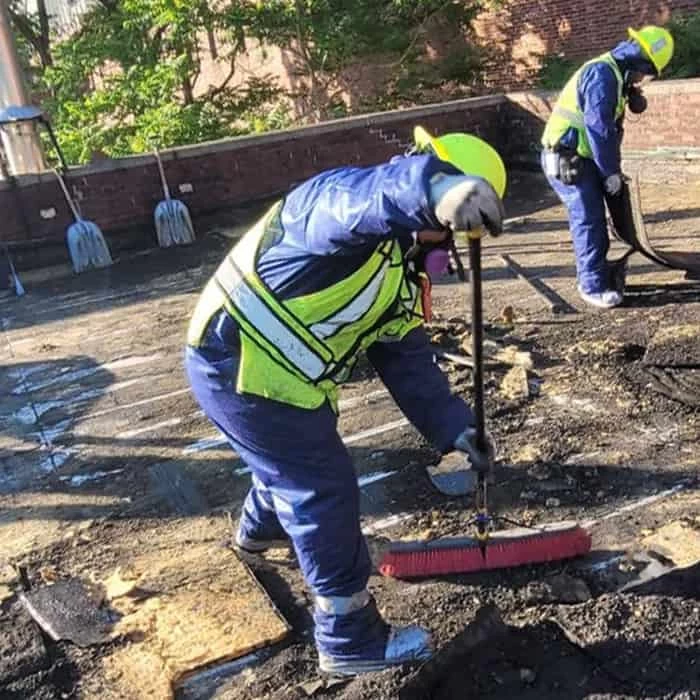
Once permits are in hand and utilities are confirmed disconnected, the physical work begins. Structural teardown, debris removal, and site grading are handled by our crew, with all demolition debris disposed of at licensed facilities and full documentation provided for permit closeout. By the time we’re done, you have a clean, graded site and the paperwork to prove every step was done right which matters when your builder is ready to break ground.
Full-Scope Demolition Built for the Hamptons Market
House demolition in Water Mill isn’t a single task it’s a sequence of regulated steps that have to happen in the right order, by licensed hands, with documentation at every stage. We handle the full sequence: pre-demolition asbestos survey, lead and mold assessment, licensed abatement if needed, structural demolition, debris hauling to NYS DEC-compliant facilities, and site preparation. Everything under one contract, with one team accountable from start to finish.
The type of project we see most often in Water Mill is the teardown-rebuild a developer or buyer who has purchased an older property on a premium lot and needs the existing structure cleared to make way for new construction. These projects require tight coordination with the rest of the construction team, and they require a demolition contractor who can work within an architect’s timeline and a builder’s schedule. We also handle estate demolitions, where an executor or attorney needs a property cleared as part of a settlement, and selective interior demolition for major renovations where specific rooms or structural elements need to come out before a rebuild begins.
For properties near Mecox Bay or the south-of-the-highway oceanfront corridor, we factor in the coastal and environmental sensitivity of the site debris containment, dust suppression, and runoff control are standard practice, not add-ons. If your project involves a structure that has sustained storm or flood damage, we can assess and mobilize accordingly. Financing is available, including 0% APR options, for estate executors and investors managing liquidity timing between acquisition and construction loan closing.
Do I need a permit to demolish a house in Water Mill, NY?
Yes a building permit is required for all demolition of structures within the Town of Southampton, which governs Water Mill. The permit is issued through Southampton Town’s Land Management, Building and Zoning Division, located at 116 Hampton Road in Southampton. The application process involves review under the New York State Uniform Fire Prevention and Building Code and the Town’s Zoning Ordinance.
One thing that catches people off guard in Water Mill: if your property is near the hamlet’s historic core particularly around the Mill Creek corridor, where the Water Mill Museum is listed on the National Register of Historic Places the application may be referred to the Landmarks and Historic Districts Board. That board has 45 days from receipt of a complete application to render its findings. If you’re not accounting for that window in your project timeline, it can create a delay that ripples through your entire construction schedule. A contractor who knows the Southampton Town process pulls the permit correctly the first time and builds that timeline into the plan from the start.
Does New York State require an asbestos survey before demolishing a house?
Yes, and this applies to every structure regardless of age or apparent condition. New York State law requires a pre-demolition asbestos survey before any building is torn down. The survey must be conducted by a licensed inspector, and if asbestos-containing materials are found, a licensed abatement contractor must remove them before demolition proceeds. Disturbing asbestos without proper abatement exposes the property owner not just the contractor to EPA enforcement action, stop-work orders, and significant fines.
In Water Mill specifically, this requirement is practically universal for teardown projects. The hamlet’s older housing stock original summer cottages, mid-century ranches, and farmhouses built between the 1940s and late 1970s was constructed during the peak era of asbestos use. It shows up in floor tiles, pipe insulation, roofing shingles, exterior siding panels, textured ceiling finishes, and boiler wrap. The good news is that when the same contractor handles both the survey and the demolition, there are no handoffs or scheduling gaps. The findings get incorporated into the project scope before work begins, and the project moves forward without interruption.
How long does house demolition take in Water Mill from start to finish?
The physical demolition of a residential structure in Water Mill typically takes one to three days depending on the size and complexity of the building. But the full timeline from first call to clean site is longer than that, because of the steps that have to happen before the machines move.
The pre-demolition hazmat survey needs to be completed first. If abatement is required, that adds time depending on the scope of what’s found. Utility disconnections gas, electric, water, sewer have to be formally coordinated and confirmed before work can begin. The Southampton Town permit process adds additional lead time, and if Landmarks Board review is triggered, that alone can add up to 45 days. For Water Mill projects, we generally advise clients to plan for a four-to-eight-week window from contract signing to project completion, accounting for all pre-work. One practical note: if your project needs to be completed before Memorial Day which is the preference in most teardown-rebuild situations, given how congested Route 27 becomes during summer and how visible construction activity is once seasonal residents arrive starting the process in late winter or early spring gives you the most scheduling flexibility.
What happens if asbestos is found during the demolition process?
If asbestos is discovered, work stops until it’s properly handled. Under New York State law, asbestos-containing materials must be removed by a licensed abatement contractor before demolition can continue. The abatement involves containing the affected area, removing the materials using approved methods, and disposing of them at a licensed hazardous waste facility with documentation at every step.
The reason this becomes a costly surprise on so many projects is that the asbestos survey and the demolition are handled by two different contractors who aren’t communicating well, or the survey wasn’t thorough enough to catch everything before the work started. When we handle both the survey and the demolition under one contract, any findings are identified upfront and priced into the scope before a machine ever touches the structure. There’s no mid-project renegotiation, no work stoppage while you scramble to find an abatement contractor, and no finger-pointing between separate companies. For a teardown-rebuild project in Water Mill where a builder is already scheduled and a construction loan may already be drawn that kind of cost and schedule certainty is worth a great deal.
How much does house demolition cost in Water Mill, NY?
Residential demolition in the Water Mill area typically ranges from $15,000 to $50,000 or more, depending on the size of the structure, the presence of hazardous materials, site access conditions, and the scope of site preparation required after the teardown. Asbestos or lead abatement, if needed, adds to that figure based on the quantity and type of materials found.
In Water Mill’s teardown-rebuild market, the demolition cost is usually a small fraction of the overall project budget. When you’re working with a lot worth $3–$5 million and a new construction budget to match, the demolition isn’t where most buyers are trying to save money they’re trying to avoid the risk of cost surprises mid-project. That’s why a thorough pre-demolition survey and a fixed-scope contract that accounts for known hazmat findings before work begins matter more than finding the lowest per-square-foot price. Financing is available through us, including 0% APR options, which can be useful for estate executors or investors managing the timing between acquisition and construction loan closing.
Can one contractor handle asbestos removal and house demolition in Water Mill?
Yes and in Water Mill, that’s the arrangement worth looking for. When the same contractor holds both the NYS Department of Labor Asbestos Contractor License and the general contractor licensing required for structural demolition in Suffolk County, they can legally handle every phase of the project in-house. That means the hazmat survey, the abatement, and the teardown all move under one contract, one schedule, and one point of accountability.
The alternative hiring a separate abatement contractor and a separate demolition contractor creates coordination gaps that are genuinely costly in this market. The abatement contractor finishes and leaves. The demolition contractor can’t start until they’ve confirmed clearance. If there’s a scheduling conflict or a dispute about scope, you’re the one managing it while your builder waits. We hold the full license stack to handle both phases legally and without subcontracting either one. For a Water Mill property owner or developer managing a project where the land value alone justifies precision, having one contractor responsible for the entire scope from survey to clean site is the cleaner, lower-risk path.