When Woodside's Pre-War Walls Need to Come Down Right
Most of Woodside was built between the 1910s and 1940s attached rowhouses, brick walk-ups, shared walls, and decades of materials that require more than just a wrecking crew. House demolition in Woodside means permits, asbestos surveys, and a contractor who actually knows how to work in a dense urban neighborhood without making your neighbor’s problem your problem.
I needed a professional consultation explanation of procedure for safe removal of Asbestos in my apartment complex. Without having an account yet, I was very impressed with the caring, knowledgeable and generous advice offered by Jessica, and will look forward to doing business in the future. Thank you so much! I feel much more informed about a sometimes scary endeavor. Peace. Nancy Silva Mineola, NY.
Mia Munoz
Used this company to clean up some water flood in my house. They were fast and easy to work with.very professional, Would recommend to anyone!
Nini Valle
Great company, had a flood and they responded quickly and efficiently. Billed my insurance company directly. I highly recommend this company!
joe colapietro, jr
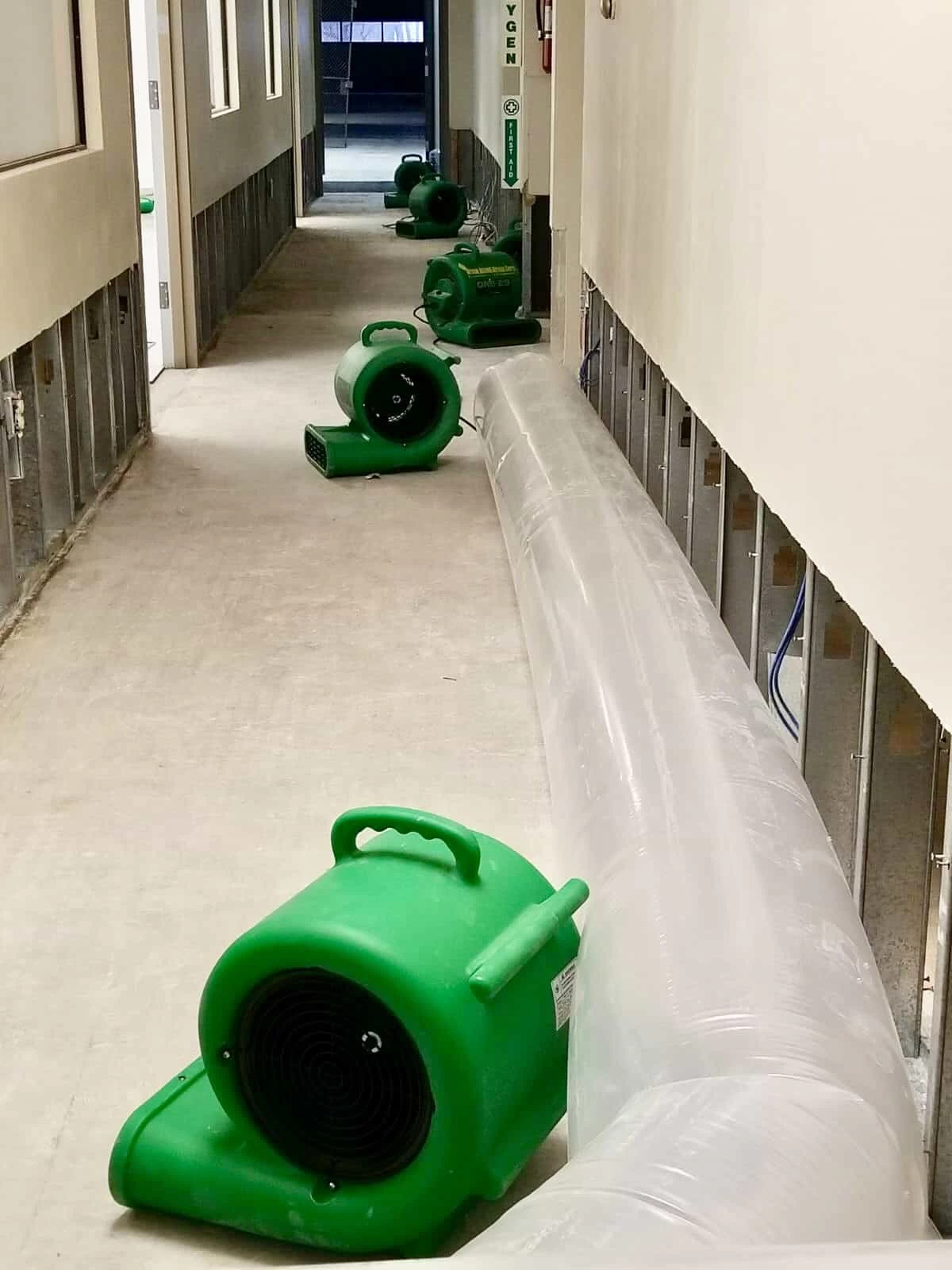
I had pipe freeze in my basement right before a snow storm and they made to within an hour to help start the clean up process. They we by our side throughout the entire process and even helped with the insurance company. They did such a great job with the cleanup, repair, remidiation, I contracted them to perform the repairs and finishes in the basement. They came with enough manpower and material to get the job done. Leo and Jessica were nothing but a pleasure to deal with!!
Cristian Arredondo c
I had some water damage in my home and Green Island was able to take care of my issue quickly and effectively. I am very pleased with the work they did. They responded quickly and were very professional.
Michael M
Outstanding service! From the office to the field crew everyone was friendly, helpful and responsive. I highly recommend Green Island Group.
When demolition is done right in Woodside, you walk away with a cleared, compliant site not a fine from the NYC Department of Buildings or a stop-work order taped to your fence. That’s the outcome that actually matters, and it only happens when the contractor knows what they’re doing before they show up.
Woodside’s housing stock is almost entirely pre-war. That means virtually every demolition project here will require a mandatory asbestos survey under NYS DOL Industrial Code Rule 56 before a single wall is touched. If your home was built before 1960 and most in Woodside were a lead paint inspection under NYC Local Law 31 is also required. These aren’t optional steps. Skipping them means fines, delays, and personal liability that lands on you, not the contractor.
The other reality of demolishing a home in Woodside is the density. You’re likely sharing a wall or sitting within feet of your neighbor’s property. One wrong move with the wrong crew can compromise an adjacent structure, trigger an insurance claim, and turn a straightforward teardown into a legal headache. When the job is handled correctly from the start hazmat survey, permits pulled, adjacent structures protected none of that happens. You get a clean site and a clear path forward.
We’ve been handling demolition and environmental work across New York State for over 12 years, with active coverage across all five NYC boroughs including Queens. That means the team working on your Woodside property has navigated the NYC DOB permit process, NYC DEP asbestos regulations, and HPD lead paint enforcement more times than most contractors have even applied for a permit.
What makes the difference in a neighborhood like Woodside isn’t just experience it’s the right licenses. We’re both a certified asbestos abatement contractor and a licensed demolition contractor. That combination matters in Woodside because you can’t legally demolish a pre-war home in Queens without first completing a certified asbestos survey. Having both under one roof means no waiting on a second company to finish before the demo crew can start.
From the rowhouses along 58th Street to the properties near the Woodside LIRR station corridor, we’ve seen the full range of what Queens demolition looks like. You’re not getting a crew that learned on the job at your expense.
The first step is always the site assessment. Before any permits are filed or equipment is scheduled, we evaluate the property structure type, shared walls, access points, and what hazardous materials may be present. In Woodside, where the majority of homes predate 1978 and many predate 1960, that assessment almost always includes a certified asbestos inspection and a lead paint evaluation. This isn’t extra paperwork it’s the law, and skipping it is what gets homeowners in trouble.
Once the hazmat picture is clear, we file permits through NYC DOB NOW. If asbestos or lead is found, abatement happens first fully documented, fully compliant with both NYS DOL and NYC DEP requirements. Utility disconnections are coordinated with Con Edison, National Grid, and NYC DEP Water before any physical work begins. For properties near active construction zones and with the Queens Boulevard revamp running through 2027, that applies to more Woodside addresses than usual we plan access routes and equipment staging accordingly.
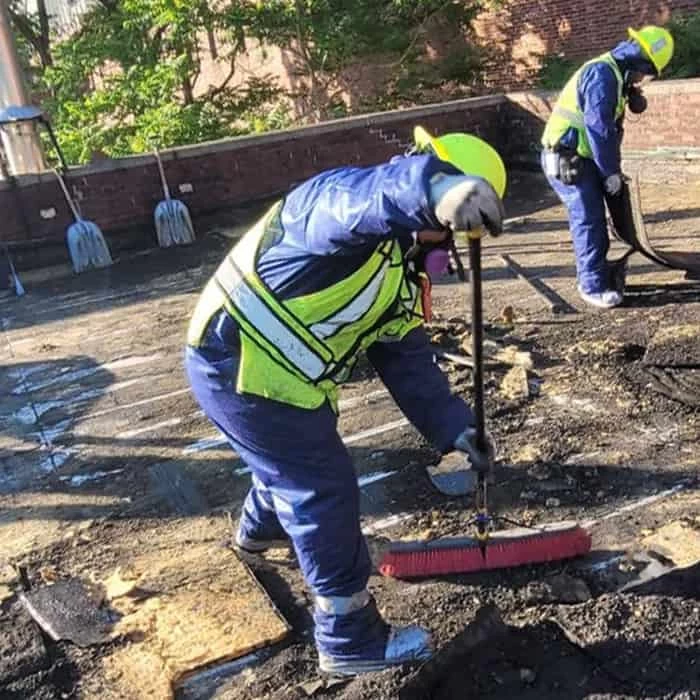
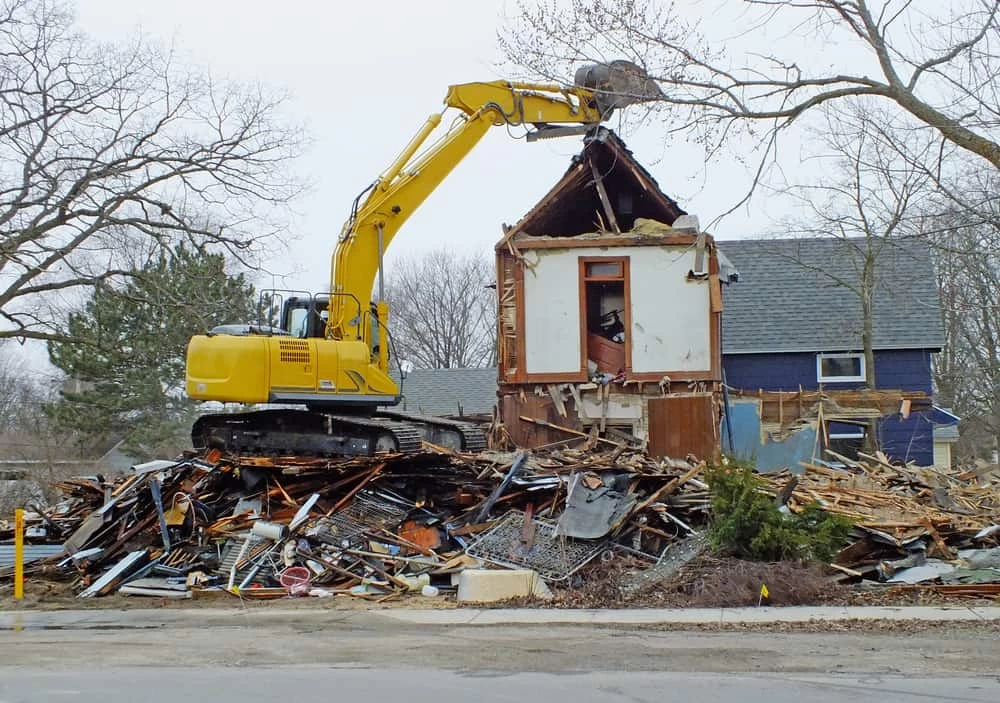
Then the structure comes down. In Woodside’s attached-housing environment, that means careful, controlled demolition with specific protections for adjacent properties built into the plan from the start. We remove debris, clear the site, and leave you with a clean, inspection-ready property not a pile of rubble and an open question about what happens next.
One Contractor Covers the Whole Job Survey Through Clearance
What you get with us isn’t just a demolition crew it’s a fully managed process that covers everything NYC requires before, during, and after a teardown. That includes the mandatory pre-demolition asbestos survey, any required abatement, permit filing with the NYC DOB, utility coordination, the physical demolition, and complete debris removal. If your project involves a post-fire or post-flood structure, we handle direct insurance billing you’re not stuck in the middle trying to coordinate between your carrier and your contractor.
For Woodside specifically, that full-service approach isn’t just convenient it’s necessary. The NYC regulatory environment layers multiple agencies on top of each other: DOB for permits, DEP for asbestos at the city level, NYS DOL for asbestos at the state level, and HPD for lead paint under Local Law 31. A contractor who only handles one piece of that puzzle leaves you responsible for coordinating the rest. That’s where projects stall, fines accumulate, and timelines collapse.
Whether you’re tearing down a single-family rowhouse, clearing a site for new construction, or dealing with a structure that’s been compromised by water or fire damage, we handle the scope in full. No subcontracting the hazmat to a separate firm, no gaps in the timeline, and no finger-pointing if something comes up mid-project.
Do I need a permit to demolish a house in Woodside, NY?
Yes every demolition in New York City requires a permit from the NYC Department of Buildings, filed through their DOB NOW system. There are no exceptions for small structures, partial teardowns, or interior-only work that involves structural elements. In Woodside, which falls under Queens Community Board 2, the permit process also requires documentation of your pre-demolition asbestos survey before the DOB will approve the application.
Performing demolition without a permit in NYC results in an immediate stop-work order and civil fines starting at $2,500 for a first offense and those fines escalate quickly for repeat or ongoing violations. Beyond the fines, unpermitted work creates title issues if you ever sell the property and can leave you personally liable for any damage to adjacent structures. We handle the entire permit process on your behalf, from application through final inspection sign-off.
Is an asbestos survey required before demolishing a home in Woodside?
Yes, and this is one of the most commonly misunderstood requirements for homeowners in Woodside. Under NYS DOL Industrial Code Rule 56, a certified asbestos survey is mandatory before any demolition or renovation that disturbs building materials regardless of the size of the project. In Woodside, where the overwhelming majority of residential structures were built between the 1910s and 1940s, asbestos-containing materials are extremely common in floor tiles, pipe insulation, roofing, and joint compound.
In addition to the state requirement, the NYC Department of Environmental Protection imposes its own asbestos regulations on top of what the state requires a dual compliance layer that applies specifically to New York City properties and doesn’t exist in Nassau or Suffolk County. If asbestos is found, it must be abated by a certified contractor before demolition can proceed. We’re both a certified asbestos abatement contractor and a licensed demolition contractor, so the survey, any required abatement, and the demolition itself are all handled without bringing in a second company.
How much does house demolition typically cost in Woodside, Queens?
For a standard residential demolition in New York City, costs generally range from $6,000 to $25,000 depending on the size of the structure, the scope of hazmat work required, and site-specific logistics. In Woodside, a few local factors tend to push costs toward the middle or upper end of that range. The pre-war housing stock here almost universally requires asbestos and lead paint assessments, which add cost but are legally non-negotiable. Dense urban site conditions limited equipment access, debris removal through active residential streets, adjacent structure protection also add to the overall scope compared to a suburban teardown on an open lot.
NYC DOB permit fees alone can reach several thousand dollars depending on the project. That said, getting an accurate number requires an actual site assessment square footage, structure type, shared walls, access constraints, and hazmat findings all affect the final scope. A quote that doesn’t account for permits, hazmat surveys, and debris removal is not a complete quote. We provide full, transparent estimates that cover every required step so you’re not hit with add-ons after the contract is signed.
Can a house attached to my neighbor's home be demolished safely in Woodside?
Yes, but it requires a contractor who specifically understands shared-wall and semi-detached construction which describes a large portion of Woodside’s residential housing stock. Rowhouses and semi-detached homes built in the 1910s through 1940s share party walls that are structurally connected to the adjacent property. Demolishing one side without a plan for the other means exposing your neighbor’s wall to the elements, potentially destabilizing their structure, and opening yourself up to property damage claims.
The NYC DOB requires specific adjacent structure protection protocols for demolition projects in attached-building situations. That typically includes structural shoring, weatherproofing the exposed party wall, and in some cases a pre-demolition structural assessment of the neighboring property. These aren’t optional precautions they’re code requirements. We’ve completed demolition projects across all five boroughs in exactly these conditions. The process is manageable when it’s planned correctly from the start, and it’s a disaster when it isn’t.
What happens if a storm or flood damages my Woodside property and it needs to come down?
Emergency demolition after storm or flood damage follows the same permit and hazmat requirements as any other demolition in NYC but the timeline is compressed and the stakes are higher. Woodside is subject to flooding when heavy rain falls for extended periods, and water damage that compromises structural integrity can create an immediate safety hazard that can’t wait for a standard permit timeline. In those situations, the NYC DOB does have an emergency permit process for structures that pose an imminent danger, but it still requires documentation and a licensed contractor to execute the work.
We’re available 24 hours a day, seven days a week, and handle direct billing to insurance carriers for post-disaster demolition. That means if your home was damaged by a storm, a fire, or a flood, you’re not coordinating between your insurance company and your contractor while also dealing with temporary housing and everything else that comes with a major property loss. We respond quickly, document everything the insurance company needs, and move the project forward without putting that burden on you.
How long does a full house demolition take in Woodside, NY?
The physical demolition of a standard residential structure typically takes one to five days once the site is ready. But in Woodside and in New York City generally the pre-demolition process is where most of the timeline lives. The asbestos survey needs to be completed and documented before permits can be filed. If asbestos or lead is found and abatement is required, that adds time before demolition can begin. Permit processing through NYC DOB NOW varies, but plan for at least a few weeks from application to approval under normal circumstances.
Utility disconnections gas through National Grid, electric through Con Edison, water through NYC DEP also need to be formally completed before work starts, and coordinating those disconnections adds scheduling time. Projects near the Queens Boulevard construction corridor may face additional access constraints given the ongoing $23.75 million roadway revamp running through 2027. We manage the full timeline from survey through site clearance so nothing falls through the cracks.