I needed a professional consultation explanation of procedure for safe removal of Asbestos in my apartment complex. Without having an account yet, I was very impressed with the caring, knowledgeable and generous advice offered by Jessica, and will look forward to doing business in the future. Thank you so much! I feel much more informed about a sometimes scary endeavor. Peace. Nancy Silva Mineola, NY.
Mia Munoz
Used this company to clean up some water flood in my house. They were fast and easy to work with.very professional, Would recommend to anyone!
Nini Valle
Great company, had a flood and they responded quickly and efficiently. Billed my insurance company directly. I highly recommend this company!
joe colapietro, jr
I had pipe freeze in my basement right before a snow storm and they made to within an hour to help start the clean up process. They we by our side throughout the entire process and even helped with the insurance company. They did such a great job with the cleanup, repair, remidiation, I contracted them to perform the repairs and finishes in the basement. They came with enough manpower and material to get the job done. Leo and Jessica were nothing but a pleasure to deal with!!
Cristian Arredondo c
I had some water damage in my home and Green Island was able to take care of my issue quickly and effectively. I am very pleased with the work they did. They responded quickly and were very professional.
Michael M
Outstanding service! From the office to the field crew everyone was friendly, helpful and responsive. I highly recommend Green Island Group.
Most remodels look great on day one. The question is what they look like two winters later in an Amityville home that gets hit with bay humidity, salt air, and the occasional nor’easter. Material choices that work fine in an inland Nassau County kitchen can peel, warp, and fail fast along the South Shore. Getting the right contractor means getting someone who knows that before they spec your cabinets not after you call them back with a problem.
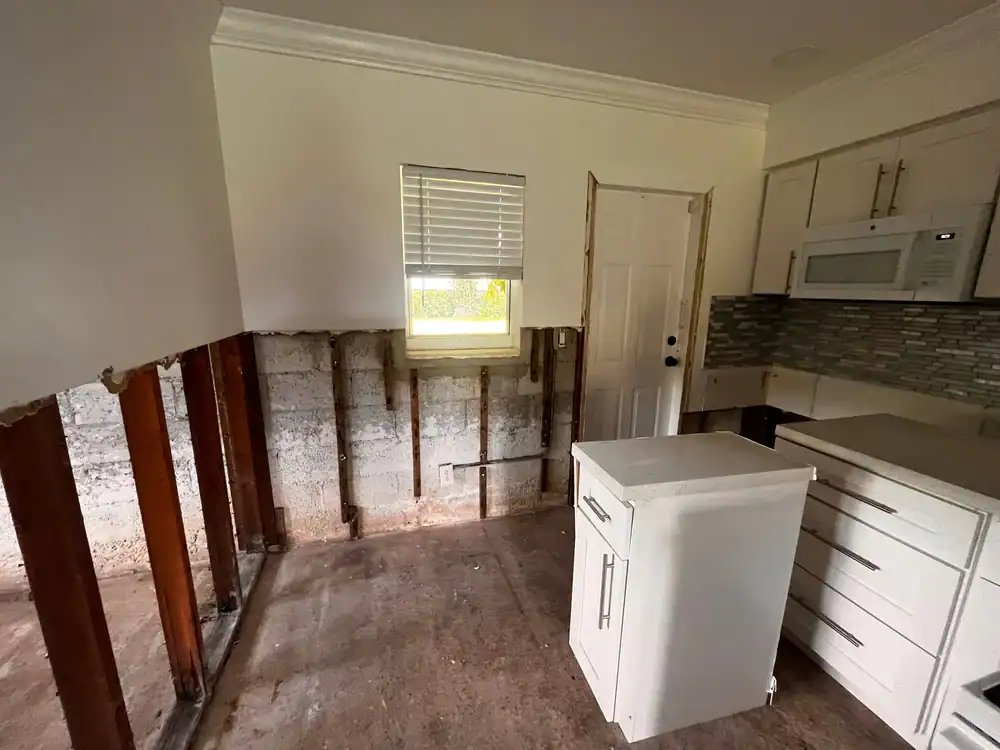
Beyond durability, a lot of Amityville homes were built in the 1950s, 60s, and 70s. That means when the demo starts, there’s a real chance something turns up behind the walls mold from years of coastal moisture, soft subfloor from an old leak, or asbestos in the floor tile adhesive. Most remodeling contractors stop the project when that happens. We don’t, because we hold the environmental remediation and abatement licenses to handle it in-house, on the same timeline, without bringing in a separate crew.
The end result is a kitchen that’s been assessed from the structure out not just dressed up on the surface. You get new cabinets, countertops, and layout that actually fits how you cook and gather, built on a foundation that’s been properly evaluated and, if needed, remediated. That’s a different kind of remodel than what most contractors in this area are offering.
12 Years, 5,000 Projects, Built for South Shore Realities
We’ve been operating out of Bohemia, NY since 2012 about 18 miles east of Amityville along the same South Shore corridor. We’ve completed over 5,000 projects across New York State, and we hold a Home Improvement Contractor license verified through the Nassau County board, plus five additional licenses covering asbestos abatement, environmental remediation, and restoration work. That’s not a common combination for a kitchen remodeling contractor, and it matters more in Amityville than almost anywhere else on Long Island.
We’re also IICRC certified and hold M/WBE certification through New York State a credential that requires formal government vetting, not just a self-applied label. We carry full workers’ compensation insurance, which protects you as the homeowner if anything goes sideways on the job. For residents in Amityville, a community that runs its own building department and its own police force, working with a contractor whose credentials can actually be looked up and verified isn’t a bonus it’s the baseline.
From First Visit to Final Walkthrough No Guesswork
It starts with a home visit. We come out to your Amityville home, walk through your existing kitchen, ask how you actually use the space, and listen to what’s been driving you crazy about the current layout. From there, we build a 3D design model a photorealistic rendering of your finished kitchen so you can see the cabinet layout, countertop material, and overall flow before any demolition begins. You can request changes, adjust the island size, swap materials, reconfigure the layout. All of it happens before a single cabinet comes down.
Once the design is locked, we handle the permit filing directly with the Village of Amityville Building Department. This matters because Amityville is an incorporated village with its own permitting process separate from the Town of Babylon’s building division and contractors who aren’t familiar with that layer can cause real delays. We coordinate the application, plans submission, and inspector scheduling so you don’t have to navigate any of it yourself.
Then comes demolition, construction, and installation cabinets, countertops, flooring, lighting, plumbing and electrical coordination, all of it managed by our team. If something turns up during demo moisture damage, mold, or materials that require abatement it gets handled in-house without stopping the project. The final step is a walkthrough with you to confirm everything is right before the job is closed out. One company, one point of contact, start to finish.
Kitchen Cabinet Renovation and Remodeling Amityville
Every Scope of Kitchen Work, Under One Roof
We handle kitchen remodeling at every scale from a focused cabinet renovation or countertop replacement to a full gut-and-rebuild that changes the layout entirely. If your Amityville kitchen just needs updated cabinetry and new countertops, that’s a project we manage. If you want to open up the floor plan, relocate the sink, add an island, and redo the lighting, that’s also a project. Either way, it’s managed by our licensed team with the same process.
For homeowners in Amityville’s canal-adjacent neighborhoods south of Montauk Highway areas that took on water during Superstorm Sandy and have dealt with coastal moisture ever since the remodel often involves more than aesthetics. Our restoration background means we can assess what’s happening structurally before new finishes go in. If the subfloor under your tile is soft, if there’s mold behind the cabinet base, if the wall behind the sink has been quietly absorbing moisture for years, that gets addressed as part of the project, not discovered afterward as a separate bill.
Material selection is handled with the South Shore environment in mind cabinet finishes that resist humidity, countertop sealants that hold up through Long Island’s seasonal swings, flooring that can handle what a coastal kitchen actually puts it through. The goal is a kitchen that looks the way you want it to and stays that way.
Do I need a permit for a kitchen remodel in Amityville, NY?
In most cases, yes if your kitchen remodel involves moving or adding plumbing, upgrading electrical, relocating gas lines, or making any structural changes, you’ll need a permit. Because Amityville is an incorporated village, that permit comes from the Village of Amityville Building Department, not just the Town of Babylon’s building division. That’s a distinction a lot of contractors miss, and it can cause real problems wrong jurisdiction, wrong forms, delayed inspections, or work that doesn’t pass review at the end.
We handle the entire permit process in-house. We file the application, submit the plans, and coordinate directly with the Village of Amityville Building Department through every inspection. You don’t have to make a single call to the building department yourself. For homeowners who’ve tried to navigate that process on their own before, this alone tends to be one of the biggest reasons they choose to work with a contractor who actually knows the local permitting structure.
How much does a kitchen remodel cost in Amityville, NY?
The honest answer is that it depends on the scope. A focused kitchen makeover new cabinet fronts, updated countertops, fresh hardware and lighting can come in around $10,000 to $25,000. A full kitchen renovation that changes the layout, relocates plumbing, adds an island, and replaces everything from the subfloor up can run $50,000 to $100,000 or more. The average kitchen remodel in New York lands around $27,000, but that number doesn’t mean much without knowing what your specific kitchen actually needs.
For Amityville homes built in the 1950s through 1970s, there’s also the question of what’s behind the walls. If demo reveals mold, moisture damage, or materials that require abatement, that affects the total cost. The advantage of working with us is that those discoveries don’t become a separate, surprise engagement they’re handled within the same project scope. We provide a written, itemized estimate upfront so you know what you’re looking at before any work begins.
What if mold or asbestos is found during my kitchen renovation?
This is one of the most common concerns for homeowners in Amityville’s older housing stock and it’s a legitimate one. Homes built before 1980 frequently contain asbestos in floor tile adhesives, ceiling texture, pipe insulation, and joint compound. Mold is also common in Amityville kitchens, particularly in homes that experienced water intrusion during Superstorm Sandy or that have dealt with years of coastal humidity behind the cabinets and under the sink.
Most kitchen remodeling contractors don’t hold the licenses to handle these materials. When they find something, they stop the project and tell you to bring in a separate remediation company which means delays, additional contracts, and a gap in accountability between two different crews. We hold asbestos abatement licensing and full environmental remediation credentials, so when something turns up during demo, it gets addressed in-house without stopping the clock. The project continues on schedule, and you’re not left managing two separate contractors trying to coordinate around each other.
How long does a kitchen remodel typically take in Amityville?
A straightforward kitchen cabinet renovation or countertop replacement no layout changes, no plumbing relocation can typically be completed in one to three weeks once materials are on-site. A full kitchen renovation that involves structural changes, new plumbing runs, electrical upgrades, and a reconfigured layout generally runs four to eight weeks, depending on the scope and permit timeline.
In Amityville, the Village of Amityville Building Department’s permit review and inspection scheduling is part of that timeline. We’re familiar with the process and can anticipate those windows and schedule around them. For homeowners planning around the holiday season which is a real consideration in Amityville where kitchen-centered family gatherings are a big part of the calendar starting the conversation in late summer or early fall gives you the best chance of having a finished kitchen before the holidays. We walk through realistic timelines during the initial consultation so you’re not guessing.
Is a kitchen remodel worth it if I'm thinking about selling my Amityville home?
The data makes a strong case. Minor kitchen renovations are delivering up to 113% ROI in 2025, meaning some homeowners recoup more than they spend at resale. Fifty-four percent of realtors recommend upgrading the kitchen before listing a home for sale. In Amityville, where median home values are sitting around $631,000, the kitchen is one of the most direct levers you have for improving what a buyer sees and what they’re willing to offer.
That said, the return depends on doing it right. A kitchen that looks updated but has unpermitted work, soft subfloor, or materials that don’t hold up under inspection is a liability, not an asset. A properly permitted, structurally sound kitchen remodel with documented work from a licensed contractor gives buyers confidence and gives you negotiating room. If you’re thinking about listing in the next one to three years, a kitchen renovation is worth having a real conversation about sooner rather than later.
How do I know if a kitchen remodeling contractor in Amityville is actually licensed and insured?
You ask for the license numbers and verify them. In New York, Home Improvement Contractor licenses are issued at the county level you can check active status through the Nassau County Consumer Affairs licensing database. Workers’ compensation insurance should come with a current certificate, not just a verbal confirmation. If a contractor can’t hand you verifiable license numbers and a current insurance certificate before work starts, that’s a problem especially in Amityville, where the Village Building Department requires licensed contractors for permitted work.
We hold a Home Improvement Contractor license verified through the Nassau County board, plus five additional licenses including asbestos abatement and environmental remediation credentials. We carry workers’ compensation insurance, which matters because if an uninsured worker is injured in your home, you can be held personally liable as the property owner. Our M/WBE certification is issued directly by New York State a formal government vetting process. Every credential we hold can be looked up. That’s the standard worth holding any contractor to before you sign anything.