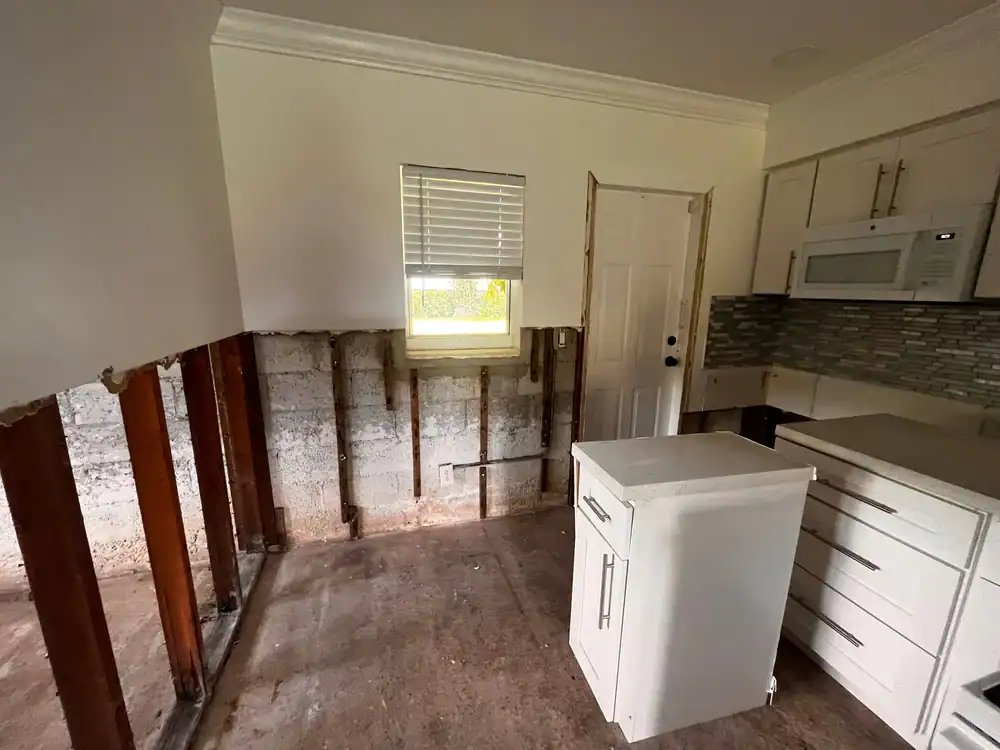
Coastal Kitchens Built to Last on the Barrier Island
Salt air, flood zones, and a single bridge between you and the mainland — your kitchen remodel needs a contractor who already knows what that means before stepping through your door. We’ve worked on dozens of homes in Atlantic Beach, and we understand the specific demands of renovating on the barrier island. The materials that hold up in inland Nassau County don’t perform the same way here. The permitting process is different. The timeline is different. When you call us, you’re not explaining the barrier island to someone who’s never worked here before.
I needed a professional consultation explanation of procedure for safe removal of Asbestos in my apartment complex. Without having an account yet, I was very impressed with the caring, knowledgeable and generous advice offered by Jessica, and will look forward to doing business in the future. Thank you so much! I feel much more informed about a sometimes scary endeavor. Peace. Nancy Silva Mineola, NY.
Mia Munoz
Used this company to clean up some water flood in my house. They were fast and easy to work with.very professional, Would recommend to anyone!
Nini Valle
Great company, had a flood and they responded quickly and efficiently. Billed my insurance company directly. I highly recommend this company!
joe colapietro, jr
I had pipe freeze in my basement right before a snow storm and they made to within an hour to help start the clean up process. They we by our side throughout the entire process and even helped with the insurance company. They did such a great job with the cleanup, repair, remidiation, I contracted them to perform the repairs and finishes in the basement. They came with enough manpower and material to get the job done. Leo and Jessica were nothing but a pleasure to deal with!!
Cristian Arredondo c
I had some water damage in my home and Green Island was able to take care of my issue quickly and effectively. I am very pleased with the work they did. They responded quickly and were very professional.
Michael M
Outstanding service! From the office to the field crew everyone was friendly, helpful and responsive. I highly recommend Green Island Group.
What Changes When the Kitchen Finally Gets Done Right
A kitchen remodel in Atlantic Beach isn’t just about aesthetics. It’s about fixing what the environment has been doing to your home for years. Salt air accelerates corrosion on hardware, warps cabinet boxes that weren’t built for a marine climate, and quietly degrades finishes that would hold up fine in an inland home. When the materials are chosen correctly for where you actually live — right between Reynolds Channel and the Atlantic Ocean — you stop replacing things every few years and start enjoying a kitchen that holds up.
For homeowners who rebuilt after Sandy, there’s another layer to this. A lot of those kitchens were done fast, under insurance timelines, with the goal of getting the house livable again. That was the right call at the time. But if it’s been 10 or 12 years and the kitchen still doesn’t feel like yours — the layout is off, the finishes aren’t what you would have chosen, the cabinetry is starting to show its age — this is the renovation you were waiting to do. Not a repair. A real kitchen.
The result is a space that matches the quality of the home you’ve invested in, functions the way you actually cook and entertain, and doesn’t need to be touched again for decades. That’s what a well-executed kitchen remodel looks like in Atlantic Beach.
One Team, One Contract, Zero Guesswork — Built for Barrier Island Work
We manage the entire kitchen remodel under one roof — design, permitting, demolition, construction, and final delivery. You’re not coordinating between a cabinet company, a separate countertop installer, and an electrician who’s never worked on the barrier island before. One team handles it, one project manager owns it, and you have one person to call if anything needs to be addressed.
Working in Atlantic Beach means understanding the permit landscape — and in this village specifically, that includes flood zone compliance requirements that don’t apply to inland towns. Atlantic Beach sits entirely within a FEMA Special Flood Hazard Area, and any renovation touching plumbing, flooring, or lower-level spaces has to be designed with that in mind. That’s not something you want to explain to a contractor after the fact. We’ve pulled permits in Atlantic Beach enough times to know exactly what the Village requires before we even walk through your door.
We hold a Nassau County Home Improvement Contractor License, carry full general liability and workers’ compensation insurance, and provide a Certificate of Insurance before any contract is signed.
From First Conversation to Finished Kitchen — Here's the Sequence
It starts with a consultation where the focus is on your kitchen — how you use it, what’s not working, what you want to change, and what the space needs to do better. For homes in Atlantic Beach, that conversation also includes material selection for a coastal environment. The finishes, hardware, cabinet construction, and countertop materials that perform well in a salt air climate are not always the same ones that look great in a showroom catalog. That conversation happens early, not after materials have already been ordered.
From there, we handle design development and the full permitting process. In Atlantic Beach, that means coordinating with the Village and, where required, the Town of Hempstead — and accounting for any flood zone compliance requirements before a single wall is opened. Permits are pulled correctly the first time. Unpermitted work in a flood zone community creates real problems at inspection, at resale, and if the home ever floods again.
Once permits are in hand, the build begins on a schedule that’s been planned around your life — whether your Atlantic Beach home is your year-round residence or a seasonal property you want ready before Memorial Day. The project is managed start to finish, inspections are scheduled, and you don’t have to track down subcontractors to find out what’s happening. When the job is done, it’s done completely — not “mostly done” with a punch list that never gets finished.
Every Detail Accounted For, From Layout to Last Finish
A full kitchen remodel with us covers the complete scope — layout redesign, custom or semi-custom cabinetry, countertop selection and installation, backsplash, lighting, plumbing rough-in and finish, electrical upgrades, flooring, and all associated permits and inspections. Nothing is handed off to a third party you’ve never met. The team that starts your project finishes it.
For Atlantic Beach homes specifically, the material conversation matters more than it does in most places. Cabinet hardware in a salt air environment needs marine-grade or stainless finishes to resist corrosion. Wood cabinetry needs proper sealing and ventilation consideration. Countertop materials are evaluated not just for appearance but for moisture resistance and long-term performance in a coastal home. These aren’t upsells — they’re the difference between a kitchen that looks the same in year eight and one that starts showing wear in year three.
If your home was built before 1978, federal EPA Lead-Safe Work Practices apply to any renovation disturbing existing surfaces. We are EPA Lead-Safe Certified, which means the work is handled correctly and your family isn’t exposed to hazards during the process. For a village where a significant portion of the housing stock predates 1978, this matters — and it’s worth confirming with any contractor you’re considering before work begins.
Do I need a permit for a kitchen remodel in Atlantic Beach, NY?
Yes, and in Atlantic Beach the permit requirements go a layer deeper than most Nassau County towns. Any kitchen renovation involving plumbing relocation, electrical upgrades, structural changes, or new circuits requires a building permit from the Village of Atlantic Beach — and depending on the scope, potentially the Town of Hempstead as well. Nassau County also requires permits for adding or relocating water lines, drain pipes, and related systems.
What makes Atlantic Beach different from inland Nassau County communities is the flood zone layer. The entire village sits within a FEMA Special Flood Hazard Area, which means any work affecting lower-level spaces or plumbing may trigger additional compliance requirements — including the use of flood-resistant materials below the Base Flood Elevation and, in some cases, an updated elevation certificate. Skipping this step doesn’t just create a permit problem. It can void your flood insurance coverage and create significant liability if the home sustains water damage down the line. We handle the full permitting process on your behalf and know exactly what’s required for barrier island work.
How much does a kitchen remodel typically cost in Atlantic Beach?
Kitchen remodel costs in Atlantic Beach generally run higher than Nassau County averages, and there are a few reasons for that. First, the homes themselves are in the $1.35 million to $2.5 million range — a kitchen renovation needs to match the property, which means the design, materials, and finish quality have to be at a corresponding level. Second, coastal material requirements add real cost. Marine-grade hardware, properly sealed cabinetry, and moisture-resistant countertop materials cost more than their standard counterparts, but they last significantly longer in a salt air environment.
For a mid-range full kitchen remodel in Atlantic Beach — new cabinetry, countertops, appliances, lighting, and plumbing fixtures with layout changes — you’re typically looking at $60,000 to $100,000 depending on scope and material selections. High-end custom projects with premium appliances, custom cabinetry, and full layout redesigns can run $120,000 and above. What you’re investing in is a kitchen that holds up in this specific environment, passes inspection in a flood zone municipality, and adds real value to a home that’s already worth well over a million dollars.
What kitchen materials hold up best in a coastal home like mine?
This is one of the most important questions to ask before a single material gets specified, and it’s one that a contractor who hasn’t worked on the barrier island may not have a ready answer to. Salt air is corrosive. It attacks metal hardware, accelerates finish deterioration on cabinetry, and shortens the lifespan of materials that would perform fine in an inland home. The difference between a kitchen that looks great at year ten and one that looks tired at year four often comes down to what was specified at the start.
For hardware, marine-grade stainless or solid brass with a protective finish significantly outperforms standard chrome or nickel in a salt air environment. For cabinetry, thermally fused laminate and properly sealed painted finishes tend to hold up better than raw wood veneer in high-humidity coastal conditions. For countertops, quartz is generally the strongest performer — it’s non-porous, doesn’t require sealing, and handles moisture and humidity without degrading the way some natural stones can. These aren’t the only options, but they’re the starting point for a material conversation that’s grounded in where you actually live.
How long does a kitchen remodel take from start to finish in Atlantic Beach?
For a full kitchen remodel in Atlantic Beach — meaning a complete gut and redesign, not a cosmetic refresh — you’re realistically looking at 10 to 16 weeks from signed contract to finished kitchen. That timeline includes design finalization, material lead times, permit processing through the Village of Atlantic Beach and any applicable Town of Hempstead requirements, and the construction phase itself.
The permit process in a flood zone municipality adds time that a straightforward inland project wouldn’t have. It’s not unusual for flood zone compliance review to add two to four weeks to the permitting phase depending on the scope of work. Material lead times for custom cabinetry — which is what most Atlantic Beach homes require — typically run six to eight weeks. Planning around this is especially important if you’re working toward a seasonal deadline, like having the kitchen finished before a summer stay. We build the full timeline out at the start of the project so you know what’s happening and when, and the schedule is built around your calendar — not just the construction sequence.
My Atlantic Beach kitchen was rebuilt after Sandy — is it worth remodeling again?
For a lot of Atlantic Beach homeowners, the honest answer is yes — and the reasoning is straightforward. Kitchens that were rebuilt in the 2013 to 2016 post-Sandy period are now 10 to 13 years old. Many of them were done under insurance timelines, which meant speed was prioritized over design quality and material selection. The goal was to get the house functional again, not to get the kitchen exactly right. A decade-plus of salt air exposure on top of a rushed installation means a lot of those kitchens are showing wear faster than they should be.
More importantly, your situation has probably changed since then. You know how you actually use the space now. You know what the layout gets wrong. You know what you’d do differently. A second remodel doesn’t mean starting over from scratch — it means taking what was put back together quickly and turning it into the kitchen you actually wanted. The walls are going to need to come out anyway at some point. Doing it intentionally, with a real design process and the right materials, is a better outcome than waiting for another forcing event.
How do I find a reliable kitchen remodel contractor who actually knows Atlantic Beach?
In a village of roughly 1,700 people, word of mouth travels fast. The community Facebook group, the beach clubs, the neighbors you see regularly — contractor recommendations move through Atlantic Beach quickly, and so do bad experiences. That’s actually useful information when you’re vetting someone. Ask specifically whether they’ve worked on the Long Beach Barrier Island before, not just in Nassau County generally. Barrier island work involves logistics, permit requirements, and material considerations that don’t apply to inland projects, and a contractor who hasn’t done it before will find that out on your job.
Beyond local references, the basics matter: a Nassau County Home Improvement Contractor License issued by the Nassau County Department of Consumer Affairs, active general liability and workers’ compensation insurance with a Certificate of Insurance available before signing, and EPA Lead-Safe Certification if your home was built before 1978. A contractor who hesitates on any of those is a contractor worth reconsidering. We check all of those boxes and will provide documentation before any agreement is in place — because in a community like Atlantic Beach, where your neighbors will ask how it went, the work and the process both have to hold up.