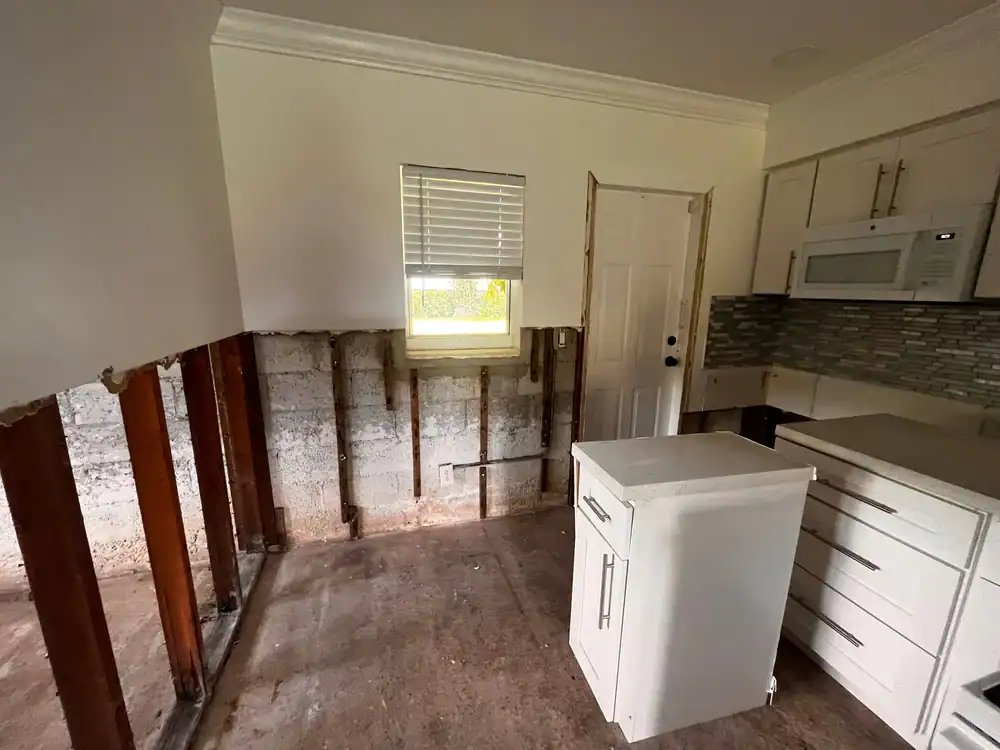
Your 1960s Kitchen Deserves More Than a Cosmetic Fix
Most Centereach homes were built in an era when kitchens were an afterthought. We handle the full remodel and whatever the demo reveals behind those original walls.
I needed a professional consultation explanation of procedure for safe removal of Asbestos in my apartment complex. Without having an account yet, I was very impressed with the caring, knowledgeable and generous advice offered by Jessica, and will look forward to doing business in the future. Thank you so much! I feel much more informed about a sometimes scary endeavor. Peace. Nancy Silva Mineola, NY.
Mia Munoz
Used this company to clean up some water flood in my house. They were fast and easy to work with.very professional, Would recommend to anyone!
Nini Valle
Great company, had a flood and they responded quickly and efficiently. Billed my insurance company directly. I highly recommend this company!
joe colapietro, jr
I had pipe freeze in my basement right before a snow storm and they made to within an hour to help start the clean up process. They we by our side throughout the entire process and even helped with the insurance company. They did such a great job with the cleanup, repair, remidiation, I contracted them to perform the repairs and finishes in the basement. They came with enough manpower and material to get the job done. Leo and Jessica were nothing but a pleasure to deal with!!
Cristian Arredondo c
I had some water damage in my home and Green Island was able to take care of my issue quickly and effectively. I am very pleased with the work they did. They responded quickly and were very professional.
Michael M
Outstanding service! From the office to the field crew everyone was friendly, helpful and responsive. I highly recommend Green Island Group.
What Changes When Your Kitchen Finally Works for You
When your kitchen actually functions the way your household runs, everything shifts. Mornings move faster. Cooking feels less like a chore. And the space that used to frustrate you becomes the one everyone gravitates toward whether it’s a Tuesday night dinner or a holiday gathering with the whole family packed in.
For Centereach homeowners specifically, a kitchen remodel is also a financial decision that deserves to be taken seriously. Median home values here have climbed to around $557,000–$600,000, and in a Suffolk County market where homes are moving in under 30 days, the condition of your kitchen directly affects what buyers are willing to pay. Minor kitchen renovations are delivering up to 113% ROI in 2025.
What most remodeling companies won’t tell you upfront is that homes built in the 1960s which describes the majority of Centereach’s housing stock regularly hide things behind original cabinetry. Mold from decades of kitchen moisture. Asbestos in floor tiles or pipe insulation. Outdated wiring that wasn’t built for modern appliances. A contractor who isn’t equipped to handle those discoveries will stop your project cold. Our background in environmental remediation means those discoveries get handled in-house, on schedule, without blowing up your budget or bringing in a second crew.
Based in Bohemia, Built for Centereach Homes Like Yours
We’re based in Bohemia right here in Suffolk County, about 15 miles down Nicolls Road from Centereach. Since 2012, we’ve completed over 5,000 projects across New York State, with a team that has spent more than a decade working inside Centereach homes of the exact vintage and construction type that fill neighborhoods like Dawn Estates and Eastwood Village.
What sets us apart from the kitchen design shops and general remodeling contractors you’ll find along Middle Country Road isn’t just experience it’s licensing. We hold a Home Improvement Contractor license, five additional licenses, IICRC certification, and state-issued asbestos abatement credentials. That combination matters when your Centereach home was built before 1980 and you have no idea what’s behind the walls.
We’re also a certified M/WBE contractor through New York State not a self-declared label, but a formal government designation that requires documented review and ongoing compliance. It’s a reflection of who we are, not just how we market ourselves.
It starts with a home visit. Someone from our team comes to your Centereach home, walks through your current kitchen, and actually listens how you cook, how your family uses the space, what drives you crazy about the layout, and what you want to walk into every morning. That conversation shapes everything that follows.
From there, we move into 3D design. Before a single cabinet is ordered or a wall comes down, you see a photorealistic rendering of your finished kitchen. You can adjust the layout, swap materials, and approve every detail. No surprises, no “that’s not what I pictured.” What you approve is what gets built.
Once the design is locked, we handle the permit application directly with the Town of Brookhaven Building Division in Farmingville because Centereach falls under Brookhaven’s jurisdiction, and any kitchen work involving structural changes, plumbing, or electrical requires a permit and a final Certificate of Occupancy. Most homeowners don’t want to deal with that process, and they shouldn’t have to. Demolition, construction, any remediation work that comes up mid-project, inspections, and the final CO walkthrough all run through one team, one point of contact, start to finish.
Kitchen Redesign and Cabinet Renovation Centereach
Everything Included Even What Other Contractors Walk Away From
A full kitchen remodel with us covers the complete scope: layout redesign, custom cabinetry, countertop replacement, flooring, lighting, plumbing and electrical coordination, and all permitting through the Town of Brookhaven. Whether you’re opening up a closed-off galley kitchen in a 1950s cape in Centereach, reconfiguring a ranch-style layout to get more counter space, or doing a full gut renovation on a colonial in one of Centereach’s older subdivisions the process is the same. Everything is handled under one roof.
What sets this apart from a kitchen showroom or a design-only contractor is what happens when the demo reveals something unexpected. In pre-1980 homes which covers most of Centereach asbestos in floor tiles, lead paint on original surfaces, or mold behind a wall that’s been accumulating moisture for 40 years are real possibilities, not hypotheticals. We’re licensed to handle all of it. The project doesn’t stop. The timeline doesn’t reset. You don’t get handed off to a remediation subcontractor you’ve never met.
For homeowners thinking about listing their Centereach home, the kitchen is consistently the room that moves the needle most with buyers. For families who are staying put, it’s about building a space that actually fits your life the school-morning rush, the weeknight dinners, the holidays when your home becomes the gathering place. Either way, the investment is real, and it deserves a contractor who can deliver it without shortcuts.
Do I need a permit for a kitchen remodel in Centereach, NY?
Yes, in most cases. Because Centereach is a hamlet within the Town of Brookhaven, all permitting falls under the Brookhaven Building Division, located at One Independence Hill in Farmingville. Any kitchen remodel that involves moving plumbing, altering electrical systems, removing walls, or changing the layout of the space requires a building permit and a final Certificate of Occupancy before the work is considered complete.
This matters more than most homeowners realize not just for the project itself, but for the future. Open permits or unpermitted work can complicate a home sale, delay a closing, or create liability issues down the road. We manage the entire permit process in-house, from application through final inspection, so you never have to navigate the Brookhaven Building Division on your own. The permit is pulled correctly the first time, and the CO is obtained before the job is closed out.
How much does a kitchen remodel typically cost in Centereach, NY?
For a full kitchen remodel in Centereach, you’re realistically looking at somewhere between $25,000 and $75,000 depending on the scope of work, the materials selected, and what the demo reveals. The New York State average for a typical kitchen renovation runs around $27,765, but that number can shift quickly when you’re working in a Centereach home built in the 1960s which describes most of the housing stock here.
Older Centereach homes often require electrical panel upgrades to handle modern kitchen loads, plumbing updates to replace corroded galvanized lines, or remediation work if mold or asbestos-containing materials are discovered during demolition. Those aren’t surprises that should blindside you they’re predictable possibilities in pre-1980 construction, and a contractor who is upfront about them from the start will give you a more accurate picture of total project cost than one who quotes low and adjusts later. We provide itemized estimates after a home visit, not ballpark figures over the phone.
What happens if asbestos or mold is found during my kitchen demo?
This is one of the most important questions a Centereach homeowner can ask before hiring a kitchen remodeler and most contractors don’t have a good answer. In homes built before 1980, asbestos can be present in floor tiles, pipe insulation, joint compound, and ceiling texture. Mold is common behind original cabinetry in kitchens that have had decades of moisture exposure from dishwashers, sink plumbing, and cooking steam.
When a contractor who isn’t licensed for remediation encounters either of these, the project stops. They’re legally and practically unable to proceed, which means subcontractors, new timelines, and costs you weren’t expecting. Our core background is environmental remediation asbestos abatement, mold remediation, and water damage repair. We hold the licenses and certifications to handle these discoveries in-house, without pausing the project or bringing in an outside crew. The work continues, the timeline stays intact, and you’re not left managing a situation your contractor wasn’t prepared for.
How long does a kitchen remodel take from start to finish?
For a full kitchen remodel, a realistic timeline runs anywhere from six to twelve weeks depending on the scope of work, material lead times, and whether any unexpected conditions come up during demolition. The design and permitting phase which includes the 3D design review, approval, and the permit application process with the Town of Brookhaven typically takes two to four weeks before physical work begins.
If you’re planning around a specific date, like listing your Centereach home in the spring real estate market or having the kitchen ready before the holidays, that timeline needs to be built into your planning from the beginning, not treated as an afterthought. We establish a milestone-based schedule before demolition starts, so you know what’s happening week by week. The single-team, single-contact model also eliminates the coordination delays that come from managing multiple subcontractors which is one of the most common reasons kitchen remodels run long.
Is a kitchen remodel worth it before selling my home in Centereach?
In the current Centereach market, the answer is almost always yes but the scope matters. As of 2024–2025, the median home price in Centereach is around $600,000, and the market is competitive with homes selling in under 30 days on average. In that environment, a kitchen that is visibly dated or functionally outdated is one of the first things buyers use to negotiate the price down.
Minor kitchen renovations are delivering up to 113% ROI in 2025, and 54% of real estate professionals recommend a kitchen upgrade before listing. That doesn’t mean you need to do a $75,000 full renovation before going to market sometimes a targeted update to cabinetry, countertops, and lighting is enough to move the needle. The right starting point is an honest conversation about your home’s current condition, your timeline, and what buyers in the Centereach market are actually responding to. We can walk you through that during the initial home visit.
How do I know which kitchen layout actually makes sense for my Centereach home?
The honest answer is that it depends on your home’s footprint and how your household actually uses the space and those two things don’t always point in the same direction. Most Centereach homes are post-war capes, ranches, and colonials with original kitchen layouts that were designed for a different era of cooking and family life. Open-concept layouts are popular, but removing a wall in a 1960s Centereach home isn’t always as simple as it looks structural considerations, plumbing runs, and electrical paths all factor in.
Our process starts with a home visit specifically because the right layout can’t be determined from a photo or a floor plan alone. We look at how the space connects to adjacent rooms, where natural light comes from, how traffic moves through the kitchen during a busy morning, and what your family actually needs day to day. The 3D design phase then lets you see multiple layout options before committing to anything so the decision you make is based on a real visual, not a guess.