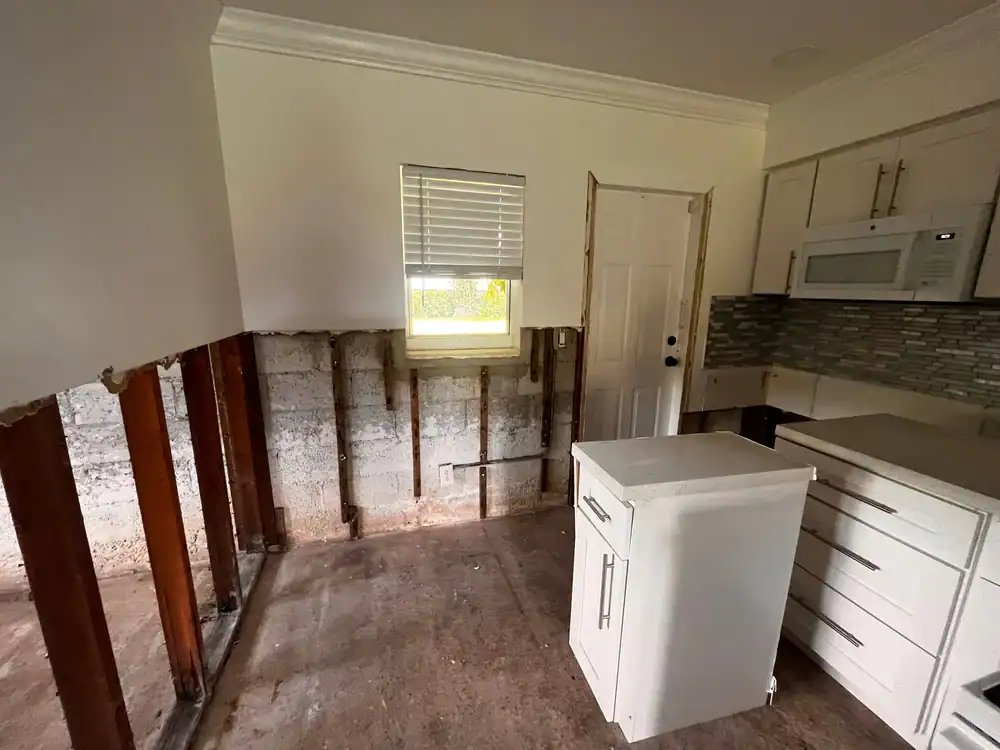
Most Cold Spring Harbor kitchens were designed before open floor plans existed. We rebuild them from the studs out permits, older home surprises, and all.
I needed a professional consultation explanation of procedure for safe removal of Asbestos in my apartment complex. Without having an account yet, I was very impressed with the caring, knowledgeable and generous advice offered by Jessica, and will look forward to doing business in the future. Thank you so much! I feel much more informed about a sometimes scary endeavor. Peace. Nancy Silva Mineola, NY.
Mia Munoz
Used this company to clean up some water flood in my house. They were fast and easy to work with.very professional, Would recommend to anyone!
Nini Valle
Great company, had a flood and they responded quickly and efficiently. Billed my insurance company directly. I highly recommend this company!
joe colapietro, jr
I had pipe freeze in my basement right before a snow storm and they made to within an hour to help start the clean up process. They we by our side throughout the entire process and even helped with the insurance company. They did such a great job with the cleanup, repair, remidiation, I contracted them to perform the repairs and finishes in the basement. They came with enough manpower and material to get the job done. Leo and Jessica were nothing but a pleasure to deal with!!
Cristian Arredondo c
I had some water damage in my home and Green Island was able to take care of my issue quickly and effectively. I am very pleased with the work they did. They responded quickly and were very professional.
Michael M
Outstanding service! From the office to the field crew everyone was friendly, helpful and responsive. I highly recommend Green Island Group.
A Kitchen That Finally Matches How You Actually Live
Cold Spring Harbor homes have a lot going for them the harbor views, the wooded lots, the quiet that’s hard to find anywhere else on Long Island. The kitchen, in a lot of these homes, is the one thing that hasn’t kept up. Mid-century floor plans weren’t built for the way families actually use a kitchen today. Walls that close things off, counters that run out of space fast, storage that never quite works these are the things that chip away at a home you otherwise love.
When the kitchen gets done right, the whole house changes. You’re not working around a layout that was designed for a different era. You have the counter space, the flow, the storage, and the finishes that belong in a home at this level. And in a market where Cold Spring Harbor listings are regularly topping $2 million, an updated kitchen isn’t just a quality-of-life improvement it’s one of the smartest financial moves you can make before a sale.
There’s also the practical side that most contractors don’t talk about upfront. A significant portion of homes in Cold Spring Harbor were built before 1960, and a lot of them before 1978. That matters during a kitchen demo, because older construction means a real chance of finding asbestos in floor tiles or drywall compound, or lead paint behind the cabinets. If your contractor isn’t equipped to handle that, your project stops the moment something turns up. We’re a licensed environmental remediation contractor so if something is found behind your walls, it gets handled in-house, on the same timeline, without bringing in a second company.
Kitchen Remodel Contractors Serving Huntington, NY
12 Years of Opening Walls and Knowing What to Do Next
Green Island Group has been doing this work across Long Island and New York State since 2012. Over 5,000 completed projects. A Home Improvement Contractor license verified through Nassau County, five additional licenses, full liability insurance, workers’ compensation coverage, IICRC certification, and official New York State M/WBE certification issued by the state after formal review, not self-declared. These aren’t claims you have to take on faith. They’re credentials you can look up.
We started in environmental remediation asbestos abatement, mold remediation, structural demolition, water and fire damage restoration. Kitchen remodeling grew out of that foundation, which means the team that shows up to your Cold Spring Harbor home has spent years working inside the walls of older Long Island homes. We know what pre-1978 construction looks like from the inside. We know what the Town of Huntington’s Building & Housing Division requires for permitted work. And we know that a kitchen remodel in a home near the harbor requires different material thinking than a project ten miles inland.
When you’re investing in a home that’s worth what Cold Spring Harbor homes are worth, the contractor you hire needs to be ready for whatever is behind those walls not just the version of the job where everything goes smoothly.
How We Handle a Cold Spring Harbor Kitchen Remodel From Start to Finish
It starts with a home visit. We come to your Cold Spring Harbor home, walk the kitchen with you, and actually listen what’s not working, what you’ve always wanted, what you want to keep. From there, we take measurements and build a full 3D design rendering of your new kitchen. You see the cabinet placement, the countertop materials, the layout, the finishes everything before any work begins. You review it, request changes, and sign off before a single wall gets touched.
Once the design is approved, we handle the permit submissions to the Town of Huntington Building & Housing Division. Structural changes, electrical modifications, plumbing relocations anything that requires a permit gets filed and coordinated by our team. You don’t have to navigate that process yourself. If you’re in one of the areas near Lloyd Harbor where village permits apply separately from the Town’s standard process, that gets sorted too.
Demo comes next, and this is where having a remediation-licensed contractor actually matters. If testing or demo work turns up asbestos-containing materials which is a real possibility in Cold Spring Harbor homes built before 1978 it’s handled in-house. No project pause, no scrambling for a second contractor. Construction follows, then the final walkthrough where everything gets reviewed before the job is called done. The goal is a completed kitchen that works the way it was designed to not a project that drags past the holidays because something unexpected derailed it.
Built for Cold Spring Harbor Homes Not a Generic Showroom Spec
A kitchen remodel in Cold Spring Harbor isn’t the same job as one in a newer subdivision further south on the island. The homes here are older, the environment is coastal, and the expectations are high. Our kitchen remodeling scope reflects all of that.
Full kitchen renovations cover everything from layout redesign and structural wall removal to custom cabinetry, countertop installation, flooring, lighting, plumbing and electrical coordination, and finish work. Cabinet renovations are available for homeowners who want to preserve the bones of the kitchen but update the look and function new doors, new hardware, refinishing, or full cabinet replacement depending on what makes the most sense. For kitchens that need a meaningful refresh without a full gut, targeted makeovers address the highest-impact changes first: countertops, cabinet faces, sink and fixture upgrades, and layout adjustments that improve daily flow without tearing everything out.
Material selection is something we take seriously in this area specifically. Salt air and harbor humidity accelerate wear on finishes, hardware, and cabinetry that isn’t specified for a coastal environment. Particle board cabinetry, for example, doesn’t hold up in high-humidity conditions the way solid wood or quality plywood construction does. We recommend and source materials with that local reality in mind not whatever is easiest to install, but what will actually last in a Cold Spring Harbor kitchen over the long term. Every project includes 3D design, permit management, full insurance coverage, and a final walkthrough before the job is closed.
Do I need a permit for a kitchen remodel in Cold Spring Harbor, NY?
Yes, and the scope of your project determines exactly which permits are required. Cold Spring Harbor is an unincorporated hamlet within the Town of Huntington, so building permits are issued through the Town of Huntington Building & Housing Division at Town Hall on Main Street in Huntington. Any work involving structural changes removing a wall, relocating a doorway, adding load-bearing support for an island requires a building permit. Electrical modifications, including adding circuits or upgrading panel capacity, require a permit and a licensed electrician inspection. Plumbing changes, like relocating a sink or adding a pot filler, require their own permit and a licensed plumber sign-off.
If your property happens to fall within the incorporated Village of Lloyd Harbor, which borders Cold Spring Harbor, the permit process is handled through the village’s own building officials not the Town of Huntington. That’s a distinction most contractors aren’t aware of, and it can cause real delays if it’s not caught early. We manage the entire permit process in-house, including identifying which jurisdiction applies to your specific property before the first application is filed.
How much does a kitchen remodel typically cost in Cold Spring Harbor?
The honest answer is that it depends heavily on scope, and the range is wide. In the New York metro area, a full kitchen remodel meaning a complete gut and rebuild runs roughly $24,500 on the lower end and $107,000 or more for a full luxury overhaul with custom cabinetry, high-end countertops, and premium appliances. For Cold Spring Harbor specifically, where homes are valued well above $1 million and buyers have high expectations for finishes, most full remodels fall in the $50,000 to $100,000+ range. A targeted kitchen makeover or cabinet renovation can be done for significantly less, depending on what’s being changed.
Labor typically accounts for 50% to 60% of total project cost, which is why contractor selection matters as much as material selection. One thing worth knowing: in older Cold Spring Harbor homes, it’s not uncommon to open a wall and find something that adds to the scope outdated wiring, moisture damage, or materials that require remediation before construction can continue. A contractor who can handle that in-house won’t charge you to pause the project and bring in a second company. We provide a written, itemized proposal before any work begins so you know exactly what’s included and what the plan is if something unexpected turns up.
How long does a kitchen remodel take from start to finish?
For a full kitchen renovation design, permits, demo, construction, and finish work most projects run between six and twelve weeks from the time construction begins. The design and permitting phase adds time before that, typically two to four weeks depending on how quickly the Town of Huntington’s Building & Housing Division processes the application and how many revisions the design goes through. A targeted makeover or cabinet renovation with no structural changes can move significantly faster, sometimes completing in two to three weeks once materials are on hand.
The most common cause of timeline delays in Cold Spring Harbor homes isn’t the construction itself it’s discovering something unexpected during demo. Pre-1978 homes can have asbestos-containing materials in floor tiles, pipe insulation, or drywall compound, and if a contractor isn’t licensed to handle remediation, the project stops until a separate company can be brought in. Our remediation licensing means that if something turns up during demo, it gets addressed by the same team on the same timeline. That single factor has saved a lot of Cold Spring Harbor homeowners from the experience of eating takeout for months while their kitchen sits half-demolished.
What kitchen materials hold up best in a waterfront home near the harbor?
This is one of the most important questions Cold Spring Harbor homeowners can ask, and most contractors don’t address it proactively. The salt air and elevated humidity that come with living near the harbor affect how kitchen materials perform over time and the difference between a material that’s specified for a coastal environment and one that isn’t shows up within a few years of installation.
For cabinetry, solid wood or high-quality plywood construction significantly outperforms particle board in high-humidity conditions. Particle board swells, warps, and delaminate in coastal environments it’s a common failure point in kitchens that were renovated with showroom-grade materials that weren’t selected with the local environment in mind. For hardware, finishes rated for corrosion resistance brushed nickel, stainless, or powder-coated options hold up better than bare metal or low-quality chrome near salt air. Countertop edge sealing and grout selection also matter more in a harbor-adjacent kitchen than they would in an inland home. Quartz surfaces, for example, are non-porous and don’t require the same level of sealing maintenance that natural stone does which makes them a practical choice for a high-humidity kitchen environment. Our material recommendations take the Cold Spring Harbor environment into account specifically, not just what looks good in a catalog.
Will a kitchen remodel actually add value to my home before I sell?
In Cold Spring Harbor’s market, yes and the numbers back it up. Minor kitchen remodels are delivering up to 113% return on investment in 2025, meaning homeowners can recoup more than they spend when they sell. Approximately 54% of realtors recommend a kitchen upgrade before listing a home. In a market where Cold Spring Harbor homes are listing at a median of around $2.34 million and buyers are comparing every detail of a very limited inventory typically only a handful of active listings at any given time an updated kitchen is one of the most visible and financially meaningful improvements you can make.
Active listings in Cold Spring Harbor regularly call out kitchen updates as primary selling features: quartz countertops, farm sinks, open floor plans, stainless appliances. These aren’t incidental details they’re what buyers at this price point are looking for and what drives faster, stronger offers. Homes that have been renovated command real premiums over unrenovated comparables in this market. If you’re planning to sell within the next few years, a kitchen remodel isn’t a luxury it’s a competitive decision. And if you’re planning to stay, you get the daily benefit of a kitchen that actually works for the way your family lives, in a home you’re already invested in protecting.
What should I look for when hiring a kitchen remodel contractor in Cold Spring Harbor?
The first thing to verify is licensing and insurance not just claimed, but verifiable. In New York, Home Improvement Contractor licensing is a legal requirement, and you can look up license numbers through the relevant county or state licensing board. Beyond the HIC license, ask specifically about workers’ compensation coverage. If a worker is injured on your property and the contractor doesn’t carry workers’ comp, you can be held financially liable under New York law. In a community where home values and personal assets are what they are in Cold Spring Harbor, that’s not a risk worth taking.
Second, ask how the contractor handles unexpected finds during demo. In a town where a significant portion of the housing stock predates 1978, the question of what happens if asbestos or lead paint turns up is not hypothetical it’s a real possibility in a lot of these kitchens. A contractor who has to stop the project and bring in a separate remediation company will cost you time and money that wasn’t in the original plan. Third, ask to see a written, itemized proposal not a ballpark number. You should know exactly what’s included, what materials are being specified, what the permit plan is, and what the process looks like if something changes mid-project. A contractor who can answer all of those questions clearly, in writing, before work begins is a contractor who has done this enough times to know what can go wrong and how to handle it.