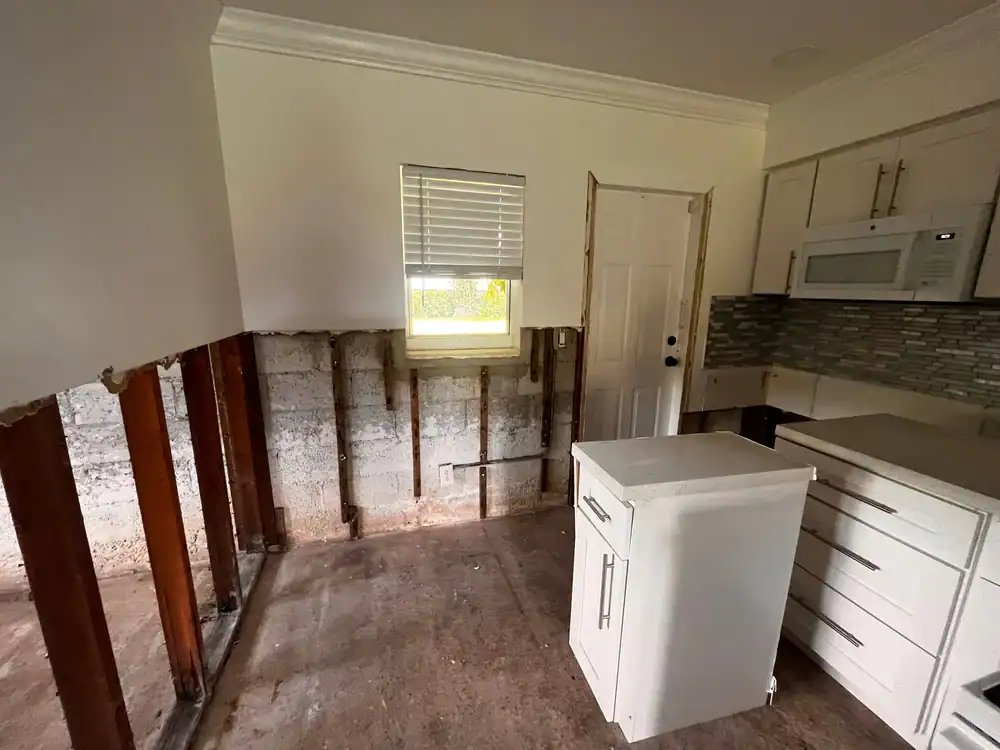
Glen Head homes deserve more than a surface refresh. We handle full kitchen renovations — from demo to done — so you get real results without the contractor chaos.
I needed a professional consultation explanation of procedure for safe removal of Asbestos in my apartment complex. Without having an account yet, I was very impressed with the caring, knowledgeable and generous advice offered by Jessica, and will look forward to doing business in the future. Thank you so much! I feel much more informed about a sometimes scary endeavor. Peace. Nancy Silva Mineola, NY.
Mia Munoz
Used this company to clean up some water flood in my house. They were fast and easy to work with.very professional, Would recommend to anyone!
Nini Valle
Great company, had a flood and they responded quickly and efficiently. Billed my insurance company directly. I highly recommend this company!
joe colapietro, jr
I had pipe freeze in my basement right before a snow storm and they made to within an hour to help start the clean up process. They we by our side throughout the entire process and even helped with the insurance company. They did such a great job with the cleanup, repair, remidiation, I contracted them to perform the repairs and finishes in the basement. They came with enough manpower and material to get the job done. Leo and Jessica were nothing but a pleasure to deal with!!
Cristian Arredondo c
I had some water damage in my home and Green Island was able to take care of my issue quickly and effectively. I am very pleased with the work they did. They responded quickly and were very professional.
Michael M
Outstanding service! From the office to the field crew everyone was friendly, helpful and responsive. I highly recommend Green Island Group.
What Changes When Your Glen Head Kitchen Actually Works
Most Glen Head kitchens were built in the 1950s and 1960s — designed for a different era, a different lifestyle, and a different family. The layout is tight. The cabinets are dated. The countertops have seen better decades. And every time you cook a meal or host the holidays, the kitchen reminds you it was never really built for the way you live now.
When the renovation is done right, that changes. You stop working around a bad layout and start using a kitchen that was designed around you — more counter space, better storage, a flow that makes sense. For a Glen Head home, where property values regularly cross the million-dollar mark, a well-executed kitchen isn’t just a quality-of-life upgrade. It’s one of the strongest financial decisions you can make before a future sale.
There’s also something specific to North Shore homes worth knowing: Long Island’s coastal humidity is not kind to aging kitchen materials. Cabinet frames swell. Laminate delaminates. Caulking fails around sinks and backsplashes, and slow moisture damage builds behind cabinetry for years before anyone notices. A kitchen renovation done by a contractor who understands what’s typical in Glen Head’s older homes — and knows how to handle what they find behind the walls — gives you a result that actually holds up here.
We’re a Nassau County contractor — not a national franchise, not a call center that dispatches whoever’s available. The team serving Glen Head is the same team that pulls your permits through the Town of Oyster Bay, manages your project from the first demo day, and answers the phone when you have a question midway through.
That matters more than most homeowners realize until they’ve had the other experience. Coordinating a cabinet company, a plumber, an electrician, and a tile installer who don’t communicate with each other is a part-time job. We handle all of it under one contract, which means your kitchen gets done without you becoming the project manager.
We serve Glen Head and the surrounding North Shore communities — including Sea Cliff, Glenwood Landing, and Old Brookville — and have direct experience with the housing stock in this area: mid-century colonials, ranch homes, and split-levels that require a contractor who knows what they’re working with before demo day begins.
From First Call to Final Walkthrough — No Guesswork
It starts with a straightforward consultation. You walk through what you want, what’s not working, and what your timeline looks like. We assess the existing kitchen — the layout, the cabinet condition, the plumbing and electrical situation — and give you a written proposal with real line items, not a ballpark number that shifts every week.
Once you’re ready to move forward, we file permits with the Town of Oyster Bay’s Planning and Development Department. Glen Head is an unincorporated hamlet, which means there’s no local village building department — everything runs through the Town of Oyster Bay, and we handle that process on your behalf. For any project touching electrical, plumbing, or structure — which covers most meaningful kitchen renovations — permits aren’t optional, and a contractor who skips them is leaving you with a problem that surfaces at resale.
During construction, you have one point of contact. If demo reveals something unexpected — moisture damage behind cabinets, aging subfloor, anything common in homes of this era — it gets addressed within the same project, not handed off to a separate contractor. The final walkthrough is exactly that: a real review of the finished space before the job is closed out.
Full-Scope Kitchen Work Built for North Shore Homes
We handle kitchen renovations at every scope level — from cabinet replacements and countertop upgrades to full gut renovations with layout reconfiguration. If you’re not sure where your project falls, the consultation will tell you. The goal is an honest recommendation based on your specific kitchen, not a pitch for the highest-margin option.
For Glen Head homeowners asking about cabinet renovation specifically: the answer depends on what’s actually there. If the existing boxes are structurally sound and the layout works, refacing can be a smart, cost-effective move. If the frames are failing, the construction quality is poor, or the layout is the core problem, full replacement is the right call. You’ll get a straight answer either way.
Because a significant share of Glen Head’s housing stock was built before 1978, EPA Lead-Safe certification is a routine part of how we work — not an add-on, not a checkbox. Federal law requires it for any renovation disturbing lead paint in pre-1978 homes, and it protects your family throughout the project. Nassau County also requires all home improvement contractors to hold a current registration with the Nassau County Department of Consumer Affairs. We carry that registration, along with general liability and workers’ compensation insurance — documentation available before you sign anything.
Do I need a permit for a kitchen remodel in Glen Head, NY?
In most cases, yes — and the scope of your project determines exactly what’s required. Glen Head is an unincorporated hamlet within the Town of Oyster Bay, which means all building permits are processed through the Town of Oyster Bay’s Planning and Development Department, not a local village office. If your kitchen renovation involves any electrical upgrades, plumbing relocation, new fixture installation, or structural changes like removing a wall for an open-concept layout, a permit is required. That covers the majority of meaningful kitchen remodels.
A straight cabinet swap or countertop replacement that doesn’t touch electrical, plumbing, or structure may not trigger a permit requirement — but if your Glen Head home is 50 or 60 years old, the odds are high that at least an electrical upgrade will be part of the conversation. Older homes in this area often run on wiring that predates modern appliance loads, and bringing that up to code is both a safety issue and a permit requirement. We manage the entire permit process on your behalf, including filing, inspection coordination, and the final certificate of occupancy.
How much does a kitchen remodel typically cost in Glen Head, NY?
It depends on scope, but here’s a realistic range for the Glen Head market. A focused update — new cabinets, countertops, and fixtures without moving plumbing or walls — typically runs between $30,000 and $50,000. A full gut renovation with custom cabinetry, high-end countertops, layout reconfiguration, and updated electrical and plumbing generally falls between $80,000 and $150,000, sometimes higher depending on material selections and the condition of what’s discovered during demo.
Glen Head homeowners are not typically looking for the cheapest bid — and that’s worth understanding before you start collecting estimates. In a community where homes regularly sell above $850,000, a kitchen that clearly signals quality and care is one of the strongest assets you can have at resale. Industry data consistently shows that kitchen remodels in the Northeast return roughly 85 to 96 cents on the dollar at sale. The real risk isn’t spending too much on a good renovation — it’s spending on a poor one that needs to be redone.
What happens if water damage or mold is found during kitchen demo?
It’s more common than most homeowners expect, especially in Glen Head’s older housing stock. Homes built in the 1950s and 1960s have decades of plumbing history behind them — slow leaks under sinks, failed caulking around backsplashes, and moisture that’s been sitting behind cabinets long enough to damage subfloor and wall framing. North Shore humidity accelerates the problem. By the time you’re doing a full kitchen renovation, there’s a reasonable chance demo will turn something up.
Most kitchen remodelers stop when that happens. They flag it as out of scope, and you’re left finding a separate remediation contractor while your kitchen sits half-demolished. Our combined renovation and restoration capabilities mean discovered damage gets handled within the same project, by the same team. You don’t just get the problem documented — you get it resolved, and then the renovation continues. That’s a meaningful difference in a community where the homes are this age.
How long does a kitchen remodel take from start to finish in Glen Head?
For a full gut renovation, a realistic timeline is six to twelve weeks from the start of construction — but that’s the construction window, not the full project timeline. Material lead times, permit processing through the Town of Oyster Bay, and inspection scheduling all add time before a single cabinet is removed. Custom cabinetry alone can run eight to twelve weeks from order to delivery. If you’re planning around a specific date — the holidays, a listing, a family event — those lead times need to be factored in from the start.
The honest answer is that the projects that go smoothest are the ones where the timeline was built realistically from day one, not optimistically. We provide project timelines that account for the full sequence: permit filing, material delivery, construction phases, and inspection windows. Glen Head homeowners who commute to the city on the LIRR and run busy households don’t have time to chase a contractor for updates — a clear schedule and a single point of contact make the difference.
Is a kitchen renovation worth it if I'm planning to sell my Glen Head home?
In most cases, yes — especially in this market. Glen Head sits in one of Nassau County’s most competitive real estate corridors, where buyers are sophisticated, expectations are high, and a dated kitchen is one of the first things a buyer’s agent will use to negotiate the price down. A kitchen that looks like it was last updated in 1985 signals deferred maintenance, even if everything else in the home is in great shape.
You don’t need a $150,000 renovation to move the needle before a sale. A focused update — new cabinets, updated countertops, fresh fixtures — in the $35,000 to $50,000 range can meaningfully improve both your list price and your days on market. The key is making selections that match the North Shore standard without over-improving for the street. A real estate agent familiar with the Glen Head and Oyster Bay Town market can help calibrate that, and we can work within a defined scope and budget to get the kitchen where it needs to be before you list.
How do I know if a kitchen contractor in Glen Head is actually licensed and insured?
Ask for two things before you sign anything: the contractor’s Nassau County Home Improvement Contractor registration number and a current Certificate of Insurance showing general liability and workers’ compensation coverage. Nassau County requires all home improvement contractors working in the county — including Glen Head — to hold a current registration with the Nassau County Department of Consumer Affairs. This is separate from any state-level license and is specific to Nassau County. You can verify a registration number directly through the county.
The Certificate of Insurance should name you as an additional insured for the duration of the project. If a contractor hesitates, delays, or gives you a reason why they can’t produce it immediately, that’s your answer. In a community where homes are valued well above $800,000, the risk of hiring an uninsured contractor isn’t abstract — it’s a liability that lands on you if something goes wrong during construction. We provide both documents upfront, before the contract is signed, without being asked twice.