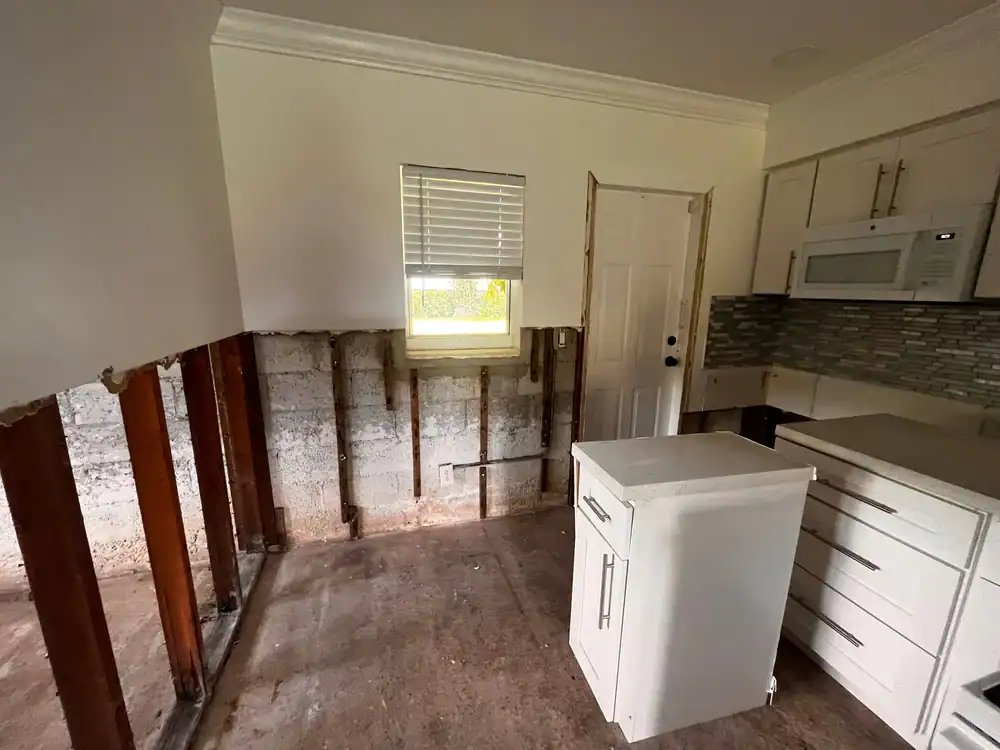
North Shore Homes Deserve a Kitchen Built for Them
Most kitchens in Glenwood Landing were designed for a different era. If yours hasn’t kept up with how you actually live, we handle the full kitchen renovation — from permits through final walkthrough — so you don’t have to manage it yourself.
I needed a professional consultation explanation of procedure for safe removal of Asbestos in my apartment complex. Without having an account yet, I was very impressed with the caring, knowledgeable and generous advice offered by Jessica, and will look forward to doing business in the future. Thank you so much! I feel much more informed about a sometimes scary endeavor. Peace. Nancy Silva Mineola, NY.
Mia Munoz
Used this company to clean up some water flood in my house. They were fast and easy to work with.very professional, Would recommend to anyone!
Nini Valle
Great company, had a flood and they responded quickly and efficiently. Billed my insurance company directly. I highly recommend this company!
joe colapietro, jr
I had pipe freeze in my basement right before a snow storm and they made to within an hour to help start the clean up process. They we by our side throughout the entire process and even helped with the insurance company. They did such a great job with the cleanup, repair, remidiation, I contracted them to perform the repairs and finishes in the basement. They came with enough manpower and material to get the job done. Leo and Jessica were nothing but a pleasure to deal with!!
Cristian Arredondo c
I had some water damage in my home and Green Island was able to take care of my issue quickly and effectively. I am very pleased with the work they did. They responded quickly and were very professional.
Michael M
Outstanding service! From the office to the field crew everyone was friendly, helpful and responsive. I highly recommend Green Island Group.
A Kitchen That Finally Matches the Rest of Your Home
A significant portion of Glenwood Landing’s housing stock was built before 1950. That means a lot of kitchens in this hamlet are working against layouts designed for a completely different way of living — cramped galley configurations, undersized electrical panels that can’t support modern appliances, plumbing that predates anything you’d find at a showroom today. A real kitchen remodel fixes those things at the root. Not just new cabinet doors over the same broken bones, but an actual rebuild that makes the space work.
There’s also the waterfront factor. Homes near Shore Road and Hempstead Harbor deal with elevated humidity and salt-air exposure year-round. That accelerates wear on cabinetry, subflooring, and drywall in ways that inland kitchens simply don’t experience. If your cabinets are warping, your drawer boxes are swelling, or your countertop seams are lifting — that’s the environment doing what it does. The right renovation accounts for that from the material selection stage, not as an afterthought.
And then there’s the straightforward financial reality. With home values in Glenwood Landing ranging from roughly $870,000 to well over $1.4 million, a dated kitchen is a real liability — whether you’re planning to sell in a few years or stay for another decade. A well-executed kitchen remodel in the Northeast returns somewhere between 85 and 96 cents on the dollar at resale. That’s not a renovation, that’s an investment.
We’re a full-service renovation contractor based in New York, and we’ve worked throughout Nassau County’s North Shore communities — including Glenwood Landing and the older, character-rich homes that make up most of its residential streets. We know what’s behind the walls in a pre-war colonial. We know what the Town of Oyster Bay building department needs to approve a permit, and we know that if your property sits in the southwestern corner of Glenwood Landing, you’re actually dealing with the Town of North Hempstead instead. That’s not a detail most contractors think about until it becomes a problem.
What that means for you is simple: one point of contact from the first conversation to the final walkthrough. The person who scopes your project is accountable for how it finishes. We pull every permit, manage every inspection, and coordinate every trade — so you’re not the one chasing down a plumber while your kitchen sits half-demo’d for three weeks.
In a community this size — under 4,000 residents in Glenwood Landing, where people genuinely know their neighbors — a contractor’s reputation is everything. We build ours on projects we’d be comfortable having our name attached to permanently.
What the Process Looks Like Before a Single Cabinet Gets Touched
It starts with a consultation — not a sales pitch. We come to your home, look at the actual space, and have a real conversation about what’s working, what isn’t, and what a realistic scope looks like for your budget and your goals. If you’ve been thinking about this for a while, you probably already have a general idea of what you want. Our job at that stage is to pressure-test it, flag anything that could become a problem later, and give you a proposal with actual line items — not a ballpark number designed to get you to sign something.
Once you’re ready to move forward, we handle permitting through whichever town jurisdiction covers your property. For most of Glenwood Landing, that’s the Town of Oyster Bay. For homes in the southwestern section of the hamlet, it’s the Town of North Hempstead. Either way, we’ve navigated both building departments, and we manage the process so you don’t have to. If your home was built before 1978 — which describes a large portion of Glenwood Landing’s housing stock — we also follow EPA Lead-Safe certified practices during demolition, because federal law requires it and your family’s safety isn’t a checkbox.
Construction timelines vary by scope. A cabinet-focused renovation typically runs two to four weeks. A full gut renovation in a Glenwood Landing home — accounting for permit processing, material lead times, and actual build days — usually runs six to ten weeks when the project is planned properly. We’ll give you the real number upfront, not an optimistic estimate that falls apart on week two.
Kitchen Cabinet Renovation and Redesign Glenwood Landing
Built for North Shore Homes, Not a Generic Showroom Floor
Glenwood Landing homes have a specific design character — North Shore traditional, quality materials, proportions that reflect decades of craftsmanship rather than a national builder’s spec sheet. The kitchen renovation work we do here reflects that. Whether you’re dealing with a 1940s colonial that needs a full gut and layout reconfiguration, or a mid-century ranch where the cabinets have seen better days and the countertops haven’t been updated since the Clinton administration, the approach is the same: we start with your home, not a catalog.
For homes near the harbor in Glenwood Landing, we pay close attention to material selection — cabinet construction, finish type, countertop materials, and ventilation — because what performs well in an inland Nassau County home doesn’t always hold up the same way near Hempstead Harbor. That’s a practical consideration, not a sales point. Kitchen cabinet renovation and full kitchen redesigns both fall within our scope, and we handle the layout planning, cabinetry, countertops, tile, lighting, and appliance integration under a single contract.
Nassau County requires all home improvement contractors to hold a valid Home Improvement Contractor License issued by the Nassau County Department of Consumer Affairs. We carry that license, along with general liability insurance and workers’ compensation coverage. If you want to see the certificate before signing anything, ask — we’ll send it the same day.
Do I need a permit for a kitchen remodel in Glenwood Landing, NY?
Yes, in most cases. If your kitchen renovation involves any structural changes, electrical upgrades, plumbing relocation, or HVAC modifications — and most meaningful remodels do — you’ll need a building permit. In Glenwood Landing, which town issues that permit depends on where your property sits. The majority of the hamlet falls within the Town of Oyster Bay, but the southwestern portion falls under the Town of North Hempstead. These are two separate building departments with their own processes, and the distinction matters when it comes to filing correctly and avoiding delays.
We handle permitting as part of every project we manage. That includes identifying which jurisdiction applies to your address, preparing the required documentation, submitting to the correct building department, and coordinating inspections as the work progresses. Unpermitted kitchen work creates real problems — for your homeowner’s insurance, for your resale, and potentially for your neighbors who will notice the work happened without an inspection sticker. It’s not worth cutting that corner.
How much does a kitchen remodel typically cost in Glenwood Landing?
The range is wide, and it depends heavily on scope. A cabinet-focused renovation — new boxes, doors, hardware, and countertops without touching the layout — typically falls somewhere in the $25,000 to $50,000 range. A full gut renovation, where you’re reconfiguring the layout, relocating plumbing, upgrading electrical, and finishing everything from floor to ceiling with quality materials, is more commonly in the $60,000 to $120,000 range for a Glenwood Landing home. High-end finishes, custom cabinetry, or premium appliance packages can push that higher.
The reason the range is that wide is that older homes — and a significant share of Glenwood Landing’s housing stock predates 1950 — often reveal additional work once demo begins. Outdated wiring, galvanized plumbing, subfloor damage from years of moisture exposure near the harbor, or lead paint that requires certified remediation practices can all affect the final number. We scope projects carefully upfront to minimize surprises, and we give you a detailed written proposal before any work begins. That way you’re making a decision based on real numbers, not an estimate designed to get you to sign.
How long does a full kitchen renovation take from start to finish?
For a cabinet-focused renovation without major structural or plumbing changes, you’re typically looking at two to four weeks of active construction. A full gut renovation — new layout, relocated plumbing and electrical, all new finishes — runs closer to six to ten weeks in a Glenwood Landing home when the project is properly planned. That includes permit processing time through the Town of Oyster Bay or Town of North Hempstead, material lead times for cabinetry and countertops, and the actual build sequence.
The planning phase before construction starts is where timelines are really won or lost. If materials aren’t ordered until after demo begins, or if permits are submitted late, those delays stack up fast. We sequence the project so that permits are in process, materials are ordered, and the job site is ready to move the moment demo is complete. We’ll give you a realistic project calendar at the proposal stage — not a best-case scenario that assumes everything goes perfectly.
My Glenwood Landing home was built in the 1940s — does that affect the renovation process?
It does, and it’s worth understanding what that means before work begins. Homes built before 1978 are subject to the EPA’s Renovation, Repair, and Painting Rule, which requires contractors to use Lead-Safe certified practices when disturbing painted surfaces. A significant portion of Glenwood Landing’s housing stock — including most homes built in the 1930s, 1940s, and 1950s — falls into this category. If you have children or grandchildren in the home, this isn’t a technical footnote. It’s a federal requirement that directly affects how demolition and prep work are handled. We hold EPA Lead-Safe Certification and follow those protocols on every qualifying project.
Beyond lead paint, older homes often have electrical panels that predate modern load requirements, galvanized or cast-iron plumbing that may need upgrading to support a new kitchen layout, and plaster walls that require different handling than standard drywall. None of these are deal-breakers — they’re just things that need to be planned for honestly. We walk through all of it during the initial consultation so there are no surprises once the walls open up.
What kitchen design styles work best for North Shore homes in Glenwood Landing?
Glenwood Landing homes tend to have a specific character — traditional proportions, quality materials, a sensibility that leans toward understated rather than trendy. The design directions that tend to hold up best in this market are shaker-style cabinetry in painted or natural wood finishes, quartz or natural stone countertops, hardwood or large-format tile flooring, and lighting that layers ambient, task, and accent sources rather than relying on a single overhead fixture. These aren’t arbitrary preferences — they’re the choices that photograph well, age gracefully, and appeal to the buyers who shop in this price range when it’s time to sell.
That said, the right design for your kitchen depends on your specific home, your layout, and how you actually use the space. A family that entertains regularly has different priorities than someone who cooks solo every evening. We work through those questions during the design consultation, and we’ll tell you honestly when a choice you’re considering is likely to feel dated in five years versus one that’s going to look right for the next twenty.
Does Green Island Group handle kitchen remodels in the areas surrounding Glenwood Landing?
Yes. We work throughout the North Shore communities in Nassau County, including Glen Head, Sea Cliff, Roslyn Harbor, and Glen Cove — all of which share similar housing characteristics with Glenwood Landing: older homes, established neighborhoods, and homeowners who expect quality work and clear communication. The permitting landscape shifts slightly depending on which town or village governs a given property, and we’re familiar with those differences across the area.
If you’re in Glenwood Landing or anywhere nearby along the North Shore, the process starts the same way — a consultation at your home, a detailed written proposal, and a clear scope before anything is signed. We’re not going to give you a number over the phone without seeing the kitchen, because that number would be meaningless. Reach out through the contact form or give us a call, and we’ll set up a time that works for you.