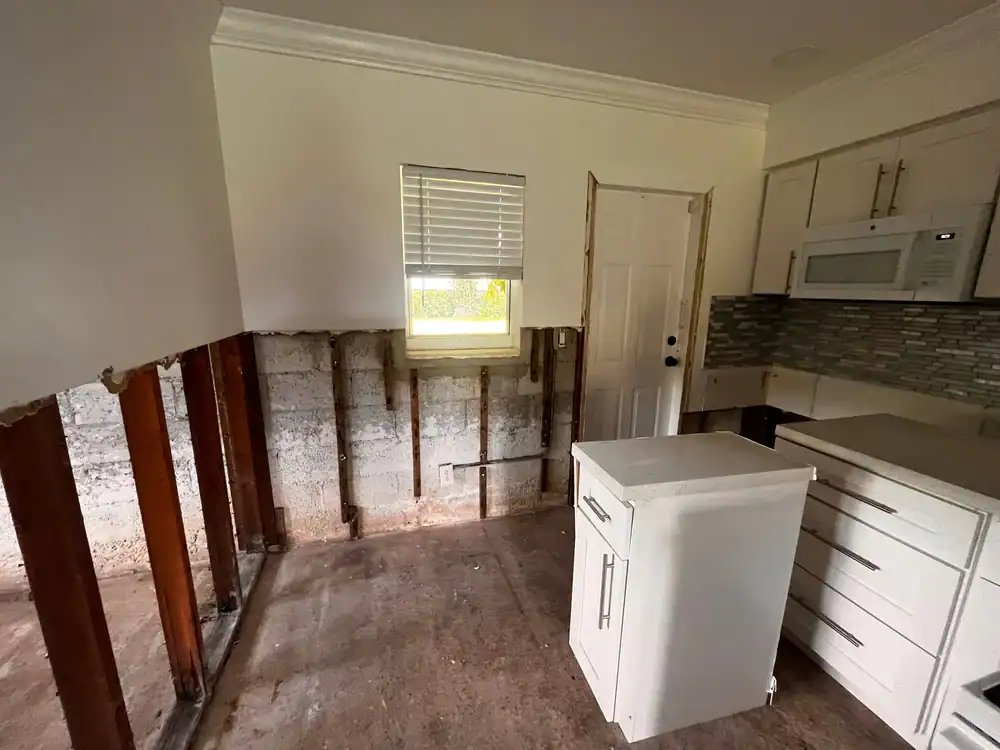
Your 1960s Colonial Kitchen Deserves Better Than This
Most Great Neck Gardens kitchens were built for a different era — and you feel it every single day. We handle the full kitchen remodel, from layout to final finish, so you’re not managing four different contractors on a $900,000 home.
I needed a professional consultation explanation of procedure for safe removal of Asbestos in my apartment complex. Without having an account yet, I was very impressed with the caring, knowledgeable and generous advice offered by Jessica, and will look forward to doing business in the future. Thank you so much! I feel much more informed about a sometimes scary endeavor. Peace. Nancy Silva Mineola, NY.
Mia Munoz
Used this company to clean up some water flood in my house. They were fast and easy to work with.very professional, Would recommend to anyone!
Nini Valle
Great company, had a flood and they responded quickly and efficiently. Billed my insurance company directly. I highly recommend this company!
joe colapietro, jr
I had pipe freeze in my basement right before a snow storm and they made to within an hour to help start the clean up process. They we by our side throughout the entire process and even helped with the insurance company. They did such a great job with the cleanup, repair, remidiation, I contracted them to perform the repairs and finishes in the basement. They came with enough manpower and material to get the job done. Leo and Jessica were nothing but a pleasure to deal with!!
Cristian Arredondo c
I had some water damage in my home and Green Island was able to take care of my issue quickly and effectively. I am very pleased with the work they did. They responded quickly and were very professional.
Michael M
Outstanding service! From the office to the field crew everyone was friendly, helpful and responsive. I highly recommend Green Island Group.
When the layout actually fits how your family lives — morning routines, weekend cooking, kids doing homework at the island — the whole house feels different. That’s not an exaggeration. A functional kitchen changes the daily rhythm of a home, and in Great Neck Gardens, where most families are here for the long haul because of the school district, that matters more than it would somewhere else. You’re not renovating to sell. You’re renovating to live in it for the next fifteen years.
The homes on this peninsula were built in the 1940s through 1970s — Colonials and Cape Cods with galley kitchens, minimal counter space, and walls that cut the room off from the rest of the house. Opening that up, adding an island, reconfiguring the layout — that’s not cosmetic work. It’s a structural change that makes the home feel like it was built for today. And because Great Neck Gardens sits on a peninsula surrounded by Long Island Sound, Manhasset Bay, and Little Neck Bay, the materials used in your kitchen need to hold up to coastal humidity. The wrong cabinet finish in this environment will show moisture damage within a few years. The right one will still look sharp in twenty.
At the price point homes trade for in this area — consistently above $900,000 — a well-executed kitchen renovation isn’t a gamble. Northeast kitchen remodels return roughly 85 to 96 cents on the dollar at resale. But more than the financial return, you get a kitchen that actually works for your family every single day until then.
We are a full-service renovation contractor based in New York, working throughout Nassau County and the North Shore of Long Island. We handle kitchen remodels from the first conversation through the final walkthrough — design, permits, demolition, construction, and finish work all under one contract. You have one point of contact. One team responsible for the result.
We know Great Neck Gardens. We know that this hamlet is unincorporated, which means your permits go through the Town of North Hempstead — not a village hall — and we handle that process as a standard part of every project. We know the housing stock here: mid-century Colonials and Cape Cods with original layouts that need more than a cosmetic refresh. We understand the coastal environment that defines this peninsula and what it demands from materials and finishes. And we know what it takes to do this work correctly in a home that’s worth what yours is worth.
When something goes wrong on a project — and in renovation, something always needs adjusting — you want one contractor who owns it. That’s what we offer.
It starts with a consultation at your home. We walk the kitchen, talk through what’s working and what isn’t, and get a clear picture of what you actually want — not just what looks good on Pinterest. From there, we put together a detailed written proposal with line-item cost breakdowns. No vague estimates. No “we’ll figure it out as we go.”
Once you approve the scope, we handle the Town of North Hempstead permit applications before any work begins. For most kitchen remodels in Great Neck Gardens — anything involving electrical upgrades, plumbing relocation, or structural changes like wall removal — a permit is legally required. We pull it, schedule the inspections, and make sure everything is done above board. In a market where buyers at the $1 million price point have attorneys reviewing disclosure documents, unpermitted work is a real liability. We don’t create that problem for you.
Construction follows a sequenced schedule: demolition, structural work if needed, rough plumbing and electrical, inspections, then cabinetry, countertops, flooring, appliances, and finish work. We also flag one thing that often gets overlooked in Great Neck homes — if your house was built before 1978, which most homes here were, we follow EPA Lead-Safe certified practices during demolition. It’s a federal requirement, and it protects your family. The timeline depends on scope, but we give you a realistic one upfront and communicate throughout. You won’t be chasing us down for updates.
Every Kitchen Remodel Built Around Your Home's Reality
A kitchen remodel in Great Neck Gardens isn’t a showroom project — it’s a renovation inside a real home with real constraints. Original plumbing in a 1965 Colonial sits differently than new construction. Walls that look like they can come down sometimes can’t, and walls that look structural sometimes aren’t. We assess all of it before we quote it, so the number you approve is the number you pay.
The scope of what we handle includes full layout reconfiguration, custom cabinetry and cabinet renovation, countertop installation, kitchen cabinet remodels for homeowners who want to preserve the bones but upgrade the finish, flooring, lighting, plumbing fixture relocation, appliance installation, and backsplash work. For homes on the Great Neck Peninsula, we specifically recommend moisture-resistant cabinet finishes and sealed countertop materials — the coastal humidity here is not the same as inland Nassau County, and the material choices need to reflect that. It’s something we raise in every consultation for homes in this area.
We’re also Nassau County licensed through the Nassau County Department of Consumer Affairs, and we carry full general liability and workers’ compensation insurance. A Certificate of Insurance is available before any contract is signed, before any deposit changes hands. At the home values in Great Neck Gardens, that’s not a formality — it’s a basic protection for your investment, and any contractor who hesitates to provide it shouldn’t be working in your home.
Do I need a permit for a kitchen remodel in Great Neck Gardens, NY?
Yes, for most meaningful kitchen remodels, you do. Great Neck Gardens is an unincorporated hamlet, so permits are issued by the Town of North Hempstead Building Department — not a village hall, which is how it works in the incorporated villages surrounding you like Kings Point or Kensington. Any work that touches electrical systems, moves plumbing, or involves structural changes like removing a wall requires a permit before work begins.
Cosmetic-only work — painting, swapping out hardware, replacing countertops without moving the sink — generally doesn’t require a permit. But the moment you’re adding circuits for new appliances, relocating the sink, or opening up the kitchen to the dining room, you’re in permit territory. Skipping that step creates real problems: it can void your homeowner’s insurance during construction, and when you eventually sell, unpermitted work becomes a disclosure issue that buyers’ attorneys will catch. We handle the Town of North Hempstead permit process as part of every project — it’s not an add-on, it’s just how we work.
How much does a kitchen remodel cost in Great Neck Gardens?
Kitchen remodel costs on Long Island range broadly depending on scope — from around $20,000 for a focused cabinet and countertop refresh to $75,000 or more for a full reconfiguration with high-end finishes. In the Great Neck area specifically, full-home renovation work runs approximately $100 per square foot as a starting point, and kitchen projects in homes valued above $900,000 typically sit in the $50,000 to $80,000 range for a comprehensive remodel.
The variables that move the number most are whether you’re changing the layout, how much electrical and plumbing work is involved, and the material tier you’re working with. In Great Neck Gardens homes — most of which are mid-century Colonials and Cape Cods — layout changes are common because the original kitchens were designed for a different way of living. Opening up a wall, adding an island, or expanding into an adjacent room adds to the budget but also adds the most to daily livability. We provide detailed written proposals with line-item breakdowns so you know exactly what you’re paying for before anything starts.
How long does a kitchen remodel typically take in a Great Neck Gardens home?
For a mid-range kitchen remodel — cabinet replacement, new countertops, flooring, and updated fixtures without major structural changes — you’re typically looking at four to six weeks of active construction. If the project involves wall removal, layout reconfiguration, or significant plumbing and electrical work, the timeline extends to eight to twelve weeks depending on scope and inspection scheduling.
One factor that affects timing specifically in Great Neck Gardens is the Town of North Hempstead permit process. Permit review and approval adds time before construction begins — typically a few weeks — which is why we submit applications early and build that lead time into the project schedule. We also account for inspection hold points, where work pauses until a Town of North Hempstead inspector signs off on rough plumbing or electrical before walls close. These aren’t delays — they’re required steps — and we schedule around them so the overall timeline stays on track. We give you a realistic schedule upfront and keep you informed throughout.
What cabinet materials hold up best in Great Neck Gardens' coastal environment?
This is a question that matters more in Great Neck Gardens than it does in most of Nassau County. The hamlet sits on a peninsula surrounded by Long Island Sound, Manhasset Bay, and Little Neck Bay — and that coastal setting means ambient humidity levels are consistently higher than you’d find inland. Over time, that humidity affects cabinet finishes, particularly on lower-quality painted or laminate surfaces that aren’t properly sealed.
For kitchens on the Great Neck Peninsula, we recommend cabinet finishes with moisture-resistant coatings — either a high-quality thermofoil with sealed edges, a catalyzed lacquer finish on solid wood or MDF, or a factory-finished frameless cabinet line with appropriate sealant. Plywood box construction holds up better than particleboard in higher-humidity environments, which is worth specifying even at a modest cost difference. For countertops, quartz is generally the better choice over marble in this environment — it’s non-porous and doesn’t require the ongoing sealing that natural stone does. We walk through these material decisions in the consultation so you’re choosing based on what actually performs in your home, not just what looks good in a showroom.
Is a kitchen remodel worth the investment in Great Neck Gardens' real estate market?
For most Great Neck Gardens homeowners, the relevant frame isn’t the resale return — it’s the daily return. This is a community where families stay for the school district. The Great Neck Union Free School District is one of the top-ranked public school districts in New York State, and it’s the primary reason people buy here and don’t leave. If you’re planning to be in your home for another ten to fifteen years, the return on a kitchen that actually works for your family is immediate and compounding. You feel it every morning.
That said, the financial return at resale is real. Northeast kitchen remodels return approximately 85 to 96 cents on the dollar at resale, which is among the strongest returns of any home improvement project. In the Great Neck market, where homes routinely trade above $1 million and buyers at that price point expect updated kitchens, a dated original kitchen can be a meaningful obstacle to a competitive sale.
How do I know if a kitchen remodeling contractor is properly licensed to work in Great Neck Gardens?
Nassau County requires all home improvement contractors — including kitchen remodelers — to hold a current license issued by the Nassau County Department of Consumer Affairs. This is a specific, verifiable credential, and you can confirm any contractor’s license status directly through the Nassau County DCA before signing anything. It’s worth doing, especially at the investment level a kitchen remodel represents.
Beyond the Nassau County license, ask for a current Certificate of Insurance showing general liability coverage and workers’ compensation. A legitimate contractor provides both immediately, before any contract is signed and before any deposit is paid. If a contractor is slow to produce either document, that’s a signal worth paying attention to. For homes in Great Neck Gardens built before 1978 — which is most of them — also ask whether the contractor holds EPA Lead-Safe certification. Federal law requires certified lead-safe practices when disturbing painted surfaces in pre-1978 homes, and not every contractor bothers to maintain that credential. We hold Nassau County licensing, carry full insurance, and are EPA Lead-Safe certified. All of it is available for review before you commit to anything.