Great River Kitchens Built for the Life You're Actually Living
Your kitchen should match the home you’ve invested in and the life you’re living along the Connetquot. We deliver kitchen remodeling in Great River, NY with the credentials, process, and local knowledge to get it right the first time.
I needed a professional consultation explanation of procedure for safe removal of Asbestos in my apartment complex. Without having an account yet, I was very impressed with the caring, knowledgeable and generous advice offered by Jessica, and will look forward to doing business in the future. Thank you so much! I feel much more informed about a sometimes scary endeavor. Peace. Nancy Silva Mineola, NY.
Mia Munoz
Used this company to clean up some water flood in my house. They were fast and easy to work with.very professional, Would recommend to anyone!
Nini Valle
Great company, had a flood and they responded quickly and efficiently. Billed my insurance company directly. I highly recommend this company!
joe colapietro, jr
I had pipe freeze in my basement right before a snow storm and they made to within an hour to help start the clean up process. They we by our side throughout the entire process and even helped with the insurance company. They did such a great job with the cleanup, repair, remidiation, I contracted them to perform the repairs and finishes in the basement. They came with enough manpower and material to get the job done. Leo and Jessica were nothing but a pleasure to deal with!!
Cristian Arredondo c
I had some water damage in my home and Green Island was able to take care of my issue quickly and effectively. I am very pleased with the work they did. They responded quickly and were very professional.
Michael M
Outstanding service! From the office to the field crew everyone was friendly, helpful and responsive. I highly recommend Green Island Group.
There’s a specific kind of frustration that comes with a kitchen that used to be fine. It’s not broken. It’s just not right anymore the layout fights you, the finishes look tired, and every time you have people over, you’re apologizing for it instead of enjoying it. That’s the problem a real kitchen renovation solves. Not just a new look, but a kitchen that actually functions the way you need it to.
In Great River, the stakes are higher than most places. When your home is worth $1.5 million or more, a dated kitchen isn’t just a personal annoyance it’s a financial liability. Buyers in this market are deliberate and discerning. They notice. A kitchen that’s been done right, with materials and craftsmanship that match the home’s quality, is a direct competitive advantage when it’s time to sell. The ROI on a well-executed kitchen remodel in this price tier is real minor renovations are returning over 100% in 2025.
There’s also the waterfront reality. Homes between the Connetquot River and the Great South Bay live in a different climate than homes ten miles inland. Salt air, elevated humidity, and seasonal temperature swings put real stress on cabinet finishes, grout, and hardware that weren’t specified for coastal conditions. A kitchen built for Great River uses materials selected for this environment not just what looks good in a showroom.
12 Years In. 5,000 Projects Done. Built for Great River Homes.
We’ve been working in Suffolk County homes since 2012 over 12 years, more than 5,000 completed projects, and a track record built entirely on repeat clients and referrals. We’re based in Bohemia, about 10 miles from Great River, which means we know this stretch of the South Shore intimately. We understand the housing stock, the Town of Islip building department, and what it takes to work in homes where the standard for quality is genuinely high.
What sets us apart isn’t just experience it’s capability. We hold active licensing for asbestos abatement and environmental remediation in addition to our home improvement contractor license. That matters in Great River, where homes have history. When a kitchen demo reveals something unexpected behind the walls, we handle it in-house. No stopping the project. No subcontractors. No awkward conversation about delays.
We’re also M/WBE certified through New York State a formal vetting process, not a self-declaration. Our team is real, accountable, and named. That’s not a small thing when you’re handing over keys to a home you’ve spent years building.
No Surprises. Here's Exactly How the Project Runs.
It starts with a conversation not a sales pitch. The goal of the first meeting is to understand how you actually use your kitchen, what’s driving you crazy about it now, and what your version of “done” looks like. From there, the design process begins, and this is where we do something most contractors don’t: we build a full 3D model of your finished kitchen before any work starts. You see the cabinetry, the countertops, the layout, the lighting all of it and you approve every detail before demolition begins. That single step eliminates the most common remodeling regret.
Once the design is locked, permits come next. In Great River, kitchen work that touches plumbing, electrical, gas lines, or structural walls requires a building permit through the Town of Islip Building Division. We handle the entire permit process documentation, submission, and inspector coordination so you’re never navigating a building department on your own or wondering whether your project is code-compliant.
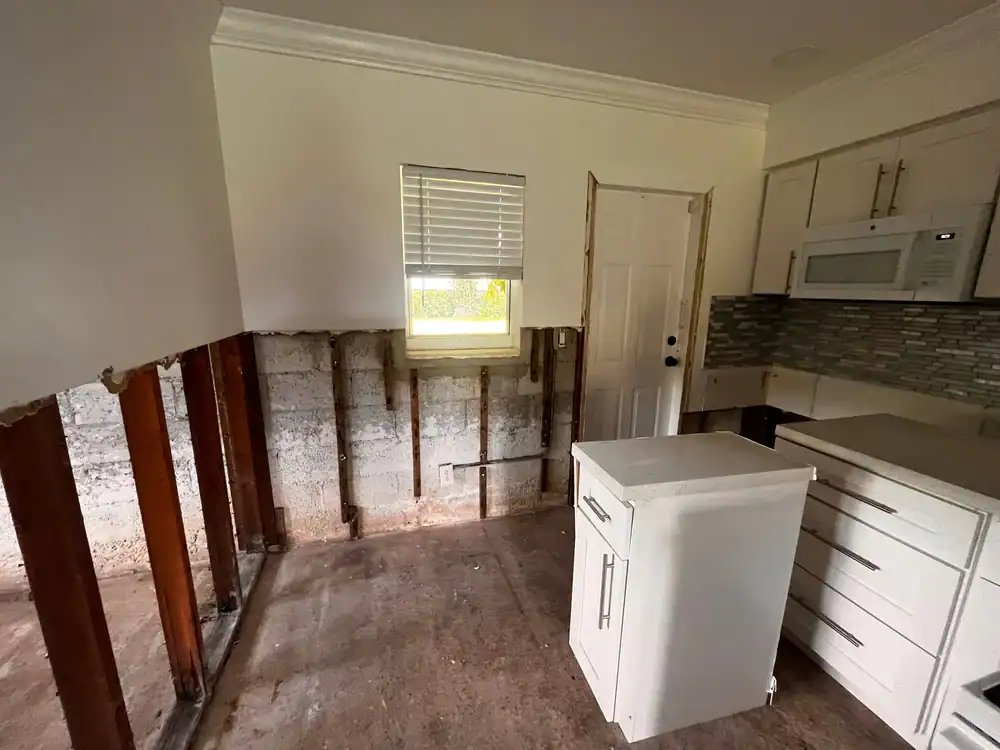
Construction follows a clear sequence: demo, rough work, inspections, finishes, and final walkthrough. If anything unexpected turns up during demolition moisture damage, mold, or materials requiring environmental handling, which is a real possibility in older South Shore homes it gets resolved in-house without derailing the timeline. When the project is done, you walk through it together before anyone signs off.
Everything Your Kitchen Needs, Handled Under One Roof
A kitchen remodel isn’t one job it’s a sequence of interconnected trades that have to be coordinated precisely or the whole thing falls apart. We manage every phase in-house: design, demolition, carpentry, cabinetry, countertop installation, flooring, electrical and plumbing coordination, and final finishes. You’re not managing a roster of subcontractors. You have one point of contact from the first design conversation to the day you cook your first meal in the new kitchen.
For Great River homeowners specifically, material selection is part of the conversation from day one. Homes along the Connetquot and near the Great South Bay deal with salt air and ambient humidity that accelerate wear on finishes, grout, and hardware that aren’t specified for coastal conditions. We select materials that hold up in this environment cabinet finishes that resist moisture, countertop materials that don’t absorb it, caulks and sealants that perform in a climate like this one.
The scope of work is built around your kitchen not a preset package. Whether you’re reconfiguring a layout, replacing cabinetry, upgrading countertops and appliances, or taking the space down to the studs and starting over, the process adapts to what your home actually needs. Every project includes full permit coordination with the Town of Islip, 3D design modeling before construction begins, and a final walkthrough before the job is closed out.
Do I need a building permit for a kitchen remodel in Great River, NY?
It depends on what the work involves. In Great River, you’re under the jurisdiction of the Town of Islip Building Division, which follows New York State Uniform Code alongside local Islip requirements. Cosmetic work painting, replacing cabinet doors, swapping out fixtures generally doesn’t require a permit. But if the project involves moving plumbing, modifying electrical circuits or panels, removing or altering walls, or touching gas lines, a permit is required and inspections will be scheduled at specific stages of the work.
This is one of the areas where working with an experienced local contractor makes a real difference. We handle the entire permit process for every project preparing the documentation, submitting through the Town of Islip’s building division, and coordinating directly with inspectors throughout construction. You never have to figure out the building department on your own, and you never have to wonder whether your finished kitchen has an open permit that will surface as a problem when you go to sell.
How much does a kitchen remodel typically cost in Great River, NY?
Kitchen remodel costs vary significantly based on scope, materials, and what’s discovered once the walls are opened. In the New York market, a minor kitchen remodel averages around $27,000 to $30,000, while a full gut renovation in a larger or more complex space can reach $100,000 or more. Labor typically accounts for 50% to 60% of the total cost, which is why contractor selection is one of the most consequential financial decisions in the process not just for the quality of the result, but for how the budget holds up when surprises arise.
In Great River, where homes are transacting above $1.5 million, the calculus is a little different than it would be in a $400,000 house. The investment has to match the home. Buyers in this market are sophisticated and will notice when materials or craftsmanship don’t measure up to the property’s overall quality. A kitchen that’s done right at this price point isn’t just a lifestyle upgrade it’s a financial strategy. Minor remodels are returning over 100% ROI in 2025, and 54% of realtors recommend a kitchen upgrade before listing.
What happens if asbestos or mold is found during kitchen demolition?
This is a more common scenario in Great River than most homeowners expect. A significant portion of Long Island’s South Shore housing stock was built before 1980, and homes from that era frequently contain asbestos in insulation, floor tile, or pipe wrap materials that get disturbed during a kitchen demolition. Mold is also a real possibility in homes that have experienced any moisture intrusion over the years, especially in a waterfront community where ambient humidity is elevated year-round.
With most kitchen-only contractors, discovering either of these during demo means the project stops. A separate remediation company gets called in, timelines shift, and the conversation about additional costs begins. We hold active asbestos abatement licensing and handle environmental remediation in-house. If something is found during demo, it gets addressed by our team, on the same timeline, without subcontractors or project delays. For homeowners in an older South Shore community like Great River, that capability isn’t a nice-to-have it’s a practical necessity.
How long does a kitchen remodel take from start to finish in Great River?
The honest answer is that timeline depends heavily on scope and what’s found during demolition. A straightforward kitchen remodel cabinet replacement, new countertops, updated flooring, no structural changes can be completed in three to six weeks once materials are ordered and permits are in place. A full gut renovation involving layout changes, new plumbing runs, electrical upgrades, and structural modifications will typically run eight to twelve weeks or longer.
The permit process through the Town of Islip adds time to the front end of any project that requires it usually two to four weeks for permit approval before construction can begin. Planning your project with that lead time in mind is important, especially if you’re working toward a specific target, like having the kitchen finished before the holidays or before listing the home. We walk through realistic timelines during the design phase so you’re not caught off guard, and the 3D design approval process ensures that material selections and layout decisions are finalized before the first wall opens which is one of the biggest drivers of mid-project delays.
What materials hold up best in a coastal Great River kitchen environment?
Great River’s location between the Connetquot River and the Great South Bay creates a specific set of conditions that inland Long Island communities don’t face to the same degree. Salt air from the bay, elevated ambient humidity, and the seasonal swing from humid summers to cold, dry winters put real stress on materials that weren’t specified for a coastal environment. Cabinet finishes that look perfect in a showroom can warp, peel, or discolor within a few years if they’re not rated for high-humidity conditions.
For cabinetry, thermally fused laminate and certain painted finishes with moisture-resistant primers outperform standard finishes in this environment. For countertops, quartz outperforms natural stone in terms of moisture resistance and maintenance in coastal settings granite requires regular sealing to stay protected. Grout should be sealed and, where possible, large-format tiles reduce the number of grout lines exposed to humidity. Hardware finishes matter too brushed nickel and stainless hold up better than chrome in salt-air environments. These aren’t just aesthetic choices. In Great River, they’re durability decisions.
Is a kitchen remodel worth it if I'm planning to sell my home in Great River?
In most markets, this is a judgment call. In Great River, it’s closer to a straightforward yes with some nuance. Buyers in this market are paying $1.5 million and above for homes, and at that price point, they arrive with high expectations and real options. A dated kitchen in an otherwise well-maintained home is one of the first things a discerning buyer notices, and it typically shows up as a reduced offer or a longer time on market. Great River homes are already averaging around 73 days on market longer than the national average which means sellers can’t afford to give buyers a reason to move on.
The financial case is also supported by the numbers. Minor kitchen remodels are delivering over 100% ROI in 2025, and 54% of realtors recommend a kitchen upgrade before listing. That doesn’t mean you need a full gut renovation before putting the home on the market sometimes a targeted refresh of cabinetry, countertops, and fixtures is enough to shift buyer perception significantly. The right scope depends on the home’s current condition and your target sale price. That’s a conversation worth having before you decide either way, and it’s something we can help you think through during the initial consultation.