Pre-War Kitchens in Hamilton Grange Deserve More Than a Generic Remodel
Most contractors aren’t ready for what’s inside a 100-year-old Hamilton Grange building. We are and we handle everything from the board approval to the final inspection.
I needed a professional consultation explanation of procedure for safe removal of Asbestos in my apartment complex. Without having an account yet, I was very impressed with the caring, knowledgeable and generous advice offered by Jessica, and will look forward to doing business in the future. Thank you so much! I feel much more informed about a sometimes scary endeavor. Peace. Nancy Silva Mineola, NY.
Mia Munoz
Used this company to clean up some water flood in my house. They were fast and easy to work with.very professional, Would recommend to anyone!
Nini Valle
Great company, had a flood and they responded quickly and efficiently. Billed my insurance company directly. I highly recommend this company!
joe colapietro, jr
I had pipe freeze in my basement right before a snow storm and they made to within an hour to help start the clean up process. They we by our side throughout the entire process and even helped with the insurance company. They did such a great job with the cleanup, repair, remidiation, I contracted them to perform the repairs and finishes in the basement. They came with enough manpower and material to get the job done. Leo and Jessica were nothing but a pleasure to deal with!!
Cristian Arredondo c
I had some water damage in my home and Green Island was able to take care of my issue quickly and effectively. I am very pleased with the work they did. They responded quickly and were very professional.
Michael M
Outstanding service! From the office to the field crew everyone was friendly, helpful and responsive. I highly recommend Green Island Group.
A Kitchen That Finally Works for How You Actually Live
Hamilton Grange apartments weren’t designed for modern life. The galley kitchens in these pre-war buildings were built for a different era small, closed off, and short on storage. When you renovate, you’re not just getting new cabinets. You’re getting a kitchen that fits the way you cook, entertain, and move through your space every single day.
The buildings along Amsterdam Avenue and Convent Avenue have good bones. But good bones don’t mean the infrastructure is ready for a modern kitchen. Outdated electrical panels, aging plumbing, and original plaster walls are the norm here and if your contractor hasn’t worked inside buildings like these before, those surprises become your problem mid-project. That’s not a position you want to be in.
When the work is done right, the difference is immediate. Counter space that actually makes sense. Storage that works vertically because floor space is limited. Lighting that changes the feel of a room that may not have a window. And a kitchen that adds real value to a property in a neighborhood where buyers are actively looking for exactly this updated interiors inside historic buildings with character that newer construction simply can’t replicate.
5,000 New York Projects. Zero Surprises We Haven't Seen Before.
We’ve been doing restoration and remodeling work across New York since 2012. Over 5,000 completed projects. That number matters here because Hamilton Grange’s housing stock brownstones, pre-war walk-ups, co-ops built between 1895 and 1940 comes with conditions that newer construction simply doesn’t. Asbestos floor tiles. Lead paint. Knob-and-tube wiring. Corroded galvanized pipes behind walls that haven’t been touched in decades. We’ve seen all of it, and we know how to handle it without stopping your project cold.
We’re also a certified MWBE contractor, approved by New York State which means we’ve been vetted at an institutional level, not just rated on a review platform. When you’re investing $40,000 or more into a kitchen in a building near Strivers’ Row or Sugar Hill, that kind of accountability matters. Our team manages the full scope: design, permits, board communication, construction, and final sign-off. One point of contact from start to finish.
What a Kitchen Renovation Actually Looks Like in a Manhattan Co-Op
It starts with a consultation where we look at your actual space not a generic floor plan, but your kitchen, your building, your layout constraints. From there, we build out a 3D design so you can see exactly what the finished kitchen looks like before anything is removed. In a compact Hamilton Grange apartment where every inch counts, getting the design locked in before demolition isn’t optional. It’s the only way to avoid expensive mid-project changes.
Once the design is approved, we handle the paperwork and in Manhattan, that’s a real process. If you’re in a co-op, that means coordinating your Alteration Agreement with building management before a DOB filing can even begin. Then architectural drawings, DOB permit submission, and review which, as of 2024, runs four to eight weeks on its own. We manage all of it. You don’t need to chase anyone down or figure out what an Alt-2 permit means.
Construction begins once approvals are in place. We work within your building’s rules: standard work hours, dust containment, coordinated material deliveries so the elevator situation doesn’t become a building-wide issue. When the work is done, we handle the final DOB inspection and sign-off. You get a finished kitchen and a closed permit not a renovation that’s technically incomplete on paper.
Built for Pre-War Buildings, Not Just New Construction Condos
A kitchen renovation in Hamilton Grange isn’t the same job as one in a new construction building in Midtown. The walls are plaster, not drywall. The electrical panel may need upgrading before a modern range or dishwasher can run properly. The plumbing configuration might make a layout change more involved than it looks on paper. We account for all of that upfront in the design, in the quote, and in the timeline so nothing catches you off guard halfway through.
On the construction side, we handle custom cabinetry designed specifically for smaller Manhattan kitchens: ceiling-height uppers that use vertical space, integrated appliance solutions, pull-out organizers, and soft-close hardware built to your exact dimensions. Countertops, backsplash, flooring, lighting all of it is scoped and executed under one contract with one team. No subcontractor juggling, no gaps in accountability.
If your renovation starts as an emergency a burst pipe in January, a roof leak that takes out your kitchen ceiling we handle the restoration first and the remodel second. We carry full insurance, work directly with your insurance carrier on covered damage, and hold all required New York City credentials: NYC GC License, HIC License, and H13 Kitchen and Bath specialty licensing. Everything needed to pull permits, do the work legally, and close it out properly.
Do I need board approval to remodel my kitchen in a Hamilton Grange co-op?
Yes and it’s usually the longest part of the entire process. In a co-op, which covers the majority of residential ownership in Hamilton Grange, you need a signed Alteration Agreement from your building’s board before the NYC Department of Buildings will accept a permit application. That agreement outlines what work is allowed, what insurance certificates are required, what the approved work hours are, and what your responsibilities are to the building and your neighbors.
The timeline for board approval alone typically runs four to eight weeks, and that’s before DOB review, which has its own queue. Starting the board process early ideally before you’ve finalized your design is one of the most important things you can do to keep your project on schedule. We help you understand what your specific building’s alteration agreement requires and coordinate the communication with management so you’re not navigating it alone.
How much does a kitchen remodel cost in Hamilton Grange, NY?
For a Manhattan kitchen renovation, a basic facelift without layout changes typically runs $20,000 to $30,000. A mid-range remodel that includes new appliances and minor layout adjustments is generally $35,000 to $60,000. A full custom overhaul with premium materials can reach $60,000 to $120,000 or more. Those ranges are specific to New York City labor alone runs $150 to $250 per hour here, which is a significant portion of any project budget.
One cost that surprises a lot of Hamilton Grange homeowners: board approvals and DOB permit filings can add $8,000 to $20,000 to the total, depending on the scope of work and your building’s specific requirements. That’s a real budget line item, not a footnote. We walk through all of it in the initial consultation so you have a clear picture of the full investment before any decisions are made.
What permits are required for a kitchen renovation in Manhattan?
Most full kitchen renovations in Manhattan require an Alteration Type 2 permit from the NYC Department of Buildings. This covers interior renovations that don’t change the use or occupancy of the space which is the standard scenario for a kitchen remodel. To file for that permit, you need a licensed architect or professional engineer to prepare and submit construction plans for DOB review.
Beyond the DOB permit, your co-op or condo building will have its own requirements through the Alteration Agreement separate from city permits entirely. If your building is within a designated historic district, like parts of the Convent Avenue Historic District in Hamilton Grange, there may also be Landmarks Preservation Commission considerations depending on the scope of work. We handle the permit filings and coordinate with your building management so the process moves as smoothly as the city allows.
What happens if asbestos or lead paint is found during my kitchen renovation?
In Hamilton Grange’s pre-war buildings most of which were constructed between 1895 and 1940 asbestos and lead paint are common finds. Asbestos was used extensively in floor tiles, pipe insulation, plaster, and ceiling materials. Lead paint is present in virtually all buildings constructed before 1978, and NYC Local Law 1 imposes strict requirements on contractors who disturb painted surfaces in buildings built before 1960.
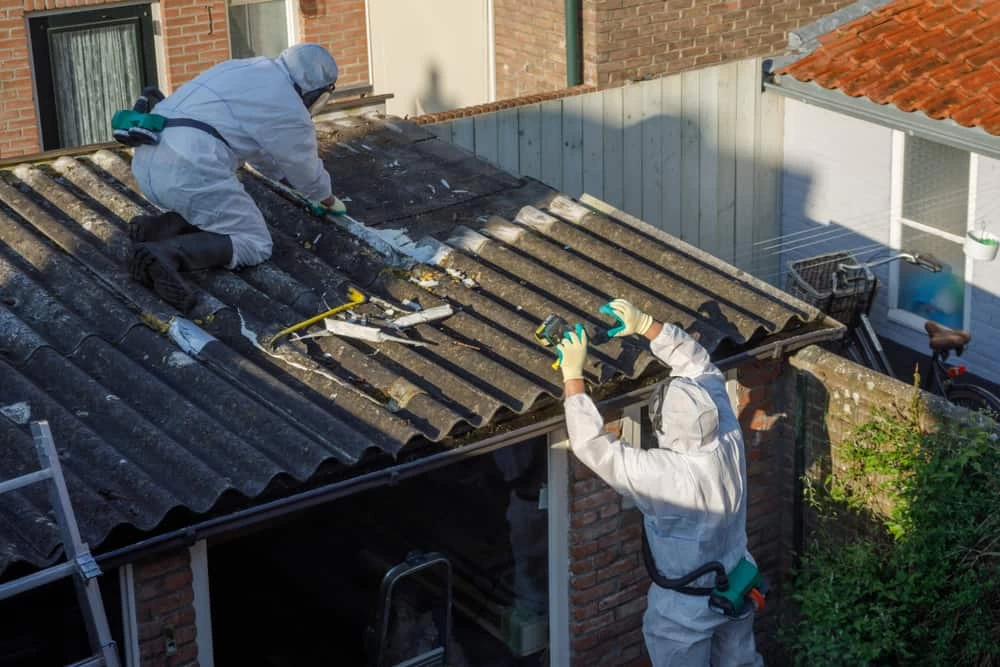
When these materials are found, work cannot legally continue until they’re properly addressed. For most contractors, that means stopping the project and sending you to find a licensed abatement company. We handle asbestos abatement in-house it’s a core service, not an afterthought. We test, abate, and document everything in compliance with NYC regulations, then continue the renovation without you having to coordinate a separate contractor or reset your timeline from scratch.
How long does a kitchen renovation take in a Hamilton Heights apartment?
The honest answer is that the construction itself the actual demo, installation, and finishing typically takes three to six weeks for a full kitchen remodel. But in a Manhattan co-op or condo, the total timeline from project start to the day construction begins is often ten to twenty weeks, because of everything that happens before a tool is picked up.
Board approval runs four to eight weeks. Architectural drawings take two to four weeks. DOB permit review, as of 2024, has increased significantly and now runs four to eight weeks on its own. These phases can overlap somewhat, but not entirely. We map out a realistic timeline in the consultation phase so you know what to expect and we start the approval and permitting process as early as possible to avoid unnecessary delays on the back end.
Can Green Island Group handle a kitchen remodel that started as water damage in my building?
Yes and this is actually one of the more common ways kitchen renovations start in Hamilton Grange. Pre-war buildings along Broadway and Amsterdam Avenue are prone to the kinds of water events that begin as emergencies: a pipe freezes and bursts in January, a roof leak during a nor’easter migrates down through the ceiling, a failed connection floods the unit below. When that happens, the damage to cabinets, flooring, and walls often makes a full kitchen renovation the logical next step once the restoration is complete.
We respond to water damage events around the clock and work directly with insurance carriers on covered damage so you’re not managing that process yourself during an already stressful situation. Once the restoration is done, the same team can move directly into the renovation scope. You don’t have to start over with a new contractor, re-explain the building’s requirements, or lose weeks of momentum. It’s one continuous project with one team who already knows your space.