Gold Coast Kitchens Deserve More Than a Generic Contractor
Lattingtown homes aren’t like most homes on Long Island — and your kitchen renovation shouldn’t be treated like one either. We handle full kitchen remodels built to match the scale, character, and quality of North Shore estates.
I needed a professional consultation explanation of procedure for safe removal of Asbestos in my apartment complex. Without having an account yet, I was very impressed with the caring, knowledgeable and generous advice offered by Jessica, and will look forward to doing business in the future. Thank you so much! I feel much more informed about a sometimes scary endeavor. Peace. Nancy Silva Mineola, NY.
Mia Munoz
Used this company to clean up some water flood in my house. They were fast and easy to work with.very professional, Would recommend to anyone!
Nini Valle
Great company, had a flood and they responded quickly and efficiently. Billed my insurance company directly. I highly recommend this company!
joe colapietro, jr
I had pipe freeze in my basement right before a snow storm and they made to within an hour to help start the clean up process. They we by our side throughout the entire process and even helped with the insurance company. They did such a great job with the cleanup, repair, remidiation, I contracted them to perform the repairs and finishes in the basement. They came with enough manpower and material to get the job done. Leo and Jessica were nothing but a pleasure to deal with!!
Cristian Arredondo c
I had some water damage in my home and Green Island was able to take care of my issue quickly and effectively. I am very pleased with the work they did. They responded quickly and were very professional.
Michael M
Outstanding service! From the office to the field crew everyone was friendly, helpful and responsive. I highly recommend Green Island Group.
A Kitchen That Finally Matches the Rest of Your Home
A lot of Lattingtown homeowners are sitting on properties worth $2 million or more — with a kitchen that hasn’t been touched since the nineties. The rest of the home is beautiful. The kitchen just doesn’t keep up. That gap is more common than you’d think in a village where homes have been in families for decades, and it’s exactly the kind of project we were built for.
Kitchens on the North Shore face conditions that inland Nassau County homes don’t. The humidity off the Long Island Sound works on wood cabinetry over time — warping drawer boxes, softening finishes, and quietly doing damage that only becomes obvious when you start pulling things apart. If your home predates 1978, there’s a strong chance there’s lead paint in the mix too. These aren’t theoretical concerns — they’re the reality of renovating older coastal homes in Lattingtown, and they require a contractor who knows how to handle them correctly.
When the project is done right, the difference isn’t just visual. You get a kitchen that functions the way your life actually works now — better storage, a layout that opens up to how you entertain, materials that hold up to the environment you live in. And on a property at this price point, a well-executed kitchen renovation isn’t an indulgence. It’s one of the highest-returning investments you can make before a sale, or simply the best upgrade you can give yourself if you’re staying.
Kitchen Remodel Contractors Serving Lattingtown, NY
We've Built Kitchens in Lattingtown Before — We Know What Works Here
We’re a full-service renovation contractor based in New York, and the North Shore is not new territory for us. We’ve worked on older, larger, architecturally specific homes throughout Lattingtown and the surrounding communities — Locust Valley, Glen Cove, Bayville — the kinds of properties where cookie-cutter solutions simply don’t work. That experience matters when you’re renovating a home with real architectural character and a price tag to match.
What makes this different from calling a national franchise or a lead-gen referral? Accountability. We’re a real company with a real license, real insurance, and a real stake in the reputation we’ve built serving Nassau County homeowners. We pull permits through Lattingtown Village Hall directly — not through a Nassau County blanket process — because that’s what’s required here, and we know the difference.
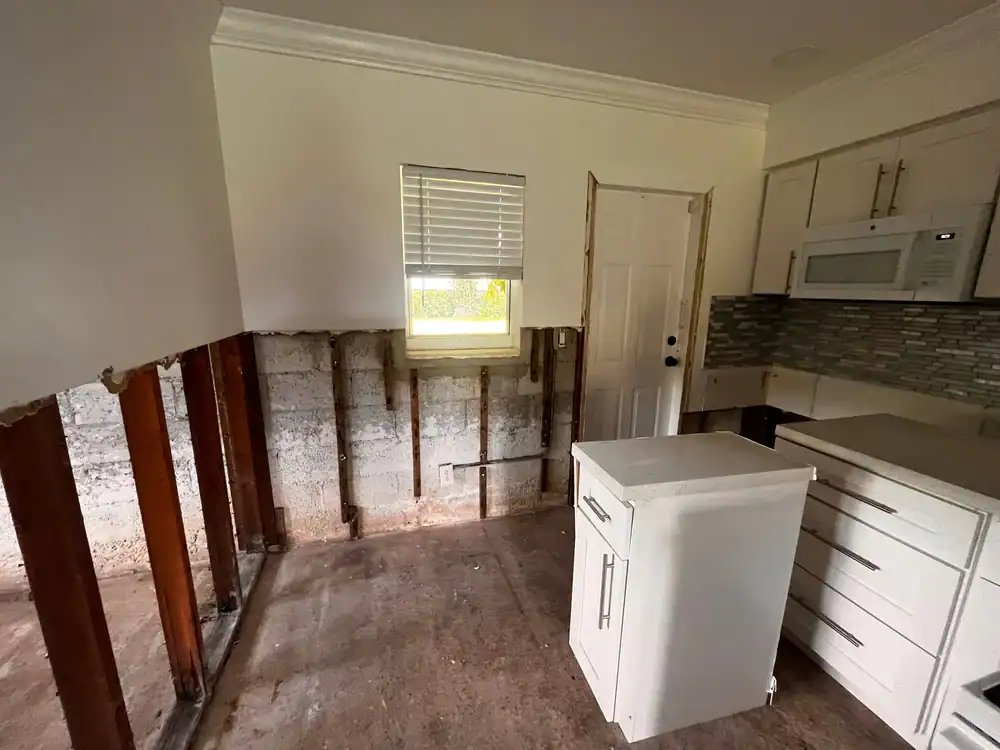
If your kitchen has seen water damage, storm intrusion, or decades of coastal moisture buildup, we can handle the remediation and the renovation under one roof. You don’t need two contractors, two timelines, and two sets of headaches.
Kitchen Redesign Process for Lattingtown Homeowners
No Mystery, No Surprises — Here's What to Expect
It starts with a consultation at your property. We walk the kitchen with you, look at what’s there, talk through what you actually want, and give you an honest read on what the scope involves. For older Lattingtown homes, that first walkthrough often reveals things worth knowing before a single cabinet comes down — moisture behind walls, original materials that need special handling, or layout constraints that affect what’s possible. Better to know upfront than mid-project.
From there, we handle the permit process through Lattingtown Village Hall. This is a village-level permit, not a county permit — and it has its own requirements and review timeline. We manage that entirely so you’re not chasing paperwork or trying to figure out who to call. Once permits are in hand, the build begins. Demolition, rough work, any structural or plumbing changes, cabinetry, countertops, tile, fixtures, appliances — all of it coordinated through one team, one schedule, and one point of contact.
Spring tends to be the busiest window for kitchen projects in this area — homeowners want things done before summer entertaining season kicks in. If you’re thinking about a fall or winter start, lead times on materials are typically shorter and scheduling is more flexible. Either way, the process is the same: clear communication, no dropped balls, and a finished kitchen you can actually use.
Full Kitchen Renovation Services in Lattingtown, NY
Everything the Job Needs, Under One Contractor
A full kitchen renovation with us covers the complete scope — layout reconfiguration, cabinetry, countertops, backsplash, flooring, lighting, plumbing fixtures, and appliance integration. For Lattingtown homes specifically, that often means working around original architectural details, non-standard ceiling heights, or older plumbing and electrical systems that need updating before the cosmetic work begins. We don’t skip that part. We address what’s underneath so the finished product holds up the way it should.
If your kitchen has experienced water intrusion — from a nor’easter, a plumbing failure, or years of moisture accumulation near the Sound — we can bridge the remediation and renovation in one coordinated project. That’s something most kitchen remodelers can’t offer, and it matters when your walls are already open and the scope is already in motion. Handling both sides under one contract saves time, eliminates the coordination gap between trades, and typically costs less than running two separate projects back to back.
Every project is fully permitted through Lattingtown Village Hall and built to village code. We carry general liability insurance and workers’ compensation, and we’re EPA Lead-Safe certified — which is directly relevant given how many homes in this village predate 1978. If you want documentation before signing anything, we provide it. No hesitation.
Do I need a permit for a kitchen remodel in Lattingtown, NY?
Yes — and the permit comes from Lattingtown Village Hall specifically, not from Nassau County or the Town of Oyster Bay. Lattingtown is an incorporated village with its own municipal government and its own building permit process, which surprises a lot of homeowners who assume all Nassau County permits go through the same office. Any structural changes, plumbing relocations, or electrical work associated with your kitchen renovation will require a permit pulled at the village level.
This matters more than it might seem. Unpermitted work in a village that actively monitors construction creates real problems — for your homeowner’s insurance, for your ability to sell the property, and for your liability if something goes wrong. We handle the entire permit process on your behalf, including submitting the required documentation and coordinating inspections. You don’t need to figure out who to call or what forms to file. We know the process in Lattingtown, and we manage it start to finish.
How much does a kitchen remodel typically cost in Lattingtown?
For a home in Lattingtown, a realistic budget for a full kitchen renovation starts around $75,000 and can run $150,000 to $200,000 or more depending on scope, materials, and what’s found once the walls come open. That range is higher than what you’d see quoted for a kitchen in Levittown or East Meadow — and it should be. The homes here are larger, the architectural expectations are higher, and the materials palette that actually fits a Gold Coast estate is not the same as what works in a postwar Cape.
Labor and materials costs in Nassau County run 20 to 30 percent above national averages, and North Shore contractors who work on estate-scale homes price accordingly. On a property worth $2 to $4 million, a $100,000 kitchen renovation is a proportionate investment — and in the Northeast, kitchen remodels consistently return among the highest percentages of their cost at resale of any home improvement project. The question isn’t whether it’s worth doing. It’s whether you’re doing it with the right team.
My Lattingtown home is older — what should I know before starting a kitchen renovation?
Older homes in Lattingtown — and many here trace to the mid-20th century or earlier — come with a specific set of renovation realities. Lead paint is common in homes built before 1978, which means any contractor disturbing painted surfaces is legally required to hold EPA Lead-Safe (RRP) certification and follow specific containment and cleanup protocols. Not every contractor working on Long Island bothers with this certification. We are certified, and we follow the required work practices on every project where it applies.
Beyond lead paint, older coastal homes often have moisture damage that isn’t visible until demolition begins — warped subflooring, soft framing behind cabinets, or compromised wall cavities from years of humidity off the Sound. Kitchens near exterior walls or on the north-facing sides of a home tend to accumulate this kind of damage quietly over decades. We factor this into the initial walkthrough and give you an honest assessment before work starts, so there are no budget surprises once the walls are open.
How long does a kitchen renovation take from start to finish?
For a full kitchen gut renovation in a Lattingtown home, a realistic timeline runs eight to twelve weeks from the start of construction — sometimes longer depending on the scope of structural or plumbing work involved. That doesn’t include the time before construction begins: the design consultation, material selection, permit submission, and the village’s review timeline at Lattingtown Village Hall. From first conversation to first day of demo, plan for six to ten weeks on the front end, especially if you’re ordering custom cabinetry or specialty materials with longer lead times.
Timing your project matters here. Spring is peak demand on the North Shore — homeowners want kitchens finished before summer entertaining season, and contractor schedules fill up fast between March and June. If you start the conversation in January or February, you’re in a much better position to hit a May or June completion. Fall and winter projects tend to move faster because material lead times shorten and scheduling is more flexible. Either season works — it just affects how early you need to get the process started.
Can Green Island Group handle a kitchen renovation that also involves water damage?
Yes — and this is one of the more meaningful differences between us and a contractor who only does kitchen remodeling. If your kitchen has experienced water intrusion from a nor’easter, a plumbing failure, or years of coastal moisture accumulation, the remediation and the renovation don’t have to be two separate projects with two separate contractors. We can assess the damage, handle any necessary remediation work, and then design and build the new kitchen — all under one contract, one timeline, and one point of contact.
This matters practically because when the walls are already open for damage remediation, the incremental cost of upgrading the kitchen at the same time is significantly lower than it would be in a standalone renovation. You’re not paying twice for demolition, twice for disposal, or twice for the disruption to your home. For Lattingtown homeowners near Frost Creek or along the Sound-facing side of their property, this kind of combined scope comes up more often than you’d expect — and having a contractor who can handle both sides cleanly makes a real difference in how the project goes.
How do I know if a kitchen remodeling contractor is actually licensed to work in Lattingtown?
The license that matters for home improvement work in Lattingtown is a Nassau County Home Improvement Contractor License, issued by the Nassau County Department of Consumer Affairs. This is a county-specific credential — not a generic state registration — and it’s verifiable. Any contractor you’re seriously considering should be able to give you their license number without hesitation so you can confirm it directly with the county.
Beyond the license, ask for a current Certificate of Insurance before any contract is signed. You want to see general liability coverage and workers’ compensation — both, not just one. In a village where properties are worth millions and where the homeowner can bear liability for injuries that occur on site, this documentation isn’t optional. We provide both on request, before anything is agreed to. If a contractor hesitates on either of these — the license number or the insurance certificate — that hesitation is your answer. In a close-knit community like Lattingtown, the contractors who last are the ones who have nothing to hide.