Manhasset Homes Deserve a Kitchen That Matches Them
Your kitchen should reflect the home you invested in — not remind you of what it used to be. We handle kitchen remodeling in Manhasset, NY from first conversation to finished space.
I needed a professional consultation explanation of procedure for safe removal of Asbestos in my apartment complex. Without having an account yet, I was very impressed with the caring, knowledgeable and generous advice offered by Jessica, and will look forward to doing business in the future. Thank you so much! I feel much more informed about a sometimes scary endeavor. Peace. Nancy Silva Mineola, NY.
Mia Munoz
Used this company to clean up some water flood in my house. They were fast and easy to work with.very professional, Would recommend to anyone!
Nini Valle
Great company, had a flood and they responded quickly and efficiently. Billed my insurance company directly. I highly recommend this company!
joe colapietro, jr
I had pipe freeze in my basement right before a snow storm and they made to within an hour to help start the clean up process. They we by our side throughout the entire process and even helped with the insurance company. They did such a great job with the cleanup, repair, remidiation, I contracted them to perform the repairs and finishes in the basement. They came with enough manpower and material to get the job done. Leo and Jessica were nothing but a pleasure to deal with!!
Cristian Arredondo c
I had some water damage in my home and Green Island was able to take care of my issue quickly and effectively. I am very pleased with the work they did. They responded quickly and were very professional.
Michael M
Outstanding service! From the office to the field crew everyone was friendly, helpful and responsive. I highly recommend Green Island Group.
Most Manhasset homeowners aren’t looking for a quick refresh. They’re looking for a kitchen that finally functions the way the rest of their life does — efficiently, cleanly, without friction. When the renovation is done right, you stop working around the space and start using it.
A lot of homes in Manhasset were built before 1940. The kitchens in those pre-war colonials and Tudors were designed for a completely different way of living. Walls that once separated the kitchen from a formal dining room, layouts built for domestic staff, cabinetry that’s been through decades of North Shore humidity — none of it was built for how you actually cook, host, or move through your home today. A proper renovation doesn’t just update the look. It corrects the layout, modernizes the infrastructure, and gives you a kitchen that belongs in the house you’re living in now.
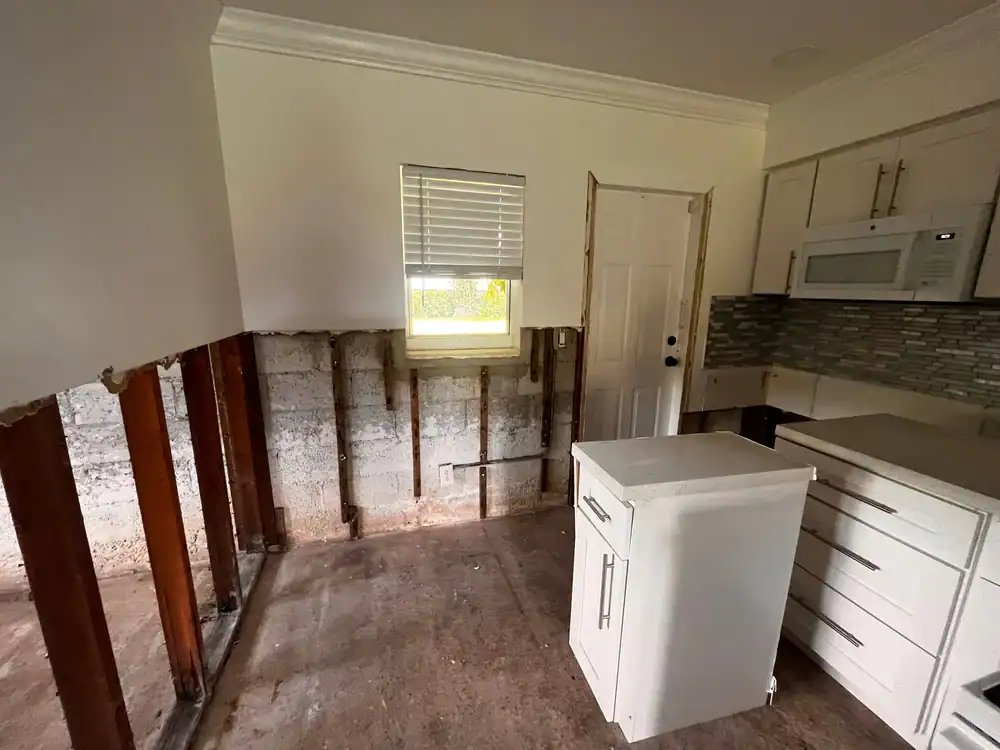
Homes near Manhasset Bay deal with elevated moisture year-round. That coastal humidity works its way into original cabinetry, subflooring, and walls in ways that aren’t always visible until demo begins. When that happens, you want a contractor who can handle what’s behind the walls — not one who stops at the surface and hands you a problem.
We’re a full-service renovation contractor serving Nassau County’s North Shore, including Manhasset and the surrounding communities. That means kitchen remodeling from initial scope through final inspection — cabinets, countertops, plumbing, electrical, flooring, and everything in between — managed under one contract with one point of contact. You’re not coordinating between a cabinet company, a tile guy, and a plumber who all have different schedules and no shared accountability.
Manhasset sits in the Town of North Hempstead, which means permits flow through the Building Department right on Plandome Road. That’s not a detail every contractor knows. We handle the permitting process from application through final sign-off, which matters enormously when you’re renovating a home worth over a million dollars and you need the work to be legal, documented, and protected at resale.
Every project comes with a written scope, a documented change order process, and a clear payment schedule. No surprises at the end of the job.
How We Handle Your Kitchen Renovation From Start to Finish
It starts with a consultation — a real conversation about your kitchen, your home, and what you actually want. Not a sales pitch. We look at the existing layout, the architectural character of the space, and what the scope realistically involves before anything is put on paper. In a pre-war colonial or Tudor home, that assessment matters more than it does in newer construction. Original plumbing, knob-and-tube wiring, and structural walls that don’t show up on any plan are common in Manhasset’s older housing stock, and they need to be accounted for before a number is quoted.
From there, you receive a written scope of work with a clear timeline. Permit applications are submitted to the Town of North Hempstead’s Building Department — a step that’s non-negotiable for any kitchen involving electrical work, plumbing relocation, or structural wall removal. That process has specific timelines, and we build them into the project schedule so you’re not waiting on an inspection that wasn’t planned for.
Construction runs with a dedicated project manager who communicates proactively. You get updates without having to chase them. If something unexpected surfaces during demo — and in a home built before 1940, it sometimes does — you hear about it immediately, with options, before any additional work begins.
We handle the full range of kitchen renovation work in Manhasset — from complete gut renovations that reconfigure the entire layout to targeted cabinet replacements, countertop upgrades, and fixture modernization. The scope is built around what your kitchen actually needs, not a pre-packaged tier that may not fit your home.
For full gut renovations — the most common scope in Manhasset’s pre-war homes — that means demo, structural assessment, updated electrical and plumbing, custom or semi-custom cabinetry, stone or quartz countertops, new flooring, and finish work that matches the architectural character of the home. Open-concept conversions, where a wall between the kitchen and dining room is removed to create the layout today’s buyers expect, are a regular part of the work in this area. Those projects require structural permits and engineered drawings, and we manage that process entirely.
For homeowners who want a more targeted renovation — cabinet replacement without a full layout change, countertop replacement, or a kitchen makeover focused on finishes rather than infrastructure — the scope is scoped accordingly. We also hold EPA Lead-Safe certification, which is directly relevant in Manhasset where the vast majority of homes predate 1978. If lead paint is present in the kitchen, the renovation has to be handled correctly. That’s not optional, and it’s not something every contractor in Nassau County is certified to manage.
How much does a kitchen remodel typically cost in Manhasset, NY?
In Manhasset, a full gut kitchen renovation in an average-sized home — and homes here average around 4,300 square feet — typically runs between $80,000 and $150,000, depending on layout complexity, material selections, and what’s found during demo. Cabinet-focused renovations without a full layout change generally land in the $25,000 to $60,000 range. Countertop and fixture updates without touching the cabinets can come in between $10,000 and $25,000.
The reason costs in Manhasset tend to run higher than in surrounding Nassau County communities isn’t just material selection — it’s the age of the housing stock. Pre-war homes frequently require electrical updates, plumbing assessments, and structural work that newer construction doesn’t. Those aren’t add-ons. They’re the cost of doing the job correctly in a home that’s 80 to 100 years old. A quote that doesn’t account for that is either incomplete or optimistic in a way that will catch up with you mid-project.
Do I need a permit for a kitchen remodel in the Town of North Hempstead?
Yes — and the scope of what requires a permit is broader than most homeowners expect. In the Town of North Hempstead, which governs Manhasset as an unincorporated hamlet, electrical work involving new circuits or panel upgrades requires an electrical permit. Plumbing relocation — moving a sink, adding a dishwasher connection, or touching a gas line — requires a plumbing permit. Removing a wall to create an open-concept layout, which is one of the most common requests in Manhasset’s older colonial homes, requires a structural permit and often engineered drawings.
The Building Department is located at 210 Plandome Road in Manhasset itself. Permit timelines vary by scope, and they need to be factored into the project schedule from the beginning — not treated as an afterthought. We handle the entire permitting process on your behalf. In a home worth $1.3 million or more, unpermitted work creates real problems at resale. Nassau County real estate attorneys flag it routinely during transactions, and legalizing it after the fact costs significantly more than doing it right the first time.
How long does a kitchen renovation take in Manhasset?
A full gut kitchen renovation in Manhasset typically takes eight to fourteen weeks from the start of construction, depending on scope and material lead times. That range assumes permits are submitted and approved before work begins — which is how we structure every project. Custom cabinetry, which is the standard in this market, often carries a six to ten week lead time on its own. That’s not construction time. That’s manufacturing time, and it needs to be ordered before demo begins.
The honest answer is that timeline depends heavily on what’s behind the walls. In a pre-war home on the North Shore, demo sometimes reveals original plumbing or wiring that needs to be addressed before any finish work can proceed. We build contingency into every project schedule for exactly that reason. Families with kids in the Manhasset school district typically plan renovations around the academic calendar — late winter through spring, or late summer before school resumes. That’s worth factoring in when you’re deciding when to start.
What should I look for when hiring a kitchen remodel contractor in Nassau County?
The first thing to ask for is a Nassau County Home Improvement Contractor License. This is a legal requirement for any contractor performing residential renovation work in Manhasset and the surrounding communities — it’s issued by the Nassau County Department of Consumer Affairs and verifiable online. A contractor who can’t produce a license number immediately is operating without one, which exposes you to real liability if something goes wrong.
After that, ask for a Certificate of Insurance — general liability and workers’ compensation, both current. In a home worth over a million dollars, this is not a formality. Then ask to see the written scope of work and the change order process before you sign anything. The most common source of renovation disputes isn’t bad workmanship — it’s charges that appear at the end of a project that weren’t in the original agreement. A contractor who operates with a documented change order process, where every scope modification is written and signed before work begins, eliminates that problem entirely.
What happens if water damage or mold is found during a Manhasset kitchen renovation?
It’s more common than people expect, particularly in Manhasset. The combination of pre-war construction and coastal proximity to Manhasset Bay means elevated humidity has been working on these homes for decades. Original cabinetry installed against exterior walls, subflooring around older plumbing, and areas behind sinks that have never been touched are the most common places moisture damage shows up during demo.
When that happens, the work stops, you’re contacted immediately, and you’re given a clear explanation of what was found and what the options are. No work proceeds beyond the original scope without a signed change order. Our full-service capability means that remediation and renovation can be handled under the same contract — you don’t have to bring in a separate restoration company, wait for them to finish, and then restart the renovation. That continuity matters for timeline, budget management, and the quality of the finished result.
Is a kitchen renovation worth the investment in a Manhasset home?
In the New York metro area, a well-executed kitchen renovation returns approximately 85 to 96 cents on the dollar at resale — one of the highest returns of any home improvement category in the country. In Manhasset specifically, where the median property value sits around $1.36 million and buyers are sophisticated enough to recognize quality work when they see it, a kitchen renovation is rarely just a lifestyle decision. It’s a financial one.
Beyond resale, there’s the daily reality of living in a home with a kitchen that doesn’t work. Manhasset homeowners chose this community deliberately — for the schools, the commute on the Port Washington Branch, the character of the neighborhood. The home itself should match that standard. A kitchen renovation that modernizes the layout, updates the infrastructure, and brings the finishes in line with the rest of the house isn’t an indulgence. It’s bringing the most-used room in the house up to the level of everything else you’ve invested in.