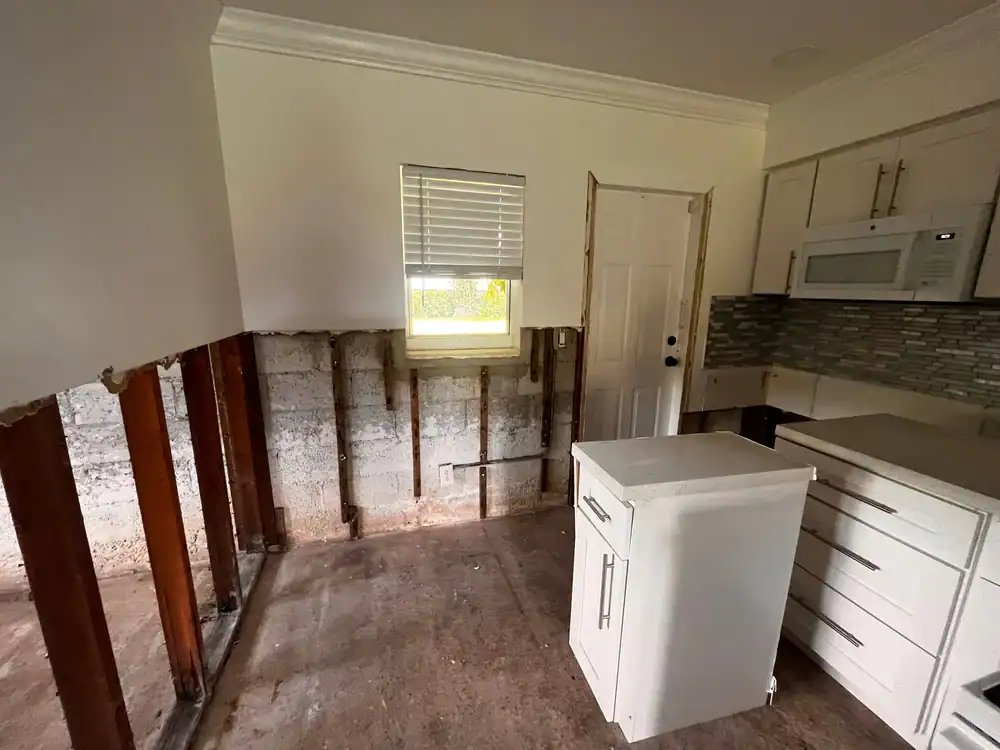
Most homes in Massapequa Park were built decades ago — and the kitchens show it. We handle the full kitchen remodel, start to finish, so you’re not managing three different contractors while commuting into the city.
I needed a professional consultation explanation of procedure for safe removal of Asbestos in my apartment complex. Without having an account yet, I was very impressed with the caring, knowledgeable and generous advice offered by Jessica, and will look forward to doing business in the future. Thank you so much! I feel much more informed about a sometimes scary endeavor. Peace. Nancy Silva Mineola, NY.
Mia Munoz
Used this company to clean up some water flood in my house. They were fast and easy to work with.very professional, Would recommend to anyone!
Nini Valle
Great company, had a flood and they responded quickly and efficiently. Billed my insurance company directly. I highly recommend this company!
joe colapietro, jr
I had pipe freeze in my basement right before a snow storm and they made to within an hour to help start the clean up process. They we by our side throughout the entire process and even helped with the insurance company. They did such a great job with the cleanup, repair, remidiation, I contracted them to perform the repairs and finishes in the basement. They came with enough manpower and material to get the job done. Leo and Jessica were nothing but a pleasure to deal with!!
Cristian Arredondo c
I had some water damage in my home and Green Island was able to take care of my issue quickly and effectively. I am very pleased with the work they did. They responded quickly and were very professional.
Michael M
Outstanding service! From the office to the field crew everyone was friendly, helpful and responsive. I highly recommend Green Island Group.
What Changes When Your Kitchen Finally Works for You
The kitchens in Massapequa Park’s mid-century Cape Cods and ranch homes weren’t designed for how families actually live today. Galley layouts with no counter space, cabinets that have absorbed thirty years of coastal humidity, electrical panels that trip the moment you run the dishwasher and the microwave at the same time — these aren’t minor inconveniences. They’re daily friction that adds up.
When the kitchen is right, the whole house feels different. You’re not working around the space anymore — the space is working for you. Cooking is easier, mornings are smoother, and having people over doesn’t require an apology for the state of the room everyone ends up in anyway.
There’s also a financial side worth being straight about. Massapequa Park home values are averaging around $810,000 right now, and the market here is genuinely competitive — scoring 83 out of 100 on Redfin. A well-executed kitchen renovation in the Northeast returns roughly 85 to 96 cents on the dollar at resale. That’s not a guarantee, but it does mean you’re not spending money that disappears — you’re reinvesting it into your most valuable asset in one of the strongest real estate markets on Long Island.
We’re a full-service renovation contractor serving Nassau County and the South Shore of Long Island. We manage the entire kitchen remodel in-house — design consultation, permits, demolition, construction, and final walkthrough — without handing your project off to a rotating cast of subs once the deposit clears.
That matters more in a place like Massapequa Park than people realize. This is an incorporated village with its own Building Department on Broadway, not just a Nassau County hamlet where permits run through a general process. We know the difference, and we handle the Village permit process directly so you don’t have to figure it out yourself.
A lot of Massapequa Park homeowners are on the Babylon Branch every morning, off the train at Penn Station by 8 AM and not back until evening. You’re not home to supervise. That’s exactly why having one accountable team — one project manager, one point of contact — isn’t a nice-to-have. It’s the whole thing.
It starts with a consultation at your home, where we look at the actual space — not a floor plan, the real kitchen. We’re checking layout, existing plumbing and electrical, cabinet condition, and anything behind the walls that could affect scope or budget. In homes built in the 1950s and 1960s, which covers the vast majority of Massapequa Park, that often means assessing for outdated wiring, original plumbing runs, and surfaces that may contain lead paint. We’re EPA Lead-Safe certified, so that’s not a conversation you need to have with us separately — it’s already built into how we work.
From there, we put together a detailed, line-item written proposal. Not a ballpark. A real breakdown of labor, materials, permits, and contingency so you know exactly what you’re agreeing to before anything starts. Once you’re ready to move forward, we pull the permit through the Village of Massapequa Park Building Department and schedule the work around a timeline we both agree on upfront.
During the build, your project manager keeps you updated — not just when you ask, but proactively. If you’re commuting and can’t check in during the day, you’ll have updates waiting when you get home. The job closes with a final walkthrough, a certificate of compliance from the Village, and a written warranty on all labor performed.
We handle kitchen remodels across the full spectrum — from focused cabinet and countertop renovations to complete gut renovations that reconfigure the layout entirely. For Massapequa Park’s mid-century housing stock, the most common projects involve opening up a closed galley or L-shaped kitchen, upgrading electrical service to handle modern appliance loads, relocating plumbing to support a better layout, and selecting materials that hold up to the coastal humidity that comes with living near the Great South Bay.
That last point matters more than most contractors will tell you. The moisture environment on the South Shore is harder on cabinet finishes, hardware, and under-sink areas than what you’d find in an inland Nassau County community like Mineola or Westbury. We spec materials with that in mind — cabinet constructions and finish selections that won’t warp or degrade within five years of installation.
Every project includes full permit management through the Village of Massapequa Park Building Department, EPA Lead-Safe work practices for pre-1978 homes, manufacturer warranty passthrough on all materials, and a written labor warranty.
Do I need a permit for a kitchen remodel in Massapequa Park, NY?
Yes — and the permit process in Massapequa Park works differently than in surrounding areas. Because Massapequa Park is an incorporated village, permits for kitchen remodeling work are processed through the Village of Massapequa Park Building Department, not through the Town of Oyster Bay or Nassau County directly. Any work that involves moving plumbing, upgrading electrical service, or making structural changes requires a permit and inspection before the work can be closed out with a certificate of compliance.
This matters for a practical reason: unpermitted work in Massapequa Park can surface during a future real estate transaction and create real problems — required remediation, re-inspection, or in some cases, work that has to be redone. The Village has active code enforcement, and buyers’ attorneys in a market this competitive will look. We handle the entire permit process for you, including preparing the required plans and specifications, submitting the application, and coordinating the Village inspections through to final compliance.
How much does a kitchen remodel typically cost in Massapequa Park?
Budget ranges vary depending on scope, but here’s a realistic picture for Massapequa Park’s housing stock. A focused renovation — new cabinets, countertops, backsplash, and fixtures without moving plumbing or electrical — typically runs in the $35,000 to $55,000 range. A full gut renovation that reconfigures the layout, upgrades electrical service, relocates plumbing, and includes new flooring and appliances generally falls between $80,000 and $150,000 or more, depending on material selections and what’s found behind the walls.
That last part is important in homes built between the 1940s and 1960s, which is the vast majority of Massapequa Park. Hidden conditions — outdated knob-and-tube wiring, original cast iron plumbing, asbestos floor tile — are common enough that a contingency of 10 to 15 percent should be built into any realistic budget conversation. We identify as much of this as possible during the initial consultation and before the proposal is written, so you’re not hit with surprises mid-project.
How long does a kitchen remodel take from start to finish in Massapequa Park?
For a mid-range kitchen renovation — cabinets, countertops, tile, fixtures, and moderate electrical or plumbing work — you’re typically looking at four to eight weeks of active construction once the permit is approved and materials are on-site. A full gut renovation with layout changes can run ten to fourteen weeks depending on scope and what’s uncovered during demolition.
The permit timeline through the Village of Massapequa Park adds time to the front end of the project, which is worth factoring into your planning. If you’re aiming for a completed kitchen before the holidays, the planning and design phase should ideally start in August or September. For homeowners preparing to list in the spring real estate market — which is extremely competitive in Massapequa Park — starting the conversation in late fall gives you the runway to get through design, permitting, and construction without rushing. We’ll give you a realistic timeline in writing before any work begins.
My Massapequa Park home was built in the 1950s — what should I expect during a kitchen remodel?
A few things come up consistently in mid-century South Shore homes that are worth knowing before you start. Electrical service in homes from this era was not designed to handle modern kitchen appliances — a refrigerator, dishwasher, microwave, and range running simultaneously will often exceed what a 1950s panel can support. Upgrading the electrical service is a common and necessary part of a full kitchen renovation in homes like these, and it requires its own permit through the Village.
Lead paint is essentially universal in pre-1978 homes, which covers virtually every house in Massapequa Park. Federal law requires contractors working in these homes to be EPA Lead-Safe certified and to follow specific containment and cleanup procedures — we’re certified, and those practices are standard on every job we do here. Original plumbing in homes this age is often cast iron or galvanized steel, and if you’re reconfiguring the layout, it may need to be partially replaced. None of this is a reason not to renovate — it’s just information you should have upfront so the budget and timeline reflect reality.
Is it worth remodeling a kitchen in Massapequa Park before selling my home?
In most cases, yes — but the answer depends on the condition of the current kitchen and what the market around you looks like. Massapequa Park’s real estate market is genuinely competitive, with homes averaging around $810,000 and a competitiveness score of 83 out of 100 on Redfin. Buyers in this market have high expectations, and an outdated kitchen in a home at this price point is a visible liability — it shows up in offers, in negotiations, and in how long the home sits before going under contract.
A well-executed kitchen renovation in the Northeast returns roughly 85 to 96 cents on the dollar at resale according to Remodeling Magazine’s Cost vs. Value data. That doesn’t mean you should gut the kitchen two weeks before listing — the timing and scope matter. But if your kitchen is genuinely outdated and you have 12 to 18 months before you plan to sell, a renovation is one of the highest-ROI improvements you can make to a Massapequa Park home. We can walk you through what makes sense for your specific situation during the consultation.
How do I choose the right kitchen remodeling contractor in Massapequa Park?
The most important things to verify before signing anything: Nassau County home improvement contractor licensing, current general liability and workers’ compensation insurance, and EPA Lead-Safe certification — which is legally required for work in pre-1978 homes and applies to virtually every house in Massapequa Park. Ask any contractor you’re considering to provide copies of all three before the conversation goes further. A contractor who hesitates on any of these isn’t a contractor you want working in your home.
Beyond credentials, pay attention to how the proposal is structured. A vague number on a one-page quote is a red flag — it leaves room for change orders that inflate the final cost well beyond what you agreed to. A detailed, line-item written proposal that breaks down labor, materials, permits, and contingency is what a serious contractor provides. Also ask specifically about experience with the Village of Massapequa Park permit process. This village has its own Building Department and its own inspection requirements — a contractor who’s never pulled a permit here before will be learning on your project. That’s a risk worth avoiding in a community where the homes are worth protecting.