I needed a professional consultation explanation of procedure for safe removal of Asbestos in my apartment complex. Without having an account yet, I was very impressed with the caring, knowledgeable and generous advice offered by Jessica, and will look forward to doing business in the future. Thank you so much! I feel much more informed about a sometimes scary endeavor. Peace. Nancy Silva Mineola, NY.
Mia Munoz
Used this company to clean up some water flood in my house. They were fast and easy to work with.very professional, Would recommend to anyone!
Nini Valle
Great company, had a flood and they responded quickly and efficiently. Billed my insurance company directly. I highly recommend this company!
joe colapietro, jr
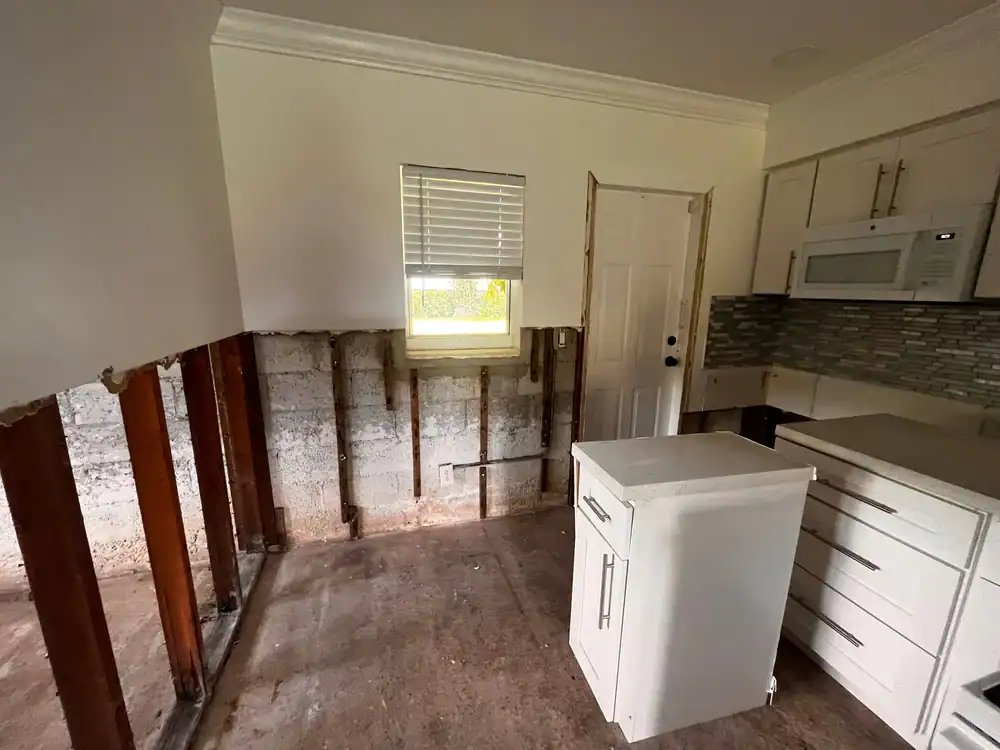
I had pipe freeze in my basement right before a snow storm and they made to within an hour to help start the clean up process. They we by our side throughout the entire process and even helped with the insurance company. They did such a great job with the cleanup, repair, remidiation, I contracted them to perform the repairs and finishes in the basement. They came with enough manpower and material to get the job done. Leo and Jessica were nothing but a pleasure to deal with!!
Cristian Arredondo c
I had some water damage in my home and Green Island was able to take care of my issue quickly and effectively. I am very pleased with the work they did. They responded quickly and were very professional.
Michael M
Outstanding service! From the office to the field crew everyone was friendly, helpful and responsive. I highly recommend Green Island Group.
What Changes When Your Muttontown Kitchen Finally Matches Your Home
A dated kitchen in a $2 million home isn’t just an aesthetic problem — it’s a disconnect. The rest of your house reflects the investment you’ve made over the years. The kitchen shouldn’t be the room you apologize for when guests walk in. When that changes, everything about how you use the space changes with it.
Muttontown homes are large, and most of them were built in the 1960s through 1980s — an era when kitchens were compartmentalized, closed off from the rest of the house, and designed around a lifestyle that looks nothing like yours today. Opening up that layout, replacing outdated cabinet boxes, and bringing in the kind of finishes that actually belong in a North Shore estate home isn’t a luxury upgrade. It’s closing the gap between what your home is worth and what it looks like inside.
There’s also a practical side that matters here. A meaningful portion of Muttontown’s housing stock was built before 1978, which means renovation work needs to be handled by a contractor who is EPA Lead-Safe certified — not just licensed in a general sense. When you’re working in a pre-1978 home with children in the house, that distinction isn’t a technicality. It’s the difference between a renovation done right and one that creates a problem you didn’t have before.
We’re a New York-based home improvement contractor that handles kitchen renovations in Muttontown from the first design conversation to the final walkthrough — without farming out the work to a rotating cast of subcontractors you’ve never met. That matters more in a home like yours than it does almost anywhere else.
We’ve worked throughout Nassau County’s North Shore communities, including Muttontown, Syosset, Jericho, and the Oyster Bay corridor — the kinds of homes where kitchens are large, projects are complex, and the homeowner’s expectations are exactly what they should be. We know how to navigate the permit process through the Village of Muttontown, how to work within HOA-governed communities like Stone Hill, and how to deliver finished work that actually fits the home it’s going into.
What you won’t get from us is the experienced estimator who disappears after the deposit. The person you meet at the consultation is connected to the project from start to finish. That’s not a talking point — it’s just how we operate.
No Surprises — Here's Exactly How a Muttontown Kitchen Remodel Unfolds
It starts with a consultation where we actually look at your kitchen — not just take measurements and hand you a brochure. We want to understand how you use the space, what’s not working, and what the end result needs to look like. From there, we move into design and material selection, where we’ll walk you through cabinet construction options, countertop materials, appliance integration, and layout changes that make sense for the size and character of your home.
Once the design is locked in, we handle the permitting. Kitchen renovations in Muttontown that involve electrical, plumbing, or structural changes require building permits through the Village of Muttontown and compliance with Nassau County codes. We manage that process — the documentation, the submission, the inspections — so you’re not chasing down a building department on your own. This step alone is where a lot of projects go sideways with contractors who either skip it or don’t know the local process.
Construction follows a clear sequence: demolition, rough-in trades, cabinet installation, countertop fabrication and install, tile, lighting, and finish carpentry. Your project timeline is built around real lead times for your specific materials and the actual permit turnaround in this jurisdiction — not an optimistic number designed to get you to sign. We close with a final walkthrough and punch list, and everything is backed by a written warranty on labor with manufacturer warranties passed through on all materials.
Built for Homes That Require More Than a Standard Approach
A kitchen renovation in Muttontown is not the same project as one in Hicksville or East Meadow. The average home in this village is over 6,000 square feet, and the kitchen footprint, complexity, and material expectations that come with that are in a different category entirely. What we do here reflects that — from the cabinet lines we work with to the countertop materials we specify to the way we sequence a project in a home that’s actively being lived in.
Every project includes full design consultation, permit management, demolition, and complete installation across all trades — cabinetry, countertops, plumbing, electrical, tile, and finish carpentry. If your home was built before 1978, our EPA Lead-Safe certification means the renovation is handled with the containment and cleanup protocols required by federal law. If your property is within a community like Stone Hill at Muttontown, we coordinate access and job site conduct according to the community’s requirements — that’s not something every contractor operating in Nassau County bothers to think about in advance.
We work with semi-custom and full-custom cabinet lines, natural and engineered stone countertops, panel-ready and integrated appliances, and lighting designs that treat your kitchen as the room it actually is in a home like yours — not an afterthought. Nassau County licensing, insurance, and a written warranty are standard on every project, not optional add-ons you have to ask about.
Do I need a building permit for a kitchen remodel in Muttontown, NY?
In most cases, yes. If your kitchen renovation in Muttontown involves any electrical work, plumbing relocation, structural changes, or HVAC modifications, you need a building permit issued through the Village of Muttontown within the framework of Nassau County building codes. This applies to the majority of full kitchen remodels — which typically involve at least one of those trades.
Skipping permits isn’t just a legal risk. Unpermitted work in Nassau County can void your homeowner’s insurance during construction, create mandatory disclosure obligations when you sell, and in some cases require the unpermitted work to be torn out and redone. The permit process adds time upfront, but it protects you at every stage after that. We handle the entire permitting process on your behalf — research, documentation, submission, and inspection coordination — so it doesn’t fall on you to figure out.
How much does a kitchen remodel typically cost in Muttontown, NY?
In Muttontown, a full kitchen remodel in a home of this size and caliber typically runs between $80,000 and $200,000 or more, depending on the scope, materials, and whether the project involves layout reconfiguration or structural changes. That range reflects the reality of working in large estate-style homes on Nassau County’s North Shore — where kitchens are bigger, material expectations are higher, and labor costs reflect the complexity of the work.
A more modest refresh — new cabinet fronts, updated countertops, and cosmetic changes without moving plumbing or walls — can come in lower. But if you’re looking at a full gut renovation in a 6,000-square-foot Muttontown home with custom cabinetry, stone countertops, and integrated appliances, the lower end of that range is usually the floor, not the ceiling. What you should be skeptical of is a bid that comes in dramatically below market without a clear explanation of what’s been left out. In this market, a suspiciously low number almost always means something is missing from the scope.
How long does a full kitchen renovation take from start to finish?
For a full kitchen remodel in a Muttontown home, you’re typically looking at a total timeline of 10 to 20 weeks from signed contract to final walkthrough — and that range is honest, not padded. The largest variable is usually cabinet lead time, which for semi-custom and full-custom lines can run 6 to 10 weeks on its own. Add permit processing time through the Village of Muttontown, inspection scheduling, and the realistic sequencing of trades, and you can see how a project that takes 6 weeks of active construction still requires a longer overall window.
The timeline you receive from us is built from the actual lead times on your specific materials and the real permit turnaround in this jurisdiction. We don’t give you a number designed to make the sale and then walk it back after the deposit. If you’re planning around a specific date — a family event, a summer travel schedule, a holiday window — tell us that at the consultation and we’ll build the project plan around it rather than discovering the conflict three weeks in.
What should I look for when hiring a kitchen contractor in Nassau County?
The first thing to verify is whether the contractor holds a current Home Improvement Contractor License from the Nassau County Department of Consumer Affairs. This is a specific license required by Nassau County law — it’s separate from a general business registration, and contractors who can’t produce it are operating illegally in this county. You can verify any contractor’s license status through the Nassau County Department of Consumer Affairs website. Ask for the license number before you sign anything, and look it up.
Beyond licensing, ask for a current Certificate of Insurance showing general liability and workers’ compensation coverage. In a home valued at $1 million or more, working with an uninsured contractor isn’t just risky — it’s a liability that could fall on you if something goes wrong on the job site. Then look at the proposal itself: a contractor who can give you a detailed, written scope of work with a clear payment schedule and a realistic timeline has thought through your project. One who gives you a ballpark number on a handshake hasn’t.
My Muttontown home was built in the 1970s — does that affect the renovation process?
Yes, and it’s worth understanding before work begins. Homes built before 1978 in Muttontown may contain lead-based paint, and federal law under the EPA’s Renovation, Repair, and Painting Rule requires contractors disturbing painted surfaces in those homes to be EPA Lead-Safe certified. This means using specific containment procedures, work practices, and post-renovation cleanup protocols to prevent lead dust from spreading through the home. It’s not optional, and it’s not a formality — lead dust generated during demolition is a genuine health hazard, particularly for children.
Beyond lead paint, older estate-era construction in Muttontown often has characteristics that require experienced hands — oversized rooms, original architectural millwork, and mechanical systems that weren’t designed around modern kitchen layouts. Relocating plumbing or electrical in a 1970s Muttontown home is a different job than doing the same work in new construction. A contractor who has worked in homes like yours on Nassau County’s North Shore will know what to expect. One who hasn’t may be surprised by what’s behind the walls — and pass that surprise on to you in the form of change orders.
Is a kitchen remodel a good investment if I'm planning to sell my Muttontown home?
In the Muttontown market, a well-executed kitchen renovation is one of the strongest investments you can make before listing. Buyers at the $2 million to $5 million price point — which is where most Muttontown homes are positioned — expect the kitchen to match the rest of the home. A dated kitchen in an otherwise well-maintained estate home is one of the most common reasons a listing sits longer than it should, or why buyers come in below asking. Real estate agents in this market will tell you the kitchen is the room that drives the emotional decision to make an offer.
Remodeling Magazine’s Cost vs. Value data consistently shows that kitchen remodels in the Northeast deliver among the highest resale returns of any home improvement project. In a village where homes appreciate the way Muttontown’s do, the math on a kitchen renovation before sale is usually straightforward — especially if the current kitchen is more than 15 years old and hasn’t been updated. The key is doing it right: quality materials, permitted work, and a finished result that a buyer’s agent can point to as a genuine selling feature, not a rushed pre-sale patch job.