I needed a professional consultation explanation of procedure for safe removal of Asbestos in my apartment complex. Without having an account yet, I was very impressed with the caring, knowledgeable and generous advice offered by Jessica, and will look forward to doing business in the future. Thank you so much! I feel much more informed about a sometimes scary endeavor. Peace. Nancy Silva Mineola, NY.
Mia Munoz
Used this company to clean up some water flood in my house. They were fast and easy to work with.very professional, Would recommend to anyone!
Nini Valle
Great company, had a flood and they responded quickly and efficiently. Billed my insurance company directly. I highly recommend this company!
joe colapietro, jr
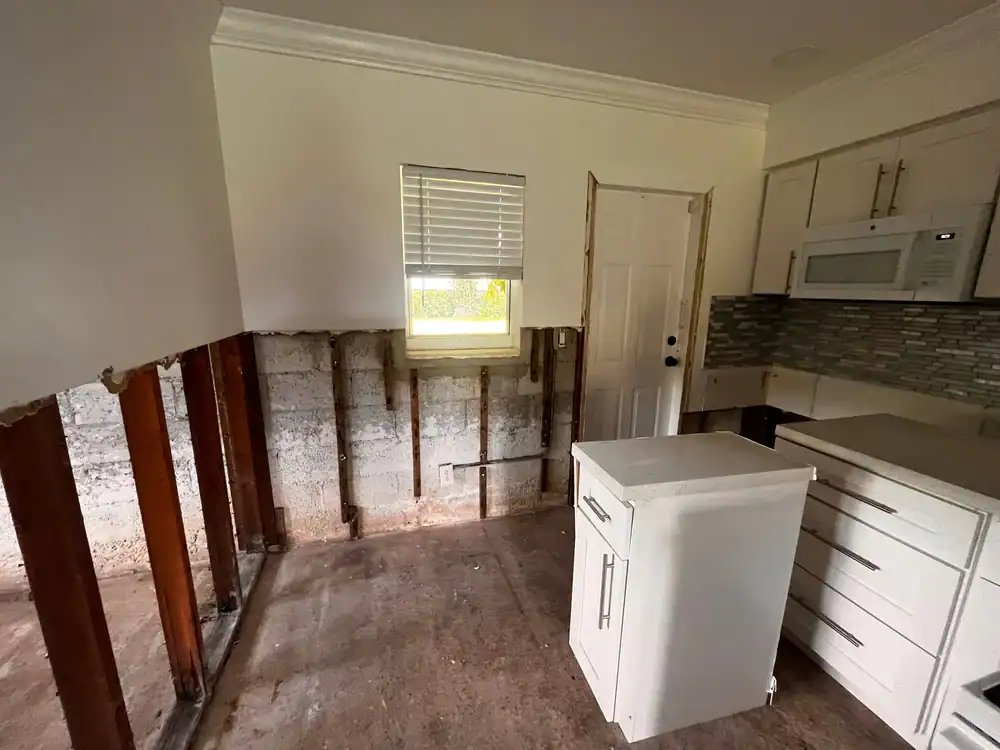
I had pipe freeze in my basement right before a snow storm and they made to within an hour to help start the clean up process. They we by our side throughout the entire process and even helped with the insurance company. They did such a great job with the cleanup, repair, remidiation, I contracted them to perform the repairs and finishes in the basement. They came with enough manpower and material to get the job done. Leo and Jessica were nothing but a pleasure to deal with!!
Cristian Arredondo c
I had some water damage in my home and Green Island was able to take care of my issue quickly and effectively. I am very pleased with the work they did. They responded quickly and were very professional.
Michael M
Outstanding service! From the office to the field crew everyone was friendly, helpful and responsive. I highly recommend Green Island Group.
The homes on the tree-lined streets of New Hyde Park have a lot going for them — solid bones, great location, 33 minutes to Penn Station. The kitchens, though? Most of them were designed for a different era entirely. Closed-off layouts, cramped counter space, electrical systems that trip a breaker when you run the microwave and the coffee maker at the same time. That’s not a character flaw of the house. It’s just a kitchen that was never updated to match the way people actually cook and live today.
A full kitchen renovation fixes that. Not just the way it looks, but the way it functions — how the layout flows, how much storage you actually have, whether the ventilation can handle a serious cooking session without filling the house with smoke. For a lot of New Hyde Park households, that last point matters more than most contractors acknowledge. The community has a significant number of families with South Asian and East Asian backgrounds who cook differently than a standard American kitchen was designed to accommodate — higher heat, more complex prep work, multiple dishes running simultaneously. A kitchen redesign that ignores how you actually cook isn’t a renovation. It’s just a facelift.
And when you’re sitting on a home worth close to $800,000, the investment makes financial sense too. Kitchen renovations in the Northeast return roughly 85 to 96 cents on the dollar at resale, and in a market where New Hyde Park homes go to pending in about 22 days, a renovated kitchen is the difference between multiple offers and a price cut.
We Know New Hyde Park's Homes — And Its Building Department
We’re a Long Island-based home improvement contractor, and New Hyde Park is already part of our regular service territory. That matters for a specific reason: the Village of New Hyde Park has its own incorporated Building Department at 1420 Jericho Turnpike, and it operates differently than the Town of Hempstead or Town of North Hempstead offices that most Nassau County contractors are used to dealing with. Permits here require notarized applications, three sets of construction plans, and certificates of insurance in a specific format that names the Village as certificate holder. We’ve done this before. We handle the paperwork so you don’t have to figure it out yourself.
Beyond the permits, we know the housing stock in New Hyde Park. These are mid-century Cape Cods, brick colonials, and ranch homes — most of them 60 to 80 years old — with kitchens that were built to a completely different standard. We’ve worked in enough of them to know what’s behind the walls before we open them up, and that kind of familiarity changes how a project runs. Fewer surprises. Better planning. A finished kitchen that actually reflects what you wanted from the start.
What the Process Looks Like From Call to Completed Kitchen
It starts with a consultation — a real conversation about how your kitchen is currently failing you and what you actually want it to do. Layout, storage, appliances, finishes, whether you want to open a wall or keep the footprint intact. We’re not pushing a catalog at you. We’re figuring out what makes sense for your home and your household specifically.
From there, we build out a detailed project plan before anything gets ordered or demoed. That includes the permit application to the Village of New Hyde Park Building Department, material selections, trade sequencing, and a realistic timeline with a target completion date we build the entire project backward from. If your kitchen needs plumbing relocated, electrical upgraded, or a wall removed for an open-concept layout, all of that gets coordinated under one project manager — not handed off to a separate GC who doesn’t know what the cabinet installer agreed to.
Once work begins, you have one point of contact throughout. The trades are scheduled in the right order. Materials are pre-ordered to avoid supply delays that push your timeline out by weeks. And when the project wraps, it wraps with a final walkthrough where you tell us if anything isn’t right before we consider the job done. For households near LIJ Medical Center where schedules are demanding and predictability isn’t optional, that structure isn’t a bonus — it’s the baseline expectation, and we meet it.
Kitchen Cabinet Renovation and Remodel New Hyde Park
Full Kitchen Renovation or Targeted Upgrade — Here's the Honest Difference
Not every kitchen in New Hyde Park needs a full gut renovation, and we’ll tell you that straight. If your cabinet boxes are structurally sound and your layout works, a cabinet renovation — new doors, new hardware, new countertops — can modernize the space for a fraction of the cost of a full remodel. If your layout is inefficient, your boxes are damaged, or you want to reconfigure the kitchen entirely, replacement is the smarter long-term investment. We lay out both options clearly in the consultation so you’re making an informed decision, not just agreeing to whatever the contractor recommends.
For full kitchen remodels, the scope typically includes cabinet replacement or refacing, countertop installation, flooring, backsplash, lighting, plumbing fixture updates, and any electrical work required to bring the kitchen up to current load requirements. In New Hyde Park’s older homes, that electrical piece is often more significant than homeowners expect — a 60-year-old kitchen circuit wasn’t designed for a modern refrigerator, dishwasher, microwave, and range running simultaneously. We assess that during the planning phase, not after demo day.
Kitchen makeovers at the cosmetic end of the spectrum — new countertops, cabinet hardware, lighting, and paint — are also available for homeowners who want a meaningful visual update without a major construction project. Whatever the scope, every job is fully permitted through the Village of New Hyde Park Building Department. No shortcuts that come back to haunt you at closing.
Do I need a permit for a kitchen remodel in New Hyde Park, NY?
Yes — and in New Hyde Park specifically, that permit comes from the Village’s own Building Department at 1420 Jericho Turnpike, not from the Town of Hempstead or Town of North Hempstead. This is one of the details that trips up contractors who work across Nassau County without understanding that the Village of New Hyde Park is an incorporated municipality with its own code enforcement and permit process.
Any kitchen remodel that involves plumbing changes, electrical work, structural modifications, or HVAC alterations requires a building permit from the Village. The application needs to be notarized, submitted with three copies of construction plans and a Nassau County Assessment Application, and accompanied by certificates of insurance in a specific format that names the Village as certificate holder. The Village also requires Board of Trustees review before a permit is issued — which adds a step that homeowners in unincorporated areas aren’t used to. We handle all of this on your behalf. You don’t need to become an expert in Village permitting code to get your kitchen renovated correctly.
How much does a kitchen remodel typically cost in New Hyde Park, NY?
In the New Hyde Park market, a full kitchen renovation typically runs between $40,000 and $90,000 depending on the scope, materials, and whether structural work is involved. Cabinet-focused partial remodels — new cabinet doors, countertops, hardware, and lighting without a full layout change — generally fall in the $15,000 to $35,000 range. Cosmetic kitchen makeovers at the lighter end of the spectrum can come in under that.
Labor and material costs in the Nassau County area run roughly 25 to 40 percent above national averages, which is a real factor in budgeting. That said, the return on investment in New Hyde Park is strong — with home values averaging close to $800,000, a well-executed kitchen renovation is a financially defensible investment, not just a lifestyle upgrade. The most important thing is getting a detailed, itemized proposal upfront so you know exactly what you’re committing to before a single cabinet gets ordered.
How long does a full kitchen renovation take in New Hyde Park?
A full kitchen remodel in New Hyde Park typically takes between six and twelve weeks from the start of construction, depending on the scope of work. That timeline does not include the planning and permitting phase, which adds several weeks on the front end — particularly given the Village of New Hyde Park Building Department’s requirement for Board of Trustees review before permit issuance. Factoring in design finalization, material ordering, and permit approval, homeowners should plan for a total project timeline of roughly three to four months from initial consultation to completed kitchen.
The single biggest cause of extended timelines isn’t the construction itself — it’s poor pre-project planning. Materials ordered after demo begins, trades scheduled without a clear sequence, and change orders made mid-project can add weeks to what should have been a clean run. We pre-order materials, sequence trades in advance, and lock in a target completion date before work begins. If you’re planning to have the kitchen done before the holidays or ahead of a spring listing, the time to start the conversation is earlier than most people think.
What's actually involved in opening up a kitchen wall in an older New Hyde Park home?
This is one of the most common requests we get from New Hyde Park homeowners, and it’s also one of the most misunderstood in terms of what’s actually involved. Opening a wall to create an open-concept kitchen sounds straightforward until you open it up and find a load-bearing structure, a plumbing stack, or knob-and-tube wiring that needs to be addressed before anything else can happen.
In New Hyde Park’s mid-century housing stock — most of it built in the 1940s through 1960s — load-bearing walls are common, and the electrical and plumbing systems running through those walls often haven’t been updated since original construction. Before any wall comes down, we assess the structural situation, pull the required permits from the Village Building Department, and have a clear plan for any mechanical systems that need to be rerouted. The permit process for structural work in the Village is more involved than a standard cosmetic remodel, and it exists for good reason — a wall removed without proper structural support is a safety issue, not just a code violation. We don’t skip that process, and you shouldn’t want a contractor who does.
Should I reface my kitchen cabinets or replace them entirely?
The honest answer is that it depends on two things: the condition of your existing cabinet boxes and whether your current layout actually works for you. If the boxes are solid — no water damage, no warping, no structural issues — and you’re happy with where everything sits in the kitchen, refacing is a legitimate option. New doors, drawer fronts, and hardware can dramatically change the look of a kitchen for significantly less than a full replacement.
The problem is that a lot of New Hyde Park kitchens haven’t just aged cosmetically — they’ve aged functionally. A kitchen designed in 1958 wasn’t built with today’s appliances, today’s storage expectations, or today’s cooking habits in mind. If your layout forces you to walk across the kitchen to get from the prep area to the stove, or if you have a corner cabinet that’s essentially a black hole for pots and pans, refacing doesn’t fix any of that. It just puts new doors on an inefficient layout. We’ll give you a straight assessment during the consultation — if refacing makes sense for your kitchen, we’ll tell you. If it doesn’t, we’ll explain exactly why.
How do I find a reliable kitchen remodeling contractor in New Hyde Park, NY?
Start with licensing. Nassau County requires home improvement contractors to be licensed through the Nassau County Department of Consumer Affairs — that license number should be verifiable and displayed clearly. Any contractor working in the Village of New Hyde Park also needs to carry general liability insurance and workers’ compensation insurance in a format that meets the Village’s specific requirements. Ask for the certificate of insurance before you sign anything, and confirm it names the Village of New Hyde Park as certificate holder if your project requires a Village permit.
Beyond credentials, look for a contractor who can demonstrate actual familiarity with New Hyde Park’s housing stock and permit process — not just a contractor who says they serve “all of Nassau County.” The Village’s Building Department has specific requirements that differ from unincorporated Nassau County, and a contractor who hasn’t navigated that process before is going to learn on your project. Reviews from actual Long Island homeowners, a clear and itemized written proposal, and a project manager who is reachable throughout the job are the practical signals that separate contractors worth hiring from ones worth passing on. New Hyde Park is a tight-knit community — your neighbors and colleagues at LIJ have probably used someone. Ask around before you commit.