Lower Manhattan Kitchens Built for What's Behind the Walls
In a neighborhood where buildings date back to the 1800s and co-op boards have the final say, your kitchen remodel needs more than a contractor it needs someone who’s already seen what Lower Manhattan throws at you.
I needed a professional consultation explanation of procedure for safe removal of Asbestos in my apartment complex. Without having an account yet, I was very impressed with the caring, knowledgeable and generous advice offered by Jessica, and will look forward to doing business in the future. Thank you so much! I feel much more informed about a sometimes scary endeavor. Peace. Nancy Silva Mineola, NY.
Mia Munoz
Used this company to clean up some water flood in my house. They were fast and easy to work with.very professional, Would recommend to anyone!
Nini Valle
Great company, had a flood and they responded quickly and efficiently. Billed my insurance company directly. I highly recommend this company!
joe colapietro, jr
I had pipe freeze in my basement right before a snow storm and they made to within an hour to help start the clean up process. They we by our side throughout the entire process and even helped with the insurance company. They did such a great job with the cleanup, repair, remidiation, I contracted them to perform the repairs and finishes in the basement. They came with enough manpower and material to get the job done. Leo and Jessica were nothing but a pleasure to deal with!!
Cristian Arredondo c
I had some water damage in my home and Green Island was able to take care of my issue quickly and effectively. I am very pleased with the work they did. They responded quickly and were very professional.
Michael M
Outstanding service! From the office to the field crew everyone was friendly, helpful and responsive. I highly recommend Green Island Group.
A Kitchen That Finally Works for Where You Actually Live
Peck Slip isn’t a suburb. Your kitchen isn’t a blank slate in a new-construction house with fresh drywall and simple permits. You’re working with a building that has history sometimes 50 years of it, sometimes 150. And when you finally decide to renovate, you want it done right the first time, not ripped apart again six months later because something got missed.
When we open a wall in your Peck Slip kitchen, we’re not surprised by what we find. Outdated plumbing configurations common in 1970s-era Southbridge Towers units, moisture damage from years of East River proximity, aging electrical panels that can’t support modern appliances these aren’t curveballs. They’re Tuesday. That experience means your project doesn’t stall when something unexpected turns up, and your budget doesn’t quietly double because nobody planned ahead.
The result is a kitchen that looks the way you envisioned it and holds up to the way you actually use it. Better layout, better storage, better light, and none of the anxiety that comes with hiring someone who’s never worked in a Manhattan co-op or a converted Seaport loft before.
One Team That Handles the Whole Thing Permits Included
We’ve been working across New York City since 2012, with over 5,000 completed projects across Manhattan, Queens, Nassau, and Suffolk County. We’re not a Long Island company trying to figure out the city. We work here regularly, and we understand what that actually means DOB permits, co-op board alteration agreements, restricted work hours in residential buildings, and the logistical reality of delivering materials to a Lower Manhattan address like Peck Slip.
For Peck Slip residents specifically, that matters. Whether you’re in Southbridge Towers navigating the post-privatization renovation process, or you own a loft in one of the converted warehouse buildings near the South Street Seaport Historic District, we have the licensing, insurance, and experience that your building manager and co-op board will accept without a fight.
We’re also a certified MWBE vetted and approved by New York State. That’s not a marketing badge. It means we’ve been held to an institutional standard of accountability that most residential remodelers in this market haven’t.
What Renovating a Peck Slip Kitchen Actually Looks Like
It starts with a design consultation not a sales pitch. We walk through your kitchen, understand how you use the space, and then build out a full 3D rendering of the proposed renovation before any demolition happens. In a compact Manhattan kitchen where every inch has a job to do, this step isn’t optional. You approve the design before a single cabinet comes down. No surprises, no regret.
Once the design is locked in, we handle the permit process. If your renovation involves moving a sink, adding a gas line, or touching any plumbing or electrical which most meaningful kitchen remodels do you need DOB permits. If you’re in a co-op like Southbridge Towers, you also need board approval and a signed alteration agreement before work can legally begin. We manage all of it. We know what to file, how to file it, and what your building’s management office is going to ask for.
Construction runs on a clear schedule with real communication. Work hours in NYC residential buildings are typically restricted to 9 AM to 4 PM on weekdays, and we plan around that from day one. When the job is done, you get a finished kitchen not a punch list that drags on for weeks.
A full kitchen remodel with us covers the complete scope: custom cabinetry with soft-close hardware, granite or quartz countertop installation, backsplash tile, flooring, under-cabinet lighting, electrical work for new outlets and circuits, and plumbing modifications for relocated sinks or new appliance hookups. If you want to open up a wall and reconfigure the layout entirely, we handle the structural work and the permits that go with it.
For Peck Slip residents, a few things come up regularly that not every contractor is equipped to handle. Buildings in and around the South Street Seaport Historic District may have Landmarks Preservation Commission considerations for any work affecting historic fabric. Older buildings particularly those built before 1980 may contain asbestos in floor tile adhesives or pipe insulation, which requires proper assessment and handling before renovation work begins. If your building was affected by Superstorm Sandy flooding and you did emergency repairs but never completed the full renovation, we can assess what was done and what still needs attention underneath the surface.
The scope is always tailored to what your specific kitchen and building actually need. If you’re in a 1971-era Southbridge Towers unit with original cabinetry and an aging electrical panel, that’s a different starting point than a loft conversion near Water Street and we approach both accordingly.
Do I need a DOB permit to remodel my kitchen in Peck Slip?
It depends on what you’re doing. If your kitchen remodel is purely cosmetic new cabinet fronts, countertops, paint, hardware you typically don’t need a DOB permit. But the moment you start moving plumbing, adding or relocating a gas line, upgrading your electrical panel, or removing a wall, you’re in permit territory. In Manhattan, that means filing with the NYC Department of Buildings, and the permit type depends on the scope: an Alteration Type 2 is common for wall changes and plumbing modifications, while more significant structural work may require an Alteration Type 1.
If you’re in a co-op building like Southbridge Towers, the permit process is only part of it. You also need co-op board approval and a signed alteration agreement before any work can legally start. That document outlines the scope of work, the contractor’s insurance requirements, and the building’s rules around work hours and access. We handle this process regularly in Peck Slip and know exactly what your building’s management office is going to ask for before you even submit the paperwork.
How much does a kitchen remodel typically cost in a Manhattan apartment?
The honest range for a Manhattan kitchen remodel runs from around $26,000 on the budget end think cabinet refacing, new countertops, updated fixtures to well over $150,000 for a full gut renovation with custom cabinetry, high-end appliances, layout reconfiguration, and all the permits that come with it. The reason NYC costs run higher than national averages comes down to a few real factors: contractor insurance minimums required by co-op buildings are higher, work hours in residential buildings are restricted, material delivery in Lower Manhattan is logistically complicated, and skilled tradespeople in this market charge accordingly.
For Peck Slip specifically, your building type plays a big role in where you land on that range. A Southbridge Towers unit with original 1970s cabinetry and an aging electrical panel is a different project than a loft conversion near the Seaport with an open layout and newer infrastructure. The best way to get an accurate number is a proper walkthrough not a ballpark over the phone so the scope is based on your actual kitchen, not a generic estimate.
How does the co-op board approval process work for a kitchen renovation?
Before any renovation work starts in a co-op building, you need the board’s sign-off. The process typically starts with submitting your renovation plans a description of the scope, your contractor’s license and insurance documentation, and sometimes architectural drawings depending on the complexity of the work. The board reviews everything and, if approved, issues an alteration agreement that you and your contractor both sign. That agreement spells out the rules: work hours (usually 9 AM to 4 PM on weekdays in NYC residential buildings), noise restrictions, liability coverage requirements, and what happens if damage occurs to common areas.
For Southbridge Towers residents in Peck Slip, this process has become increasingly relevant since the 2015 privatization. With apartments now valued at real market rates, more residents are investing in renovations and the board has a well-established process for reviewing them. The key is having a contractor who already knows what the board is going to ask for and can submit clean, complete documentation the first time. Incomplete submissions slow everything down, sometimes by weeks. We’ve been through this process in Manhattan co-op buildings repeatedly and know how to keep it moving.
What should I know about renovating a kitchen in a historic Seaport District building?
The South Street Seaport Historic District which covers buildings along Peck Slip between Pearl and Water Streets and was designated by the NYC Landmarks Preservation Commission in 1977 adds a layer of consideration that doesn’t exist in most other parts of the city. The good news is that interior renovations in landmark buildings generally don’t require LPC review unless they affect a designated historic interior feature. Most kitchen remodels, even substantial ones, fall entirely within the interior and don’t trigger LPC involvement.
Where it gets more nuanced is if your renovation involves any work that’s visible from the street, affects the building’s exterior, or touches structural elements that are part of the landmark designation. In those cases, LPC review may be required before DOB permits can be issued. If you’re in one of the converted loft buildings on or near Peck Slip some of which date to the 1830s and 1850s it’s worth confirming the landmark status of your specific building and what that means for your project before you start. We can help you work through that question early so it doesn’t become a delay later.
How long does a kitchen renovation take in a Peck Slip apartment?
For a standard kitchen remodel in a Manhattan apartment new cabinets, countertops, backsplash, updated plumbing and electrical the construction phase typically runs three to six weeks once work actually begins. The part that surprises most people is everything that happens before the first tool touches the kitchen. Design approval, DOB permit filing, and co-op board review can add several weeks to the front end of the timeline, depending on your building and the complexity of the scope.
In a building like Southbridge Towers, where the alteration agreement process is established but requires complete documentation, getting everything submitted correctly the first time is the biggest factor in keeping the pre-construction timeline tight. For more complex renovations layout reconfigurations, structural wall removal, full gut renovations in older loft buildings near Peck Slip the overall timeline from first consultation to finished kitchen can run three to five months when you factor in design, permitting, and construction. That’s not a reason to delay. It’s a reason to start the conversation earlier than you think you need to.
What happens if the contractor finds asbestos or water damage during my kitchen remodel?
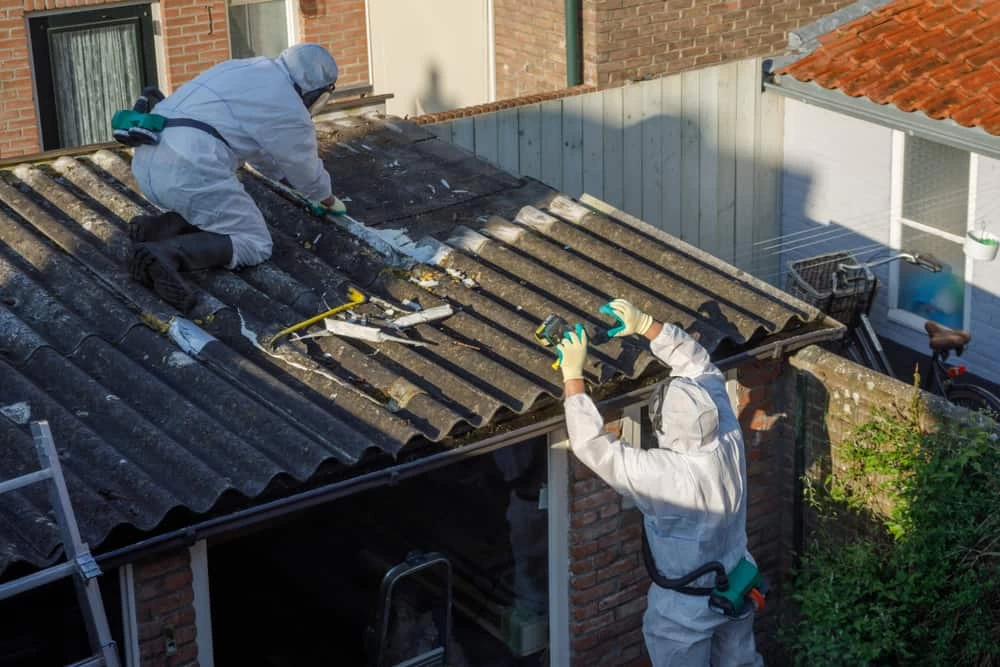
In Lower Manhattan’s older building stock, this isn’t a rare scenario it’s a common one. Buildings constructed before 1980, including Southbridge Towers (built 1971), frequently contain asbestos in floor tile adhesives, pipe insulation, and joint compound. When asbestos-containing materials are disturbed during a renovation, New York City requires that the work stop until a licensed asbestos contractor completes an assessment and, if necessary, abatement. This adds time and cost, but it’s not optional and a contractor who tells you otherwise is one to walk away from.
Water damage is similarly common in this area. The East River waterfront location, combined with the documented flooding that Superstorm Sandy caused throughout the Seaport district in 2012, means that moisture intrusion and related structural damage are real possibilities in ground-floor and lower-level units even in buildings that look fine on the surface. Our background in disaster restoration means we’re not caught off guard by either of these discoveries. We assess, we advise, and we handle it as part of the project not as a reason to inflate your bill or walk off the job.