I needed a professional consultation explanation of procedure for safe removal of Asbestos in my apartment complex. Without having an account yet, I was very impressed with the caring, knowledgeable and generous advice offered by Jessica, and will look forward to doing business in the future. Thank you so much! I feel much more informed about a sometimes scary endeavor. Peace. Nancy Silva Mineola, NY.
Mia Munoz
Used this company to clean up some water flood in my house. They were fast and easy to work with.very professional, Would recommend to anyone!
Nini Valle
Great company, had a flood and they responded quickly and efficiently. Billed my insurance company directly. I highly recommend this company!
joe colapietro, jr
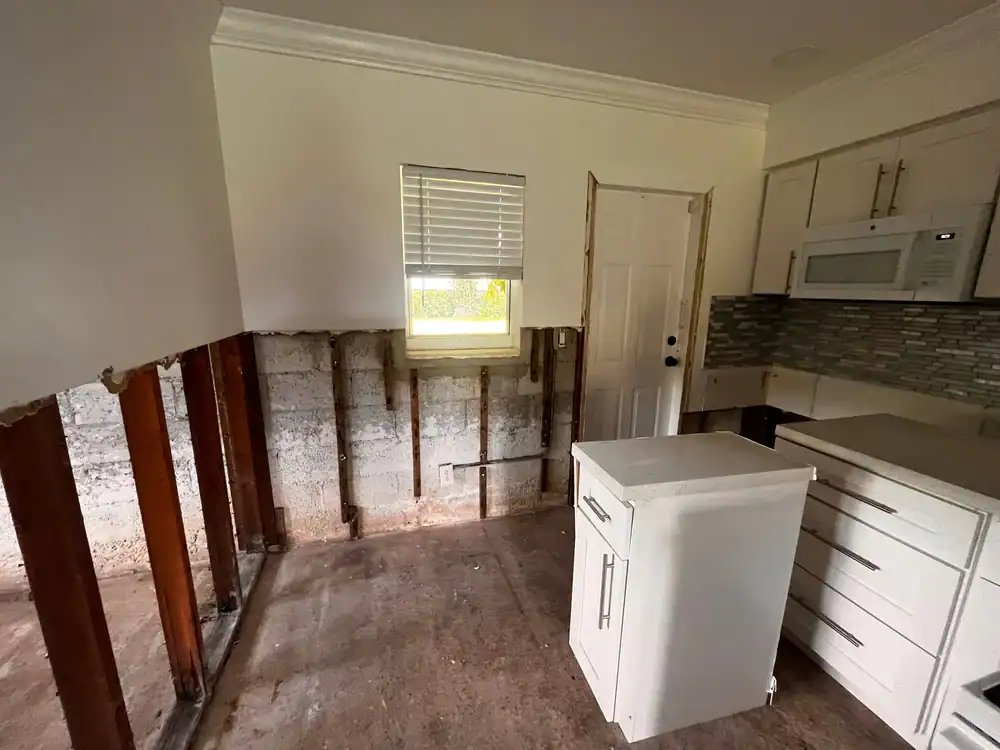
I had pipe freeze in my basement right before a snow storm and they made to within an hour to help start the clean up process. They we by our side throughout the entire process and even helped with the insurance company. They did such a great job with the cleanup, repair, remidiation, I contracted them to perform the repairs and finishes in the basement. They came with enough manpower and material to get the job done. Leo and Jessica were nothing but a pleasure to deal with!!
Cristian Arredondo c
I had some water damage in my home and Green Island was able to take care of my issue quickly and effectively. I am very pleased with the work they did. They responded quickly and were very professional.
Michael M
Outstanding service! From the office to the field crew everyone was friendly, helpful and responsive. I highly recommend Green Island Group.
What Changes When Your Kitchen Finally Works for You
Most kitchens in Salisbury were designed in the 1950s and 1960s — compact galley layouts, closed-off walls, limited counter space, and materials that have quietly worn out over the past six or seven decades. They weren’t built for how you actually live today. When that changes, everything around it changes too.
A kitchen renovation done right opens up the way your home flows. The wall between the kitchen and the living area comes down. The counter space you’ve been working around finally exists. Storage makes sense. And the space that used to feel like a chore to be in becomes somewhere you actually want to spend time — cooking, gathering, just being home.
There’s also a financial side that matters in a market like Salisbury’s. Salisbury home values have reached a median sale price of $826,500. A kitchen that looks like it was last touched in 1965 is a real liability in that market — both for daily life and for what the home is worth when you’re ready to sell. A well-executed kitchen renovation in Nassau County returns roughly 85 to 96 cents on the dollar at resale. For a home at this price point, that’s not a small number.
We’re a full-service renovation contractor based in New York, and we’ve worked extensively throughout Nassau County — including the mid-century ranch homes, Cape Cods, and split-levels that make up virtually every block in Salisbury. We know what these homes look like behind the walls, and we know how to renovate them without turning a three-week project into a three-month ordeal.
What that means for you is one point of contact from the first conversation to the final walkthrough. No juggling three different subcontractors who’ve never spoken to each other. No disappearing after demo. One team, one contract, one person you can actually reach when you have a question.
We’re Nassau County licensed, fully insured, and EPA Lead-Safe certified — which matters specifically in a community like Salisbury, where nearly every home was built before 1978. We pull Town of Hempstead permits on your behalf, handle the inspection scheduling, and make sure the finished project is clean, compliant, and built to last.
No Surprises — Here's How the Process Actually Goes
It starts with a consultation where we look at your kitchen as it actually exists — not just what you want it to look like, but what the space allows, what the structure requires, and what’s realistic given your timeline and budget. For Salisbury homes specifically, that often means evaluating whether a wall can come down to open up the layout, what the existing plumbing configuration allows, and whether there are any signs of moisture or subfloor issues that need to be addressed before finish work begins. These aren’t surprises we spring on you mid-project — they’re things we look for upfront so the scope is accurate before anyone signs anything.
Once the scope is set, we handle the Town of Hempstead building permit process entirely. If your renovation involves electrical, plumbing, or any structural changes — which most meaningful kitchen renovations do — a permit is required, and we manage that from application through final inspection. You don’t have to chase down the building department or figure out what forms to file.
From there, we pre-order materials before demo begins to avoid the waiting-period delays that drag projects out. Demo, rough work, inspections, and finish installation follow a clear sequence with a committed timeline. We keep the job site clean, communicate when anything shifts, and don’t consider the job done until you’ve walked through it and signed off.
Everything Your Salisbury Kitchen Renovation Actually Includes
A kitchen remodel with us covers the full scope — not just the parts that are easy to show in a photo. That means design consultation, demolition, structural work if needed, rough electrical and plumbing, cabinet installation, countertop fabrication and installation, backsplash, flooring, fixtures, and final trim. If your renovation involves removing a wall to open up the layout — one of the most common requests we get in Salisbury’s ranch and Cape Cod homes — we handle the structural assessment, the beam work, and the finish on both sides.
Cabinetry is where most of the budget lives, and we walk you through the full range of options: semi-custom, custom, and refacing where it makes sense. Countertop selections run from quartz — currently the most requested material in Nassau County renovations — to granite, butcher block, and porcelain. We don’t steer you toward what’s easiest for us. We help you figure out what works for how you actually use the kitchen and what holds up in a home that gets real use.
Because virtually every home in Salisbury was built before 1978, our team follows EPA Lead-Safe certified renovation practices on every project — proper containment, safe removal, and compliant disposal of any lead-paint materials disturbed during demo. This isn’t optional and it isn’t an add-on. It’s part of how we work in this community.
Do I need a permit for a kitchen remodel in Salisbury, NY?
In most cases, yes. Salisbury is an unincorporated hamlet within the Town of Hempstead, which means all building permits for renovation work are processed through the Town of Hempstead Building Department — not a village office, since Salisbury has no incorporated village government. If your kitchen renovation involves any electrical upgrades, plumbing changes, or structural work like removing a wall, a permit is required. Purely cosmetic work — swapping hardware, repainting, replacing countertops without moving plumbing — may not require one, but the moment you touch wiring, pipes, or load-bearing elements, you need to be permitted.
Skipping the permit isn’t a shortcut — it’s a liability. Unpermitted work can void your homeowner’s insurance, create disclosure problems when you sell, and result in required remediation if it surfaces during a home inspection. We handle the entire Town of Hempstead permit process on your behalf: application, submission, inspection scheduling, and final sign-off. You don’t have to figure out the process. We’ve done it many times.
How much does a kitchen remodel typically cost in Nassau County?
The range is wide, and it depends heavily on scope. A cabinet-focused partial remodel — new cabinets, countertops, backsplash, and fixtures without structural changes — typically runs between $25,000 and $50,000 in the Nassau County market. A full gut renovation that includes layout reconfiguration, new electrical, new plumbing, and all-new finishes generally falls between $60,000 and $150,000 depending on materials and the complexity of the structural work involved.
For Salisbury homeowners, the investment context matters. With median home values at $826,500 and trending upward, a $60,000 to $80,000 kitchen renovation represents roughly 7 to 10 percent of your home’s value — well within what financial advisors and real estate professionals consider a rational investment at this price point. Kitchen renovations also return approximately 85 to 96 cents on the dollar at resale in the New York metro market, making them one of the highest-ROI improvements you can make. The question isn’t really whether you can afford to renovate — it’s whether you can afford not to in a market this competitive.
What should I know about renovating a pre-1978 home in Salisbury?
Almost every home in Salisbury was built between the 1940s and 1960s, which puts virtually the entire hamlet’s housing stock in pre-1978 territory. That matters because homes built before 1978 may contain lead paint — and under the EPA’s Renovation, Repair, and Painting Rule, any contractor disturbing more than six square feet of painted surface in a pre-1978 home must be EPA Lead-Safe certified and must follow specific containment and disposal procedures. This is a federal legal requirement, not a suggestion.
Beyond lead paint, older homes in Salisbury often have original knob-and-tube wiring, galvanized plumbing, and compressed subfloor materials that weren’t built to last 70-plus years. When you open up walls during a kitchen renovation, there’s a real possibility of finding something that needs to be addressed before finish work can begin. A contractor who has worked extensively in Nassau County’s mid-century housing stock — like the Levitt-style homes throughout Salisbury — knows to look for these things upfront and factor them into the scope honestly, rather than calling them surprises after demo is done.
How long does a kitchen renovation typically take from start to finish?
For a full kitchen renovation, you’re generally looking at six to twelve weeks from the start of demo to final walkthrough, depending on scope and whether any structural or remediation work is involved. A partial remodel focused on cabinets, countertops, and fixtures — without structural changes — can often be completed in three to five weeks. The timeline varies, but the bigger factor in most project delays isn’t the actual work — it’s poor pre-planning. Contractors who order materials after demo begins, who don’t account for permit timelines, or who don’t sequence inspections correctly are the ones whose projects drag on for months.
We pre-order all materials before demolition starts. We factor the Town of Hempstead permit and inspection timeline into the project schedule from the beginning, so there are no waiting-period surprises mid-project. We also give you a realistic timeline upfront — not an optimistic one designed to win the bid. If you’re commuting out of the Westbury LIRR station every morning and running a full household, you deserve to know exactly how long your kitchen will be out of commission. We tell you that before you sign anything.
Is it worth renovating my kitchen before selling my home in Salisbury?
In most cases, yes — especially in Salisbury’s current market. With median sale prices at $826,500 and buyer expectations high in a school district as sought-after as East Meadow, a kitchen that looks like it hasn’t been touched since the home was built is one of the first things buyers discount. Real estate professionals consistently cite the kitchen as the single most influential room in a buyer’s decision, and in Nassau County’s competitive market, a dated kitchen can cost you more at negotiation than a renovation would have cost upfront.
That said, the return depends on what you do and how you do it. A full gut renovation with custom everything right before a sale may not fully recoup its cost in every scenario. A targeted renovation — new cabinets, quartz countertops, updated fixtures, and a layout that opens up the space — tends to deliver the strongest return relative to investment. If you’re thinking about selling within the next one to three years, it’s worth having a conversation about what scope makes sense for your specific home and price point before committing to anything.
How do I know if a kitchen remodeling contractor is licensed to work in Nassau County?
Nassau County requires all home improvement contractors to hold a license issued by the Nassau County Department of Consumer Affairs. This is a county-level requirement that’s separate from any state licensing, and it applies to contractors doing kitchen renovations, bathroom work, additions, and most other residential improvement projects. A licensed contractor has passed background checks, carries required insurance, and is subject to regulatory oversight. You can verify any contractor’s license status directly through the Nassau County Department of Consumer Affairs — it’s a public database, and the search takes about two minutes.
Before you sign any contract for a kitchen renovation in Salisbury, ask the contractor for their Nassau County Home Improvement Contractor license number and their Certificate of Insurance. A legitimate contractor will hand both over without hesitation. If someone is reluctant to provide either, that’s a real red flag — not a minor one. Our license number and insurance documentation are available before any contract is signed, and we encourage every homeowner we meet with to verify them independently. That’s just how it should work.