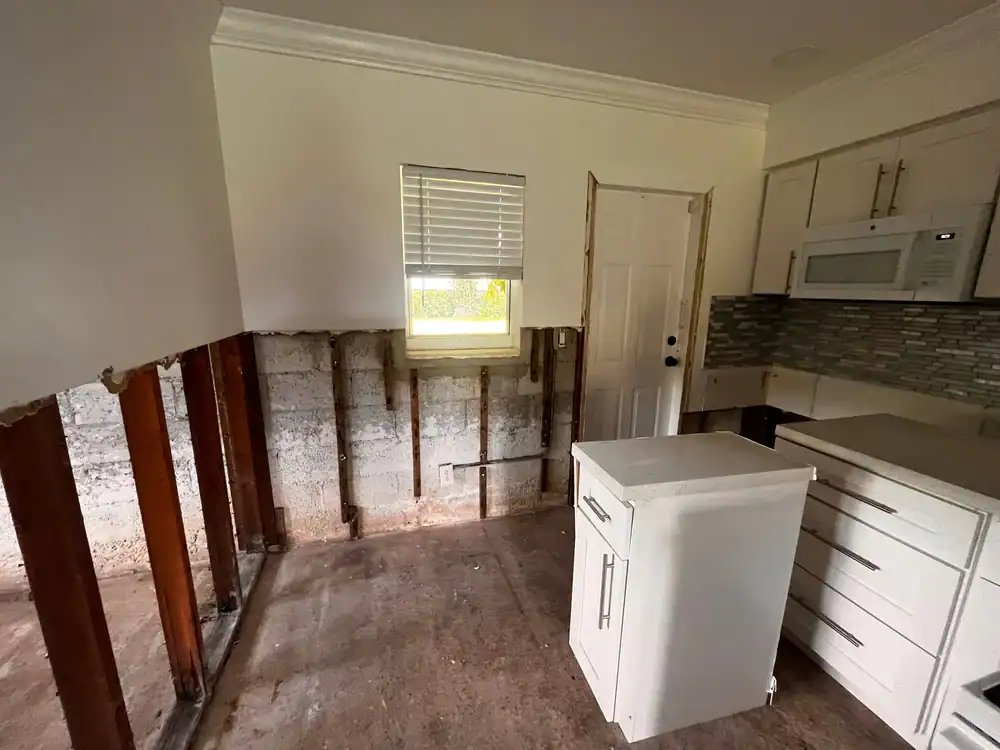
Sea Cliff homes have character worth keeping — and kitchens that haven’t caught up. We handle the full kitchen renovation, from Sea Cliff village permits to the final coat of paint.
I needed a professional consultation explanation of procedure for safe removal of Asbestos in my apartment complex. Without having an account yet, I was very impressed with the caring, knowledgeable and generous advice offered by Jessica, and will look forward to doing business in the future. Thank you so much! I feel much more informed about a sometimes scary endeavor. Peace. Nancy Silva Mineola, NY.
Mia Munoz
Used this company to clean up some water flood in my house. They were fast and easy to work with.very professional, Would recommend to anyone!
Nini Valle
Great company, had a flood and they responded quickly and efficiently. Billed my insurance company directly. I highly recommend this company!
joe colapietro, jr
I had pipe freeze in my basement right before a snow storm and they made to within an hour to help start the clean up process. They we by our side throughout the entire process and even helped with the insurance company. They did such a great job with the cleanup, repair, remidiation, I contracted them to perform the repairs and finishes in the basement. They came with enough manpower and material to get the job done. Leo and Jessica were nothing but a pleasure to deal with!!
Cristian Arredondo c
I had some water damage in my home and Green Island was able to take care of my issue quickly and effectively. I am very pleased with the work they did. They responded quickly and were very professional.
Michael M
Outstanding service! From the office to the field crew everyone was friendly, helpful and responsive. I highly recommend Green Island Group.
Most Sea Cliff kitchens were designed for a different era. The layouts are compartmentalized, the storage is limited, and the space just doesn’t match how you actually live. A well-planned kitchen remodel changes that — not by erasing what makes your home special, but by making it functional without stripping its character.
Sea Cliff’s housing stock is overwhelmingly pre-1978, and a significant portion dates back to the 1880s and early 1900s. That means older plumbing configurations, original plaster walls, and floor plans built around domestic life that no longer exists. A contractor who understands what’s behind those walls — before demo starts — is the difference between a project that runs on schedule and one that keeps surprising you with new costs.
Then there’s the environment. Sitting on Hempstead Harbor means your home deals with elevated humidity, salt air, and coastal moisture year-round. The materials going into your kitchen need to hold up to that — the cabinet finishes, the hardware, the waterproofing behind the backsplash. Done right, your kitchen looks as good in year ten as it does on day one.
We’re a New York-based full-service renovation contractor. We’ve worked in Nassau County’s older housing stock long enough to know that no two kitchens are the same — especially on the North Shore, where a home’s history is part of what makes it worth owning.
Sea Cliff is an incorporated village with its own Building Department, its own permit process, and village-level licensing requirements for the plumbers and electricians who work inside village limits. That’s a layer of regulatory complexity that trips up contractors who aren’t familiar with it. We know the process, we handle the permits, and we’ve done this in communities like Sea Cliff, Glen Head, and Glen Cove — homes with the same pre-war bones, the same coastal exposure, and the same community expectation of quality.
One contract, one point of contact, from the first consultation through the final walkthrough. That’s how every project runs.
It starts with a real conversation — not a sales pitch. We come out, walk the kitchen, and ask the right questions: what’s not working, what you want to keep, what the home’s character calls for. For a Victorian in Sea Cliff, that conversation looks different than it does for a postwar ranch in Levittown. The design phase is where we figure out what’s actually possible within your floor plan, your budget, and the architectural context of your home.
Once the design is locked in, we handle the permit application with the Village of Sea Cliff Building Department. This step matters more than most homeowners realize. Sea Cliff’s village-level permit process has its own timeline, and any contractor who doesn’t factor that in will hand you a project schedule that’s wrong from the start. We build permit processing, material lead times, and inspection scheduling into the timeline before we quote it.
From there, demo begins — carefully, especially in homes with pre-1978 painted surfaces. We are EPA Lead-Safe Certified, which the Village of Sea Cliff Building Department explicitly requires for any contractor disturbing more than six square feet of painted surface in older homes. After demo, the trades come in on sequence: plumbing, electrical, carpentry, tile, countertops, and finishes — all coordinated under one roof. You get a project manager who’s reachable, a schedule that reflects reality, and a finished kitchen that was worth the wait.
A kitchen remodel in Sea Cliff isn’t a one-size-fits-all job. The scope depends on what’s there, what you want, and what the home’s structure allows. We handle everything from cabinet-focused updates — new cabinets, countertops, hardware, and paint — all the way through full gut renovations that involve layout reconfiguration, plumbing relocation, and structural modifications. Whatever the scope, it’s managed under a single contract with a single team.
For Sea Cliff’s Victorian and Edwardian homes specifically, we bring design guidance that understands the architectural context. That might mean period-appropriate cabinet profiles, traditional hardware finishes, or custom millwork that connects to the original molding in the rest of the house. It might mean opening a layout that was never designed for the way modern families actually use a kitchen. Either way, the goal is a result that feels right in the home — not like it was dropped in from a showroom catalog.
Every project includes permit handling with the Village of Sea Cliff Building Department, EPA Lead-Safe certified work practices for pre-1978 homes, licensed and village-registered tradespeople, and full workers’ compensation and liability coverage. With average home values in Sea Cliff now above $1.28 million, a well-executed kitchen renovation isn’t just a quality-of-life improvement — it’s a financially sound investment in one of Nassau County’s most desirable communities.
Do I need a permit for a kitchen remodel in Sea Cliff, NY?
Yes — and in Sea Cliff specifically, the permit process goes through the Village’s own Building Department, not just Nassau County or the Town of Oyster Bay. Because Sea Cliff is an incorporated village, it maintains its own permitting authority, and any kitchen remodel that involves plumbing, electrical work, or structural changes requires a building permit from the village before work begins.
Beyond the standard permit, Sea Cliff also requires that plumbers and electricians working within village limits be specifically licensed or registered with the Village Building Department — on top of their state and county credentials. This is a detail that catches contractors off guard if they’re not familiar with Sea Cliff’s requirements. We handle the permit application, coordinate with the village, and make sure every trade on your project meets the village’s specific licensing requirements. You don’t have to figure any of that out on your own.
What does a full kitchen remodel typically cost in Sea Cliff?
The range is wide depending on scope, but here’s a realistic breakdown for Sea Cliff’s market. A cabinet-focused partial remodel — new cabinets, countertops, hardware, and paint — typically runs $25,000 to $50,000. A mid-range full remodel with a new layout, appliances, flooring, and updated lighting generally falls between $60,000 and $100,000. A full gut renovation with structural changes, plumbing relocation, and custom elements can run $100,000 to $175,000 or more.
Sea Cliff is not a budget-renovation market, and the homes here don’t call for one. With average home prices above $1.28 million and property taxes averaging over $10,000 annually, a kitchen remodel in this village is a proportionally sound investment. Industry data consistently shows kitchen remodels in the Northeast returning 85 to 96 cents on the dollar at resale — and in a market as desirable as Sea Cliff, an updated kitchen can be the deciding factor for buyers. The better question isn’t what it costs — it’s what a poorly executed remodel costs you later.
What does EPA Lead-Safe Certified mean, and why does it matter in Sea Cliff?
EPA Lead-Safe Certification is a federal requirement under the EPA’s Renovation, Repair, and Painting Rule. Any contractor disturbing more than six square feet of painted surface in a home built before 1978 must be certified and must follow specific containment, work practice, and cleanup protocols designed to prevent lead dust exposure. The Village of Sea Cliff’s Building Department explicitly states this requirement for contractors working in the village.
Given that Sea Cliff’s housing stock is overwhelmingly pre-1978 — with a large portion dating to the 1880s through early 1900s — this applies to virtually every kitchen remodel in the village. It’s not a technicality. Lead dust exposure during renovation is a genuine health risk, particularly for children, and a contractor who skips the certification or glosses over the protocols is creating real liability for your family. We are EPA Lead-Safe Certified. We follow the required procedures on every applicable project, and we’ll tell you upfront what that means for your specific job before any work begins.
How long does a kitchen remodel take in Sea Cliff?
For a mid-range full remodel in Sea Cliff, a realistic timeline is eight to fourteen weeks from permit approval to final walkthrough — though the total calendar time from your first consultation to project completion is typically longer when you factor in design, material selection, and the village permit process.
The Sea Cliff permit process is the variable most homeowners don’t account for. Because the village runs its own Building Department with its own review and inspection scheduling, permit processing adds time that a contractor unfamiliar with the village might not build into their initial estimate. Material lead times — especially for custom cabinets or specialty countertops — add additional weeks. We account for all of this before we give you a timeline. The date we give you reflects what’s actually going to happen, not an optimistic guess made before anyone’s looked at the permit calendar or the cabinet manufacturer’s lead time.
Can you remodel a kitchen in a Victorian home without losing its original character?
Yes — and in Sea Cliff, this is one of the most common conversations we have. The village has more than 50 designated landmark buildings and is widely recognized for having one of the best collections of late Victorian era architecture in Nassau County. Homeowners here didn’t buy these homes to gut them. They want modern functionality without erasing what makes the house worth owning.
The key is approaching the design phase with the home’s context in mind from the start. That might mean cabinet profiles that echo the period rather than clash with it, hardware finishes that feel appropriate to the era, custom millwork that ties into original molding details elsewhere in the house, or a layout reconfiguration that opens the space without removing architectural elements that define the room. It’s a different design conversation than you’d have in a postwar ranch, and it requires a contractor who actually asks about the home’s history before picking up a demo hammer. That’s how we start every Sea Cliff project.
How do I find a kitchen remodeler in Sea Cliff who actually knows the village's requirements?
The honest answer is: ask directly, and listen carefully to the response. A contractor who knows Sea Cliff will immediately understand that it’s an incorporated village with its own Building Department — not just a Nassau County permit pull. They’ll know that plumbers and electricians need to be village-registered, that the EPA Lead-Safe requirement applies to nearly every kitchen in the village given the age of the housing stock, and that the permit timeline needs to be built into the project schedule from day one.
If a contractor gives you a vague answer about permits, or tells you they’ll “handle it” without being able to explain what that means specifically in Sea Cliff, that’s worth paying attention to. The same goes for anyone who can’t speak to EPA Lead-Safe requirements when you’re talking about a home that was clearly built before 1978. We serve the North Shore because we understand it, and we’re accountable to the reputation we’ve built here.