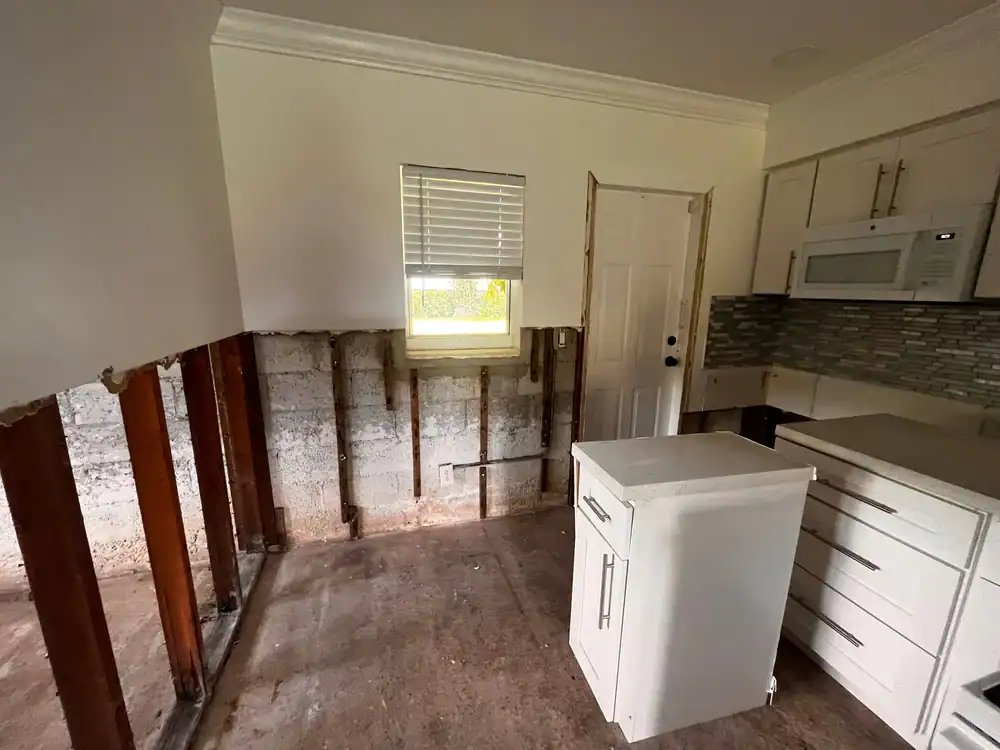
Searingtown Kitchens Built to Last Another 30 Years
Your split-level or colonial wasn’t designed for the way you live today — we fix that with kitchen renovations built for Searingtown homes and the families anchored to them.
I needed a professional consultation explanation of procedure for safe removal of Asbestos in my apartment complex. Without having an account yet, I was very impressed with the caring, knowledgeable and generous advice offered by Jessica, and will look forward to doing business in the future. Thank you so much! I feel much more informed about a sometimes scary endeavor. Peace. Nancy Silva Mineola, NY.
Mia Munoz
Used this company to clean up some water flood in my house. They were fast and easy to work with.very professional, Would recommend to anyone!
Nini Valle
Great company, had a flood and they responded quickly and efficiently. Billed my insurance company directly. I highly recommend this company!
joe colapietro, jr
I had pipe freeze in my basement right before a snow storm and they made to within an hour to help start the clean up process. They we by our side throughout the entire process and even helped with the insurance company. They did such a great job with the cleanup, repair, remidiation, I contracted them to perform the repairs and finishes in the basement. They came with enough manpower and material to get the job done. Leo and Jessica were nothing but a pleasure to deal with!!
Cristian Arredondo c
I had some water damage in my home and Green Island was able to take care of my issue quickly and effectively. I am very pleased with the work they did. They responded quickly and were very professional.
Michael M
Outstanding service! From the office to the field crew everyone was friendly, helpful and responsive. I highly recommend Green Island Group.
Most Searingtown kitchens were built in the 1950s and 60s — back when a galley layout and 100-amp electrical service were perfectly acceptable. They’re not anymore. If you’re cooking in a kitchen that feels cramped, dark, and out of step with the rest of your home, you already know the problem. The question is whether you fix it or keep working around it.
A well-executed kitchen remodel changes how your home functions every single day. You get counter space that actually fits how you cook, storage that makes sense, and a layout that doesn’t require you to shuffle sideways past someone to get to the refrigerator. For households in Searingtown where multi-generational living is common — and where a serious home-cooked meal is a real event, not an afterthought — that functional shift matters more than any finish upgrade.
There’s also the financial side. With median home values in Searingtown sitting above $1.1 million, a kitchen renovation is one of the few home improvements that returns close to what you put in. Minor kitchen remodels in the Northeast return roughly 85 to 96 cents on the dollar at resale. But more than that — when your family is anchored to the Herricks School District for the next decade, you’re not renovating to sell. You’re renovating to live better in the home you’ve already committed to.
We’re a Nassau County contractor — not a national brand with a territory map that happens to include your zip code. Our team has worked in the split-levels and colonials throughout Searingtown and the surrounding North Hempstead area, including homes along the streets between I.U. Willets Road and the Northern State Parkway that define this community. That familiarity with the local housing stock in Searingtown isn’t a marketing claim — it shows up in how a project is scoped, permitted, and executed.
Every kitchen remodel is managed by a dedicated project manager from the first consultation through the final walkthrough. One person, one point of contact, full accountability. No rotating cast of subcontractors who don’t know each other’s work.
We hold a valid Nassau County Home Improvement Contractor License, carry full general liability and workers’ compensation insurance, and are EPA Lead-Safe certified — which matters directly in a community where most homes predate 1978. These aren’t background details. They’re the baseline of doing this work right.
It starts with a consultation at your home. Not a sales pitch — an actual walkthrough of the kitchen, where the conversation covers how you use the space, what’s not working, and what a realistic scope looks like given your home’s existing layout and structure. For Searingtown’s split-level homes in particular, that structural conversation matters early. Ceiling heights, load-bearing walls, and the location of existing plumbing and electrical runs all affect what’s possible before a single cabinet is ordered.
From there, you get a detailed written proposal with a line-item scope and a clear timeline. Every change that comes up during the project — and something always comes up in a 1960s home — is documented in writing before any additional work proceeds. No verbal agreements, no surprise invoices at the end.
Once work begins, we pull every required permit through the Town of North Hempstead’s Building Department and manage the inspection schedule on your behalf. If your kitchen remodel involves electrical upgrades, plumbing relocation, or any structural changes, those permits are not optional — and a contractor who suggests skipping them to save time is creating a problem you’ll deal with at resale. The project wraps with a final walkthrough and a written warranty on labor, so you know exactly what’s covered and for how long.
Not every kitchen in Searingtown needs a full gut renovation. Some homes need a complete redesign — new layout, new plumbing, new electrical, new everything. Others need a focused upgrade: new cabinets, new countertops, updated lighting, and a backsplash that doesn’t look like it was installed during the Carter administration. We handle both ends of that spectrum and everything in between.
For full kitchen remodels, the scope typically includes layout reconfiguration, cabinet installation, countertop fabrication and installation, tile work, plumbing rough-in and finish, electrical upgrades, lighting, and finish carpentry. Material selections are guided by a design consultation — not a catalog handed to you in a showroom. Quartz countertops, two-tone cabinetry, and under-cabinet lighting systems are among the most requested upgrades in this market right now, and we can walk you through options that hold up in Nassau County’s climate without requiring constant maintenance.
For more targeted kitchen cabinet renovation or cabinet remodel projects, the process is scoped specifically to what needs to change — which keeps the investment focused and the timeline shorter. Either way, the work is done under a Nassau County license, with proper permits, by a team that knows the difference between a cosmetic fix and a structural one. If your home was built before 1978, EPA Lead-Safe protocols are followed throughout — no exceptions, no shortcuts.
Do I need a permit for a kitchen remodel in Searingtown, NY?
Yes, in most cases. Because Searingtown is an unincorporated hamlet within the Town of North Hempstead, all building permits for kitchen remodels go through the Town of North Hempstead’s Building Department — not a village office. Any work that involves electrical upgrades, plumbing relocation, structural changes, or HVAC modifications requires a permit before work begins.
This matters more than people realize. Unpermitted work creates real problems when you go to sell. Buyers’ attorneys in Nassau County routinely pull permit records, and unpermitted renovations — even good ones — can delay or kill a closing. Beyond the legal side, permitted work means inspections, and inspections mean the work was verified. We pull every required permit on your behalf and manage the inspection schedule, so that piece of the project is handled without you having to track it down yourself.
How much does a kitchen remodel typically cost in Nassau County?
In Nassau County, labor and material costs run 25 to 40 percent above national averages, so the numbers are higher than what you’ll see on national remodeling websites. A focused kitchen update — new cabinets, countertops, and lighting without changing the layout — typically runs in the $40,000 to $65,000 range. A full kitchen remodel with layout reconfiguration, new plumbing, electrical upgrades, and high-end finishes will generally fall between $75,000 and $150,000 depending on scope and material selections.
For Searingtown specifically, where median home values exceed $1.1 million, that investment range is proportional to the home and the market. A $90,000 kitchen renovation on a $1.3 million home is not an overreach — it’s a reasonable improvement that returns well at resale and dramatically improves daily life in the meantime. What you want to avoid is a vague proposal with a round number and no breakdown. A legitimate contractor gives you a line-item scope so you know exactly where the budget is going.
How long does a kitchen remodel take from start to finish?
For a full kitchen remodel in a Searingtown home, plan for eight to twelve weeks from the start of demolition to final walkthrough. That range accounts for permit processing through the Town of North Hempstead, lead times on cabinets and countertops — which are typically four to six weeks for custom or semi-custom orders — and the reality that older homes in this area often reveal conditions behind the walls that need to be addressed before the finish work can proceed.
The planning and permitting phase before demolition begins adds additional time. A well-run project typically spends two to four weeks in the pre-construction phase: finalizing material selections, pulling permits, and confirming the full scope in writing. Homeowners who want to be realistic about timing should start that process at least three to four months before they need the kitchen functional. Spring projects in particular tend to book out quickly in Nassau County, so if you’re targeting a summer completion, the conversation should start in late winter.
My Searingtown home was built in the 1960s — what should I know before remodeling the kitchen?
A few things come up consistently in pre-1978 homes in Searingtown that are worth knowing before you start. First, lead paint. Federal law requires contractors working in pre-1978 homes to hold EPA Lead-Safe Certification and follow specific containment and disposal protocols when disturbing painted surfaces. If you have children or elderly family members in the home during construction, this is not a footnote — it’s a health issue. Make sure your contractor can document that certification before work begins.
Second, electrical service. Many split-levels and colonials in Searingtown were built with 100-amp panels, which are not sufficient for a modern kitchen with a dishwasher, microwave, refrigerator, range, and under-cabinet lighting all running simultaneously. An electrical upgrade is often part of the scope even when it wasn’t planned for at the start. Third, plumbing. Galvanized steel supply lines from the 1960s have a finite lifespan, and a kitchen remodel is often the right moment to replace them before they become an emergency. A thorough pre-construction walkthrough surfaces these issues early, so they’re budgeted for — not discovered mid-project.
What kitchen upgrades make the most sense for resale value in this market?
In a market like Searingtown, where buyers at the $1 million-plus price point expect move-in-ready finishes, the kitchen is one of the first things that determines whether a home sells quickly or sits. The upgrades that consistently move the needle in this market are cabinet replacement or refacing with updated hardware, quartz countertops, a cohesive tile backsplash, updated lighting — particularly recessed and under-cabinet — and modernized plumbing fixtures.
Layout changes matter too, but they’re more nuanced. Opening a wall between the kitchen and dining room to create a more open flow is one of the most requested renovations in Searingtown’s split-level and colonial stock, and it tends to resonate strongly with buyers who are used to seeing open-concept layouts in newer construction. That said, not every wall can or should come down — a structural assessment is part of the process. The upgrades that return best are the ones that address real functional deficiencies in the existing layout, not just cosmetic improvements layered on top of a floor plan that still doesn’t work.
How do I know if a kitchen remodel contractor in Nassau County is legitimate?
Nassau County requires all home improvement contractors to hold a valid county-issued license through the Nassau County Department of Consumer Affairs. That license is publicly searchable, which means you can verify it before signing anything. Ask any contractor you’re considering for their Nassau County Home Improvement Contractor License number and look it up. If they can’t provide it, that’s your answer.
Beyond the license, you want to see a current Certificate of Insurance that includes general liability coverage — at minimum $1 million per occurrence — and workers’ compensation for all employees on the job. For homes built before 1978, which covers most of Searingtown’s housing stock, EPA Lead-Safe Certification is also required by federal law for renovation work that disturbs painted surfaces. A contractor who checks all three boxes and will give you documentation before you sign a contract is operating the right way. One who pushes back on any of it is telling you something important about how the rest of the project will go.