Stewart Manor Kitchens Built for Homes That Have Been Here a While
Most kitchens in Stewart Manor haven’t been touched in decades — and a full kitchen renovation done right can change how your whole home feels and what it’s worth.
I needed a professional consultation explanation of procedure for safe removal of Asbestos in my apartment complex. Without having an account yet, I was very impressed with the caring, knowledgeable and generous advice offered by Jessica, and will look forward to doing business in the future. Thank you so much! I feel much more informed about a sometimes scary endeavor. Peace. Nancy Silva Mineola, NY.
Mia Munoz
Used this company to clean up some water flood in my house. They were fast and easy to work with.very professional, Would recommend to anyone!
Nini Valle
Great company, had a flood and they responded quickly and efficiently. Billed my insurance company directly. I highly recommend this company!
joe colapietro, jr
I had pipe freeze in my basement right before a snow storm and they made to within an hour to help start the clean up process. They we by our side throughout the entire process and even helped with the insurance company. They did such a great job with the cleanup, repair, remidiation, I contracted them to perform the repairs and finishes in the basement. They came with enough manpower and material to get the job done. Leo and Jessica were nothing but a pleasure to deal with!!
Cristian Arredondo c
I had some water damage in my home and Green Island was able to take care of my issue quickly and effectively. I am very pleased with the work they did. They responded quickly and were very professional.
Michael M
Outstanding service! From the office to the field crew everyone was friendly, helpful and responsive. I highly recommend Green Island Group.
What Changes When Your Kitchen Finally Works for You
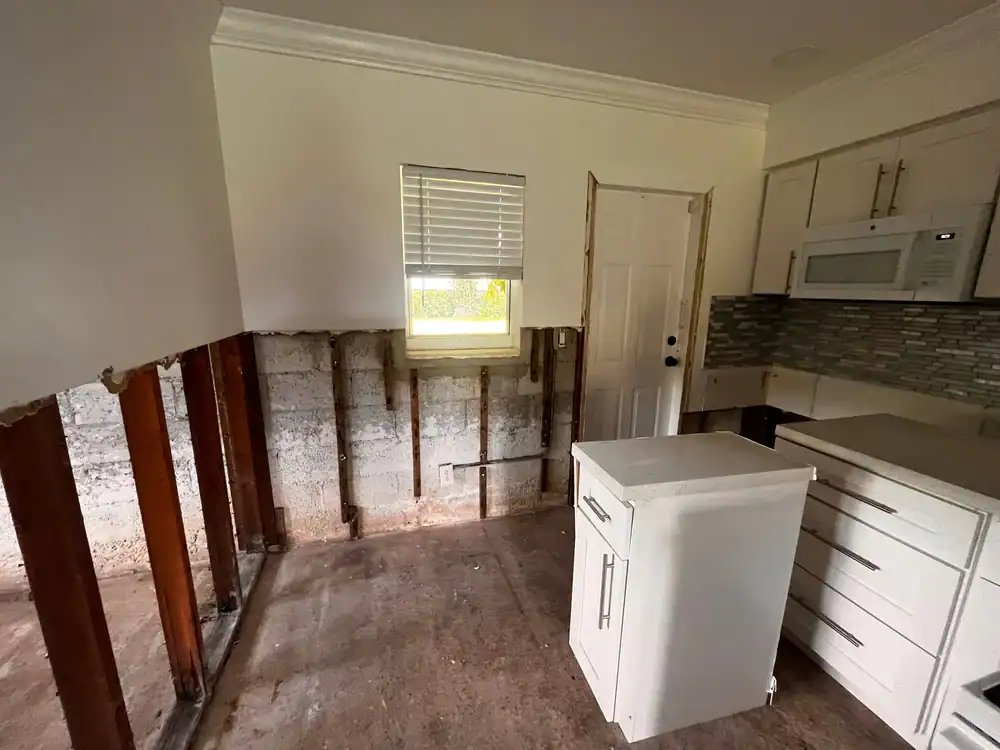
Stewart Manor homes were mostly built between the 1930s and 1960s. That’s a lot of character — and a lot of kitchens that were designed for a lifestyle that doesn’t exist anymore. Narrow layouts, limited counter space, cabinets that have seen better days, and electrical panels that weren’t built to run a modern refrigerator and dishwasher at the same time. A real kitchen remodel doesn’t just make things look better. It makes the room actually function.
When the work is done right, you get a kitchen that fits how your family actually lives — morning coffee before the LIRR commute, dinner after a long day, weekend cooking with the kids around. The layout makes sense. The storage works. Nothing feels like a workaround. And in a market where Stewart Manor homes are selling above $838,000, a well-executed kitchen renovation is one of the few upgrades that genuinely holds its value at resale.
The homes here also carry real history — pre-1978 construction, older plumbing, wiring that wasn’t designed for modern appliance loads. A kitchen remodel in a house like this isn’t just cosmetic. It’s an opportunity to bring the bones of the home up to where the rest of it deserves to be.
Licensed Kitchen Remodel Contractors Nassau County
We Know Stewart Manor Homes — Because We Work in Them
Green Island Group is a New York-based home improvement contractor serving Nassau County homeowners — including Stewart Manor, Floral Park, New Hyde Park, and Garden City. We’re not a franchise. There’s no 1-800 number routing your call to a regional dispatch center. When you reach out, you’re talking to people who actually work in these neighborhoods.
We carry a current Nassau County Home Improvement Contractor License, general liability insurance, and workers’ compensation coverage. We pull permits through the Village of Stewart Manor’s Building Department — we don’t suggest skipping them, and we don’t hand you a form and disappear. We manage that process because it protects you, especially in a market where unpermitted work is one of the top issues that surfaces during home inspections on Nassau County listings.
The homes in Stewart Manor have specific needs, and we’ve worked in enough of them to know what to expect before demo even starts.
No Guesswork — Here's Exactly How the Project Runs
It starts with a consultation where we look at your actual kitchen — the layout, the current condition, what’s likely behind the walls given the age of the home — and talk through what you want to accomplish. From there, we put together a written, line-item proposal. You’ll know what’s included, what it costs, and what the timeline looks like before anything is signed.
Once the project is underway, we handle the Village of Stewart Manor building permits, coordinate all trades under one contract, and keep you updated throughout. You won’t be chasing down a plumber who doesn’t know what the electrician is doing. One project manager, one point of contact, one schedule you can actually plan around. That matters when your morning routine is built around a train time.
When we open walls in a pre-1978 home — which covers a large portion of Stewart Manor’s housing stock — we follow EPA Lead-Safe certified work practices. If we find outdated wiring or corroding galvanized plumbing behind the cabinets, we tell you immediately, explain your options, and handle it under the same contract. The goal is no surprises after demo starts.
Full Kitchen Remodels Built Around Your Home, Not a Template
Not every kitchen in Stewart Manor needs the same scope of work. Some homeowners need a complete gut renovation — new layout, new everything, walls opened, plumbing relocated. Others need a focused upgrade: new cabinets and countertops on a structurally sound existing kitchen, or a cabinet refacing program that delivers a dramatically different look without replacing the boxes. We work across the full range, and we’ll tell you honestly which approach makes the most sense for your specific situation.
For full kitchen renovations, that typically means custom or semi-custom cabinetry, quartz or stone countertops, updated flooring, new fixtures, appliance integration, and any necessary electrical or plumbing upgrades to bring the kitchen up to current code. In Nassau County homes of this vintage, electrical panel upgrades and plumbing line replacements come up regularly — we handle both. For more targeted kitchen makeovers, we can focus on the highest-impact changes without touching what doesn’t need to be touched.
Every project includes a written scope of work, a documented change order process, and a clear warranty. If you’re preparing to list your Stewart Manor home, we can also walk you through which kitchen upgrades carry the strongest return in this specific market — because not every dollar spent on a kitchen renovation comes back the same way.
Do I need a permit for a kitchen remodel in Stewart Manor, NY?
Yes — and it’s not something to skip. Any kitchen renovation in Stewart Manor that involves electrical work, plumbing changes, structural modifications, or HVAC alterations requires a permit from the Village of Stewart Manor’s Building Department. This is separate from Nassau County contractor licensing requirements, which apply on top of the village-level permits.
The reason this matters beyond just following the rules: unpermitted work is one of the most common issues flagged during home inspections in Nassau County. In a market where Stewart Manor homes are selling above $838,000, a permit problem can kill a sale, reduce your negotiating position, or force you to tear out work you already paid for. We pull all required permits as part of the project — we know the Village Building Department process, we manage the inspection schedule, and we deliver a fully permitted finished kitchen.
How much does a kitchen remodel typically cost in Stewart Manor, NY?
Kitchen remodeling costs in Nassau County run higher than national averages, and Stewart Manor is no exception. A focused kitchen upgrade — new cabinets, countertops, updated fixtures, and appliances on an existing layout — typically runs $30,000 to $50,000 in this market. A full mid-range kitchen renovation with new cabinets, countertops, flooring, and layout optimization generally falls between $60,000 and $100,000. High-end gut renovations with custom cabinetry, premium countertops, and full electrical and plumbing updates can reach $100,000 to $175,000 or more.
What drives cost in Stewart Manor specifically is the age of the housing stock. Homes built between the 1930s and 1960s frequently have conditions behind the walls — outdated wiring, galvanized plumbing, structural quirks — that need to be addressed during a kitchen remodel. These aren’t surprises we create; they’re conditions that exist in older homes. We assess for them upfront, communicate clearly when we find them, and give you options before any additional work is approved.
My Stewart Manor home was built before 1978 — is lead paint a concern during a kitchen remodel?
It’s a real and relevant concern, and any contractor working in your home should be handling it correctly. Federal EPA regulations under the Renovation, Repair and Painting Rule require contractors to use Lead-Safe certified work practices when disturbing painted surfaces in homes built before 1978. That threshold covers a significant portion of Stewart Manor’s housing stock, given that most of the village was developed between the 1920s and 1960s.
In practical terms, this means proper containment during demo, specialized cleanup procedures, and compliant waste disposal — all designed to prevent lead dust from spreading through your home during the renovation. We follow EPA Lead-Safe certified practices on all applicable projects. If you have young children in the home, this is especially worth asking about before you hire anyone. Ask every contractor on your list whether they hold EPA Lead-Safe certification — and then verify it. It’s not a technicality. It’s a health protection for your family.
How long does a full kitchen renovation take from start to finish?
For a full kitchen renovation in a Stewart Manor home, a realistic timeline from signed contract to finished kitchen is typically eight to fourteen weeks, depending on scope. That includes the time needed to process permits through the Village of Stewart Manor’s Building Department, which can add a few weeks to the front end of the schedule before any physical work begins. Cabinet lead times — especially for semi-custom or custom orders — can run four to eight weeks from order to delivery, and countertop templating and fabrication adds additional time after cabinet installation.
The actual construction phase for most kitchen remodels runs three to five weeks once materials are on-site and permits are approved. What extends timelines in older homes is discovering conditions behind the walls — electrical, plumbing, or structural work that wasn’t anticipated — which is why we assess as thoroughly as possible before demo starts. We give you a realistic timeline at the outset, not an optimistic one, and we communicate immediately if anything changes.
Is a kitchen remodel worth it if I'm planning to sell my Stewart Manor home in a few years?
In the Stewart Manor market, yes — with the right scope. Kitchen renovations consistently rank among the highest-return home improvement investments in the Northeast, with minor to mid-range kitchen remodels returning roughly 85 to 96 cents on the dollar at resale according to Remodeling Magazine’s Cost vs. Value data. In a market where Stewart Manor median sale prices have climbed above $838,000 and inventory is tight — sometimes as few as seven to nine active listings at a time — a dated kitchen is one of the first things buyers use to negotiate the price down.
The key is calibrating the investment to the home and the market. You don’t need a $150,000 custom kitchen to compete in Stewart Manor. A well-executed mid-range renovation that modernizes the layout, replaces worn cabinets and countertops, and brings the kitchen in line with the home’s overall value will perform strongly at resale. We can walk you through which specific upgrades carry the best return for your home’s price point before you commit to a scope.
How do I know if a kitchen remodeling contractor is actually licensed to work in Stewart Manor?
There are two things to verify, and both matter. First, Nassau County requires all home improvement contractors performing residential work in the county — including in incorporated villages like Stewart Manor — to hold a valid Home Improvement Contractor License issued by the Nassau County Department of Consumer Affairs. This license is public record and verifiable through the county. Any contractor who can’t immediately give you their Nassau County license number shouldn’t be working in your home.
Second, ask for a current Certificate of Insurance showing general liability coverage and workers’ compensation. This protects you directly — if a worker is injured on your property and the contractor doesn’t carry workers’ comp, you may be liable. If something is damaged and the contractor has no general liability coverage, you have no recourse. We carry both, and we provide the certificate before a contract is signed. In a village as tightly connected as Stewart Manor, a contractor’s reputation travels fast — and the ones worth hiring know that.