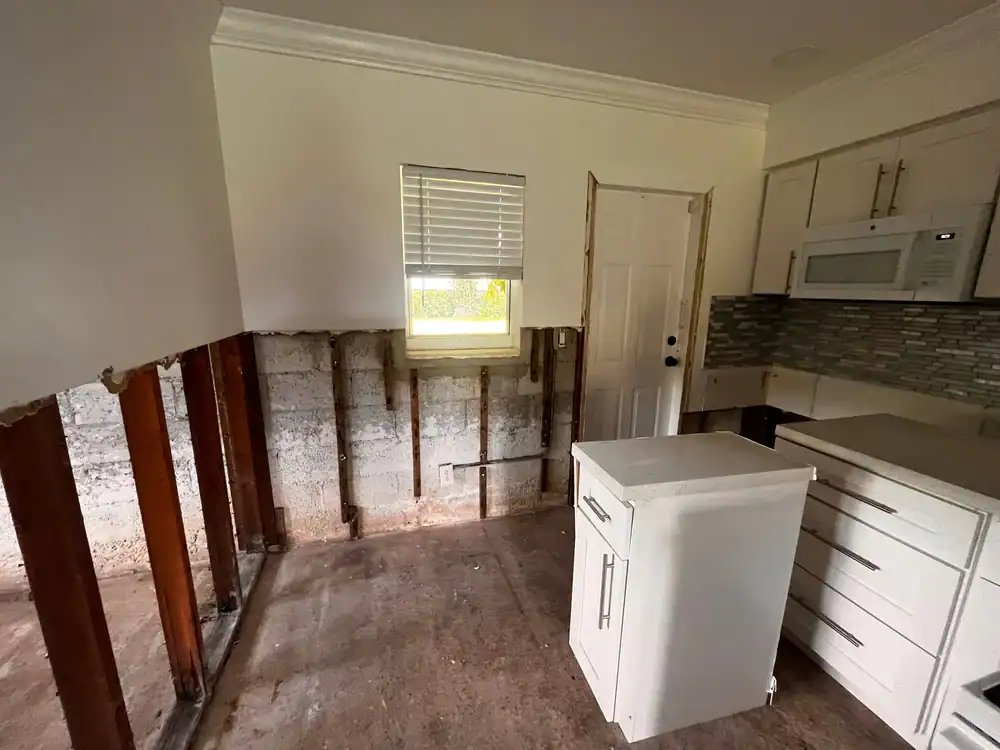
North Shore Homes Deserve More Than a Surface-Level Remodel
Stony Brook kitchens are hiding decades of wear behind cabinet doors and the homes here are old enough that what’s inside the walls matters just as much as what’s on them. We handle the full picture, from design through demolition, permits, and final inspection.
I needed a professional consultation explanation of procedure for safe removal of Asbestos in my apartment complex. Without having an account yet, I was very impressed with the caring, knowledgeable and generous advice offered by Jessica, and will look forward to doing business in the future. Thank you so much! I feel much more informed about a sometimes scary endeavor. Peace. Nancy Silva Mineola, NY.
Mia Munoz
Used this company to clean up some water flood in my house. They were fast and easy to work with.very professional, Would recommend to anyone!
Nini Valle
Great company, had a flood and they responded quickly and efficiently. Billed my insurance company directly. I highly recommend this company!
joe colapietro, jr
I had pipe freeze in my basement right before a snow storm and they made to within an hour to help start the clean up process. They we by our side throughout the entire process and even helped with the insurance company. They did such a great job with the cleanup, repair, remidiation, I contracted them to perform the repairs and finishes in the basement. They came with enough manpower and material to get the job done. Leo and Jessica were nothing but a pleasure to deal with!!
Cristian Arredondo c
I had some water damage in my home and Green Island was able to take care of my issue quickly and effectively. I am very pleased with the work they did. They responded quickly and were very professional.
Michael M
Outstanding service! From the office to the field crew everyone was friendly, helpful and responsive. I highly recommend Green Island Group.
What Changes When Your Stony Brook Kitchen Actually Works for You
Most Stony Brook homes were built in the 1950s and 1960s. That means kitchens designed around postwar layouts galley configurations, limited storage, electrical panels that weren’t built for today’s appliances. The kitchen you’re living in right now probably wasn’t designed for the way you actually cook, entertain, or move through your day. A real renovation fixes that. Not just the look of it, but the function.
Here’s what that looks like in practice. You stop working around a layout that was never built for you. Countertops, cabinetry, and lighting that actually match how you use the space. An open flow that connects to the rest of the home instead of cutting it off. And because Stony Brook sits right on the North Shore with year-round humidity and salt air off the harbor, the materials we specify are chosen to hold up in that environment not just look good in a showroom.
For homeowners thinking about selling, the math is worth knowing. Stony Brook’s average home value is approaching $766,000, and the market moves fast homes go pending in under 30 days. A kitchen that signals quality can be the difference between a bidding situation and a slow listing. Minor kitchen renovations are delivering over 100% ROI in 2025. That’s not a renovation that’s an investment.
12 Years In, 5,000 Projects Deep Credentials You Can Actually Look Up
We’ve been working in Suffolk County homes since 2012. We hold a Home Improvement Contractor license, active asbestos abatement licensing, IICRC certification, and official M/WBE certification from New York State a government-issued designation, not a self-declared one. Every credential is verifiable. That matters in a town like Stony Brook, where the people doing the hiring tend to do their homework.
We’re headquartered in Bohemia, about 20 miles south on Nicolls Road the same County Route 97 that runs straight up to the university campus and into the heart of the Three Villages. This isn’t a company dispatching crews to unfamiliar territory. Suffolk County is home base, and Stony Brook’s housing stock older, coastal, and full of character is exactly the kind of work we know.
Over 5,000 completed projects. A team that picks up the phone. One point of contact from the first conversation to the day you cook your first meal in your new kitchen.
No Surprises Here's Exactly How Your Stony Brook Kitchen Remodel Goes
It starts with a home visit. Someone from our team comes to your house, looks at the actual space, and listens to what you want not just what’s on a spec sheet. From there, you get a 3D design rendering before anything is touched. You’ll see the cabinet layout, the countertop material, the lighting, how the flow changes. If something isn’t right, you change it before it costs anything to change. Only when you’ve approved every detail does the work begin.
Then comes the part most contractors don’t talk about openly: demolition in a Stony Brook home built before 1980 can turn up asbestos in floor tiles, joint compound, or pipe insulation. It happens more than people expect in homes of this age. We hold active asbestos abatement licensing, so if something is found, the project doesn’t stop. It gets handled in-house, by the same team, without bringing in a separate company or renegotiating your contract from scratch.
Once the space is cleared and confirmed clean, the build moves forward carpentry, plumbing, electrical, flooring, and finish work, all coordinated under one roof. We handle permit management with the Town of Brookhaven’s Building Division, including the application, inspector coordination, and final certificate of occupancy sign-off. When the last walkthrough is done, the job is done.
Full Kitchen Remodels Built for How Stony Brook Homes Actually Live
A kitchen remodel with us covers the full scope design, demolition, cabinet installation, countertop replacement, plumbing and electrical updates, flooring, lighting, and finish work. There’s no hand-off to a separate tile guy or a different electrician you’ve never met. The same team that walks through the design with you is accountable for every phase through completion.
For homes in Stony Brook’s older neighborhoods whether you’re near the Village Center off Route 25A, in Stony Brook South, or closer to the Nicolls Road corridor the scope of work often includes things that don’t show up on a standard estimate until demo begins. Soft subfloor from years of moisture exposure, deteriorating cabinet bases, outdated wiring that predates modern appliance loads. Because our background includes water damage restoration and environmental remediation, those discoveries don’t derail the project. They get folded in and resolved.
If your kitchen remodel is connected to a water damage or fire event, we can handle that as a single project restoration and renovation together, without coordinating two separate contractors. The scope is built around what your home actually needs, not a fixed package that may or may not fit a 1960s North Shore layout. Every project starts with a free in-home estimate and a process that’s transparent from the first number to the final inspection.
Do I need a permit for a kitchen remodel in Stony Brook, NY?
Yes, in most cases. Stony Brook falls under the jurisdiction of the Town of Brookhaven’s Building Division, which requires a building permit for any kitchen remodeling work that involves structural changes or modifications to plumbing, electrical, or gas systems. That covers the majority of full kitchen renovations not just major structural overhauls. Cosmetic updates like painting or replacing cabinet hardware typically don’t require a permit, but anything beyond that usually does.
The permit process in Brookhaven requires signed and stamped surveys, multiple sets of plans, and coordination with inspectors for a final sign-off before a certificate of occupancy or compliance is issued. Permits are valid for one year from the date of issuance. It’s a process that takes time and attention to get right, and missing a step can delay your project or create problems when you go to sell. We manage the entire permit process on your behalf application, documentation, inspector scheduling, and final walkthrough as a standard part of every kitchen remodel in Stony Brook.
How much does a kitchen remodel typically cost in Stony Brook, NY?
For a full kitchen renovation in the New York metro area, the realistic range runs from roughly $25,000 on the lower end to $100,000 or more for a complete rip-and-replace project with custom cabinetry and high-end finishes. Where your project lands depends on the size of the kitchen, the materials you choose, and what gets discovered during demolition which in a Stony Brook home built in the 1950s or 1960s can include things like deteriorated subfloor, outdated electrical, or asbestos-containing materials that need to be properly handled before the build can move forward.
Labor typically accounts for 50 to 60 percent of the total cost. The rest goes toward materials, fixtures, and any remediation work that comes up. In Stony Brook’s market where average home values are approaching $766,000 and the real estate market is genuinely competitive a well-executed kitchen remodel isn’t just a quality-of-life improvement. It’s one of the few renovations where you can realistically recoup more than you spend when it comes time to sell. Every project starts with a free in-home estimate so you know what you’re looking at before committing to anything.
What happens if asbestos is found during my kitchen demolition?
It’s more common than most homeowners expect, especially in Stony Brook. Homes built between the 1940s and 1970s which describes the majority of the housing stock here frequently contain asbestos in 9-inch and 12-inch vinyl floor tiles, joint compound used on walls and ceilings, and pipe insulation around kitchen plumbing. You won’t know it’s there until demo begins, and at that point, the way your contractor handles it determines whether your project stalls for weeks or keeps moving.
We hold active asbestos abatement licensing, which means when something is found, it’s handled in-house. No stopping the project to call a separate licensed firm. No renegotiating your contract. No gap in accountability while you wait for another company to schedule an assessment. The abatement gets done properly with correct notification, containment, and disposal procedures under New York State regulations and the project continues. For a community where the average home is about 61 years old, this isn’t a niche capability. It’s something you should confirm your contractor has before signing anything.
How long does a kitchen remodel take from start to finish?
A straightforward kitchen remodel no major structural changes, no significant environmental discoveries typically takes four to eight weeks from the start of demolition to the final walkthrough. The design and permitting phase that happens before demo begins adds time on the front end, usually two to four weeks depending on how quickly the Town of Brookhaven’s Building Division processes the application and how many revisions the design goes through.
Where timelines get extended is when something unexpected shows up during demolition. Moisture damage behind cabinetry, deteriorating subfloor, asbestos-containing materials, or outdated electrical that needs to be brought up to current code all of these add time. The honest answer is that in a Stony Brook home built before 1980, it’s worth planning for the possibility that demo reveals something. Working with a contractor who can handle those discoveries in-house rather than pausing to coordinate a separate remediation company is the most reliable way to keep the timeline from running away from you. We build that contingency into the project plan from the start so you’re not caught off guard.
Should I remodel my kitchen before selling my home in Stony Brook?
In most cases, yes and the Stony Brook market specifically makes a strong case for it. Homes here are going pending in under 30 days, and in a market that competitive, the kitchen is one of the first things buyers are evaluating. A kitchen that looks dated, feels cramped, or shows signs of deferred maintenance can take a home that should be in a bidding situation and push it toward a price reduction conversation instead.
The financial case is straightforward. Minor kitchen renovations are delivering over 100% ROI nationally in 2025, and more than half of realtors recommend a kitchen upgrade before listing. In a market where average home values are approaching $766,000, even a mid-range kitchen remodel can pay for itself in the sale price and often does. The key is not over-building for the neighborhood. A kitchen that’s well-designed and properly executed for a Stony Brook home will land differently than one that’s been over-customized in a way that doesn’t match the surrounding market. That’s a conversation worth having before the design is finalized, and it’s one we can walk you through.
What materials hold up best in a coastal North Shore kitchen like Stony Brook?
Stony Brook’s position on Long Island Sound means your kitchen is dealing with year-round humidity and salt air in a way that inland Suffolk County communities simply aren’t. That affects how certain materials perform over time and it’s something worth thinking through before you commit to a countertop or a cabinet finish based purely on how it looks in a showroom.
For countertops, quartz tends to outperform natural stone in high-humidity coastal environments because it’s non-porous and doesn’t require sealing. Granite can work well too, but it needs to be properly sealed and maintained. For cabinetry, solid wood and plywood-box construction hold up significantly better than particleboard in humid conditions particleboard absorbs moisture and swells, which leads to warped doors and failing joints over time. Finishes matter too; a painted finish on a quality substrate will outlast a thermofoil wrap in a coastal kitchen. Flooring choices follow similar logic porcelain tile and luxury vinyl plank are more forgiving of humidity fluctuations than hardwood, which can cup and gap in a kitchen that sees significant moisture variation across seasons. We specify materials based on how they actually perform in North Shore Long Island homes, not just what looks good on a sample board.