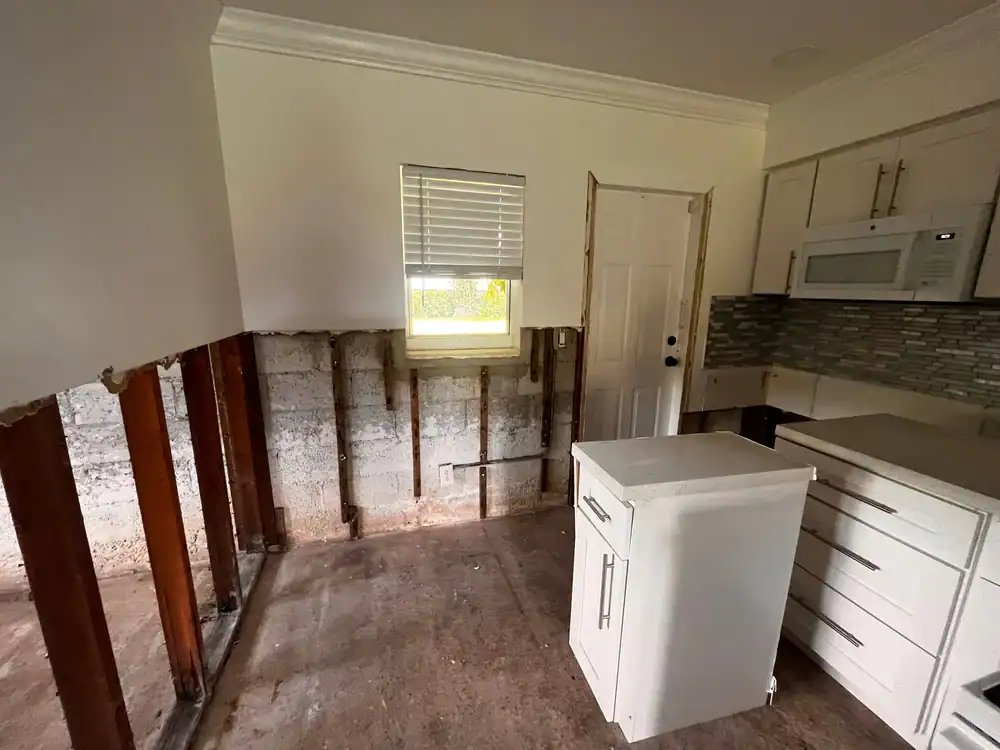
Thomaston Homes Deserve More Than a Generic Remodel
Your 1920s Colonial wasn’t built like every other house on Long Island — and it shouldn’t be renovated like one either. We handle your full kitchen remodel in Thomaston from the first design conversation to the final walkthrough.
I needed a professional consultation explanation of procedure for safe removal of Asbestos in my apartment complex. Without having an account yet, I was very impressed with the caring, knowledgeable and generous advice offered by Jessica, and will look forward to doing business in the future. Thank you so much! I feel much more informed about a sometimes scary endeavor. Peace. Nancy Silva Mineola, NY.
Mia Munoz
Used this company to clean up some water flood in my house. They were fast and easy to work with.very professional, Would recommend to anyone!
Nini Valle
Great company, had a flood and they responded quickly and efficiently. Billed my insurance company directly. I highly recommend this company!
joe colapietro, jr
I had pipe freeze in my basement right before a snow storm and they made to within an hour to help start the clean up process. They we by our side throughout the entire process and even helped with the insurance company. They did such a great job with the cleanup, repair, remidiation, I contracted them to perform the repairs and finishes in the basement. They came with enough manpower and material to get the job done. Leo and Jessica were nothing but a pleasure to deal with!!
Cristian Arredondo c
I had some water damage in my home and Green Island was able to take care of my issue quickly and effectively. I am very pleased with the work they did. They responded quickly and were very professional.
Michael M
Outstanding service! From the office to the field crew everyone was friendly, helpful and responsive. I highly recommend Green Island Group.
A Kitchen That Finally Matches the Rest of Your Thomaston Home
Most Thomaston kitchens were designed for a different era — layouts built for household staff, cabinets that have been updated once or twice but never quite right, and plumbing that predates anything modern. The result is a kitchen that works against you instead of for you. When that changes, the whole house feels different.
You get a space that actually fits how your family cooks, entertains, and moves through the day. Better flow, better light, better storage — and a design that respects the Colonial or Tudor bones your Thomaston home already has, rather than fighting them.
In a village where the average home value tops $1.1 million and the Great Neck school district premium is built into every square foot, a well-executed kitchen renovation also makes financial sense. Kitchen remodels in the Northeast return roughly 85 to 96 cents on the dollar at resale. If you’re planning to list your Thomaston home in the spring market, that investment pays you back in more ways than one.
We are a full-service New York renovation contractor — not a franchise, not a referral network. When you hire us for a kitchen remodel in Thomaston, one project manager runs the job from demo through final inspection. You’re not coordinating between a cabinet installer, a separate plumber, and a tile guy who’s never met either of them.
We’ve worked in Thomaston and the North Shore villages long enough to know that this area isn’t like remodeling anywhere else. Thomaston has its own building department at 100 East Shore Road, its own Design Review Board, and a Landmark Preservation code that applies to some of the older properties in the area. We know which jurisdiction to file with, what the process looks like, and how to keep your project moving without running into avoidable delays.
You get a locally rooted team that will be here after the project is finished — not a number that goes to a call center.
It starts with a consultation at your Thomaston home. We walk the space, look at what’s there, and listen to what you actually want — not what’s trending on a design blog. For older Thomaston homes, this walkthrough also means looking behind the obvious: original framing that may not align with modern cabinet dimensions, electrical that needs upgrading before a new kitchen can function safely, and in homes built before 1978, the presence of lead paint in surfaces that will be disturbed during demo. We identify these conditions before we price the project, so the number we give you is the number you pay.
From there, you get a detailed written proposal — labor, materials, permits, and a clear change order process. Nothing vague. We pull the permit directly through the Village of Thomaston’s Building Department and schedule all work within the village’s permitted hours: Monday through Friday, 8 a.m. to 8 p.m., and Saturdays from 10 a.m. to 6 p.m.
Once work begins, your project manager is on site and reachable. Dust barriers go up, floors get protected, and the job site gets cleaned at the end of every day. When we’re done, we walk the finished kitchen with you before we close anything out.
Full Kitchen Renovation, Built for Older Thomaston Homes
A kitchen remodel with us covers the full scope — demolition, custom cabinetry, countertop installation, plumbing, electrical, tile work, flooring, painting, and finishing. Everything under one contract. For Thomaston homeowners, that scope often includes work that doesn’t come up in newer construction: cast iron plumbing that needs evaluation, knob-and-tube wiring in the oldest homes, and uneven original framing that requires real carpentry skill to work around correctly.
We hold EPA Lead-Safe Certification, which is a federal legal requirement for any contractor disturbing lead paint in a home built before 1978. Given that most of Thomaston’s housing stock falls squarely in that category, this isn’t a bonus credential — it’s a baseline. If a contractor you’re talking to can’t confirm this certification, that’s a serious gap.
Material selection matters here too. Thomaston sits on the North Shore of Nassau County, and the proximity to Manhasset Bay means higher ambient humidity than inland communities. We spec moisture-resistant cabinet materials, appropriate ventilation systems, and properly sealed countertop and backsplash installations because the coastal climate demands it. Quartz countertops, custom cabinet lines, designer hardware, and thoughtful layout redesigns that open up the space — all of it is available, and all of it gets matched to what your specific Thomaston home actually calls for.
Do I need a permit for a kitchen remodel in Thomaston, NY?
Yes, and the permit process in Thomaston works differently than in most Nassau County communities. Because Thomaston is an incorporated village, all building permits are administered through the Village of Thomaston’s own Building Department — not Nassau County, not the Town of North Hempstead. The Building Commission, made up of the Mayor and two designated Trustees, must approve permits before they’re issued.
If your renovation involves any exterior changes — a new range hood vent, a window replacement, or anything visible from outside — you may also need approval from the village’s Design Review Board before a standard permit can move forward. And if your property carries a landmark designation under Thomaston’s Landmark Preservation code, there’s an additional review step before any demolition permit can be issued. We handle the entire permitting process on your behalf, filing with the correct jurisdiction and managing the inspection schedule so nothing stalls your project.
How much does a kitchen remodel typically cost in Thomaston?
In Thomaston and the surrounding North Shore Nassau County area, kitchen renovation costs generally range from $20,000 on the lower end for cabinet-focused updates to $50,000 and above for mid-range full renovations, with higher-end projects in Thomaston’s $1M-plus home market often running $75,000 to $150,000 depending on scope, materials, and what’s discovered behind the walls.
The honest answer is that older Thomaston homes change the equation. A Colonial from the 1920s or 1930s may have original plumbing, outdated electrical, or structural conditions that need to be addressed before the cosmetic work can begin. These aren’t surprises we use as leverage — they’re realities we identify during the initial walkthrough and price into the proposal upfront. The number we give you reflects what the job actually takes, not a low figure designed to get you to sign and grow from there.
How long does a kitchen remodel take for a Thomaston home?
A straightforward kitchen renovation — new cabinets, countertops, backsplash, and cosmetic updates without major structural changes — typically runs three to six weeks from the start of demo to final walkthrough. A more involved project that includes layout changes, plumbing relocation, electrical upgrades, or opening walls can run eight to twelve weeks or longer depending on complexity.
In Thomaston specifically, the permitting timeline through the village’s Building Department is a real factor in your overall schedule. We account for that in your project timeline from the beginning so you’re not caught off guard. If you’re planning to list your Thomaston home in the spring market, the window to start a full renovation is typically fall — giving you enough runway to complete the work and have the kitchen finished before the market heats up in February and March.
What should I look for when hiring a kitchen remodeling contractor in Thomaston?
At minimum, confirm that any contractor you’re considering holds a Nassau County Home Improvement Contractor license, carries general liability insurance and workers’ compensation, and can produce a current Certificate of Insurance before you sign anything. For Thomaston homes built before 1978 — which covers the majority of the village’s housing stock — EPA Lead-Safe Certification is a federal legal requirement, not optional.
Beyond credentials, pay attention to how a contractor handles the proposal. A detailed, itemized written scope with a clear change order process is the clearest signal that you’re dealing with someone accountable. Vague scopes and low initial numbers that grow through the project are the most common complaint in this category, and they’re entirely avoidable if you know what to ask for. Ask how they handle village-level permitting in Thomaston specifically — a contractor who’s never filed with the village’s own Building Department will be figuring it out on your project.
Is a kitchen remodel worth it before selling a Thomaston home?
For most Thomaston homeowners, yes — and the numbers support it. Kitchen remodels in the Northeast return approximately 85 to 96 cents on the dollar at resale, which puts them among the highest-ROI home improvements you can make before listing. In a village where the average home value exceeds $1.1 million and buyers are specifically choosing the Great Neck Union Free School District, a dated kitchen can be the one thing that softens an otherwise strong offer.
The key is making sure the renovation scope matches what Thomaston buyers actually respond to. Buyers in this market are design-forward and research-oriented — they notice the difference between a kitchen that was done right and one that was done quickly. A well-executed renovation with quality materials, a thoughtful layout, and finishes that respect your home’s architectural character will move the needle. A rushed cosmetic update that doesn’t hold up to scrutiny generally won’t.
Can Green Island Group handle a kitchen remodel in an older Thomaston home with original plumbing and wiring?
Yes — and this is exactly the kind of project where experience with Thomaston’s older housing stock makes a real difference. Thomaston’s homes are predominantly from the 1920s through the 1950s, and that means cast iron plumbing, original electrical systems, and framing that doesn’t conform to modern dimensions are common findings once demo begins. These aren’t dealbreakers — they’re conditions that need to be evaluated honestly and addressed correctly.
We assess the existing infrastructure during the initial walkthrough, before a proposal is written. If we find conditions that affect the scope or cost, we tell you then — not after demo is underway and you’re already committed. We also hold EPA Lead-Safe Certification, which is required by federal law when working in pre-1978 homes and directly applicable to most of Thomaston’s housing stock. The goal is a kitchen that works the way a modern kitchen should, built into a home that was constructed a century ago — and doing that well requires knowing what you’re walking into from the start.