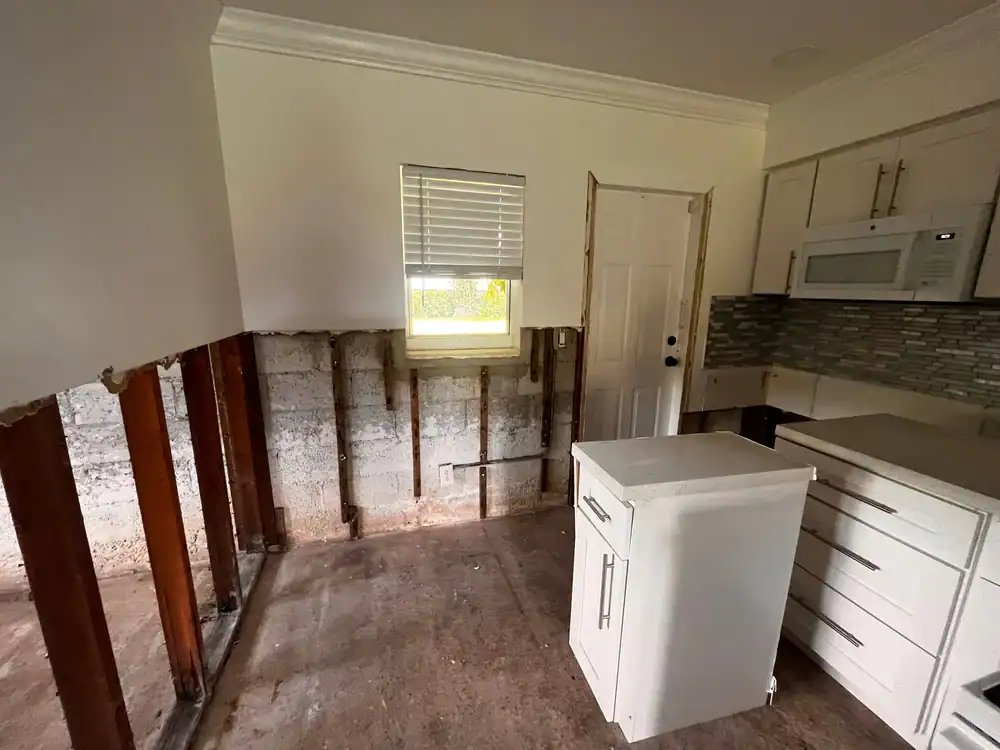
University Gardens homes were built to last — but the kitchens weren’t built for the way you live now. We handle the full kitchen remodel, from permits to final walkthrough, so you’re not managing four different contractors on your own.
I needed a professional consultation explanation of procedure for safe removal of Asbestos in my apartment complex. Without having an account yet, I was very impressed with the caring, knowledgeable and generous advice offered by Jessica, and will look forward to doing business in the future. Thank you so much! I feel much more informed about a sometimes scary endeavor. Peace. Nancy Silva Mineola, NY.
Mia Munoz
Used this company to clean up some water flood in my house. They were fast and easy to work with.very professional, Would recommend to anyone!
Nini Valle
Great company, had a flood and they responded quickly and efficiently. Billed my insurance company directly. I highly recommend this company!
joe colapietro, jr
I had pipe freeze in my basement right before a snow storm and they made to within an hour to help start the clean up process. They we by our side throughout the entire process and even helped with the insurance company. They did such a great job with the cleanup, repair, remidiation, I contracted them to perform the repairs and finishes in the basement. They came with enough manpower and material to get the job done. Leo and Jessica were nothing but a pleasure to deal with!!
Cristian Arredondo c
I had some water damage in my home and Green Island was able to take care of my issue quickly and effectively. I am very pleased with the work they did. They responded quickly and were very professional.
Michael M
Outstanding service! From the office to the field crew everyone was friendly, helpful and responsive. I highly recommend Green Island Group.
Most homes in the University Gardens subdivision were built starting in 1927. That means closed-off layouts, limited counter space, and electrical panels that weren’t designed for modern appliances. A real kitchen renovation doesn’t just make the room look better — it makes the room function the way your life actually requires it to.
When you open up the layout, upgrade the electrical, and bring in cabinetry and countertops that match how you cook and entertain, the kitchen stops being the one room you tolerate. For a lot of University Gardens households, that means a ventilation system strong enough for high-heat cooking, a layout that handles a full family gathering, and finishes that hold up to daily use — not just look good in photos.
The investment side matters too. With home values in the University Gardens and Russell Gardens area approaching and exceeding $1 million, an updated kitchen isn’t just a lifestyle upgrade — it’s one of the smartest things you can do before a sale, and one of the most satisfying things you can do if you’re staying. Northeast kitchen remodels return roughly 85 to 96 cents on the dollar at resale, which is among the highest ROI of any home improvement you can make.
We Know University Gardens Homes — And the Rules That Come With Them
We’re a full-service New York renovation contractor that handles kitchen remodels from the first design conversation through the final inspection. One contract, one point of contact, no subcontractor juggling on your end.
Working in University Gardens specifically means understanding things most contractors don’t know walking in. The University Gardens Property Owners Association has been reviewing construction plans since the community was founded in 1927 — and if you’re in the original 218-home subdivision, your renovation needs UGPOA Board approval before work begins, on top of your Town of North Hempstead building permit. That’s not a detail you want to discover mid-project.
We know the North Hempstead permit process, we know what the UGPOA submission requires, and we know the housing stock in University Gardens — what’s typically behind the walls of a pre-war kitchen, what electrical upgrades are usually necessary, and how to modernize a home without losing the character that makes this neighborhood worth living in.
It starts with a consultation at your home. We look at the existing layout, talk through how you actually use the space, and get a clear picture of what’s working and what isn’t. From there, we put together a detailed scope of work with real numbers — not a ballpark that grows by 40% once demolition starts.
Before any work begins, we handle the permitting. For University Gardens homeowners in the original subdivision, that means preparing the plan documentation for both the Town of North Hempstead Building Department and the UGPOA Board. The UGPOA has up to 30 days to review and respond, so we build that window into your timeline from the start — not as an afterthought. Homes in this area were largely built before 1978, which also means we follow EPA Lead-Safe certified practices during any demolition or surface work. That’s a legal requirement, and it’s not something to skip.
Once permits are cleared and materials are ordered, construction moves in a defined sequence: demo, rough-in work (electrical, plumbing, ventilation), framing if needed, drywall, cabinetry, countertops, backsplash, fixtures, and final trim. You’ll have one project manager coordinating every trade. When we hand the kitchen back to you, it’s finished — not 90% done with a punch list that never gets resolved.
A kitchen remodel in University Gardens isn’t a one-size-fits-all job. The homes here have specific conditions — older electrical systems, plumbing that hasn’t been touched in decades, layouts that predate open-concept design by 50 years — and the renovation has to account for all of it. We deliver the full scope: layout reconfiguration, cabinet design and installation, countertop selection and fabrication, backsplash, all rough-in trades, ventilation, lighting, and fixtures.
Design guidance is part of the process, not an add-on. We’re not handing you a catalog and walking away. If you need a powerful range hood for serious cooking, we spec it correctly. If the UGPOA’s architectural review requires that your renovation stay in harmony with the neighborhood’s character, we design with that in mind from the beginning — not as a revision after the fact.
Materials are selected for how North Shore homes actually perform over time. The coastal humidity on Long Island’s North Shore affects cabinet finishes and grout over the years, so we’re specific about what we recommend and why. Whether you’re doing a full gut renovation or a focused cabinet and countertop update, the scope is defined clearly before anything is signed — and it doesn’t change unless you change it.
Do I need UGPOA approval before starting a kitchen remodel in University Gardens?
If your home is within the original University Gardens subdivision — the 218-home planned community established in 1927 — then yes, you need to submit your construction plans to the UGPOA Board before any work begins. This is separate from your Town of North Hempstead building permit, and both are required. The UGPOA Board reviews plans to ensure they’re in harmony with the community’s architectural character, which is a covenant that’s been in place since the neighborhood was founded.
The submission goes to the UGPOA electronically, with a hard copy also required. The Board has 30 days to respond. If they don’t respond within that window, you’re permitted to proceed. The key is submitting a complete, well-prepared plan package — incomplete submissions slow the process down significantly. We prepare the documentation for both the Town permit application and the UGPOA Board submission, so you’re not navigating that on your own or discovering the requirement mid-project.
How much does a kitchen remodel typically cost in University Gardens, NY?
In the University Gardens and Great Neck area, a full kitchen gut renovation — layout reconfiguration, new cabinetry, countertops, all rough-in trades, ventilation, fixtures, and finishes — typically runs between $80,000 and $150,000 or more, depending on scope, materials, and what’s found behind the walls once demolition starts. Cabinet-focused partial remodels with countertop and fixture updates generally fall in the $30,000 to $60,000 range.
The older housing stock in University Gardens adds variables that newer-construction towns don’t have. Electrical panels in pre-war and mid-century homes often need upgrading to handle modern appliances. Plumbing that hasn’t been touched in 40 or 50 years sometimes requires replacement once it’s exposed. These aren’t surprises we spring on you — they’re things we look for and account for in the scope before the project starts. With home values in this area at or above $1 million, the investment math on a well-executed kitchen remodel is straightforward.
Does my contractor need to be licensed to do a kitchen remodel in Nassau County?
Yes — and it’s worth verifying before you sign anything. Nassau County requires all home improvement contractors to hold a valid Home Improvement Contractor License issued by the Nassau County Department of Consumer Affairs. That licensing process includes fingerprinting, proof of general liability insurance, and workers’ compensation coverage. It’s not the same as a state license or a general business registration — it’s county-specific, and it’s publicly verifiable.
For homes built before 1978 — which covers most of the University Gardens housing stock — federal law also requires contractors to hold EPA Lead-Safe (RRP) certification. Any renovation that disturbs painted surfaces in a pre-1978 home must follow certified lead-safe work practices. Nassau County Consumer Affairs enforces this, and it applies directly to the majority of homes in this community. Ask any contractor you’re considering to show you their Nassau County license number and their RRP certification. A legitimate contractor will have both and won’t hesitate to provide them.
How long does a kitchen remodel take from start to finish?
For a full kitchen renovation in University Gardens, you should realistically plan for 10 to 16 weeks from signed contract to completed project. That timeline accounts for the UGPOA Board review period — up to 30 days — plus Town of North Hempstead permit processing, material lead times (cabinetry alone can take 4 to 8 weeks depending on the manufacturer), and the construction sequence itself.
The construction phase for a full gut renovation typically runs 4 to 6 weeks once permits are in hand and materials are on site. Partial remodels — cabinet replacements, countertop swaps with plumbing updates, backsplash and fixture work — can move faster, sometimes 3 to 4 weeks for the build itself. The most common reason kitchen remodels run long is poor upfront planning: materials not ordered before demo starts, permits pulled late, or subcontractors scheduled without a real sequence in place. We build the full timeline before the first wall comes down, so the schedule you see at the start is one you can actually rely on.
What kitchen design trends are University Gardens homeowners choosing right now?
Across Nassau County’s North Shore, the most consistent requests we’re seeing are quartz countertops, two-tone cabinetry, and layouts that open the kitchen toward the main living area. Quartz now accounts for roughly 40% of countertop selections nationally, and it’s popular here for good reason — it handles the humidity that comes with North Shore coastal proximity better than many natural stone options, and it’s durable enough for households that cook seriously every day.
For University Gardens specifically, functional ventilation is a higher priority than in many other communities. A significant portion of residents here cook with high heat regularly, and a builder-grade range hood simply doesn’t cut it. We’re also seeing more requests for smart kitchen features — under-cabinet lighting on dimmers, USB charging built into outlets, and appliance integration that makes daily use easier. On the design side, homeowners in University Gardens tend to want finishes that feel current without clashing with the architectural character of homes that are 70 to 100 years old. That balance — modern function, timeless feel — is something we think about from the first design conversation.
How do I know if my kitchen needs a full gut renovation or just an update?
The honest answer depends on what’s actually there — and in University Gardens, that question matters more than in most places. Homes in this community were largely built between the 1920s and 1960s, which means the kitchen you’re looking at may have original or mid-century cabinetry, a 60- or 100-amp electrical panel that can’t support modern appliances, plumbing that predates current code, and a layout that was designed around a completely different way of living.
If the bones are sound — meaning the layout works for you, the electrical is already updated, and the plumbing is in good shape — a focused update covering cabinets, countertops, backsplash, and fixtures can transform the room without the cost or disruption of a full gut. But if the layout is the problem, or if you’re dealing with outdated electrical and plumbing that will need to be addressed anyway, a full renovation is usually the more cost-effective path. Doing a cosmetic update on a kitchen with underlying issues tends to mean doing the job twice. We walk through exactly this question during the initial consultation — looking at what’s there, what you need, and what actually makes sense for your home and your budget before any commitment is made.