West Hempstead Kitchens Built for How Families Actually Live Here
Most kitchens in West Hempstead were designed for a different era. We turn those closed-off, outdated spaces into kitchens that actually work — handling everything from permits to the final coat of paint.
I needed a professional consultation explanation of procedure for safe removal of Asbestos in my apartment complex. Without having an account yet, I was very impressed with the caring, knowledgeable and generous advice offered by Jessica, and will look forward to doing business in the future. Thank you so much! I feel much more informed about a sometimes scary endeavor. Peace. Nancy Silva Mineola, NY.
Mia Munoz
Used this company to clean up some water flood in my house. They were fast and easy to work with.very professional, Would recommend to anyone!
Nini Valle
Great company, had a flood and they responded quickly and efficiently. Billed my insurance company directly. I highly recommend this company!
joe colapietro, jr
I had pipe freeze in my basement right before a snow storm and they made to within an hour to help start the clean up process. They we by our side throughout the entire process and even helped with the insurance company. They did such a great job with the cleanup, repair, remidiation, I contracted them to perform the repairs and finishes in the basement. They came with enough manpower and material to get the job done. Leo and Jessica were nothing but a pleasure to deal with!!
Cristian Arredondo c
I had some water damage in my home and Green Island was able to take care of my issue quickly and effectively. I am very pleased with the work they did. They responded quickly and were very professional.
Michael M
Outstanding service! From the office to the field crew everyone was friendly, helpful and responsive. I highly recommend Green Island Group.
What Changes When Your Kitchen Finally Works for You
The kitchens in most West Hempstead homes were built in the 1950s and 60s — closed off from the living room, short on counter space, and running on plumbing and electrical that’s been patched together for decades. They weren’t designed for the way families cook, gather, and live today. When that changes, the whole house feels different.
Opening up a galley kitchen into a real, functional space — one with an island, room to move, and storage that actually makes sense — isn’t just an aesthetic upgrade. For families who chose West Hempstead because of the school district and plan to stay through their kids’ education, it’s an investment in a home they’re going to live in for another ten or fifteen years. That’s worth doing right.
There’s also a financial side that’s hard to ignore. With median home sale prices in West Hempstead approaching $810,000, a dated kitchen is a negotiating liability when you eventually sell. An updated one is a closing asset. In the Northeast, a well-executed kitchen remodel returns close to ninety cents on the dollar at resale — one of the strongest ROI figures of any home improvement you can make.
We’re a full-service renovation contractor based in New York, and we’ve worked in homes throughout Nassau County — including the post-war Capes, ranches, and colonials that make up most of West Hempstead’s residential streets. We know what’s typically behind those walls, under those cabinet bases, and beneath those original floors. That familiarity matters when surprises come up, and in homes this age, they usually do.
What sets us apart in this market isn’t a single trade — it’s the fact that we manage the entire project under one roof. Demolition, structural work, electrical, plumbing, cabinet installation, countertops, tile, paint, finish carpentry — all of it coordinated by one project manager, under one contract, with one point of contact for you. No juggling three different contractors who don’t talk to each other.
We also handle the Town of Hempstead Building Department permit process on your behalf, from application through final inspection. If you’re in West Hempstead, that’s the specific jurisdiction governing your renovation — and we know how to navigate it correctly.
From the First Call to the Final Walkthrough — Here's the Honest Version
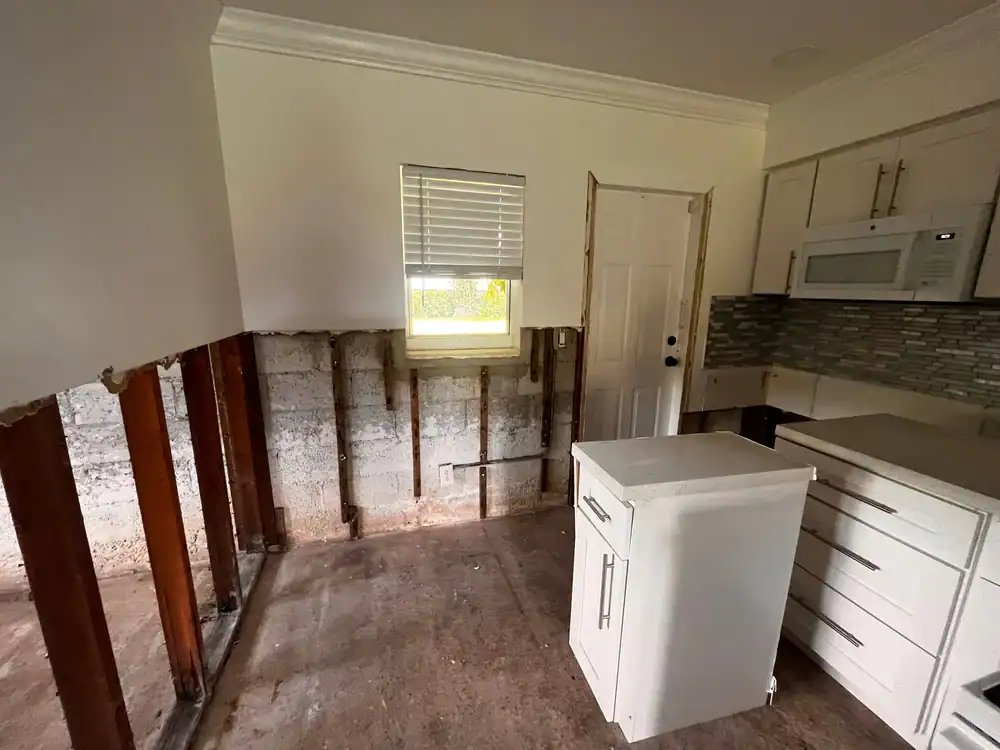
It starts with a conversation, not a sales pitch. We come out, walk through your kitchen, and talk about what’s working, what isn’t, and what you’re hoping to end up with. If there are signs of water damage under the sink or behind the cabinets — which is common in West Hempstead homes with aging plumbing — we flag it early, before it becomes a mid-project surprise that blows your budget and your timeline.
From there, we put together a detailed written proposal with a real line-item breakdown — materials, labor, permits, and a contingency buffer. No vague estimates, no bait-and-switch pricing after demo starts. Once you approve the scope, we file for the required building permit through the Town of Hempstead’s Online Permit Center. Electrical, plumbing, and structural work all require permits in West Hempstead, and we handle that entirely so you don’t have to track down forms or schedule inspectors yourself.
Construction moves in a deliberate sequence: demo, structural work if needed, rough trades, inspections, cabinet installation, countertops, backsplash, fixtures, and finish work. We communicate at every milestone. If you’re commuting into the city via the LIRR or heading out early on the Southern State, you’re not going to come home wondering what happened today — you’ll already know.
Kitchen Cabinet Renovation and Remodel West Hempstead, NY
Everything a West Hempstead Kitchen Remodel Actually Involves
A full kitchen renovation in West Hempstead typically covers a lot more ground than homeowners expect going in — especially in homes built before 1978, which is the majority of the housing stock here. When we remove old cabinets and open walls, we’re often uncovering original wiring that doesn’t meet current code, plumbing that hasn’t been touched in forty years, and surfaces with lead-based paint that require specific handling under EPA regulations. We hold EPA Lead-Safe Certification, which means we follow federally required containment and cleanup protocols to protect your family throughout the process. That’s not a detail to gloss over if you have young children in the home.
The scope of what we handle includes full gut renovations, cabinet-focused remodels, layout changes that involve removing walls or adding structural headers, countertop replacement, tile and backsplash work, under-cabinet lighting, appliance cutouts, and plumbing and electrical upgrades. Whether you’re starting with a vision board or just know you need something better than what you have, we help you make decisions — layout, cabinet configuration, countertop material, hardware — that will hold up for the long haul, not just photograph well on day one.
We also carry Nassau County Home Improvement Contractor licensing, which is the county-level credential required for legitimate home improvement work throughout West Hempstead and the rest of Nassau County. You can verify it. We’re not asking you to take our word for it.
Do I need a building permit for a kitchen remodel in West Hempstead, NY?
In most cases, yes — and the permit comes from the Town of Hempstead Building Department, not a village building department, since West Hempstead is an unincorporated hamlet within the Town of Hempstead. Any kitchen remodel that touches electrical work, plumbing, or structural elements like wall removal or new headers requires a permit. That covers the vast majority of meaningful renovations.
The Town of Hempstead has an Online Permit Center through hempsteadny.gov where applications are submitted, tracked, and where inspection requests are made. We manage this entire process on your behalf — from the initial application through the final inspection sign-off. You don’t need to call the building department or figure out what documentation is required. We handle it. Working without required permits in Nassau County can create real problems: fines, mandatory demolition of unpermitted work, complications during a home sale, and potential issues with your homeowner’s insurance during construction. It’s not worth the shortcut.
How much does a kitchen remodel typically cost in West Hempstead, NY?
Kitchen remodeling costs in Nassau County run higher than national averages — typically 25 to 40 percent above the national baseline, driven by labor rates, material costs, and the permitting requirements in the Town of Hempstead. For a full gut renovation in a West Hempstead home, most projects land somewhere between $60,000 and $120,000 depending on scope, materials, and whether structural work is involved. Cabinet-focused partial remodels with new countertops and updated fixtures typically run in the $25,000 to $50,000 range.
What affects your number most is the condition of what’s behind the walls. West Hempstead’s housing stock is predominantly 50 to 70 years old, and it’s common to find aging electrical panels, original cast-iron drain lines, or water-damaged subfloor once demo begins. We build a contingency buffer into every proposal specifically for this reason — so that if something turns up, you’re not blindsided. The goal is a written estimate that reflects reality, not a low number designed to get you to sign and then grow from there.
My West Hempstead home was built in the 1960s — does that affect my kitchen remodel?
It does, in a few specific ways. First, homes built before 1978 are likely to contain lead-based paint on walls, ceilings, and cabinet surfaces. Federal law under the EPA’s Renovation, Repair, and Painting Rule requires that contractors disturbing those surfaces be EPA Lead-Safe Certified and follow strict containment and cleanup protocols. We hold that certification. If you have young children in the home, this isn’t a technicality — it’s a genuine health protection that not every contractor in Nassau County takes seriously.
Second, the kitchens in West Hempstead’s post-war homes were typically designed as closed-off, galley-style rooms with limited counter space and storage. Opening them up into a modern, functional layout almost always involves removing at least one wall — which means identifying load-bearing elements, installing headers, and coordinating structural work alongside the trades. That’s exactly the type of multi-step, multi-trade project we’re set up to handle. Third, the plumbing and electrical in these homes is often original or patchwork-upgraded. We assess both during the planning phase so there are no surprises once the walls are open.
What happens if water damage is found behind my cabinets during demo?
It’s more common than most homeowners expect, especially in West Hempstead’s older homes where supply lines and drain connections under the sink have been in place for decades. Slow leaks behind cabinet bases, under dishwashers, or at refrigerator water lines can saturate cabinet boxes and compromise subfloor sections without any visible sign until the cabinets come out.
When we find water damage during demo, we don’t stop the project and hand you a referral to a separate remediation company. We assess the extent of the damage, remediate it properly — including any mold growth — and continue directly into the renovation. That’s a meaningful difference from how most contractors handle it. Coordinating between a remediation contractor and a remodeling contractor separately adds weeks to your timeline and creates accountability gaps when the two parties don’t communicate. We bridge that gap entirely. The damage gets addressed correctly, and your kitchen gets rebuilt — not just put back the way it was.
How long does a full kitchen remodel take from start to finish?
A full gut kitchen renovation in West Hempstead typically takes six to twelve weeks from the start of construction, depending on scope, material lead times, and how quickly the Town of Hempstead Building Department processes the permit application. The permit review timeline is something we factor into the project schedule upfront — it’s not an afterthought that delays the start of your project unexpectedly.
Material selection and ordering happen before demo begins, so cabinets, countertops, and fixtures are either on-site or confirmed for delivery before we pull anything out. This is important because cabinet lead times — especially for semi-custom or custom orders — can run four to eight weeks. Getting that locked in early keeps the construction phase moving without dead time. We give you a realistic timeline at the start of the project, not an optimistic one. If you’re planning around a specific date — a school year start, the holidays, a home listing — tell us that upfront and we’ll build the schedule accordingly.
How do I know if a kitchen remodeling contractor in Nassau County is actually licensed?
Nassau County requires home improvement contractors to hold a Nassau County Home Improvement Contractor License issued by the Nassau County Department of Consumer Affairs. This is a county-level license — separate from any state registration — and it’s searchable through Nassau County’s consumer affairs database. You can look up any contractor by name or license number before you sign anything.
We hold this license, and we’ll give you the number directly. We also carry general liability insurance and workers’ compensation coverage, and we provide a current Certificate of Insurance to any homeowner who asks for it before a contract is signed. In West Hempstead, where home values are pushing $800,000 and a renovation gone wrong is a significant financial exposure, verifying credentials before hiring isn’t overcautious — it’s the right move. An unlicensed contractor working in your home can void your homeowner’s insurance coverage during construction and create serious complications if you sell. Don’t skip this step, regardless of who you hire.