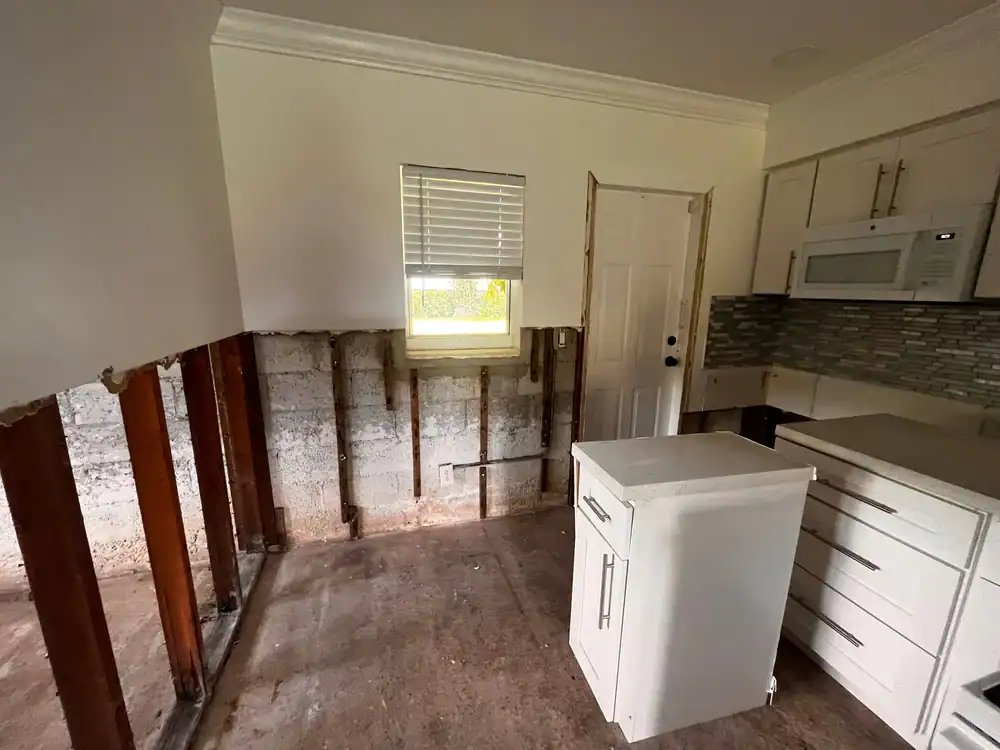
Your kitchen should work for your family — not against it. We handle kitchen renovations in Westbury, NY from start to finish, including permits, design, and every trade in between.
I needed a professional consultation explanation of procedure for safe removal of Asbestos in my apartment complex. Without having an account yet, I was very impressed with the caring, knowledgeable and generous advice offered by Jessica, and will look forward to doing business in the future. Thank you so much! I feel much more informed about a sometimes scary endeavor. Peace. Nancy Silva Mineola, NY.
Mia Munoz
Used this company to clean up some water flood in my house. They were fast and easy to work with.very professional, Would recommend to anyone!
Nini Valle
Great company, had a flood and they responded quickly and efficiently. Billed my insurance company directly. I highly recommend this company!
joe colapietro, jr
I had pipe freeze in my basement right before a snow storm and they made to within an hour to help start the clean up process. They we by our side throughout the entire process and even helped with the insurance company. They did such a great job with the cleanup, repair, remidiation, I contracted them to perform the repairs and finishes in the basement. They came with enough manpower and material to get the job done. Leo and Jessica were nothing but a pleasure to deal with!!
Cristian Arredondo c
I had some water damage in my home and Green Island was able to take care of my issue quickly and effectively. I am very pleased with the work they did. They responded quickly and were very professional.
Michael M
Outstanding service! From the office to the field crew everyone was friendly, helpful and responsive. I highly recommend Green Island Group.
A Kitchen That Finally Matches the Home You've Built
Most Westbury homes were built between the late 1940s and early 1970s. That means the kitchen you’re working in right now was designed for a different era — small galley layout, limited counter space, storage that never quite works, and electrical that wasn’t built to handle a modern refrigerator let alone a double oven. The bones of your home are solid. The kitchen just hasn’t kept up.
When a kitchen renovation is done right, the difference isn’t just visual. You get a layout that actually fits the way your household moves. You get storage that makes sense. You get finishes and materials that hold up to real daily use — not just look good in a showroom photo. In a home worth $700,000 or more, that investment pays you back both in quality of life and at resale, where a renovated kitchen in the Nassau County market can return close to what you put into it.
Westbury’s older housing stock also means there’s often more going on behind the walls than a fresh coat of paint can fix. Outdated wiring, worn plumbing, and subflooring that’s been patched rather than replaced — these are things that come up in renovation, and they’re better addressed now than discovered by a buyer’s inspector later. A kitchen remodel here isn’t just cosmetic. It’s an investment in the long-term health of your home.
We’re a full-service home improvement contractor based in New York, and we’ve worked in Nassau County long enough to know that every village has its own way of doing things. Westbury is no exception. The Village has its own Building Department, its own permit process, and its own licensing requirements for plumbing and electrical work — requirements that go beyond what Nassau County alone demands. We know this because we’ve navigated it before, and we handle all of it on your behalf.
What that means practically is that you’re not chasing down subcontractors, managing inspections, or wondering whether the electrician showing up has the right credentials for work inside village limits. From the first design conversation to the final walkthrough, everything runs through one team. We’ve completed kitchen renovations throughout Westbury — including homes near Carle Place, East Meadow, and Mineola — and we bring that same local accountability to every job.
No Surprises — Here's What Your Renovation Actually Looks Like
It starts with a consultation at your home. We look at what you’re working with — the layout, the existing plumbing and electrical, what walls can move and what can’t — and we talk through what you want the space to do. For most Westbury homes, that conversation includes an honest look at the constraints of the footprint, because a lot of post-war Cape Cods and ranches have kitchens under 150 square feet. We work within what you have and help you get the most out of it.
From there, we put together a detailed, written proposal with line-item pricing. Materials, labor, permits, and a realistic contingency are all broken out before anything gets signed. If we open a wall and find something unexpected — and in a 1960s Westbury home, that happens — we document it, price it, and get your approval before any additional work proceeds. No surprise change orders handed to you mid-project.
Once work begins, we pull the required permits through the Village of Westbury Building Department and ensure all plumbing and electrical subcontractors hold the village-level licensing the Building Department requires. Inspections are scheduled and passed before anything gets closed up. When the project is done, you get a finished kitchen and a clean permit record — which matters when it’s time to sell.
A kitchen remodel with us covers the full scope — demolition, structural work, cabinet installation, countertops, backsplash, flooring, plumbing, electrical, and finish work. You’re not hiring one company for cabinets and another for tile and a third for the sink relocation. It’s all handled under one contract, which keeps the timeline tighter and the accountability clear.
For Westbury homeowners specifically, a few things come up often enough that they’re worth naming. Because so much of the local housing stock predates 1978, there’s a real chance that painted surfaces in your kitchen contain lead. We are EPA Lead-Safe certified, which means we follow the required federal protocols when disturbing those surfaces — something that protects your family and keeps the project legally compliant. It’s not a detail every contractor takes seriously, but in a village where the majority of homes are old enough to trigger those requirements, it matters.
Cabinet work ranges from full replacement to refacing depending on your budget and the condition of your existing boxes. Countertop options include quartz, granite, and butcher block, and we help you choose based on how your kitchen actually gets used — not just what photographs well. Layout changes, like opening a wall to create better flow or adding an island where the space allows, are part of what we do. If your kitchen needs it and your home can support it, we’ll tell you honestly what’s realistic and what it costs.
Do I need a permit for a kitchen remodel in Westbury, NY?
In most cases, yes — and in Westbury specifically, the permit process goes through the Village’s own Building Department, not just Nassau County. If your renovation involves any electrical work, plumbing changes, or structural modifications like removing a wall, permits are required. That includes common kitchen remodel work like relocating a sink, adding circuits for new appliances, or upgrading your electrical panel to handle a modern kitchen load.
What makes Westbury different from unincorporated parts of Nassau County is that the Village requires all plumbing and electrical work to be performed by contractors who hold a Village of Westbury license — not just a state or county credential. If a contractor doesn’t know that requirement exists, or uses subs who don’t carry the right licensing, you end up with work that can’t pass inspection. We handle the permit application, coordinate with village-licensed tradespeople, and manage the inspection process from start to finish so you don’t have to.
How much does a kitchen remodel typically cost in Westbury, NY?
For a full kitchen renovation in Westbury, most homeowners are looking at somewhere between $45,000 and $90,000 depending on scope, materials, and what’s found behind the walls. The wide range exists for a real reason — a cosmetic refresh with new cabinet doors and countertops sits at a different price point than a full gut renovation with layout changes, new plumbing runs, and an electrical panel upgrade.
Labor and material costs in Nassau County run meaningfully higher than national averages, so budget estimates you find online for other markets won’t reflect what things actually cost here. What we can tell you is that in a market where Westbury homes are selling at or above $700,000, a well-executed kitchen renovation is one of the few home improvement investments that returns close to what you put in — both in daily use and at resale. We provide a detailed, line-item written proposal before any work begins so you know exactly what you’re committing to.
How long does a kitchen renovation take from start to finish?
For a full kitchen renovation, the realistic timeline from signed contract to finished kitchen is typically six to ten weeks, depending on the scope of work, material lead times, and how the permit process moves. In Westbury, the permit review timeline through the Village Building Department adds a step that some homeowners don’t anticipate — plan for that upfront rather than being surprised by it mid-project.
Material selection has the biggest impact on timeline outside of permitting. Custom cabinetry can have lead times of four to eight weeks, while semi-custom and stock options move faster. We walk through material choices with you early in the process specifically to avoid timeline bottlenecks. During the active construction phase, most kitchens take three to five weeks of on-site work. We give you a realistic schedule before anything starts, and we communicate clearly if anything changes.
What happens if unexpected issues are found inside the walls during demo?
In Westbury’s older housing stock, finding something unexpected during demolition is more the rule than the exception. Knob-and-tube wiring, cast iron drain lines, deteriorated subflooring, and in homes built before 1978, lead paint — these are things that show up regularly in post-war Cape Cods and ranches throughout the village. The question isn’t whether it might happen. It’s how your contractor handles it when it does.
Our process is straightforward: we document what we find, explain what it means for the project, provide a written change order with the cost to address it, and wait for your approval before any additional work proceeds. Nothing gets added to your bill without your sign-off. We also build a realistic contingency into the original proposal specifically because older homes carry more unknowns. We’d rather have that conversation upfront than hand you a surprise invoice when you’re already mid-renovation.
Should I reface my cabinets or replace them entirely?
It depends on the condition of your existing cabinet boxes and what you’re trying to accomplish. Refacing — replacing the doors, drawer fronts, and hardware while keeping the existing box structure — makes sense when the boxes themselves are solid, square, and in good shape, and when you’re happy with your current layout. It’s a more budget-friendly option and can meaningfully refresh the look of a kitchen without a full gut.
Full cabinet replacement makes more sense when the boxes are damaged, when you want to change the layout, when you need more storage than your current configuration allows, or when the existing cabinets are built in a way that limits what you can do with the space. For many Westbury homes with original 1950s and 1960s kitchens, the cabinet boxes have simply reached the end of their useful life — and replacement gives you the opportunity to redesign the storage and workflow at the same time. We’ll look at what you have and give you an honest read on which direction makes sense.
How do I know the contractor I hire is actually licensed to work in Westbury?
This is one of the most important questions you can ask, and it’s worth being specific about what licensing actually means in Westbury. The Village of Westbury requires that plumbing and electrical work be performed by contractors holding a Village of Westbury license — separate from a Nassau County or New York State credential. A contractor who holds a county license but not a village license is not legally permitted to perform that work inside village limits without risking a failed inspection or a stop-work order.
Beyond village-level licensing, you should also verify that any contractor working in Nassau County holds a Nassau County Home Improvement Contractor License, issued by the Nassau County Department of Consumer Affairs — that’s publicly searchable. Ask for a current Certificate of Insurance covering both general liability and workers’ compensation before signing anything. The Village Building Department requires that certificate as part of the permit application anyway, so any legitimate contractor should be able to provide it without hesitation. We carry all required credentials and provide documentation to any homeowner who asks before a contract is signed.