When the Canal Comes In, You Need More Than a Cleanup Crew
South shore storms don’t just damage roofs — they push water through walls, under slabs, and into places you won’t find until mold does. We handle the full storm damage restoration in Bellmore, NY, from the first call to the final inspection.
I needed a professional consultation explanation of procedure for safe removal of Asbestos in my apartment complex. Without having an account yet, I was very impressed with the caring, knowledgeable and generous advice offered by Jessica, and will look forward to doing business in the future. Thank you so much! I feel much more informed about a sometimes scary endeavor. Peace. Nancy Silva Mineola, NY.
Mia Munoz
Used this company to clean up some water flood in my house. They were fast and easy to work with.very professional, Would recommend to anyone!
Nini Valle
Great company, had a flood and they responded quickly and efficiently. Billed my insurance company directly. I highly recommend this company!
joe colapietro, jr
I had pipe freeze in my basement right before a snow storm and they made to within an hour to help start the clean up process. They we by our side throughout the entire process and even helped with the insurance company. They did such a great job with the cleanup, repair, remidiation, I contracted them to perform the repairs and finishes in the basement. They came with enough manpower and material to get the job done. Leo and Jessica were nothing but a pleasure to deal with!!
Cristian Arredondo c
I had some water damage in my home and Green Island was able to take care of my issue quickly and effectively. I am very pleased with the work they did. They responded quickly and were very professional.
Michael M
Outstanding service! From the office to the field crew everyone was friendly, helpful and responsive. I highly recommend Green Island Group.
There’s a specific kind of stress that comes with storm damage in south Bellmore. It’s not just the visible stuff — the shingles on the lawn, the wet carpet, the water line on the basement wall. It’s not knowing what’s behind it. Whether the water traveled further than you can see. Whether the contractor you’re about to call can actually handle everything they find, or whether they’re going to hit a wall the moment asbestos or mold enters the picture.
That’s the part most homeowners in this area don’t think about until they’re already in it. A significant portion of Bellmore’s housing stock was built between 1940 and 1969. When a nor’easter tears into a roof or canal flooding pushes water through a foundation in a home that age, you’re not always dealing with a simple repair. You might be dealing with disturbed asbestos insulation, compromised lead paint, or mold that started growing within 48 hours of the water getting in — none of which a general contractor is licensed to touch in New York State.
When the job is done right, you’re not just dry again. You’re back to normal — with documentation your insurance company can actually use, repairs that passed a Town of Hempstead inspection, and the confidence that nothing was missed behind the walls.
Licensed Storm Damage Restoration Company Bellmore
Every License the Job Requires — Under One Roof
We’re a Long Island-based restoration company that holds a Nassau County General Contractor license, NYS DOL Mold Remediation certification, NYS DOL Asbestos Handler certification, and USEPA Lead certifications. That combination matters here specifically. Bellmore’s south shore neighborhoods — the streets south of Merrick Road, the canal-adjacent blocks, the older homes near Shore Road — regularly produce multi-hazard storm damage scenarios that a single-trade contractor can’t legally complete.
We’re also an Approved Emergency Response Contractor through the New York State Office of General Services, which means the state has already reviewed our licensing, insurance, and operational capacity before you ever called. We operate across Nassau County year-round — not just in the weeks after a major event — and we bill insurance directly so you’re not fronting costs while your home is being restored.
From the First Call to the Final Walkthrough — No Gaps
When you call, someone answers — any hour, any day. The first thing we do is get eyes on the property and stop any active damage from spreading. That means tarping exposed roofing, extracting standing water, and boarding up anything that’s open to the elements. In south Bellmore, where canal flooding can push water in from below and from the sides rather than straight down through a roof, that initial assessment matters. We use thermal imaging cameras and commercial moisture meters to map every moisture pathway — not just the wet spots you can see.
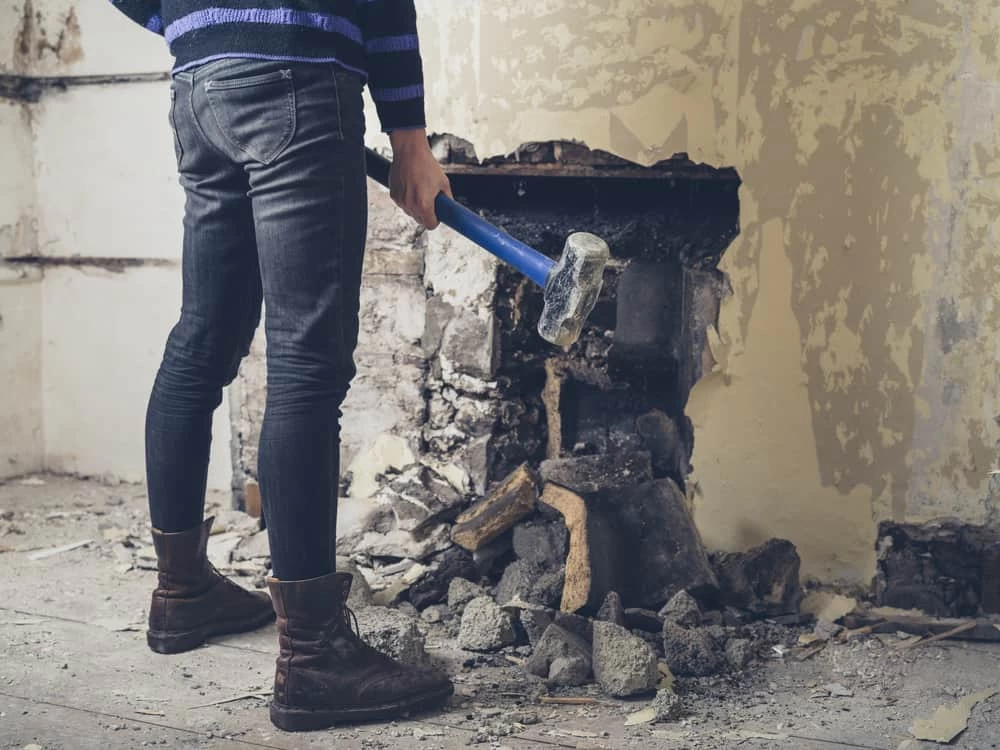
From there, we move into structural drying and controlled demolition of anything that can’t be saved. If we find mold, asbestos, or lead paint disturbed by the storm — which is a real possibility in Bellmore’s pre-1970 homes — we handle the remediation and abatement in-house. No subcontracting, no handoffs, no gaps in accountability. Once the structure is clean and dry, we pull the required permits through the Town of Hempstead Building Department and begin the rebuild.
Before we leave, you get a complete walkthrough. Every repair is documented, every inspection is passed, and your insurance paperwork reflects the full scope of what was done — because that documentation is what determines how much your claim pays out.
Storm damage restoration in Bellmore isn’t a one-size job. A nor’easter hitting a 1955 Cape Cod on Centre Avenue produces a different scope than a summer thunderstorm flooding a newer home north of Sunrise Highway. What stays consistent is our approach: we assess everything, we handle everything we find, and we don’t walk away until the job is complete and permitted.
The work we do includes emergency debris removal, water extraction, structural drying, mold testing and remediation, asbestos assessment and abatement, roof repair and replacement, siding and window repair, drywall replacement, and final structural rebuild. For Bellmore homeowners in documented flood zones — especially those south of Merrick Road carrying both a standard homeowners policy and a FEMA National Flood Insurance Program policy — we handle the documentation and billing for both claims simultaneously. That dual-policy coordination is something most contractors don’t know how to navigate, and it’s where claim money gets left on the table.
We also don’t just restore to the pre-storm condition and call it done. Where it makes sense, we install impact-resistant roofing materials and reinforced siding rated for the wind loads that south shore nor’easters actually produce. Shore Road has been described as having chronic flooding since Sandy. If your home sits in that zone, restoration is the floor — not the ceiling.
How quickly does mold start growing after storm flooding in Bellmore?
Mold can begin growing within 24 to 48 hours of water intrusion — and in south Bellmore, where flooding often comes from canal seepage or storm surge rather than a clean roof leak, the water tends to travel further and sit longer than homeowners expect. It wicks into wall cavities, migrates under flooring, and pools in subfloor voids where air circulation is poor. By the time you can smell it, you’re already dealing with a remediation job, not a drying job.
That window is the most important variable in what your restoration ends up costing. A home that gets professional water extraction and structural drying within the first 24 hours is a fundamentally different job than one that sits for three or four days. If you’re in a flood-prone area — Shore Road, South Centre Avenue, the canal streets south of Merrick Road — the safest thing you can do after any water event is call for an assessment before you’re sure you need one. The inspection costs you nothing compared to what finding mold late costs you.
Does storm damage repair require a permit in the Town of Hempstead?
Yes — and this is one of the most important things to understand before you hire anyone. Bellmore is an unincorporated hamlet within the Town of Hempstead, which means all structural restoration work — roof replacement, framing repair, siding work, foundation repair — requires a building permit pulled through the Town of Hempstead Building Department. Only contractors holding a Nassau County General Contractor license can legally pull those permits.
This matters because after major storms, out-of-area contractors appear quickly, make promises, and sometimes take deposits before anyone checks their credentials. If they’re not licensed to operate in Nassau County, they cannot legally complete permitted work in Bellmore — and you’re left holding the bag when the job fails inspection or a stop-work order gets issued. We hold a Nassau County GC license and pull every required permit before structural work begins. Every job is inspected and closed out correctly.
Can storm damage disturb asbestos or lead paint in older Bellmore homes?
It can, and in Bellmore’s south shore neighborhoods, it’s more common than most homeowners expect. A large portion of the housing stock in Bellmore Southeast and South Bellmore was built between 1940 and 1969 — which means asbestos-containing insulation, floor tiles, roofing materials, and pipe wrap are frequently present. Homes built before 1978 are also presumed to contain lead paint under federal law. When a storm tears into a roof or drives water through walls in a home of that vintage, it doesn’t just create water damage — it can disturb materials that require licensed abatement to handle legally.
In New York State, mold remediation requires a NYS DOL Mold Remediation License. Asbestos abatement requires a NYS DOL Asbestos Handler License. Lead work requires USEPA Lead and USEPA RRP certification. A general contractor without those credentials cannot legally touch those materials — which means if they find asbestos in your attic after tearing off storm-damaged roofing, they have to stop. We hold all of these certifications and handle the full damage chain in-house.
Will my insurance cover storm damage restoration in Bellmore, and how does billing work?
Most standard homeowners policies cover wind damage, fallen trees, and roof damage from storms. Flood damage — including the canal seepage and storm surge that south Bellmore residents deal with regularly — is typically covered under a separate FEMA National Flood Insurance Program policy, not your standard homeowners coverage. Many homeowners in Bellmore’s flood-prone areas carry both, which means a single storm event can generate two separate claims with two different documentation requirements.
We bill insurance directly and handle the documentation for both claim types simultaneously. That means you’re not out of pocket while the work is being done, and you’re not trying to coordinate paperwork across two insurance companies on your own. Correct, complete documentation is what determines how much your claim actually pays — and it’s where money gets lost when a contractor doesn’t know the process. We’ve navigated Nassau County flood claims, including post-Sandy situations, and we know what adjusters need to see.
What types of storm damage are most common in Bellmore, NY?
Bellmore sits on Nassau County’s south shore, roughly six miles north of Jones Beach, with a canal network south of Merrick Road that connects directly to South Oyster Bay and the Great South Bay. That geography produces a specific and recurring set of storm damage patterns. Nor’easters — which are the most frequent severe weather events here — bring sustained winds of 50 to 70 mph, heavy snow and ice loads, and ice dam formation on older roofs. The freeze-thaw cycle that follows opens up gaps in aging roofing and siding that weren’t visible before the storm.
Hurricane season brings a different risk. South shore communities like Bellmore face direct exposure to Atlantic systems, and the bay-and-canal geography amplifies storm surge from southerly systems in ways that inland Nassau towns don’t experience. Flash flooding from spring thunderstorms hitting at high tide is also a documented recurring pattern in southeastern Nassau County. Shore Road in south Bellmore has been described as having chronic flooding since Hurricane Sandy’s 11-foot storm surge forced saltwater into the local storm drain system in 2012 — and that infrastructure vulnerability hasn’t fully gone away.
How do I find a trustworthy storm damage contractor in Bellmore after a major storm?
The honest answer is that the hours right after a storm are the worst time to make a fast decision about a contractor — and also the time when the pressure to decide quickly is highest. After Sandy hit south shore communities in 2012, out-of-area contractors flooded into Bellmore and the surrounding area. Some did good work. Others took deposits and disappeared, or did work that failed inspection because they weren’t licensed to operate in Nassau County.
The fastest way to verify a contractor is to check their Nassau County General Contractor license, confirm their NYS DOL Mold and Asbestos certifications if those are relevant to your home’s age, and look for a physical service history in this specific area — not just a landing page that appeared after the storm. We already serve the Bellmore community, hold all required Nassau County and New York State licenses, and are an Approved Emergency Response Contractor through the NYS Office of General Services — a designation that requires state-level review of licensing, insurance, and operational capacity before it’s granted. That’s the kind of verification that holds up whether you check it at 9 AM or 3 AM after a nor’easter.