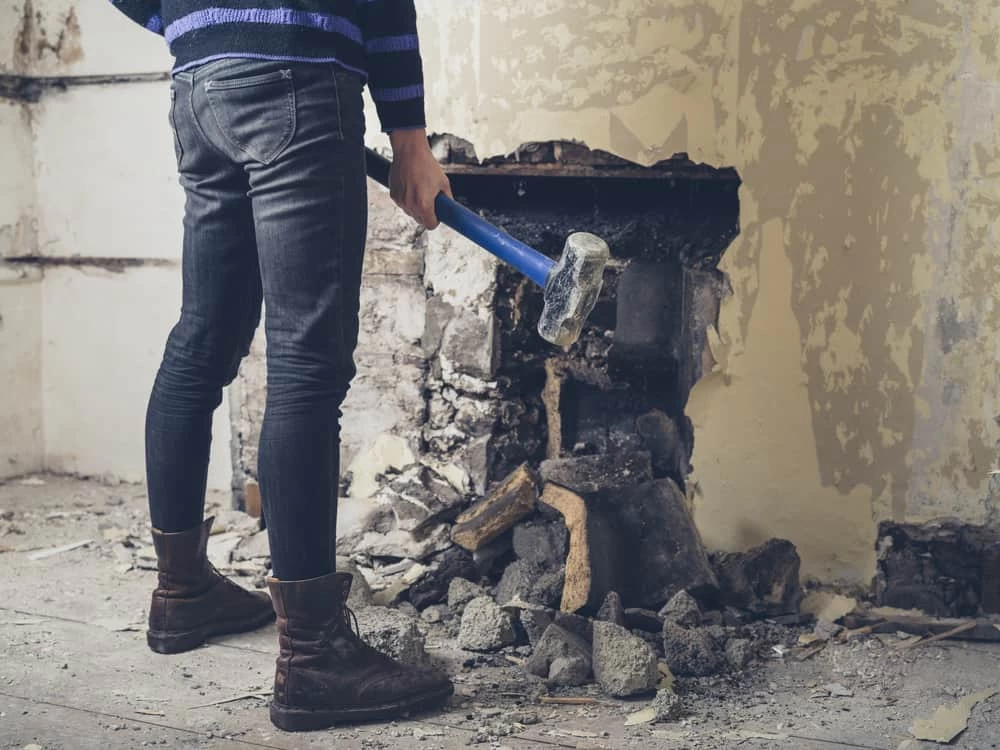
When a nor’easter takes down a 60-year-old oak onto your roof at 2am, you need someone who can actually handle what comes next — not just patch the surface and leave. We respond 24/7 to storm damage restoration in Laurel Hollow, NY, managing everything from structural repair to hidden moisture — and billing your insurance directly.
I needed a professional consultation explanation of procedure for safe removal of Asbestos in my apartment complex. Without having an account yet, I was very impressed with the caring, knowledgeable and generous advice offered by Jessica, and will look forward to doing business in the future. Thank you so much! I feel much more informed about a sometimes scary endeavor. Peace. Nancy Silva Mineola, NY.
Mia Munoz
Used this company to clean up some water flood in my house. They were fast and easy to work with.very professional, Would recommend to anyone!
Nini Valle
Great company, had a flood and they responded quickly and efficiently. Billed my insurance company directly. I highly recommend this company!
joe colapietro, jr
I had pipe freeze in my basement right before a snow storm and they made to within an hour to help start the clean up process. They we by our side throughout the entire process and even helped with the insurance company. They did such a great job with the cleanup, repair, remidiation, I contracted them to perform the repairs and finishes in the basement. They came with enough manpower and material to get the job done. Leo and Jessica were nothing but a pleasure to deal with!!
Cristian Arredondo c
I had some water damage in my home and Green Island was able to take care of my issue quickly and effectively. I am very pleased with the work they did. They responded quickly and were very professional.
Michael M
Outstanding service! From the office to the field crew everyone was friendly, helpful and responsive. I highly recommend Green Island Group.
Laurel Hollow’s wooded, hilly terrain is part of what makes it one of the most beautiful places to live on Long Island’s North Shore. It’s also what makes storm damage here different from anywhere else in Nassau County. When winds move through those mature trees on 2-plus-acre lots, it’s not just shingles that go — it’s large limbs, full root balls, and sometimes entire trees that come down on structures. The damage chain that follows moves fast.
Water doesn’t wait. Once a roof is breached, it starts working its way through insulation, into wall cavities, and across subfloor systems — often in places you can’t see from inside the house. In a Laurel Hollow home with thousands of square feet and a complex roofline, that hidden moisture is where the real long-term damage lives. Mold can establish itself within 24 to 48 hours of water intrusion, and in an older estate home, that same breach can disturb asbestos-containing materials or lead paint — creating a hazardous situation that goes well beyond standard repair work.
What you get on the other side of a proper restoration isn’t just a patched roof. It’s a home that’s been fully assessed with thermal imaging, dried to industry standards, repaired with licensed contractors, and documented completely for your insurance claim. For properties along the harbor’s edge near Laurel Hollow Beach, where storm surge adds a second layer of water risk, that thoroughness isn’t optional — it’s what separates a real restoration from a temporary fix that fails in the next storm.
Licensed for Both Counties. Built for Laurel Hollow's Regulations.
We’re a full-service disaster restoration and remediation company serving Nassau County, Suffolk County, Queens, and New York City — operating 24/7/365. Laurel Hollow sits right on the Nassau-Suffolk county line, and we hold active general contractor licenses in both counties. That matters for permitting, insurance compliance, and legal authority to work on properties near or on that border — something most restoration companies in this area simply cannot offer.
Beyond general contracting, we carry a NYS DOL Mold Remediation license, NYS DOL Asbestos Handler certification, USEPA Lead certification, and USEPA RRP certification. For a village where homes range from mid-century estates to historic properties, and where storm damage can disturb materials that require licensed handling by law, that full credential stack isn’t a bonus — it’s the baseline. We’re also an Approved Emergency Response Contractor through the NYS Office of General Services, a government-level vetting credential that most companies in this space have never pursued.
We know Laurel Hollow’s village regulations intimately, including the work hour restrictions that limit permitted construction to weekday and Saturday hours, and the tree removal permit requirements that apply when storm damage brings down trees on your property. You won’t get a stop-work order because we didn’t do our homework.
Emergency Storm Damage Restoration Laurel Hollow NY
From the First Call to a Fully Restored Home
When you call, a real person picks up — any hour, any day. We dispatch immediately for emergency response, which means getting to your property to secure it before more damage accumulates. That typically starts with emergency tarping on breached roof areas, board-up where windows or walls are compromised, and immediate water extraction if there’s active flooding. The goal in those first hours is to stop the damage from spreading while we assess the full scope.
Once the property is stabilized, we conduct a complete damage assessment using industrial thermal imaging cameras and moisture meters. This is where we find what a visual inspection misses — water that’s already traveled through wall cavities, wet insulation behind drywall, moisture under flooring. In Laurel Hollow’s larger estate homes, that step isn’t a formality. It’s what determines whether the restoration is actually complete or just cosmetically finished. We document everything in detail at this stage, which becomes the foundation of your insurance claim.
From there, the repair phase begins — structural work, roofing, water damage remediation, mold prevention, and any hazardous material handling that’s required. Because Laurel Hollow has its own Building Department with specific permit requirements, we pull the appropriate permits, schedule inspections, and make sure the work closes out with a proper certificate of occupancy. We bill your insurance company directly throughout the process, keeping you informed without making you manage the paperwork.
Storm Damage Cleanup and Restoration Services Laurel Hollow
Every License This Job Could Possibly Require
Storm damage restoration in Laurel Hollow isn’t a single-trade job. A tree through a roof on a wooded estate can require structural assessment, roofing repair, water extraction, mold remediation, debris removal, hazardous material testing, and insurance documentation — often all at once. We handle every phase under one roof, with the licenses to back it up legally in Nassau County and Suffolk County.
Our scope of work for storm damage includes emergency tarping and board-up, full structural repair and roofing, water extraction and industrial drying, thermal imaging and moisture mapping, mold testing and NYS DOL-licensed remediation, asbestos and lead assessment and certified abatement where required, debris removal and coordination of tree removal permits with Laurel Hollow’s Building Department, and complete insurance documentation with direct billing to your carrier. For waterfront properties near Cold Spring Harbor’s inner harbor, we also address storm surge intrusion at the foundation and lower levels — a specific vulnerability that standard roofing contractors aren’t equipped to handle.
If your home was built before 1978 — which applies to a significant portion of Laurel Hollow’s housing stock — storm damage that breaches walls, floors, or roofing can legally require licensed asbestos and lead handling before any repair work begins. In New York State, that work cannot be performed by an unlicensed contractor. We hold every certification required by state law, so there are no gaps in the chain and no subcontractors brought in to handle what we’re not licensed for.
Does storm damage insurance cover tree removal in Laurel Hollow, NY?
It depends on your policy and the circumstances, but in most cases homeowners insurance will cover tree removal if the tree damaged a covered structure — your roof, a fence, a detached garage. If a tree fell on your property but didn’t hit anything, coverage for removal alone is less consistent and often subject to a separate sublimit. The key is documentation.
In Laurel Hollow specifically, tree removal also requires a permit from the village Building Department — even for trees that came down in a storm. That’s a step that needs to happen before removal work begins, and it’s something your contractor should be managing, not something you should be chasing down while dealing with a damaged home. We handle the permit process and document the removal as part of the insurance claim, so nothing gets missed and no work gets done out of sequence.
How quickly does mold grow after storm water gets into my home?
Mold can begin establishing itself within 24 to 48 hours of water intrusion — and in some conditions, even faster. It doesn’t need a lot of moisture to get started. A slow leak through damaged flashing, water sitting in wall insulation, or humidity trapped in a closed attic space after a nor’easter can all create the conditions mold needs without any visible flooding.
The challenge in larger estate homes throughout Laurel Hollow is that water often travels far from the point of entry before it becomes visible. A breach at a roof valley or dormer flashing can send water down through insulation and into a wall cavity one floor below — and you won’t see it until it’s already a mold problem. That’s why thermal imaging and moisture mapping matter so much in the assessment phase. Finding the water before it becomes mold is the entire point. If you’re waiting to see staining or smell something before you call, you’re already behind.
Do I need a permit for storm damage repairs in Laurel Hollow?
Yes, for anything beyond emergency stabilization — tarping, board-up, and immediate water extraction — permitted work is required by Laurel Hollow’s Building Department. That includes structural repairs, roofing replacement, and any construction that restores or alters the building. The village also has specific work hour restrictions: permitted construction can only happen Monday through Friday between 8am and 6pm, and on Saturdays between 9am and 4pm. No permitted work on Sundays.
A contractor who doesn’t know these rules — or who skips the permit process entirely — can trigger a stop-work order that halts your restoration mid-project. It can also create problems with your certificate of occupancy and potentially complicate your insurance claim. We pull every required permit, coordinate with the village Building Department, and schedule the work within the allowed hours. When the job is done, it closes out properly with the documentation your insurer and the village both require.
What's the difference between storm damage restoration and regular storm damage repair?
Storm damage repair typically refers to fixing what’s visibly broken — replacing shingles, patching a wall, boarding up a window. Storm damage restoration goes further. It means returning the property to its pre-storm condition in full — including everything that’s not visible from the outside. That includes drying out wall cavities and subfloor systems, testing for mold, addressing any hazardous materials disturbed by the damage, and documenting the full scope for your insurance claim.
For a Laurel Hollow estate, the difference between repair and restoration is significant. Large homes with complex rooflines, finished attics, multiple levels, and high-value interior finishes require a more thorough process than a standard suburban house. A surface repair that leaves moisture behind in the structure will fail — either through mold, rot, or a repeat failure in the next storm. Restoration means the job is actually finished, not just visually closed.
How does Green Island Group handle the insurance claim process?
We handle the documentation and bill your insurance company directly. That means we photograph and catalog the damage in detail, prepare the documentation your insurer needs to process the claim, and work with your carrier throughout the process — so you’re not the one translating between a restoration contractor and an insurance adjuster while managing a damaged home.
For a property in Laurel Hollow, where homes can carry significant replacement value and where storm damage can involve multiple coverage categories — roofing, structural, water damage, hazardous materials, temporary housing — getting the documentation right matters. Underdocumented claims get underpaid. We’ve seen it happen. Our process is built around capturing the full scope from the start, so nothing gets left off the claim. You don’t pay out of pocket during the emergency phase, and you don’t have to fight for coverage that was yours from the beginning.
Can a storm disturb asbestos or lead paint in older Laurel Hollow homes?
Yes — and it’s more common than most homeowners realize. Homes built before 1978 may contain asbestos in roofing materials, insulation, floor tiles, and pipe wrap, as well as lead paint in windows, trim, and interior surfaces. When storm damage breaches those materials — through a fallen tree, a collapsed roof section, or impact damage to walls — it can release fibers and particles that require licensed handling before any repair work begins.
In New York State, mold remediation and asbestos abatement are regulated activities that require specific NYS DOL licenses. A general contractor without those licenses cannot legally perform that work — and if they do it anyway, you’re exposed to liability and potential health risk. Laurel Hollow’s housing stock includes a meaningful number of pre-1978 properties, and estate-scale homes often have more of these materials simply by virtue of their size. We hold the NYS DOL Mold Remediation license, NYS DOL Asbestos Handler certification, USEPA Lead certification, and USEPA RRP certification — meaning we assess, contain, and remediate those hazards legally and completely, as part of the same restoration project, without bringing in outside subcontractors to fill the gap.