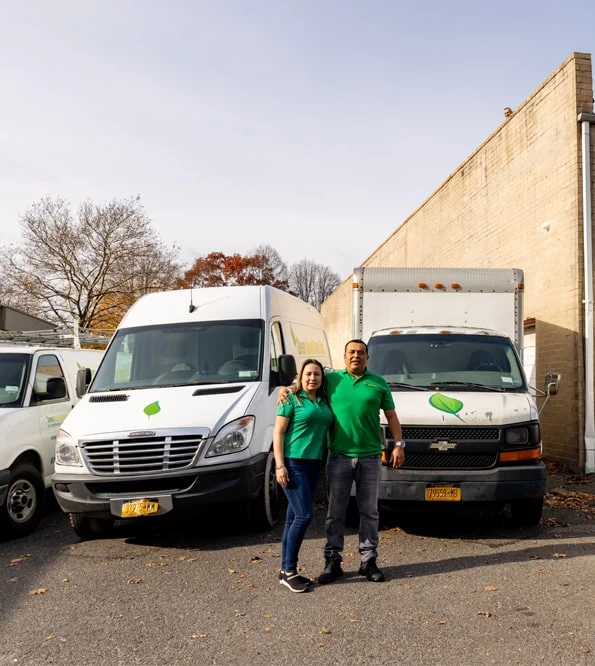
Manhattanville sits in a natural hollow and when storms hit, water finds it fast. We respond 24/7 with industrial equipment and full NYC licensing to stop the damage before it spreads.
I needed a professional consultation explanation of procedure for safe removal of Asbestos in my apartment complex. Without having an account yet, I was very impressed with the caring, knowledgeable and generous advice offered by Jessica, and will look forward to doing business in the future. Thank you so much! I feel much more informed about a sometimes scary endeavor. Peace. Nancy Silva Mineola, NY.
Mia Munoz
Used this company to clean up some water flood in my house. They were fast and easy to work with.very professional, Would recommend to anyone!
Nini Valle
Great company, had a flood and they responded quickly and efficiently. Billed my insurance company directly. I highly recommend this company!
joe colapietro, jr
I had pipe freeze in my basement right before a snow storm and they made to within an hour to help start the clean up process. They we by our side throughout the entire process and even helped with the insurance company. They did such a great job with the cleanup, repair, remidiation, I contracted them to perform the repairs and finishes in the basement. They came with enough manpower and material to get the job done. Leo and Jessica were nothing but a pleasure to deal with!!
Cristian Arredondo c
I had some water damage in my home and Green Island was able to take care of my issue quickly and effectively. I am very pleased with the work they did. They responded quickly and were very professional.
Michael M
Outstanding service! From the office to the field crew everyone was friendly, helpful and responsive. I highly recommend Green Island Group.
Most storm damage in Manhattanville doesn’t stop at the surface. Water that enters through a failed roof or cracked masonry travels through shared walls, plumbing chases, and ceiling cavities hitting units two floors below the original breach before anyone realizes what’s happening. The visible damage is rarely the whole story, and that gap between what you see and what’s actually wet is where mold starts.
Manhattanville’s building stock makes this more complicated than most. A significant portion of the neighborhood’s residential buildings predate World War II, and many of those older structures carry asbestos in pipe insulation, floor tiles, and plaster. When storm water disturbs those materials, you’re no longer dealing with a water damage job you’re dealing with an environmental remediation situation that most restoration companies aren’t licensed to touch. Getting the full picture moisture mapped, hazardous materials assessed, and drying done right is what separates a completed restoration from a recurring problem.
Once the work is done correctly, the difference is real and measurable. No hidden moisture feeding mold behind your walls. No asbestos-containing materials left disturbed and unaddressed. No insurance claim that falls apart because an unlicensed contractor cut corners on the documentation. Your space is dry, safe, and documented and you have a paper trail that protects you whether you’re dealing with your insurer, your landlord, or your building manager.
Storm Damage Restoration Company in Manhattanville
5,000 New York Restorations. Zero Shortcuts.
We’ve completed over 5,000 restoration projects across New York State. Not across 40 states in New York, in buildings like yours, under the same regulatory framework you’re navigating right now. We hold NYS OGS Approved Emergency Response Contractor status, dual NYC and NYS MWBE certification, and full licensing for both fire and flood restoration and environmental services which matters enormously in Manhattanville, where pre-war buildings and mid-century NYCHA towers make hazardous material exposure a real part of almost every storm damage job.
We also carry NYC MWBE certification a credential that reflects a genuine commitment to the communities we serve, including West Harlem and Manhattanville, where advocacy for minority-owned business participation has been a defining issue in neighborhood development for years. When you call, you’re getting a company that knows this neighborhood, knows New York’s regulatory requirements, and has the credentials to back it up.
When you call, someone answers not an answering service, not a callback queue. Our emergency response team is available around the clock because storm damage in a multi-unit building doesn’t wait for business hours. The first step is getting eyes on the full scope of the problem, and that means more than a visual walkthrough. We use thermal imaging cameras to identify moisture hidden behind walls, under floors, and above ceilings the water you can’t see but that’s already feeding mold growth within 24 to 48 hours of intrusion.
Once the full moisture map is established, industrial water extractors and commercial dehumidifiers go to work. This isn’t equipment from a hardware store it’s the kind of gear that can handle a multi-unit building where water has traveled through shared structural elements across several floors. In Manhattanville’s older building stock, this phase also includes an assessment for disturbed hazardous materials. If asbestos-containing materials or lead paint have been compromised by the storm breach, that gets addressed under our environmental services licensing before any structural restoration begins because NYC regulations require it, and because skipping it creates liability for you.
From there, structural repairs, mold remediation, and final documentation are completed in sequence. Every step is documented for your insurance claim, and we handle the billing directly with your insurer so you’re not fronting costs you may not be able to absorb. By the time the job is closed, you have a complete record of what was found, what was done, and what your space looks like now.
Storm damage restoration in Manhattanville covers a wider range than most people expect when they first call. Wind and hail damage, roof breaches, failed flashing, flooded basements, water-saturated walls those are the entry points. What follows is where the real work begins. We handle water extraction and structural drying, mold assessment and remediation under NYS Article 32 and NYC Local Laws 55 and 61, asbestos abatement under NYC and NYS regulations, debris removal, emergency board-up, and full structural restoration all under one license and one point of contact.
In Manhattanville specifically, the regulatory layer is not optional. NYC requires licensed mold assessors and remediators for any mold project exceeding 10 square feet a threshold that virtually every storm water intrusion event in an apartment building will cross. Pre-1987 buildings require mandatory asbestos surveys before any disturbed materials are touched. We’re licensed to handle all of it, which means you don’t need to coordinate multiple contractors or worry about whether the company you hired is legally permitted to complete the job.
Direct insurance billing is standard. We work with your insurer, handle the claim documentation, and remove the upfront cost barrier that stops a lot of Manhattanville residents particularly in buildings like the Manhattanville Houses, where residents shouldn’t have to choose between their financial stability and getting their home restored safely and completely.
Does storm damage restoration in Manhattanville require special permits or licenses?
Yes, and the requirements here are more layered than in most markets. New York City requires permits from the NYC Department of Buildings for most structural repair work following storm damage. Emergency work can often begin without a permit in place, but a permit application typically needs to be filed within a defined timeframe and any work left unpermitted creates liability for the property owner down the line.
Beyond the DOB, mold remediation in NYC requires separate licensed assessors and remediators under NYS Article 32 and NYC Local Laws 55 and 61 for any project exceeding 10 square feet. In Manhattanville’s pre-war buildings and mid-century towers, asbestos surveys are also mandatory before disturbing materials in buildings constructed before 1987 which covers the majority of the neighborhood’s residential stock. A restoration company that isn’t licensed for both restoration and environmental remediation cannot legally complete a full job in most Manhattanville buildings. We hold all required licenses across both categories and handle permitting as part of the standard process.
How fast does mold actually grow after storm water gets into my apartment?
Mold can begin developing within 24 to 48 hours of water intrusion and in a multi-unit building, that clock starts the moment water enters the structure, not when you first notice it. By the time visible mold appears, it’s typically been growing behind walls or under flooring for days or weeks. The problem is that in Manhattanville’s older apartment buildings, water doesn’t stay in one place. It moves through shared plumbing chases, wall cavities, and ceiling systems, which means a roof breach on the top floor can create mold conditions several floors below before anyone realizes the extent of the damage.
This is why thermal imaging during the initial assessment matters so much. Finding all the moisture not just the wet spot you can see is what determines whether the remediation is complete or just cosmetic. Under New York State’s mold law, any project involving more than 10 square feet of mold requires a licensed assessor and a separately licensed remediator. That threshold is almost always exceeded in a multi-unit building storm event in Manhattanville, which is why working with a fully licensed company from the start protects both your health and your insurance claim.
My building is managed by NYCHA who is responsible for storm damage restoration?
This is one of the most common questions from residents of Manhattanville Houses and other NYCHA properties in the area, and the answer depends on what was damaged. NYCHA or the PACT management entity now overseeing the $445 million renovation of Manhattanville Houses is responsible for structural repairs to the building itself: the roof, exterior walls, shared systems, and common areas. If your ceiling is leaking because of a roof failure, that’s a building-level issue and NYCHA or PACT management is the responsible party.
Your personal property is a different matter. Furniture, clothing, electronics, and personal belongings damaged by storm water are typically covered under renter’s insurance, not the building’s policy. If you don’t have renter’s insurance, you may still have options depending on the cause and circumstances of the damage. Regardless of who is ultimately responsible for the structural repairs, documenting your personal property damage thoroughly and immediately is critical. We can assist with damage documentation and help you understand your options including how to navigate a situation where your landlord’s timeline for structural repairs doesn’t match the urgency of your personal restoration needs.
Can storm damage expose asbestos in my Manhattanville apartment building?
Yes, and it happens more often than most people expect. A large portion of Manhattanville’s residential buildings were constructed before 1940, and many others date to the 1960s both eras when asbestos was routinely used in pipe insulation, floor tiles, ceiling plaster, roofing materials, and joint compound. When storm damage breaches a roof, drives water through aging masonry, or causes structural movement, it can disturb these materials and release asbestos fibers into the air.
NYC regulations require a mandatory asbestos survey by a certified investigator before any renovation or repair work begins in pre-1987 buildings. If asbestos-containing materials are found to have been disturbed, proper abatement under NYC DEP regulations and NYS ICR 56 must be completed before restoration work continues. This is not optional, and a restoration company that proceeds without addressing it is creating serious liability for you and your building. We hold environmental services licensing specifically for this reason so that when storm damage uncovers a hazardous material situation, the same company handling your restoration can legally and safely handle the abatement without bringing in a second contractor or leaving the work incomplete.
What does storm damage restoration typically cost, and does insurance cover it in Manhattanville, NY?
Storm damage restoration costs vary significantly depending on the scope of damage, the type of building, and what materials are involved. Nationally, repair costs range from roughly $2,600 on the low end to over $22,000 for more complex scenarios and in New York City, where labor costs, regulatory compliance, and the complexity of older building stock all factor in, projects can exceed that range when hazardous material abatement or multi-unit structural repairs are involved.
Most homeowner’s and renter’s insurance policies cover storm damage, but the specifics depend on your policy, your deductible, and how the damage is documented. In Manhattanville, where a significant number of residents are renters, it’s worth knowing that renter’s insurance typically covers personal property damage but not structural repairs, which fall to the building owner’s policy. We bill insurance directly and handle all claim documentation, which removes the upfront cost burden and eliminates the back-and-forth between you and your insurer. If you’re unsure what your policy covers, starting with a thorough damage assessment and proper documentation is the most important first step both for your safety and for your claim.
How do I know if a storm damage restoration company is actually licensed to work in New York City?
This is worth asking directly, because not every company operating in Manhattan including in Upper Manhattan neighborhoods like Manhattanville and West Harlem holds the full range of licenses required to legally complete a storm damage restoration job here. New York City has one of the most complex regulatory environments in the country for this type of work, and the licensing requirements are specific and verifiable.
For mold remediation, you can verify a company’s license through the NYS Department of Labor, which maintains a public database of licensed mold assessors and remediators under Article 32. For asbestos work, licenses are issued by the NYC Department of Environmental Protection and are also publicly searchable. NYC DOB contractor licenses are searchable through the DOB NOW portal. Beyond licensing, ask whether the company is registered with the NYS Office of General Services as an approved emergency response contractor a government-vetted designation that requires demonstrated capability and compliance. We hold all of the above, including dual NYC and NYS MWBE certification. In a neighborhood where contractor fraud after storm events is a documented risk, verifying credentials before you sign anything is the single most important step you can take to protect yourself.