When Storms Hit Middle Village, Hidden Damage Is the Real Problem
Your home is likely one of the older ones on the block and in Middle Village, that means storm damage runs deeper than what you can see. We respond within the hour and handle everything, including your insurance claim.
I needed a professional consultation explanation of procedure for safe removal of Asbestos in my apartment complex. Without having an account yet, I was very impressed with the caring, knowledgeable and generous advice offered by Jessica, and will look forward to doing business in the future. Thank you so much! I feel much more informed about a sometimes scary endeavor. Peace. Nancy Silva Mineola, NY.
Mia Munoz
Used this company to clean up some water flood in my house. They were fast and easy to work with.very professional, Would recommend to anyone!
Nini Valle
Great company, had a flood and they responded quickly and efficiently. Billed my insurance company directly. I highly recommend this company!
joe colapietro, jr
I had pipe freeze in my basement right before a snow storm and they made to within an hour to help start the clean up process. They we by our side throughout the entire process and even helped with the insurance company. They did such a great job with the cleanup, repair, remidiation, I contracted them to perform the repairs and finishes in the basement. They came with enough manpower and material to get the job done. Leo and Jessica were nothing but a pleasure to deal with!!
Cristian Arredondo c
I had some water damage in my home and Green Island was able to take care of my issue quickly and effectively. I am very pleased with the work they did. They responded quickly and were very professional.
Michael M
Outstanding service! From the office to the field crew everyone was friendly, helpful and responsive. I highly recommend Green Island Group.
The storm is over, but the damage isn’t done yet. Water sitting inside a wall cavity, moisture trapped under original plaster, or a compromised roof deck hiding under intact shingles these are the things that turn a manageable repair into a serious problem three months from now. Getting it handled correctly the first time means not reliving this six months later.
Middle Village homes are mostly pre-1950s construction. That’s not a small detail. It means aging roof decking, original window framing that lets wind-driven rain through, and basements with waterproofing that’s had decades of wear. When a nor’easter rolls through or a heavy summer storm overwhelms the sewer system near Juniper Valley Park, those vulnerabilities show up fast. A proper restoration addresses what’s actually wrong not just what’s visible on the surface.
There’s also the insurance side of this. Most homeowners in Middle Village aren’t paying out of pocket for the bulk of storm restoration work insurance covers it. But only if the damage is documented correctly and the claim is filed with the right scope. When the process is handled by someone who knows what adjusters need to see, you don’t leave money on the table.
Storm Damage Restoration Company in Middle Village
Licensed for the Work Middle Village's Older Homes Actually Require
We are a full-service storm damage restoration and general contracting company serving Middle Village, Queens, and the surrounding boroughs. We hold an active NYC General Contractor license, which means we can legally pull the DOB permits required for structural storm repairs in Middle Village something a mitigation-only company simply cannot do. That matters more than most homeowners realize until they’re halfway through a repair.
Beyond the GC license, our credential stack is built specifically for older New York City homes. The NYS DOL Asbestos License and USEPA Lead/RRP certification aren’t optional extras they’re legal requirements for storm-related demolition and repair work in a neighborhood where most of the housing stock predates 1978. Add the NYS DOL Mold License, IICRC Water/Fire Damage certification, and NYC BIC Trade Waste License, and we have the full authorization to handle every phase of the job without subcontracting critical work to someone else.
From the streets near Juniper Valley Park to the attached rowhouses along Metropolitan Avenue, we’ve worked on the kind of homes that define Middle Village.
From the First Call to the Finished Repair No Handoffs
When you call, the clock starts. We target arrival within one hour, which matters in a neighborhood where basement flooding from a backed-up sewer can escalate in minutes. The first priority on-site is stopping active damage emergency board-up, tarping, water extraction, whatever the situation calls for. Nothing gets skipped to save time.
Once the immediate threat is controlled, the assessment begins. This is where older Middle Village homes require more attention than a quick visual walkthrough. We use moisture meters and thermal imaging to look into walls, under floors, and into roof assemblies to find what the eye misses. Pre-1950s construction hides damage in ways that newer builds don’t, and a surface-level assessment leads to surface-level repairs that fail. The full scope of damage gets documented here not just for the repair plan, but for your insurance claim.
From there, the work moves into full restoration. We handle the NYC DOB permits for any structural repairs, manage the mold remediation if moisture has been sitting, address any asbestos or lead paint concerns that storm-related demolition uncovers, and carry the job through to finished interior and exterior repairs. You don’t manage multiple contractors. You don’t chase down timelines. One company, one point of contact, start to finish.
Storm Damage Cleanup and Restoration in Middle Village, NY
Every License This Job Requires, Under One Roof
Storm damage restoration in New York City isn’t the same job it is in suburban Long Island. In Middle Village, every structural repair requires an NYC DOB permit and pulling that permit requires a licensed NYC General Contractor. If the company you call can’t pull permits, they can’t legally complete the structural work your home needs. We can, and we do.
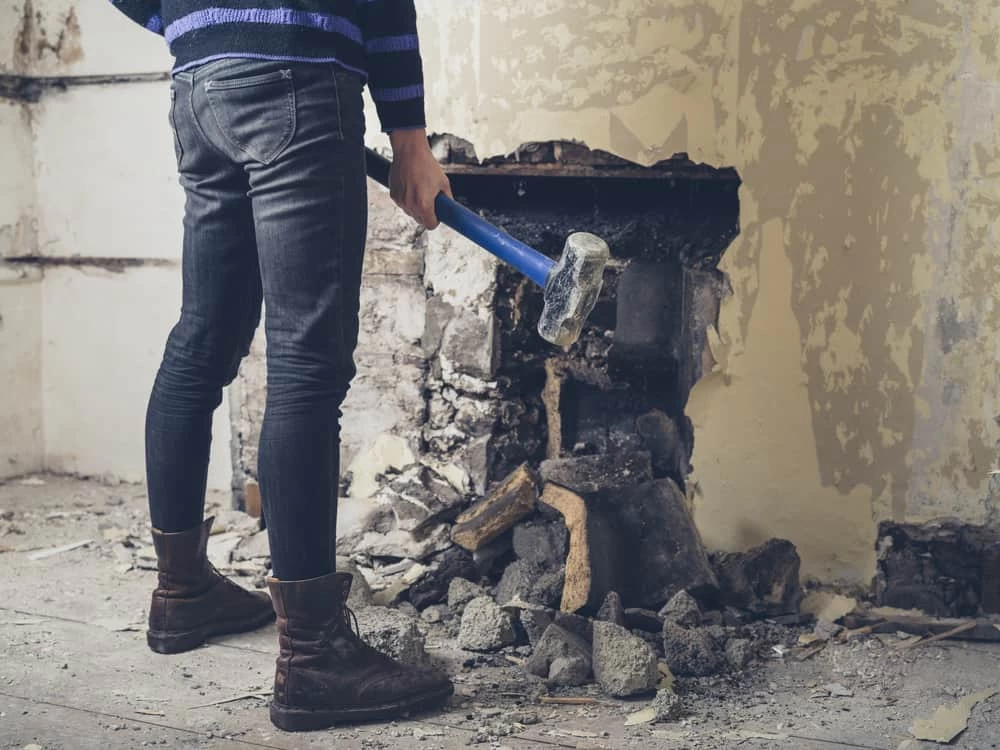
For the older homes that make up most of Middle Village’s housing stock, storm-related demolition routinely means encountering asbestos-containing materials pipe insulation, floor tiles, ceiling tiles, original roofing components and lead paint. New York State law requires licensed professionals to handle both. The NYS DOL Asbestos License and USEPA Lead/RRP certification we hold aren’t marketing credentials. They’re the legal authorization to do the work safely and in compliance with state law. In a neighborhood where the median construction year is 1951, this comes up on nearly every significant restoration project.
The full scope of what we cover includes emergency stabilization and board-up, water extraction and structural drying, mold assessment and remediation, roof repair and replacement, siding and window repair, interior reconstruction, debris removal under the NYC BIC Trade Waste License, and complete insurance claim coordination. Everything from the first response call to the final walkthrough is handled in-house no subcontracted phases, no gaps in accountability.
Does homeowners insurance actually cover storm damage repairs in Middle Village, NY?
In most cases, yes standard homeowners insurance policies cover storm damage from wind, rain, hail, and falling trees. What they typically don’t cover is flooding caused by sewer backup or groundwater intrusion, which is a real distinction for Middle Village homeowners given the neighborhood’s documented drainage vulnerabilities. If your basement flooded because a storm overwhelmed the combined sewer system near Juniper Valley Park, that’s a different coverage question than a roof damaged by wind.
The practical issue most homeowners run into isn’t whether they’re covered it’s whether the claim is filed with the full scope of damage documented. Insurance adjusters work from what’s in front of them. If the documentation only captures surface damage and misses what’s behind the walls or under the roof decking, the payout reflects that. We document damage thoroughly before any repair work begins, coordinate directly with your adjuster, and advocate for the complete scope of loss not just the easy-to-see portion of it.
How quickly does mold start growing after storm water gets into my home?
According to IICRC standards, mold can begin developing within 24 to 48 hours of water intrusion. In Middle Village’s older housing stock, where original plaster walls and aging vapor barriers are common, moisture doesn’t need much of an opening to get in and stay in.
The more specific concern is hidden moisture. Water that soaks into wall cavities, sits under original hardwood floors, or gets trapped behind finished basement walls doesn’t dry on its own and it doesn’t always show obvious signs until mold is already growing. We use moisture meters and thermal imaging as a standard part of every storm response, specifically to find the moisture that a visual inspection misses. Mold prevention is built into the restoration process from the start, not addressed as a separate problem after the fact.
My Middle Village home was built in the 1940s does that affect the restoration process?
It does, in a few important ways. Homes built before 1978 may contain lead paint, and homes built before the mid-1980s may contain asbestos in a range of materials pipe insulation, floor and ceiling tiles, roofing components, and more. When storm damage requires opening walls, removing damaged roofing, or demolishing water-damaged materials, those substances can be disturbed. New York State law requires licensed professionals to handle both, and that licensing has to be in place before the work starts not discovered as a problem halfway through.
Beyond the hazardous materials question, pre-war construction in Middle Village has its own structural characteristics. Original roof decking, plaster-over-lath wall systems, and aging foundation waterproofing all behave differently under storm stress than modern materials do. Damage tends to travel further and hide better in these older assemblies. A restoration company that’s worked extensively on Queens’ older housing stock will approach the assessment and repair process differently than one accustomed to newer suburban construction and the results reflect that difference.
What NYC permits are required for storm damage repairs, and who handles them?
Any structural repair in New York City roof replacement, exterior wall repair, framing work requires a permit from the NYC Department of Buildings. This applies in Middle Village just as it does anywhere else in the five boroughs. The permit has to be pulled by a licensed NYC General Contractor, which means a mitigation-only company or an out-of-area contractor without NYC GC licensing cannot legally complete the structural phase of your restoration.
This is a more significant issue than it might seem. Work done without the required NYC DOB permits can create problems when you go to sell the property, can void portions of your insurance claim, and can trigger violations that cost more to resolve than the original repair. We hold an active NYC General Contractor license and handle all required permitting as part of the restoration process. You don’t need to track down a separate GC or navigate the DOB process yourself it’s included in the scope of work.
How do I know if my storm damage is covered by insurance or considered a flood claim?
The distinction matters a lot, and it’s one that Middle Village homeowners specifically should understand. Standard homeowners insurance covers storm damage caused by wind, rain entering through a storm-created opening, and falling trees or debris. It does not typically cover flooding caused by surface water, storm surge, or sewer backup those require separate flood insurance or a sewer backup rider.
In Middle Village, the flooding risk during heavy storms often comes from the combined sewer system being overwhelmed, particularly in areas with older infrastructure. If water entered your basement through a floor drain or backed up through a toilet or sink during a storm, that’s likely a sewer backup event a different coverage category than wind-driven rain damage to your roof. The documentation of how water entered the property is critical to how the claim gets categorized and paid. We assess the entry point and cause of damage as part of the initial inspection, which directly informs how the claim gets filed and what coverage applies.
Why should I hire a licensed restoration company instead of a general contractor after a storm?
A general contractor can handle the rebuild phase replacing drywall, repairing roofing, finishing interiors. What they typically can’t do is the mitigation work that has to happen first: water extraction, structural drying, moisture mapping, and mold prevention. If you skip proper mitigation and go straight to repairs, you’re sealing moisture inside the structure. That moisture becomes mold, and mold becomes a much larger and more expensive problem than the original storm damage.
In Queens, post-storm contractor fraud is also a real concern. After significant weather events, door-knockers and storm chasers appear quickly, offering fast work with no documentation, no permits, and no licenses. In Middle Village specifically, where the majority of homes require asbestos and lead paint compliance for any demolition work, hiring an unlicensed contractor isn’t just a quality risk it’s a legal and health liability. A company that holds the full credential stack NYC GC license, NYS DOL Mold and Asbestos licenses, IICRC certification, USEPA Lead/RRP certification, and NYC BIC Trade Waste License can handle every phase of the job legally and correctly, without handing off the work to someone you’ve never met.