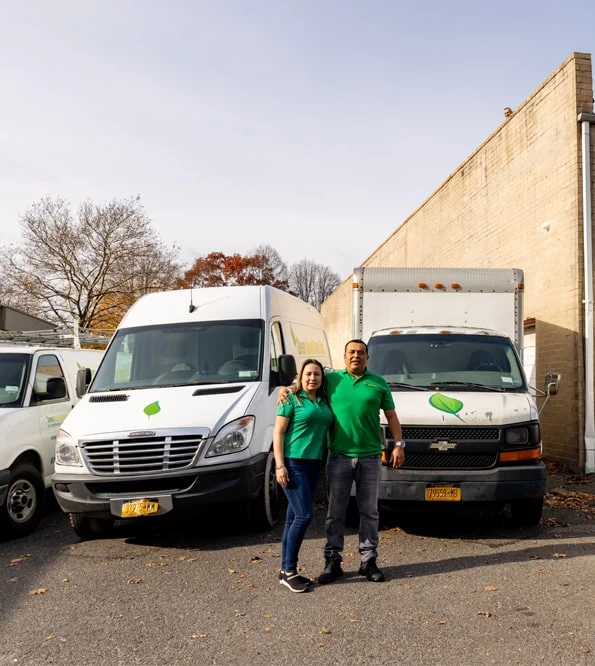
In New York City, storm damage doesn’t just affect a house it affects tenants, co-op boards, property managers, and everyone sharing a wall with you. We respond 24/7 with the licensing, equipment, and insurance expertise to stop the damage and get your property back. Whether you’re in a pre-war walk-up in Manhattan, a brownstone in Brooklyn, or a multi-family building in Queens, we know how storms move through New York’s dense building stock and what it takes to stop them.
I needed a professional consultation explanation of procedure for safe removal of Asbestos in my apartment complex. Without having an account yet, I was very impressed with the caring, knowledgeable and generous advice offered by Jessica, and will look forward to doing business in the future. Thank you so much! I feel much more informed about a sometimes scary endeavor. Peace. Nancy Silva Mineola, NY.
Mia Munoz
Used this company to clean up some water flood in my house. They were fast and easy to work with.very professional, Would recommend to anyone!
Nini Valle
Great company, had a flood and they responded quickly and efficiently. Billed my insurance company directly. I highly recommend this company!
joe colapietro, jr
I had pipe freeze in my basement right before a snow storm and they made to within an hour to help start the clean up process. They we by our side throughout the entire process and even helped with the insurance company. They did such a great job with the cleanup, repair, remidiation, I contracted them to perform the repairs and finishes in the basement. They came with enough manpower and material to get the job done. Leo and Jessica were nothing but a pleasure to deal with!!
Cristian Arredondo c
I had some water damage in my home and Green Island was able to take care of my issue quickly and effectively. I am very pleased with the work they did. They responded quickly and were very professional.
Michael M
Outstanding service! From the office to the field crew everyone was friendly, helpful and responsive. I highly recommend Green Island Group.
Stop the Spread Before It Becomes a Bigger Problem
Water doesn’t wait. In a pre-war Brooklyn brownstone or a Queens multi-family building, moisture moves through shared walls, travels along pipe chases, and hides behind plaster long before you see any visible damage. By the time mold appears and in New York City’s dense, often poorly ventilated building stock, it can appear within 24 to 48 hours what started as a manageable water intrusion has become a full remediation project with DOH violations attached.
The other thing most property owners don’t realize until it’s too late: storm flooding in New York City is no longer a coastal-only problem. Hurricane Ida proved that in 2021, when roughly 33,500 buildings sustained damage across the five boroughs and only 6.9% of those buildings were inside the traditional 100-year floodplain. If you’re in Astoria, Harlem, Flatbush, or Riverdale and you thought you were safe from flooding, Ida rewrote that assumption.
What changes after a proper storm damage restoration isn’t just the visible repairs. It’s the hidden moisture that’s been extracted, the environmental hazards that have been identified and handled correctly, and the documentation your insurance company needs to process a fair claim. That’s the difference between a patch job and a real fix.
Licensed for the Work New York City Actually Requires
We’ve completed over 5,000 restoration projects across New York State not a franchise estimate, not a national average. Actual completed jobs in this market, including the kind of complex, multi-unit, pre-war building scenarios that are specific to the five boroughs.
What separates us from most restoration companies operating in New York City is the combination of credentials we carry. We hold active fire and flood restoration licensing for both residential and commercial properties, plus environmental services licensing which matters enormously in a city where storm damage to a 1920s walk-up in the Bronx or a row house in Bed-Stuy can uncover asbestos-containing materials behind the walls. We’re also dual-certified MWBE by both New York State and New York City, and we’re an approved emergency response contractor through the NYS Office of General Services.
Those credentials took time, vetting, and documented performance to earn and they’re the reason we can legally and competently handle what most restoration companies in this city can’t.
What the Process Looks Like in a New York City Building
The first call triggers a 24/7 emergency response. Our crew arrives with industrial water extractors and thermal imaging cameras not rental equipment and begins assessing both the visible damage and what’s hiding behind your walls, ceilings, and floors. In a city where a single water intrusion event in one unit can silently affect three others above and below it, that thermal imaging step isn’t optional. It’s how you avoid finding mold six weeks later.
Once the scope is confirmed, we handle emergency securing board-up, debris removal, temporary weatherproofing to stop additional damage while the full restoration plan is developed. For most New York City properties, this is also when the permit question gets addressed. Most structural restoration work in the five boroughs requires a NYC Department of Buildings permit, and we handle that process directly. If the damage triggers what the NYC Building Code calls a “substantial improvement” meaning repair costs reach 50% or more of the building’s pre-damage value compliance with current flood-resistant construction standards under Appendix G applies, and we navigate that too.
From there, the work moves through water extraction, structural drying, mold prevention, any required environmental abatement, structural repair, and full reconstruction if needed. Insurance documentation is handled throughout, and we bill insurers directly so you’re not fronting costs during an already stressful situation.
Built for NYC's Building Stock, Not a Generic Checklist
Storm damage restoration in New York City covers a lot of ground and what’s included has to reflect the reality of what storms actually do to buildings here. We handle wind and hail damage repair, emergency board-up and property securing, tree and debris removal, roof repair and reinforcement, flooded basement water extraction, and full structural reconstruction when the damage warrants it. We also perform mold remediation under New York’s Mold Law (Article 32 of the Labor Law), which requires licensed assessors and remediators for any project over 10 square feet a threshold that virtually every significant water intrusion event in this city crosses.
For older buildings across Manhattan, Brooklyn, and the Bronx the pre-war walk-ups, brownstones, and tenements that define huge portions of the city’s residential landscape storm damage restoration also means environmental assessment. When water breaches a wall that was built before 1980, there’s a real possibility of disturbing asbestos-containing materials or lead-based paint. Our environmental services licensing means we can identify and abate those hazards in the same engagement, without sending you to find a second contractor and coordinate two separate scopes of work.
For co-op boards, condo associations, property managers, and commercial landlords across the five boroughs, we also handle the insurance complexity that comes with managing storm damage in a city where master building policies, individual unit policies, flood insurance, and commercial coverage all operate on different tracks.
Does my co-op or condo insurance actually cover storm damage in New York City?
This is one of the most common points of confusion for New York City property owners, and it’s worth understanding clearly before you’re dealing with an active claim. In a co-op or condo building, there are typically two separate insurance policies in play: the building’s master policy, which the board or association holds, and your individual unit policy (commonly called an HO-6). Which one covers what depends heavily on your building’s governing documents specifically whether the master policy is a “bare walls” policy or an “all-in” policy.
A bare walls policy covers the structure of the building but not your unit’s interior finishes, fixtures, or improvements. An all-in policy covers those as well. Storm damage that comes through the roof or building envelope is often covered under the master policy, but damage that occurs inside your unit water intrusion through your windows, damage to your personal belongings typically falls to your HO-6. The short answer is: you need to read your proprietary lease or condo declaration alongside your individual policy before you assume anything is covered. We work directly with both policy types and can help document damage in a way that supports claims under either structure.
How quickly does mold actually develop after storm flooding in a New York apartment?
Mold growth can begin within 24 to 48 hours of water intrusion and it’s especially relevant in New York City’s building stock. Older buildings with plaster walls, minimal ventilation, and decades of accumulated organic material behind finishes create ideal mold conditions faster than a newer, well-ventilated structure would.
The bigger issue in a multi-unit building is that moisture doesn’t stay contained to the unit where the flooding happened. Water travels through floor assemblies, along pipe chases, and through shared wall cavities in ways that aren’t visible until mold appears sometimes in a unit that had no direct contact with the storm water at all. This is why thermal imaging is a non-negotiable part of storm damage assessment in a New York City building. Finding moisture behind a wall on day one costs a fraction of what mold remediation costs on day thirty, and it protects you from the NYC Department of Health violation that comes with a tenant complaint about visible mold growth.
Do I need a permit from NYC DOB to repair storm damage on my property?
In most cases, yes. The NYC Department of Buildings requires a permit for structural repairs, work involving electrical or plumbing systems, and any work that alters the building envelope which describes the majority of meaningful storm damage restoration projects. There are limited exceptions for emergency life-safety work, where you can begin without a permit, but you’re required to file for one promptly after starting.
The more important compliance issue that property owners often don’t know about is NYC Building Code Appendix G, which governs flood-resistant construction on pre-FIRM buildings structures built before the current Flood Insurance Rate Maps were adopted. If the cost of your storm damage restoration equals or exceeds 50% of your building’s pre-damage market value, the entire structure may need to be brought into compliance with current flood-resistant construction standards, not just the damaged portion. In a city with as much older building stock as New York particularly in neighborhoods like Red Hook, Howard Beach, or the South Shore of Staten Island this threshold comes up more often than people expect. We handle permit filing and code compliance as part of the restoration process, so you’re not navigating that alone.
What happens if storm damage uncovers asbestos or lead paint in my older NYC building?
It’s a real possibility in any New York City building constructed before 1980, and it’s one of the most important reasons to work with a contractor who holds environmental services licensing rather than a general restoration company that will stop work and refer you elsewhere. Asbestos-containing materials were commonly used in floor tiles, pipe insulation, ceiling plaster, and joint compound in the pre-war and mid-century building stock that makes up a significant portion of Manhattan, Brooklyn, and the Bronx’s residential inventory.
When storm damage opens up walls, ceilings, or structural elements in these buildings, disturbing those materials without proper containment and abatement procedures violates both NYC and NYS environmental regulations and creates serious liability for the property owner. We hold active environmental services licensing (NAICS 562910), which means we can legally assess, contain, and abate asbestos and lead hazards as part of the same restoration engagement. You don’t need to find a separate environmental contractor, coordinate two separate scopes, or delay your restoration while you wait for a second company to come out. It’s handled in one process, by one team that’s already on-site.
How does storm damage restoration work for a multi-family building with multiple affected units in New York?
Multi-family storm damage is genuinely more complex than a single-family scenario, and it’s a situation we handle regularly across the five boroughs. The core challenge is that water damage in a multi-unit building doesn’t respect unit lines a flooded basement can affect ground-floor units, a roof breach can cascade through multiple floors, and the damage assessment has to account for all of it simultaneously rather than treating each unit as a separate project.
From a practical standpoint, we approach multi-family restoration by doing a full-building damage assessment first using thermal imaging to map moisture across all affected areas before any remediation work begins. This gives property managers and co-op boards a clear picture of the total scope before committing to a repair plan, and it produces the documentation that insurance adjusters need to process a claim across multiple units. For buildings with tenants, we also coordinate the work schedule to minimize displacement time, which matters both for tenant relations and for the landlord’s legal obligation to maintain habitable conditions under New York State law.
Is storm flooding covered by homeowners insurance or flood insurance in New York City?
This distinction matters a lot in New York City, and getting it wrong can leave you with a denied claim. Standard homeowners insurance generally covers sudden and accidental water damage like a storm that drives rain through a compromised roof or breaks a window. It does not cover flooding caused by rising water from outside the home, which is what happens during a storm surge event or when streets overflow into basements. That type of damage requires a separate flood insurance policy, either through the National Flood Insurance Program (NFIP) or a private carrier.
After Hurricane Sandy and Hurricane Ida, a significant number of New York City property owners discovered they had no flood coverage either because they weren’t in a designated flood zone and assumed they didn’t need it, or because they didn’t realize their homeowners policy excluded rising water. Ida’s damage pattern was particularly eye-opening: the vast majority of the approximately 33,500 buildings that sustained damage were outside the traditional 100-year floodplain, meaning property owners had no reason to expect flooding and many had no flood policy. If you’re unsure what your current coverage includes, reviewing both policies before the next storm not during one is the only way to avoid that gap. We can help document and categorize damage in a way that supports claims under whichever policy applies to your specific situation.