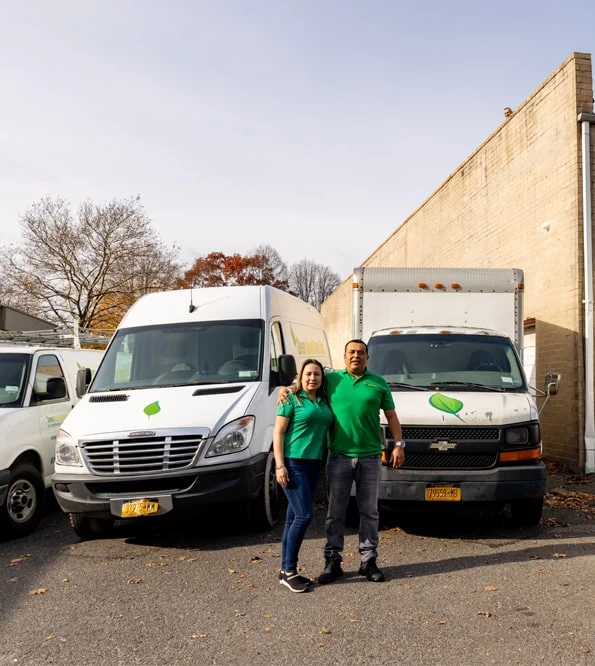
In New York City, storm damage doesn’t just wreck your property it disrupts everything around it. We respond 24/7 with the equipment, licensing, and experience to stop the damage before it compounds.
I needed a professional consultation explanation of procedure for safe removal of Asbestos in my apartment complex. Without having an account yet, I was very impressed with the caring, knowledgeable and generous advice offered by Jessica, and will look forward to doing business in the future. Thank you so much! I feel much more informed about a sometimes scary endeavor. Peace. Nancy Silva Mineola, NY.
Mia Munoz
Used this company to clean up some water flood in my house. They were fast and easy to work with.very professional, Would recommend to anyone!
Nini Valle
Great company, had a flood and they responded quickly and efficiently. Billed my insurance company directly. I highly recommend this company!
joe colapietro, jr
I had pipe freeze in my basement right before a snow storm and they made to within an hour to help start the clean up process. They we by our side throughout the entire process and even helped with the insurance company. They did such a great job with the cleanup, repair, remidiation, I contracted them to perform the repairs and finishes in the basement. They came with enough manpower and material to get the job done. Leo and Jessica were nothing but a pleasure to deal with!!
Cristian Arredondo c
I had some water damage in my home and Green Island was able to take care of my issue quickly and effectively. I am very pleased with the work they did. They responded quickly and were very professional.
Michael M
Outstanding service! From the office to the field crew everyone was friendly, helpful and responsive. I highly recommend Green Island Group.
Mold doesn’t wait for your landlord to call back. According to IICRC standards, colonization starts within 24 to 48 hours of water intrusion and in NYC’s pre-war buildings, where moisture travels through shared walls, old plaster, and century-old flooring, that window closes faster than most people realize. By the time you see visible damage, the problem behind the walls is usually already underway.
Hurricane Ida made this painfully clear. In a single night, approximately 33,500 NYC buildings sustained damage and 93% of them were outside the traditional flood zone. The flooding that drowned 11 people in basement apartments that night wasn’t a freak event. It was a preview of what happens when extreme rainfall overwhelms the city’s stormwater infrastructure, and it can happen again in any borough, in any building, on any block.
The goal of storm damage restoration isn’t just to fix what you can see. It’s to find what you can’t moisture trapped behind drywall, structural compromise hidden under flooring, environmental hazards disturbed in older buildings and address all of it before a manageable repair turns into something far more serious. That’s the difference between a $3,000 water extraction and a $30,000 remediation that puts your family out of their home for weeks.
We’ve completed more than 5,000 restoration projects across New York State not nationally spread numbers, but projects in this regulatory environment, in this climate, in buildings that look a lot like yours. We’re headquartered on Long Island and have been actively serving all five boroughs for years, from flooded basement apartments in Astoria and Red Hook to wind-damaged rooftops in Riverdale and storm-compromised buildings along the Brooklyn waterfront.
We’re fully licensed and insured in New York City specifically not just at the state level. That matters here because NYC operates under its own Building Code, its own asbestos regulations, and its own mold law. We also hold Environmental Services licensing, which means if storm damage in a pre-1980 building disturbs asbestos or other hazardous materials, you don’t need a second contractor. It’s handled under one roof.
We’re also certified as a Minority and Woman-Owned Business Enterprise by both New York State and New York City dual-certified in both jurisdictions and are an approved emergency response contractor for the NYS Office of General Services. That’s a government-vetted credential, not a self-awarded badge.
When you call, the first priority is stopping active damage. That means emergency board-up, roof tarping, debris removal, and securing the property against further exposure. In NYC, where a compromised building can affect neighboring units, adjacent properties, and shared infrastructure, getting the structure stabilized quickly isn’t just about your property it’s about everything connected to it.
Once the property is secured, the real assessment begins. We use industrial thermal imaging cameras to find moisture that isn’t visible to the naked eye behind walls, under floors, above ceilings. In a city where buildings share walls and water migrates through floors and into units that had no direct storm contact, this step is what separates a complete restoration from a job that comes back to haunt you six months later. If the building predates 1980, materials are assessed for asbestos before any demolition or disturbance begins, as required under NYC’s own asbestos regulations.
From there, water extraction and structural drying happen with commercial-grade equipment not hardware-store dehumidifiers. Once the structure is dry and cleared, repairs begin: roofing, structural work, interior restoration, whatever the damage requires. We handle the insurance paperwork throughout the entire process, document everything before the adjuster arrives, and bill the insurer directly. You don’t pay upfront during an emergency.
Most contractors handle one piece of the job. We handle all of it and in New York City, that matters more than anywhere else. Coordinating multiple contractors in NYC means multiple DOB permit applications, multiple insurance billing processes, multiple schedules, and multiple chances for something to fall through the cracks. We cover wind and hail damage repair, emergency board-up and property securing, tree and debris removal, roof repair and reinforcement, water extraction and structural drying, basement flooding cleanup, mold remediation, asbestos assessment and abatement, and full structural restoration from minor repairs to complete rebuilds.
For properties in NYC’s many historic districts Brooklyn Heights, Greenwich Village, SoHo, and others exterior restoration work may require Landmarks Preservation Commission approval before repairs begin. We navigate that process as part of the job, not as an afterthought. For buildings in flood zones, restoration work must also comply with Appendix G of the NYC Building Code, which governs flood-resistant construction standards for older structures undergoing substantial improvement.
If you’re a property owner managing a multi-family building in Queens, a commercial space in Lower Manhattan, or a single-family home on Staten Island’s South Shore the scope of what we cover doesn’t change. The service is the same: complete, documented, and handled from the first emergency call to the final inspection.
Does storm damage restoration in NYC require permits from the Department of Buildings?
Yes in New York City, any structural repair, alteration, or reconstruction following storm damage requires permits from the NYC Department of Buildings before work begins. This is separate from and more involved than standard New York State permitting, and it applies even to repairs that might seem minor on the surface. After major storm events like Sandy and Ida, the DOB has issued fee waivers for storm-related repair permits, but the permit requirement itself is never waived.
This is one of the reasons working with a contractor who is specifically licensed in New York City not just New York State makes a real difference. We handle the DOB permit process as part of the restoration job. You don’t need to figure out which permits apply, which forms to file, or how to navigate the DOB’s online system while also dealing with a damaged property. That’s handled on your behalf from the start.
How quickly does mold develop after storm flooding in a New York City apartment?
Mold colonization begins within 24 to 48 hours of water intrusion that’s not a worst-case estimate, it’s the standard established by the IICRC, the industry’s governing body for restoration standards. In NYC’s housing stock, particularly in pre-war buildings where walls are plaster over masonry and moisture has nowhere to escape quickly, that timeline can be even more aggressive. Water that looks like it’s drying on the surface is often still saturating the structure behind it.
Under New York’s Article 32 Mold Law, any mold remediation project covering more than 10 square feet requires a licensed mold assessor and a licensed remediator two separate roles. Storm water intrusion in a NYC apartment almost always exceeds that threshold once you account for what’s inside the walls. We hold both designations and can assess and remediate under one engagement, which keeps the timeline tighter and the documentation cleaner for your insurance claim.
My NYC building was built before 1980 does storm damage restoration work differently for older buildings?
It does, and this is one of the most important things to understand before any restoration work begins in an older NYC building. Buildings constructed before 1980 commonly contain asbestos-containing materials insulation, floor tiles, pipe wrap, ceiling texture, and more. When a storm tears through a structure and causes damage that requires demolition or disturbance of those materials, federal law and NYC’s own asbestos regulations which are more stringent than federal standards require testing before that work begins.
We hold NAICS 562910 Environmental Services licensing, which covers asbestos assessment and abatement. That means if storm damage in your pre-war building in the Lower East Side, Crown Heights, or Washington Heights requires disturbing older materials, we can handle the environmental component and the restoration work under one license. You don’t need to pause the job, find a separate abatement contractor, and restart. The work moves forward in the right sequence, with the right documentation, without unnecessary delays.
Will my insurance cover storm damage restoration in New York City, and how does the claims process work?
Whether your insurance covers storm damage depends heavily on the type of policy you have and the type of storm that caused the damage. Standard homeowners and renters policies typically cover wind damage, hail, and rain intrusion through a damaged roof or broken window. They do not cover flood damage that requires a separate flood insurance policy through the National Flood Insurance Program (NFIP). After Superstorm Sandy, tens of thousands of NYC property owners discovered this distinction the hard way when their standard policies denied flood-related claims.
We document damage thoroughly before the adjuster arrives photos, moisture readings, thermal imaging results, written scope which protects your claim from the first moment of response. We also bill insurers directly and handle the paperwork throughout the process, so you’re not navigating a complex claim while also managing a damaged property. If there’s a coverage dispute or a question about what’s included, having detailed documentation from day one gives you a much stronger position.
What NYC neighborhoods are most vulnerable to storm flooding and surge damage?
NYC’s geographic position at the apex of the New York Bight a natural indentation in the coastline where New York and New Jersey meet the Atlantic funnels and amplifies storm surge in Lower New York Harbor. That makes certain neighborhoods consistently more exposed than others. Battery Park City, Red Hook, DUMBO, Coney Island, Howard Beach, the Rockaways, and Staten Island’s South Shore and East Shore communities face the highest storm surge risk during coastal storms and hurricanes.
But Hurricane Ida showed that surge isn’t the only threat. When extreme rainfall overwhelms the city’s stormwater infrastructure as it did on September 1, 2021, when Central Park recorded 3.47 inches of rain in a single hour flooding happens citywide, in neighborhoods that have never been on a flood map. Low-lying streets in Flushing, basement apartments in Woodside, and below-grade spaces across all five boroughs can flood during intense rainfall events regardless of their proximity to the coast. Storm damage restoration demand in NYC isn’t limited to the waterfront it follows the storm wherever it goes.
As a NYC renter, what are my options if my landlord isn't responding to storm damage in my apartment?
In New York City, landlords are legally required to maintain habitable conditions and storm damage that affects heat, water, structural integrity, or creates mold or health hazards is a habitability issue, not a maintenance preference. If your landlord isn’t responding, you have the right to file a complaint with the NYC Department of Housing Preservation and Development (HPD), which can issue violations and compel repairs. You can also contact 311, which routes housing complaints to the appropriate city agency.
That said, the clock on mold and structural damage doesn’t wait for a violation to be issued. If water entered your unit during a storm and hasn’t been properly extracted and dried, the damage is actively worsening while the paperwork moves. Documenting everything photos, dates, written communication with your landlord protects you in any dispute. If you’re a property owner dealing with tenant complaints after a storm, getting a licensed contractor on-site quickly with documented findings is the fastest way to demonstrate you’re meeting your legal obligations and to stop the damage from escalating into something far more costly.