When Water Finds Its Way Into Your Brewster Hill Home, You Need Someone Who Moves Fast
We respond 24/7 to water damage in Brewster Hill — with direct insurance billing, 0% financing up to $200,000, and a team that handles everything from extraction to mold remediation under one roof.
I needed a professional consultation explanation of procedure for safe removal of Asbestos in my apartment complex. Without having an account yet, I was very impressed with the caring, knowledgeable and generous advice offered by Jessica, and will look forward to doing business in the future. Thank you so much! I feel much more informed about a sometimes scary endeavor. Peace. Nancy Silva Mineola, NY.
Mia Munoz
Used this company to clean up some water flood in my house. They were fast and easy to work with.very professional, Would recommend to anyone!
Nini Valle
Great company, had a flood and they responded quickly and efficiently. Billed my insurance company directly. I highly recommend this company!
joe colapietro, jr
I had pipe freeze in my basement right before a snow storm and they made to within an hour to help start the clean up process. They we by our side throughout the entire process and even helped with the insurance company. They did such a great job with the cleanup, repair, remidiation, I contracted them to perform the repairs and finishes in the basement. They came with enough manpower and material to get the job done. Leo and Jessica were nothing but a pleasure to deal with!!
Cristian Arredondo c
I had some water damage in my home and Green Island was able to take care of my issue quickly and effectively. I am very pleased with the work they did. They responded quickly and were very professional.
Michael M
Outstanding service! From the office to the field crew everyone was friendly, helpful and responsive. I highly recommend Green Island Group.
When water gets into your Brewster Hill home — whether it’s a burst pipe on a frozen January night or a basement that filled up after a storm rolled through the Hudson Highlands — the clock starts immediately. Mold can begin forming within 24 to 48 hours, and moisture that looks contained on the surface almost never is. In Brewster Hill’s older housing stock, water wicks into plaster walls, travels beneath hardwood floors, and saturates subfloor material that fans and towels will never reach.
That’s where the real damage hides. And that’s exactly what gets missed when a homeowner tries to handle it themselves, or when a contractor shows up with a shop vac and calls it done. Professional restoration means using thermal imaging cameras and moisture meters to find every wet pocket — not just the ones you can see — and then running industrial-grade drying equipment until the readings confirm the structure is actually dry.
For homes along the Tonetta Lake shoreline or on the slopes above it, this matters even more. Hillside runoff concentrates near foundations during heavy rain events, and properties in this area face a compounding threat that flat-terrain homes simply don’t. Getting it fully dried and documented — for your own peace of mind and for your insurance claim — is the only outcome worth accepting.
Water Damage Restoration Company Brewster Hill, NY
12 Years In, Still Doing It the Hard Way
We’ve been handling environmental restoration across the New York metro area for over 12 years. That means thousands of jobs completed, hundreds of insurance claims navigated, and a track record that doesn’t come from a website — it comes from showing up, doing the work, and standing behind it.
For Brewster Hill homeowners dealing with water damage in a mid-century home near Tonetta Lake or anywhere in the Town of Southeast, we understand the specific challenges your property faces. We hold NYS and NYC M/WBE Certified Contractor status — a credential issued and reviewed by the New York State Office of General Services, the same standard required to work with state agencies. That’s not a badge anyone prints themselves. It means our business has been vetted at a level that most local contractors in Putnam County haven’t gone through.
We’re fully insured — including liability coverage and Workers’ Compensation — and we back every job with a 100% Satisfaction Guarantee. The job isn’t finished until you say it is.
Emergency Water Removal Services Brewster Hill, NY
No Mystery, No Runaround — Here's What Actually Happens
When you call, someone answers — any hour, any day. The first thing that happens is a rapid assessment of the damage: where the water came from, how far it’s traveled, and what materials are affected. In Brewster Hill homes built between the 1950s and 1970s, this step includes checking for asbestos-containing materials — pipe insulation, floor tiles, ceiling tiles — that can be disturbed by water intrusion. Most contractors skip this. We don’t, because handling it wrong creates a separate and serious problem.
Once the scope is clear, extraction begins. Industrial pumps and vacuums remove standing water, and then the drying phase starts — not with household fans, but with commercial-grade dehumidifiers and air movers calibrated to the size and material of the affected space. Thermal imaging confirms where moisture is hiding inside walls and under floors. Readings are logged throughout the process so there’s a documented record for your insurance claim.
If mold is present or begins to develop, we handle that under New York State’s licensed mold remediation requirements — not farmed out to a separate company, not left for you to deal with later. From the first call to the final walkthrough, it’s one team, one point of contact, and one clear process from start to finish.
Water Damage Restoration Services near Brewster Hill, NY
What's Included When You Call Us
Water damage restoration isn’t one thing — it’s a sequence of connected steps, and skipping any one of them is how problems come back. We handle the full sequence: emergency water extraction, structural drying, moisture mapping, mold remediation (licensed under New York State requirements), and reconstruction coordination when structural repairs are needed. For homes in Brewster Hill that require permits through the Town of Southeast Building Department, we can walk you through that process clearly.
For older homes in the hamlet — particularly those built before 1980 — our service also includes assessment for asbestos-containing materials before any demolition or removal work begins. This is not standard practice for most water damage contractors in the Putnam County area. It is standard practice here, because disturbing asbestos without proper protocols creates a hazard that far outlasts the original water damage.
We also work directly with your insurance carrier — billing them, coordinating with adjusters, and providing the documentation needed to support your claim. And if the bill exceeds what insurance covers, or if you’re uninsured, we offer financing up to $200,000 at 0% APR. For a hamlet where unexpected repair costs hit hard, that option is real and it’s available from the first call.
How quickly can you respond to water damage in Brewster Hill?
We operate 24/7 emergency response specifically because water damage doesn’t follow a schedule. A pipe that bursts during a hard freeze at 3 a.m. — which is a real and common scenario in Brewster Hill given the hamlet’s elevation and inland cold exposure — needs a response that night, not the next morning.
Response time matters because of what happens while you wait. Mold can begin developing within 24 to 48 hours of a water event, and the longer water sits in contact with drywall, subfloor material, or wall cavities, the deeper it penetrates and the more expensive the restoration becomes. When you call, you’ll speak to someone who can dispatch a team and give you a clear arrival window — not a call center reading from a script, and not an out-of-state number routing to whoever’s available.
Does homeowners insurance cover water damage repair in Brewster Hill, NY?
It depends on the source of the water, and this is where a lot of homeowners in Putnam County get caught off guard. Most standard homeowners insurance policies cover sudden and accidental water damage — a burst pipe, an appliance failure, or water intrusion from a storm that damages the roof or walls. What they typically don’t cover is flooding from an external water source, like Tonetta Lake rising during a storm event or surface water entering through a foundation. That type of coverage requires a separate flood insurance policy, often through the National Flood Insurance Program.
The other common issue is deferred maintenance. If an adjuster determines that the damage resulted from a slow leak that went unaddressed over time, the claim may be denied. This is why documentation matters from the moment the damage is discovered. We bill insurance carriers directly and work with adjusters throughout the process — which means the damage is documented properly from the start, giving your claim the best possible foundation. If you’re unsure what your policy covers, we can help you understand what’s typically included before you file.
Can water damage in an older Brewster Hill home disturb asbestos?
Yes — and this is one of the most overlooked risks in the Brewster Hill housing market. A significant portion of the hamlet’s homes were built during the suburban expansion of the 1950s through the 1970s, when asbestos was commonly used in pipe insulation, floor tiles, ceiling tiles, and joint compound. When water damage occurs in these homes — a burst pipe soaking through a plaster ceiling, a flooded basement disturbing old vinyl floor tiles — the remediation process can disturb those materials.
Most water damage contractors are not equipped to handle asbestos. They’ll stop work, refer you to a separate abatement company, and leave your home in limbo while you coordinate between two different contractors on two different schedules. We handle both water damage restoration and asbestos abatement in a single engagement. That means no gap in coverage, no second contractor to vet, and no delay in getting your home back to a safe and livable condition. If you’re in a pre-1980 home anywhere in the Town of Southeast and you’ve had a water event, this is worth asking about before any demolition or removal work begins.
What should I do immediately after my basement floods in Brewster Hill?
The first thing to do is make sure it’s safe to enter the space. If there’s any chance the water has reached electrical outlets, panels, or appliances, don’t go in until the power to that area has been shut off. Water and live electricity in a basement is a serious hazard, and it’s one that’s easy to overlook when you’re focused on the damage itself.
Once it’s safe, call a restoration company before you start pulling up carpet or moving things around. The instinct to start cleaning up immediately is understandable, but disturbing wet materials before they’ve been properly assessed can spread contamination, destroy documentation that supports your insurance claim, and — in older Brewster Hill homes — potentially disturb asbestos-containing flooring or insulation. Take photos and video of everything before anything is moved. Then let the restoration team do the assessment. We can walk you through what to document, what to leave in place, and what needs to happen in what order — starting with the call, any time of day.
How do I know if there's mold after water damage in my Brewster Hill home?
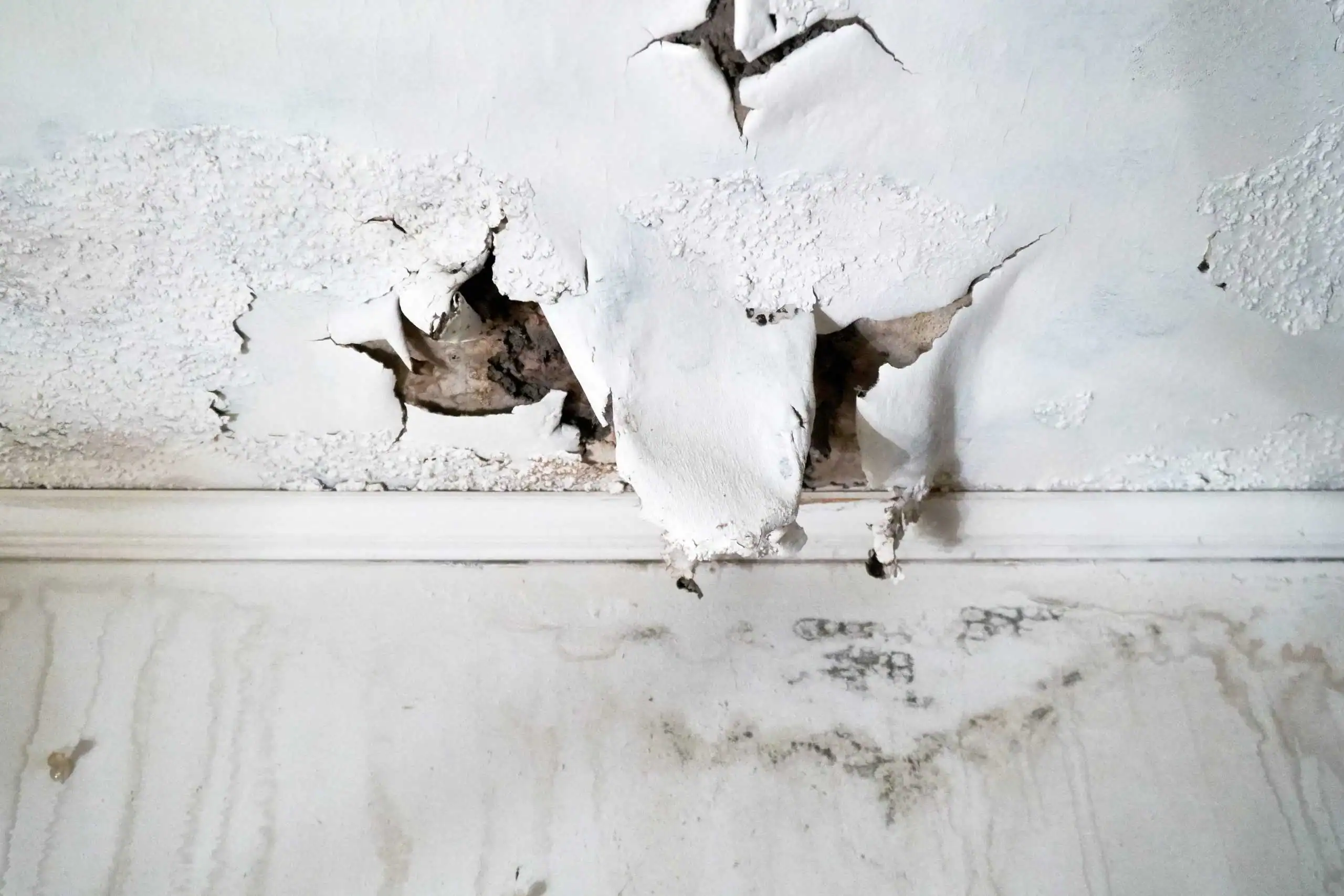
You don’t always know — and that’s the problem. Mold doesn’t always announce itself with visible growth or a strong smell, especially in the early stages. It can establish itself inside wall cavities, beneath flooring, and within insulation long before it’s visible on any surface. In Brewster Hill’s mid-century homes, where plaster walls and original subfloor construction are common, the conditions for hidden mold growth are particularly favorable after any water event.
The visible signs to watch for include discoloration on walls or ceilings, a persistent musty odor that doesn’t go away after the space dries out, and any soft or warped areas on walls or floors. But the more reliable indicator is a professional moisture assessment using thermal imaging and calibrated moisture meters — tools that can detect elevated moisture levels inside structural materials before mold becomes a visible problem. In New York State, mold remediation requires a licensed contractor. We hold that license and can assess, remediate, and document mold as part of the same restoration engagement — no separate company, no separate scheduling, no gap in the work.
Can I finance water damage repair if I can't pay the full cost upfront in Brewster Hill?
Yes, and it’s one of the more straightforward options available. We offer financing up to $200,000 at 0% APR — meaning the full cost of restoration can be financed without paying interest on top of an already stressful situation. For Brewster Hill residents dealing with an unexpected repair bill that can range from several thousand dollars for a contained pipe burst to well over $10,000 for a severe flooding event, having a real financing option changes the math entirely.
This matters in a hamlet where a meaningful share of households are working with tight margins. The cost of water damage doesn’t adjust itself to what’s convenient for your budget, but your payment timeline can. The financing is available from the first call — you don’t have to wait until after the work is scoped or started to ask about it. If cost is a concern, bring it up early. We can walk you through what the restoration is likely to cost, what insurance is expected to cover, and what financing can bridge if there’s a gap. The goal is to get your home fixed without putting your finances in a worse position than the damage already did.