When the Hudson Highlands Send Water Into Your Home
Cornwall-on-Hudson’s terrain, aging homes, and river proximity create real flood risk — we respond 24/7 with licensed water damage restoration that goes all the way to done.
I needed a professional consultation explanation of procedure for safe removal of Asbestos in my apartment complex. Without having an account yet, I was very impressed with the caring, knowledgeable and generous advice offered by Jessica, and will look forward to doing business in the future. Thank you so much! I feel much more informed about a sometimes scary endeavor. Peace. Nancy Silva Mineola, NY.
Mia Munoz
Used this company to clean up some water flood in my house. They were fast and easy to work with.very professional, Would recommend to anyone!
Nini Valle
Great company, had a flood and they responded quickly and efficiently. Billed my insurance company directly. I highly recommend this company!
joe colapietro, jr
I had pipe freeze in my basement right before a snow storm and they made to within an hour to help start the clean up process. They we by our side throughout the entire process and even helped with the insurance company. They did such a great job with the cleanup, repair, remidiation, I contracted them to perform the repairs and finishes in the basement. They came with enough manpower and material to get the job done. Leo and Jessica were nothing but a pleasure to deal with!!
Cristian Arredondo c
I had some water damage in my home and Green Island was able to take care of my issue quickly and effectively. I am very pleased with the work they did. They responded quickly and were very professional.
Michael M
Outstanding service! From the office to the field crew everyone was friendly, helpful and responsive. I highly recommend Green Island Group.
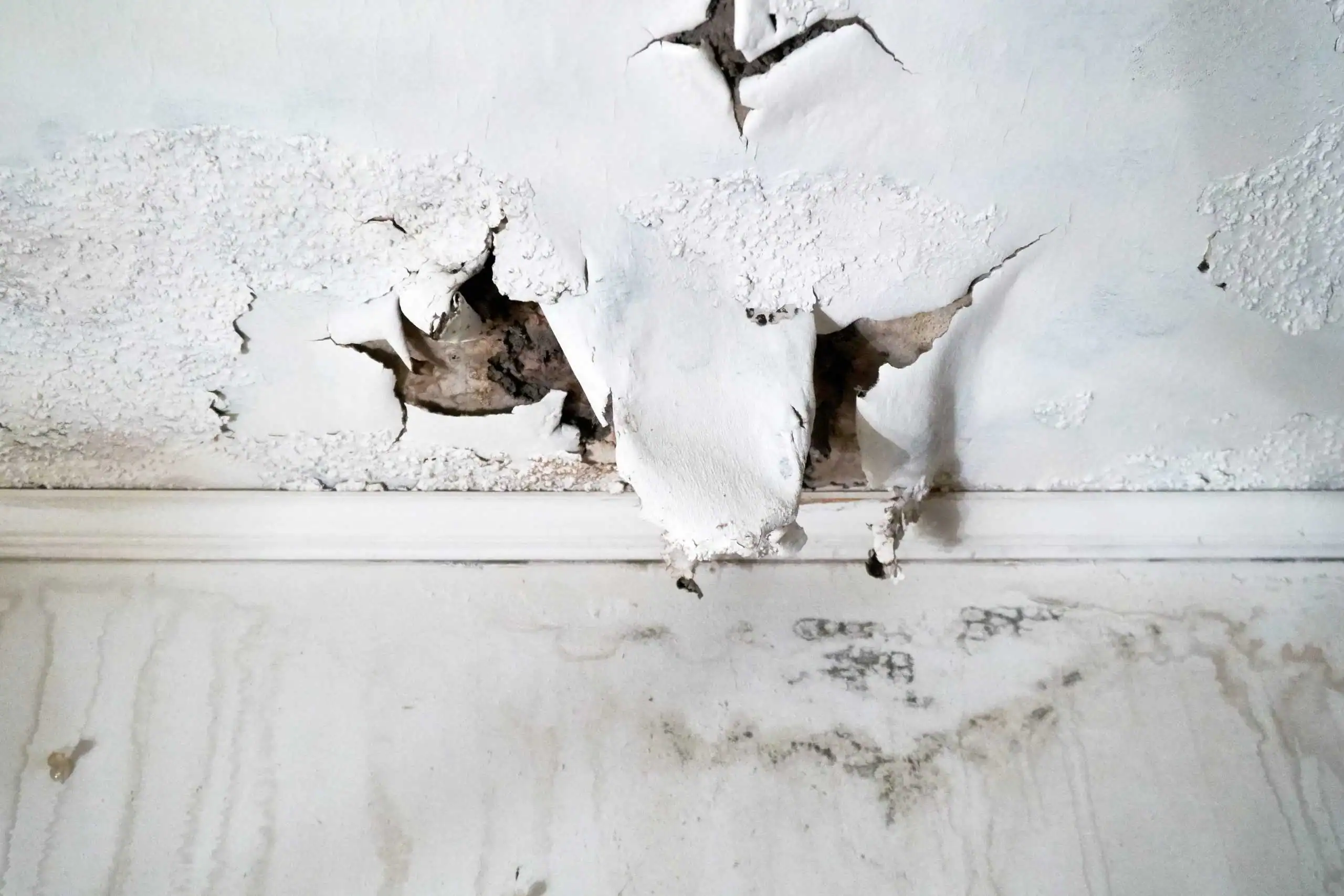
When water gets in, the visible part is rarely the whole story. What soaks into a plaster wall, settles under original hardwood floors, or sits inside a stone foundation in a home built in the 1890s doesn’t announce itself. It just keeps spreading — and in 24 to 48 hours, mold starts. By day three, you’re dealing with a different problem entirely.
Cornwall-on-Hudson’s housing stock is among the oldest in New York. These are homes with character, history, and real value — and they require a restoration approach that accounts for what’s actually inside those walls. Galvanized pipes, older drainage configurations, and pre-1980 construction materials like asbestos-containing floor tiles or pipe insulation mean that water damage here often uncovers more than just moisture.
What you get on the other side of a proper restoration isn’t just dry walls. It’s confirmation that the damage was fully mapped, that nothing was left to fester behind a surface, and that your home is genuinely safe to live in — not just dry enough to look fine. That’s the difference between a job that closes the problem and one that just delays it.
Water Damage Restoration Company in Cornwall-on-Hudson
12 Years In. Every Credential That Actually Matters.
We’ve been operating in the New York metro area for over 12 years. That means we were here through Hurricane Irene, through Ida, and through the July 2023 flash flood that shut down Route 218 for more than a year and left basements across Cornwall-on-Hudson — including the mayor’s — underwater. We’re not a franchise that arrived after the storm. We’re an established restoration contractor with the track record to prove it.
We’re NYS and NYC M/WBE Certified, fully insured with both liability and workers’ compensation coverage, and licensed for mold remediation under New York State law — a license most contractors operating in Orange County simply don’t carry. We also handle asbestos abatement in-house, which matters significantly in a village where the majority of homes predate 1980.
We work directly with your insurance company, offer financing up to $200,000 at 0% APR, and back every job with a 100% Satisfaction Guarantee. One team. One point of contact. No handoffs.
Emergency Water Removal Process in Cornwall-on-Hudson
What Happens From Your First Call to Your Final Walkthrough
When you call, you reach a real person — any hour, any day. We ask a few quick questions about what you’re seeing, then dispatch a crew to your location. For Cornwall-on-Hudson, that means we’re navigating to you whether you’re near Cornwall Landing along the river, up toward Deer Hill, or in one of the older homes off Academy Avenue. We know this area, and we don’t waste time finding it.
Once on-site, the first priority is stopping the source if it’s still active — a burst pipe, a failed sump pump, an overwhelmed drain. Then we extract standing water and begin moisture mapping. This step matters more in older homes than anywhere else. In a structure with plaster walls and stone foundations, moisture migrates in ways that modern drywall construction simply doesn’t. We don’t guess at where the water went. We find it.
From there, we set up industrial drying equipment calibrated to the specific materials in your home, monitor readings over the following days, and document everything for your insurance claim. If mold is present — or if the water disturbed any asbestos-containing materials, which is common in Cornwall-on-Hudson’s pre-1980 housing stock — we handle that in the same engagement. When the job is done, we walk through it with you before we consider it closed.
Water Damage Restoration Services Near Cornwall-on-Hudson
Full Restoration, Not Just the Part You Can See
Our water damage restoration covers the complete scope — emergency water extraction, structural drying, moisture monitoring, mold remediation, asbestos abatement, and structural repair. In Cornwall-on-Hudson specifically, that full-scope capability isn’t a bonus. It’s often a necessity.
The village’s Flood Damage Prevention chapter in its municipal code means that for properties in FEMA-designated flood zones along the Hudson and Moodna Creek corridor, restoration work that qualifies as a “substantial improvement” may trigger additional compliance requirements. We’re familiar with how those thresholds work in Orange County and can help you understand what applies to your property before work begins — not after.
For homeowners in the older sections of Cornwall-on-Hudson — the Second Empire homes from the 1860s, the Colonial Revivals from the early 1900s, the mid-century bungalows — water damage almost always involves materials that require careful handling. Asbestos-containing pipe insulation, floor tiles, and joint compounds are common in homes of that era, and disturbing them without proper abatement creates a separate liability. Because we handle both restoration and abatement under one roof, you’re not stuck coordinating two contractors or waiting for a handoff that delays the job by weeks.
Does homeowners insurance cover water damage from flooding in Cornwall-on-Hudson?
This is one of the most important distinctions to understand, especially after what happened in July 2023 in Cornwall-on-Hudson. Standard homeowners insurance does not cover flood damage — meaning water that enters your home from outside, whether from the Hudson River rising, the Moodna Creek overflowing, or storm runoff coming off the slopes of Storm King Mountain. That type of damage requires a separate flood insurance policy through the National Flood Insurance Program or a private flood insurer.
What homeowners insurance typically does cover is sudden and accidental water damage that originates inside the home — a burst pipe, a failed water heater, an overflowing appliance, or a roof leak that lets rain in. If you’re not sure which category your damage falls into, that’s actually one of the first things we help clarify when we arrive on-site. We document the source and the extent of the damage in a way that supports your claim, and we bill your insurance company directly so you’re not managing that process while also managing a damaged home.
How quickly does mold start growing after water damage in an older home?
Mold can begin colonizing within 24 to 48 hours of water intrusion — and in an older home, that timeline can feel even more unforgiving. Cornwall-on-Hudson’s housing stock includes a significant number of homes built before World War II, and those structures often have materials that hold moisture longer than modern construction: plaster walls, original wood framing, stone foundations, and older insulation that doesn’t dry quickly even with airflow.
The reason speed matters so much is that mold in the early stages — before it’s embedded in porous materials — is significantly less expensive and less disruptive to remediate than mold that’s had a week or two to establish itself. Once colonies get into wall cavities or under flooring, you’re looking at a much larger scope of work. Calling for professional water extraction and drying within the first few hours isn’t overcautious — it’s the single most effective way to keep a manageable restoration from becoming a major remediation project.
What should I do immediately after my basement floods in Cornwall-on-Hudson?
The first thing is safety — do not enter a flooded basement if there’s any chance of electrical contact with standing water. If the water is still rising or the source is still active, shut off water at the main if it’s a plumbing failure, or stay out and call for help if it’s storm-related. Once it’s safe to be in the space, don’t run fans or a shop vac and assume that’s enough. Surface drying doesn’t address what’s already migrated into walls, under flooring, or into the framing.
Document everything before you move or remove anything — photos and video of the water level, affected surfaces, and any visible damage. That documentation matters for your insurance claim. Then call a licensed restoration contractor. In Cornwall-on-Hudson, where many basements are in homes with stone foundations and older drainage systems, the water path is rarely straightforward. What looks like a few inches of standing water in the center of the room has often already wicked several feet up into the walls. Professional moisture mapping is the only way to know the actual scope.
Does water damage restoration in Cornwall-on-Hudson require any permits or local approvals?
It depends on the scope of the work. For standard water extraction, drying, and mold remediation, permits are generally not required. But Cornwall-on-Hudson has a Flood Damage Prevention chapter in its municipal code, and for properties located in FEMA-designated flood zones — which includes areas along the Hudson River and the Moodna Creek corridor — restoration work that constitutes a “substantial improvement” may trigger compliance requirements. The threshold is generally defined as repairs that equal or exceed 50% of the pre-damage market value of the structure.
In practical terms, this is most relevant for homeowners in lower-lying riverfront areas of the village who experienced significant structural damage during an event like the July 2023 flooding. If your restoration job is large enough to approach that threshold, it’s worth a conversation with the village building department before work begins. We’re familiar with how these requirements apply in Orange County and can help you understand what’s likely to apply to your specific property and situation before any work starts.
My Cornwall-on-Hudson home was built in the early 1900s — does water damage repair work differently in older homes?
Yes, in several meaningful ways. Older homes — and Cornwall-on-Hudson has some of the oldest residential housing stock in New York, with Second Empire homes from the 1860s and Colonial Revivals from the early 1900s — present specific challenges that newer construction simply doesn’t. Plaster walls absorb and hold moisture differently than drywall. Stone and brick foundations don’t dry the same way poured concrete does. Original wood framing, when saturated, takes longer to dry and is more susceptible to structural degradation if the drying process isn’t managed carefully.
There’s also the asbestos question. Homes built before 1980 commonly contain asbestos in pipe insulation, floor tiles, ceiling textures, and joint compounds. Water damage events can disturb those materials, and if they do, you need a contractor who can handle abatement — not one who stops the job and tells you to find someone else. We handle both water damage restoration and asbestos abatement in-house, which means your job doesn’t stall halfway through while you coordinate a second contractor.
How much does water damage restoration typically cost in Cornwall-on-Hudson, NY?
The honest answer is that it depends on scope, and scope in Cornwall-on-Hudson can vary significantly because of the age and construction type of the homes here. A straightforward pipe burst with limited spread in a newer-construction home might run in the range of $2,500 to $5,000. A more involved restoration — one that includes structural drying over multiple days, mold remediation, and work in an older home with plaster walls or a stone foundation — can reach $10,000 to $20,000 or more. Flood-related damage that affects multiple rooms or levels of a home can go higher.
What affects the final number most is how quickly you act and how thoroughly the damage is assessed upfront. Incomplete drying or missed moisture pockets mean the damage continues after the crew leaves, and that turns a one-time restoration into a recurring problem. We offer financing up to $200,000 at 0% APR, which means cost doesn’t have to be the reason you delay getting the job done right. We also work directly with insurance carriers and handle the documentation and billing, so if any portion of the damage is covered, that process runs without you having to manage it yourself.