When Fishkill Creek Rises, Your Home Needs More Than a Wet Vac
We respond 24/7 to water damage in East Fishkill — extracting moisture, drying out what you can’t see, and handling your insurance claim from start to finish.
I needed a professional consultation explanation of procedure for safe removal of Asbestos in my apartment complex. Without having an account yet, I was very impressed with the caring, knowledgeable and generous advice offered by Jessica, and will look forward to doing business in the future. Thank you so much! I feel much more informed about a sometimes scary endeavor. Peace. Nancy Silva Mineola, NY.
Mia Munoz
Used this company to clean up some water flood in my house. They were fast and easy to work with.very professional, Would recommend to anyone!
Nini Valle
Great company, had a flood and they responded quickly and efficiently. Billed my insurance company directly. I highly recommend this company!
joe colapietro, jr
I had pipe freeze in my basement right before a snow storm and they made to within an hour to help start the clean up process. They we by our side throughout the entire process and even helped with the insurance company. They did such a great job with the cleanup, repair, remidiation, I contracted them to perform the repairs and finishes in the basement. They came with enough manpower and material to get the job done. Leo and Jessica were nothing but a pleasure to deal with!!
Cristian Arredondo c
I had some water damage in my home and Green Island was able to take care of my issue quickly and effectively. I am very pleased with the work they did. They responded quickly and were very professional.
Michael M
Outstanding service! From the office to the field crew everyone was friendly, helpful and responsive. I highly recommend Green Island Group.
What a Fully Dried, Restored Home Actually Feels Like
Water damage isn’t just what you see on the floor. In East Fishkill’s older housing stock — colonials and split-levels built during the IBM era of the 1960s through the 1980s — moisture gets inside wall cavities, underneath hardwood floors, and into the subfloor before you’ve even grabbed a towel. By the time it looks dry on the surface, it may not be dry where it counts. That hidden moisture is where mold starts, and mold starts fast — within 24 to 48 hours of a water event.
When restoration is done right, you get your home back. Not a surface-dried version of it, but the actual structure — confirmed dry with moisture meters, treated where contamination existed, and rebuilt where damage was too far gone to save. For East Fishkill homeowners near the Fishkill Creek floodplain or in the lower-lying areas around Hopewell Junction, that means knowing your basement isn’t just visually clear — it’s genuinely safe to be in.
The other thing that changes is the financial stress. We bill insurance directly, including both standard homeowners policies and NFIP flood insurance policies — which many East Fishkill residents carry given the town’s active participation in FEMA’s Community Rating System. You don’t have to figure out which policy covers what. That part gets handled for you.
Water Damage Restoration Company in Dutchess County
12 Years In, and We Still Answer at 2 A.M.
We’ve been doing environmental restoration work in the New York metro area for over 12 years, with deep roots in East Fishkill and the surrounding Dutchess County region. Our work includes water damage, mold remediation, fire and smoke damage, and asbestos abatement — all under one roof, with one team, and one point of accountability from the first call to the final walkthrough.
We hold NYS and NYC M/WBE certification and work with the NYS Office of General Services and other state agencies. That’s not a marketing badge — it means we’ve been vetted to a standard most restoration contractors never have to meet. For East Fishkill residents who’ve watched the NYSDEC oversee decades of remediation work at the former IBM campus on Route 52, that kind of institutional credibility means something.
Every job is backed by our 100% Satisfaction Guarantee, and we carry full liability insurance and workers’ compensation. If something isn’t right after the work is done, it gets made right. That’s the whole commitment.
No Guesswork — Here's Exactly What Happens to Your Home
The first step is getting there. We operate 24/7, so when you call after a burst pipe in January or a flooded basement following a storm like Ida, someone picks up and a crew gets moving. In East Fishkill, where temperatures in elevated areas like Stormville can drop several degrees colder than valley readings, winter pipe failures are one of the most common emergency calls — and they don’t happen at convenient times.
Once on-site, we assess the full scope of damage — not just what’s visible. Industrial moisture meters and thermal imaging identify water that has migrated inside walls, beneath floors, and into structural framing. Extraction equipment pulls standing water out first, then commercial-grade dehumidifiers and air movers run until moisture readings confirm the structure is genuinely dry. This isn’t a one-visit process. Drying takes time, and we monitor it.
For homes in East Fishkill built before 1980, the assessment also includes checking for asbestos-containing materials that may have been disturbed by the water event — floor tiles, pipe insulation, drywall compound. If abatement is needed, we handle it directly rather than referring you to a separate contractor. Any structural restoration work also requires building permits through the East Fishkill Building Department on Route 376, and we manage that coordination on your behalf.
Water Damage Restoration Services Near Hopewell Junction
One Call Covers Water, Mold, and What's Hidden in the Walls
Our water damage restoration services cover the full scope — water extraction, structural drying, moisture verification, mold remediation where needed, and rebuild work where materials are too far gone to dry out. For East Fishkill homeowners, that full-scope capability matters more than it might in other areas, because the conditions here create layered problems.
Homes near the Fishkill Creek corridor and in low-lying parts of Hopewell Junction deal with basement flooding that often combines groundwater intrusion with storm overflow. Homes on private wells in Stormville and Arthursburg have plumbing systems that extend into unheated crawl spaces — a setup that makes freeze-and-burst events more likely and more damaging. And homes built during the 1960s through 1980s — which make up a significant portion of East Fishkill’s residential inventory — frequently contain asbestos in places that water damage disturbs. A contractor who can only handle the water portion of that problem is going to leave you coordinating with two or three other companies on your own.
We offer financing up to $200,000 at 0% APR. No local competitor in Dutchess County offers this. If your insurance claim is still in process or the scope of damage is larger than expected, you don’t have to wait or cut corners on the restoration to manage the cost. The work gets done right, and the payment structure works around your situation.
How quickly does mold start growing after a flooded basement in East Fishkill?
Mold can begin developing within 24 to 48 hours of a water event — and that clock starts the moment moisture gets into materials, not when you first notice the water. In East Fishkill, where many homes have finished basements with drywall, carpet, and wood framing below grade, the conditions are ideal for rapid mold growth after a flooding event. The material absorbs moisture quickly, and without proper airflow or extraction, it stays wet long after the standing water is gone.
This is why response time matters as much as the quality of the work itself. Getting extraction and drying equipment running within the first few hours dramatically reduces the likelihood of mold taking hold. If you’re calling the morning after a storm or a pipe failure overnight, you’re already in a window where professional drying equipment — not fans from the hardware store — is what the situation actually requires. We operate 24/7 specifically for this reason.
Does homeowners insurance cover water damage from a burst pipe in New York?
In most cases, yes — standard homeowners insurance covers sudden and accidental water damage, which includes burst pipes. What it typically does not cover is flooding from an external source, like a river or storm surge overflowing onto your property. That type of damage requires a separate flood insurance policy, which many East Fishkill residents carry through FEMA’s National Flood Insurance Program given the town’s active participation in the Community Rating System.
The practical issue most homeowners run into is figuring out which policy applies to their specific situation — and in cases where both policies are involved, navigating the interaction between them. We bill insurance companies directly and work through the claim process on your behalf. That includes identifying which coverage applies, submitting documentation, and following up with adjusters so you’re not stuck doing that while also dealing with a damaged home.
What's the average cost of water damage restoration for a home in Dutchess County?
The national average for water damage restoration sits around $3,800 to $4,000 for moderate damage, but that number moves significantly depending on scope. A finished basement with saturated drywall, soaked carpet, and moisture inside wall framing can run $8,000 to $16,000 or more — especially if mold remediation becomes necessary, which it often does when drying is delayed or incomplete.
In East Fishkill specifically, homes built during the 1960s through 1980s add a variable that most cost estimates don’t account for: the potential presence of asbestos-containing materials. If a water event disturbs floor tiles, pipe insulation, or drywall joint compound from that era, abatement becomes part of the job. That changes the cost picture. We offer financing up to $200,000 at 0% APR, which means you’re not forced into a partial restoration because the full scope of the job landed at an inconvenient time financially. The work gets done completely, and the payment structure adjusts to fit your situation.
Do I need a permit for water damage restoration work in East Fishkill, NY?
It depends on the scope of the work. Extraction, drying, and mold remediation typically don’t require permits on their own. But if the restoration involves removing and replacing structural components — framing, subfloor, drywall, or anything that’s part of the building’s structure — a building permit is required through the East Fishkill Building Department, located at Town Hall on NYS Route 376 in Hopewell Junction. The department can be reached at (845) 221-2427.
This is a step that gets missed when homeowners try to coordinate restoration work on their own or hire contractors who aren’t familiar with local requirements. Unpermitted structural work can create complications when you go to sell the property or file a future insurance claim. We handle the permit coordination as part of the project — you don’t have to manage that separately while also dealing with the restoration itself. It’s one less thing to track during an already stressful situation.
How do I know if my East Fishkill home has hidden water damage after a storm?
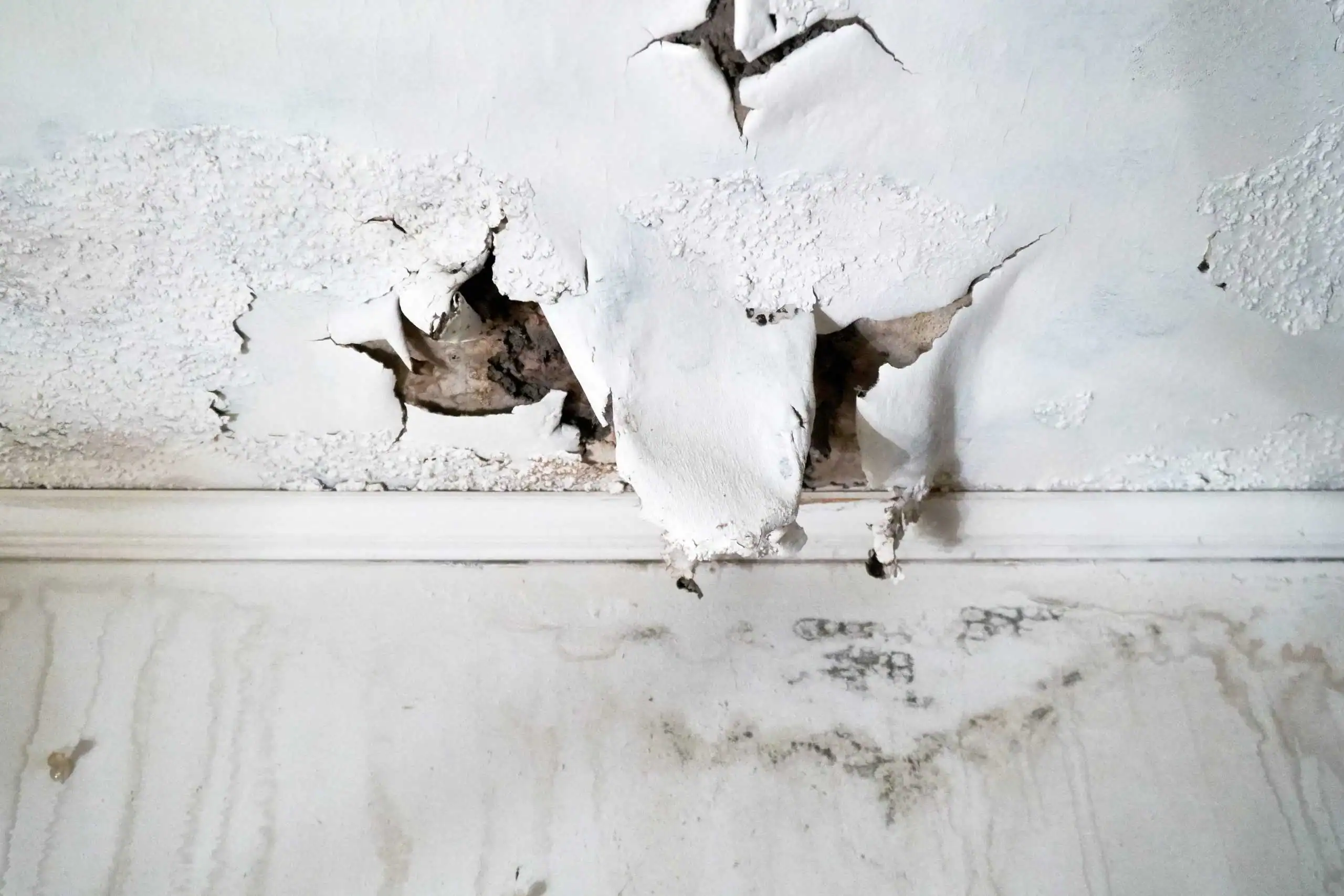
The most common signs are ones that show up after the obvious water is gone: a musty smell in the basement or near an exterior wall, paint or drywall that starts bubbling or separating, floors that feel soft or slightly springy underfoot, or visible discoloration appearing on ceilings days after a storm. East Fishkill has experienced significant rain events, including the overnight flooding from Tropical Storm Ida in 2021 that closed more than 30 roads across Dutchess County — and any of these signs after a similar event is worth taking seriously.
The problem with hidden water damage is that surface inspection doesn’t find it. Moisture inside wall assemblies, beneath hardwood floors, and within subfloor materials requires moisture meters and thermal imaging to detect accurately. We use both as part of every assessment. If moisture is present, you’ll know exactly where it is and what it’s going to take to address it — not a rough estimate, but a specific finding based on actual readings from your home.
Does Green Island Group handle both water damage and mold remediation in the same job?
Yes — and for most East Fishkill homeowners dealing with a significant water event, that matters more than it might seem upfront. Water damage and mold remediation are not always separate jobs with a clear line between them. In a home where moisture has been sitting inside wall cavities or beneath a finished basement floor for more than a day or two, mold remediation isn’t a follow-up service — it’s part of the same restoration. Having one contractor handle both means the work gets assessed and sequenced correctly from the start, rather than a second company coming in later and finding issues the first one didn’t account for.
We also perform asbestos abatement, which becomes relevant in East Fishkill homes built before 1980. If water damage disturbs materials that contain asbestos — and in homes from the IBM-era construction period, that’s a real possibility — the abatement happens within the same project scope. You’re not left coordinating between three separate contractors while your home sits partially restored. One team handles it through to completion.