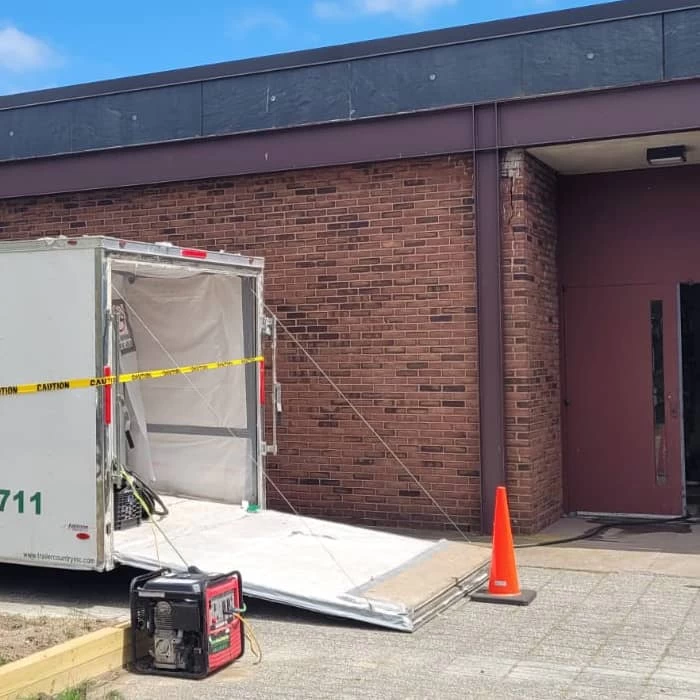
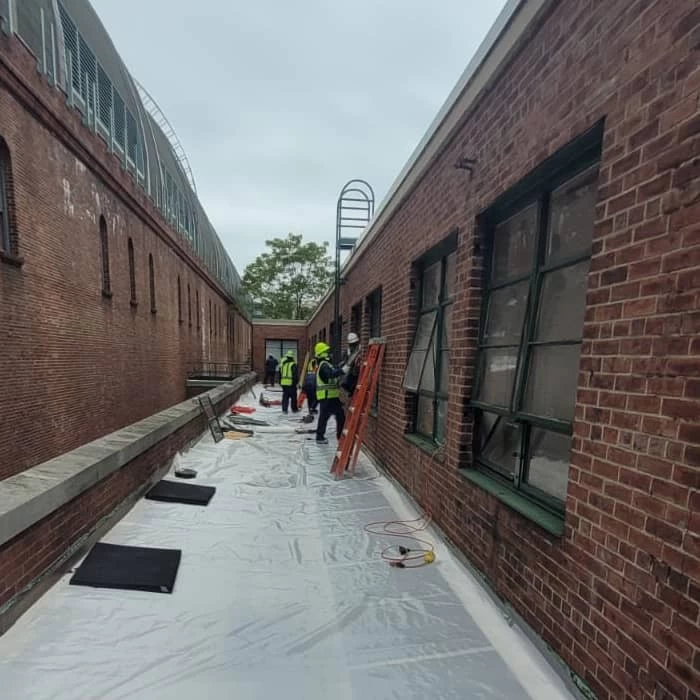
I needed a professional consultation explanation of procedure for safe removal of Asbestos in my apartment complex. Without having an account yet, I was very impressed with the caring, knowledgeable and generous advice offered by Jessica, and will look forward to doing business in the future. Thank you so much! I feel much more informed about a sometimes scary endeavor. Peace. Nancy Silva Mineola, NY.
Mia Munoz
Used this company to clean up some water flood in my house. They were fast and easy to work with.very professional, Would recommend to anyone!
Nini Valle
Great company, had a flood and they responded quickly and efficiently. Billed my insurance company directly. I highly recommend this company!
joe colapietro, jr
I had pipe freeze in my basement right before a snow storm and they made to within an hour to help start the clean up process. They we by our side throughout the entire process and even helped with the insurance company. They did such a great job with the cleanup, repair, remidiation, I contracted them to perform the repairs and finishes in the basement. They came with enough manpower and material to get the job done. Leo and Jessica were nothing but a pleasure to deal with!!
Cristian Arredondo c
I had some water damage in my home and Green Island was able to take care of my issue quickly and effectively. I am very pleased with the work they did. They responded quickly and were very professional.
Michael M
Outstanding service! From the office to the field crew everyone was friendly, helpful and responsive. I highly recommend Green Island Group.
Most homeowners think water damage is over when the visible water is gone. It isn’t. Moisture hides inside plaster walls, under original hardwood floors, and in the insulation of homes that were built decades before modern waterproofing standards existed. In Greenville, where the average home is over 80 years old, that hidden moisture doesn’t just sit there — it turns into mold within 24 to 48 hours, and by then the problem has doubled in scope and cost.
Greenville sits at 709 feet in the Catskill foothills, and that elevation matters in January. When temperatures drop hard overnight and your pipes are original to a 1940s farmhouse, a burst isn’t just possible — it’s the kind of thing that happens while you’re commuting up Route 32 toward Albany and your basement is filling up without anyone home to catch it. The damage that accumulates in those hours is exactly what professional drying equipment and moisture measurement tools are designed to find and stop.
When the job is done right, you get your home back — dry walls, confirmed moisture readings throughout the structure, no mold incubating behind the drywall, and documentation your insurance company will actually accept. That’s the outcome. Not just a shop vac and a dehumidifier, but a verified, fully dried structure you can trust.
We’ve been doing this for over 12 years. Not 12 years of franchise templates and call center dispatching — 12 years of actual restoration work, state certifications, and a track record that includes contracts with the NYS Office of General Services. That kind of institutional accountability doesn’t come from a marketing page. It comes from being vetted, repeatedly, by clients who can’t afford mistakes.
We hold NYS and NYC M/WBE certification — a government-issued credential that requires real vetting, not just a checkbox. We’re fully insured, including Workers’ Compensation, which matters on rural properties in Greene County where large lots and older structures create real on-site risk. If something goes wrong on your property during the job, you’re protected.
Greenville is a small town. We know that the families near Sunny Hill Resort and the homeowners off Route 81 near the school campuses aren’t looking for the cheapest option — they’re looking for someone who will actually show up, do the job completely, and still be reachable if something comes up after.
From Standing Water to Dry Structure — Here's the Honest Walkthrough
The first call triggers a 24/7 emergency response. Someone is coming — not a voicemail, not a next-business-day callback. When we arrive, the first priority is stopping the source if it hasn’t been stopped already, then assessing the full scope of what water has touched. In Greenville’s older homes, that assessment goes deeper than it would in newer construction. Original plaster walls, wood framing from the 1940s, and older subfloor materials absorb and hold moisture differently than modern drywall. We use industrial moisture meters and thermal imaging to find what you can’t see.
Extraction comes next — removing standing water with commercial-grade equipment before it migrates further. Then the drying phase begins, which is where most DIY attempts fall apart. A box fan doesn’t dry the inside of a wall cavity. Industrial air movers and dehumidifiers run continuously, and moisture readings are taken throughout the structure to confirm that drying is complete — not just surface-level.
If the water event disturbed materials in a home built before 1980, we have the asbestos abatement capability to handle that in the same engagement. You don’t need a second contractor, a second timeline, or a second round of insurance paperwork. Once the structure is verified dry and clear, we move into repairs — and we handle the insurance billing directly so you’re not left navigating that process alone. Greene County building permit requirements for structural repairs are part of what we manage, not something we leave on your plate.
Water Damage Restoration Services in Greenville, NY
Old House, Rural Property — the Scope Has to Match the Reality
Water damage restoration in Greenville isn’t the same job it is in a newer suburban development. The homes here are older, the infrastructure is different, and the risks that come with a water event are more layered. A pipe burst in a 1942 farmhouse off County Route 26 is not the same situation as a pipe burst in a 2005 colonial — and the restoration process has to reflect that.
What you get with us is a full-service response: emergency water extraction, structural drying with verified moisture readings, mold remediation if colonization has begun, asbestos abatement if pre-1980 materials were disturbed, smoke and fire damage restoration if applicable, and complete repair of affected structures. We offer financing up to $200,000 at 0% APR — because a $12,000 restoration bill against a home valued at $188,000 is a real financial event, and no competitor in this market offers anything close to that. We also work directly with your insurance company, managing the billing and documentation on your behalf so the claims process doesn’t become a second job.
For the resort properties along Greenville’s tourism corridor — older hospitality buildings like those near Sunny Hill with aging water infrastructure and large footprints — we have the capacity and the certifications to handle commercial-scale restoration with the same accountability we bring to residential jobs. Every engagement, residential or commercial, comes with a 100% Satisfaction Guarantee.
Does homeowners insurance cover a burst pipe in Greenville, NY?
In most cases, yes — sudden and accidental water damage from a burst pipe is covered under a standard homeowners insurance policy. The key word is “sudden.” If an adjuster determines the pipe failed due to long-term neglect or gradual deterioration, that’s where coverage disputes tend to arise. In Greenville’s older housing stock, where original plumbing from the 1940s is still in service on many properties, that distinction matters and it’s worth understanding before you file.
What you should also know is that standard homeowners insurance does not cover flooding from external sources — meaning if Catskill Mountain snowmelt or a heavy spring rain pushes water into your basement, that’s a separate flood insurance question, not your standard policy. Greene County has documented flood risk across all four seasons, so if you don’t have separate flood coverage, it’s worth reviewing. We handle direct insurance billing and assist with the documentation process, so if there’s a coverage question on your claim, we help you navigate it rather than leaving you to figure it out alone.
How quickly does mold start growing after water damage in an older home?
Mold can begin colonizing wet materials within 24 to 48 hours of a water event. In a home built in the 1940s or earlier, the conditions for mold growth are more favorable than in modern construction. Original wood framing, plaster walls, and older insulation absorb moisture deeply and hold it longer, which gives mold exactly the environment it needs.
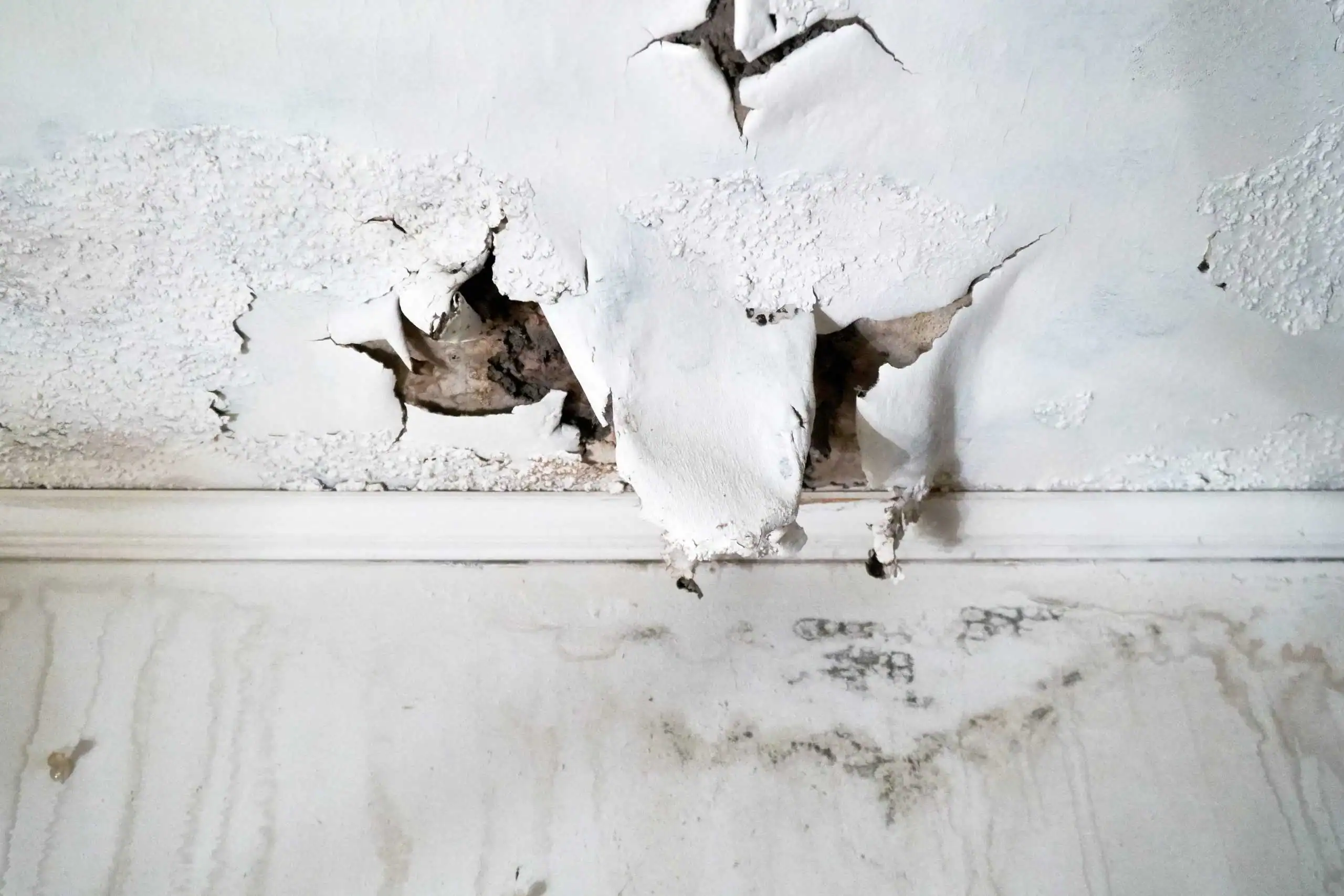
The bigger risk in Greenville’s older homes is that mold often starts where you can’t see it — inside wall cavities, under subfloors, behind original plaster. By the time you notice discoloration or smell something off, the colony is already established. That’s why professional moisture measurement matters so much. Confirming that the interior of a wall is dry — not just the surface — is the only way to know the mold clock has actually stopped. If colonization has already begun by the time we arrive, we handle licensed mold remediation as part of the same engagement.
What's the difference between water mitigation and water restoration?
Mitigation is the emergency phase — stopping the damage from getting worse. That means extracting standing water, removing saturated materials that can’t be saved, and getting industrial drying equipment running as fast as possible. The goal of mitigation is containment. Restoration is what comes after: repairing or replacing what was damaged, rebuilding affected structures, and returning the space to its pre-loss condition.
In practice, most homeowners don’t need to think about the distinction — you need both, and we handle the entire sequence. Where the line matters is in insurance documentation. Mitigation costs and restoration costs are often billed and reviewed separately by adjusters, and having a contractor who understands that process and documents each phase correctly makes a real difference in how your claim is handled. We manage both phases and the insurance paperwork that goes with them, so nothing falls through the gap between the two.
Can water damage in a Greenville home disturb asbestos-containing materials?
Yes, and it’s a more common concern in Greenville than most homeowners realize. Homes built before 1980 — which describes a significant portion of Greenville’s housing stock, given the average home age of approximately 82 years — frequently contain asbestos in insulation, floor tiles, pipe wrap, ceiling materials, and joint compound. When water damage occurs in these areas, the restoration process can disturb those materials. Disturbing asbestos-containing materials without proper abatement isn’t just risky — it’s illegal under New York State Department of Labor regulations.
Most water damage contractors aren’t equipped to handle this. They’ll either ignore the issue, which creates a serious health and legal exposure for you, or they’ll stop work and refer you to a separate abatement contractor — adding cost, time, and coordination complexity to an already stressful situation. We hold asbestos abatement certification and can handle both the water damage restoration and any necessary abatement in a single engagement. For a homeowner with a 1940s farmhouse in Greene County, that’s not a niche capability — it’s exactly what the job requires.
How much does water damage restoration typically cost in Greenville, NY?
The range is wide because the variables are wide. A contained pipe burst caught quickly in a finished basement might run $3,000 to $6,000. A more extensive event — water that sat for hours before discovery, moisture that reached multiple rooms, or damage that requires mold remediation on top of drying and repair — can reach $10,000 to $16,000 or more. In Greenville, where many homeowners commute to Albany and are away from the house during the day, water events often go undetected longer than they would in a home with someone present, which pushes costs toward the higher end of that range.
The other factor that affects cost in this area specifically is the age of the construction. Older materials — original hardwood floors, plaster walls, older framing — can complicate the drying and repair process compared to modern drywall and engineered materials. If asbestos abatement is also required, that adds to the scope. We offer financing up to $200,000 at 0% APR, which no other restoration company in the Greene County market currently offers. If the bill is real and the timing is terrible, that option exists and it’s straightforward to access.
Why does Green Island Group serve rural areas like Greenville when larger markets are closer?
Because the need here is real and the options are thin. Greenville is 26 miles from Albany and roughly 10 miles from Catskill, and most restoration companies prioritize denser markets where jobs are closer together. That leaves rural Greene County homeowners in a position where a 2 AM emergency either goes unanswered until morning or gets handled by whoever happens to be available — not necessarily whoever is qualified. Our 24/7 emergency response isn’t a slogan that applies only to Westchester County. It applies here.
There’s also a practical fit between what this area needs and what we actually do. Greenville’s older homes — many built before World War II, many on private wells and septic systems, many in the foothills where frozen pipes and seasonal flooding are annual realities — require a contractor with a broader capability set than most. Water damage, mold remediation, asbestos abatement, and direct insurance billing under one roof isn’t standard in this market. For a homeowner off Route 81 or out near East Greenville dealing with a serious water event, having all of that available from a single, certified, fully insured contractor with a 100% Satisfaction Guarantee is exactly what the situation calls for.