When the Hudson Valley's Weather Hits Home, Act Fast
Water damage in Haverstraw moves quickly — and so does mold. We have a fully licensed, insured restoration team on-site 24/7, with financing up to $200,000 at 0% APR.
I needed a professional consultation explanation of procedure for safe removal of Asbestos in my apartment complex. Without having an account yet, I was very impressed with the caring, knowledgeable and generous advice offered by Jessica, and will look forward to doing business in the future. Thank you so much! I feel much more informed about a sometimes scary endeavor. Peace. Nancy Silva Mineola, NY.
Mia Munoz
Used this company to clean up some water flood in my house. They were fast and easy to work with.very professional, Would recommend to anyone!
Nini Valle
Great company, had a flood and they responded quickly and efficiently. Billed my insurance company directly. I highly recommend this company!
joe colapietro, jr
I had pipe freeze in my basement right before a snow storm and they made to within an hour to help start the clean up process. They we by our side throughout the entire process and even helped with the insurance company. They did such a great job with the cleanup, repair, remidiation, I contracted them to perform the repairs and finishes in the basement. They came with enough manpower and material to get the job done. Leo and Jessica were nothing but a pleasure to deal with!!
Cristian Arredondo c
I had some water damage in my home and Green Island was able to take care of my issue quickly and effectively. I am very pleased with the work they did. They responded quickly and were very professional.
Michael M
Outstanding service! From the office to the field crew everyone was friendly, helpful and responsive. I highly recommend Green Island Group.
Your Haverstraw Home Dry, Safe, and Back to Normal
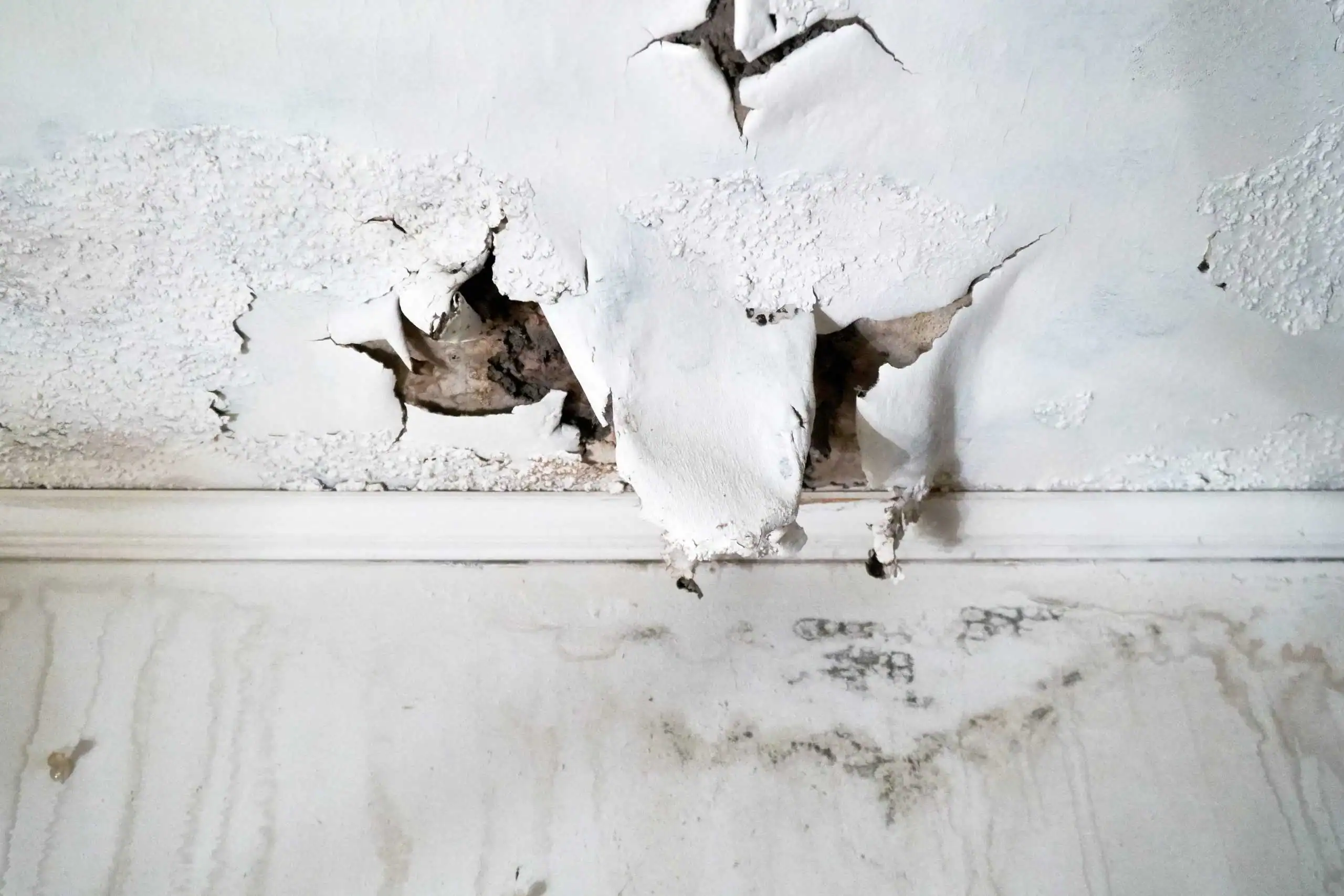
When water gets into your home, the clock starts immediately. Mold can begin growing inside walls within 24 to 48 hours — and in Haverstraw’s older housing stock, where original plaster, brick, and wood framing absorb moisture far more aggressively than modern drywall, that window matters more than most people realize. Getting a qualified team in fast is not about being cautious. It is about protecting a home that was likely built to last a century and deserves to keep that record.
Haverstraw sits on clay-heavy soil — the same dense, low-permeability deposits that made this town the brick-making capital of the world. That clay does not drain. When a heavy rain hits or a pipe bursts, water has nowhere to go except against your foundation walls and through your basement floor. A restoration company that does not understand this local geology is going to miss the source of the problem while treating the symptoms. We account for where the water came from, not just where it ended up.
Once the work is done correctly, you get your home back — dry walls, clean air, no lingering moisture, and documentation your insurance company will accept. For families in Haverstraw and the North Rockland area navigating this for the first time, that last part matters just as much as the physical restoration.
We have been doing environmental restoration work in the New York metro area for over 12 years. That includes homes along the Hudson River corridor in Haverstraw, older worker housing in Garnerville, multi-family buildings in the Village of Haverstraw, and everything in between. This is not a franchise operation running calls through a national dispatch center. We are a real team that knows Rockland County, knows the building stock here, and knows what water damage looks like in a home built in the 1890s versus one built in the 1970s.
We hold NYS and NYC M/WBE Certified Contractor status — a government-issued credential that requires real vetting, not just a fee. We also work directly with the NYS Office of General Services, which means our accountability standards are not self-reported. They are state-verified. You are fully insured for liability and Workers’ Compensation, and backed by our 100% Satisfaction Guarantee on every job.
What Happens From Your First Call to Final Walkthrough
When you call, our first priority is stopping the damage from spreading. We are available 24 hours a day, every day — because a pipe that bursts at 2 a.m. in January does not wait for business hours, and neither does the mold that follows. Our response time to the Haverstraw area is real, not a call-center estimate routed through another state.
Once on-site, we conduct a full assessment — identifying the water source, classifying the type of water involved (clean, gray, or black), and mapping how far moisture has traveled through your walls, floors, and framing. In Haverstraw’s older homes, that spread is often wider than it looks on the surface. Industrial extraction equipment removes standing water first, followed by commercial-grade drying systems placed strategically throughout the affected area. This is not consumer equipment from a hardware store. It is the kind of setup that actually pulls moisture out of 100-year-old plaster and brick.
If your home was built before 1980 — which describes a large share of the Village of Haverstraw and Garnerville — our assessment also checks for asbestos-containing materials that may have been disturbed. We handle abatement directly, so you are not left coordinating two separate contractors while your home sits wet. Before the job closes, we document everything for your insurance claim and walk you through what was done and why.
Water damage restoration is not one thing — it is a sequence of connected services that have to be done in the right order to actually work. We cover the full scope: water extraction, structural drying, moisture mapping, mold assessment, mold remediation, and asbestos abatement when needed. For homes near the Minisceongo Creek corridor or in low-lying areas along Route 9W that see recurring basement flooding, that full-service capability is not a bonus. It is what prevents you from dealing with the same problem again six months later.
New York State requires that contractors performing mold remediation hold a state-issued mold contractor license, and assessors must hold a separate mold assessor license. These are legal requirements, not optional credentials. In a market where search results for water damage repair in Haverstraw are dominated by template-based lead generation sites with no verifiable local presence, knowing that your contractor is properly licensed under New York law is a real distinction. We meet those requirements and carry full liability and Workers’ Compensation insurance on every job.
For Haverstraw homeowners facing a repair bill that was not in the budget, we offer financing up to $200,000 at 0% APR. When a severe water event can cost $10,000 to $16,000 or more, that financing option is the difference between doing the job right and doing it halfway. We handle insurance billing directly — we communicate with your adjuster and work to make sure the full scope of the damage is documented and covered.
Does homeowners insurance cover basement flooding in Haverstraw, NY?
It depends on the cause. Standard homeowners insurance typically covers sudden and accidental water damage — like a burst pipe or an appliance failure — but it usually does not cover flooding from an external water source, like the Hudson River overflowing or surface water entering through a basement window during a storm. For that type of flood damage, you would need a separate flood insurance policy through the National Flood Insurance Program or a private carrier.
This distinction matters a lot in Haverstraw specifically. The town is within an actively monitored flood zone along the Hudson River corridor, and the Hudson River Watershed Alliance has formally identified Haverstraw as a community with above-average flood vulnerability. If your basement floods after a heavy rain event and the water came in through the foundation wall or floor drain rather than from a broken pipe, your standard policy may not cover it. We handle insurance billing directly and can help you understand what your policy actually covers before the claim is filed — so there are no surprises after the work is done.
How quickly does mold grow after a water damage event in my home?
Mold can begin growing within 24 to 48 hours of a water event — and that timeline is not a worst-case scenario, it is the standard. The conditions that accelerate mold growth are moisture, organic material, and warmth, and most homes have all three. In Haverstraw’s older housing stock, where original plaster walls, wood lath, and timber framing are common, mold has even more to feed on than it would in a newer home built with moisture-resistant materials.
The practical implication is that waiting until morning to call — or waiting a few days to see if things dry out on their own — is genuinely risky. What looks like a manageable wet spot on a wall can have active mold colonies forming behind it within a day. Industrial drying equipment removes moisture from inside the wall cavity, not just the surface, which is what actually stops mold from establishing. If mold is already present by the time we arrive, New York State-licensed mold remediation is part of our full restoration process — not a separate engagement you have to arrange on your own.
What should I do first when my basement floods in Haverstraw?
The first thing to do is make sure it is safe to enter the space. If there is any chance the water has reached electrical outlets, your panel, or any wiring, do not go in until the power to that area is shut off. Water and live electricity is the most immediate danger in a flooded basement, and it is one that is easy to overlook when you are focused on the damage itself.
Once it is safe, your next call should be to a restoration company — not a general contractor, not a plumber, and not a cleanup crew. Water damage restoration is a licensed, specialized service that involves moisture mapping, extraction, and structural drying in a specific sequence. In Haverstraw, where clay soil can keep water pressing against your foundation long after the rain stops, surface cleanup is not enough. The moisture inside your walls and under your floor will keep feeding mold growth until it is properly extracted and dried. Document everything with photos before anyone touches anything — your insurance company will need it, and we can help you organize that documentation as part of the claims process.
Can water damage in an older Haverstraw home disturb asbestos?
Yes, and this is a real concern in Haverstraw specifically. A significant portion of the housing stock in the Village of Haverstraw and in Garnerville predates 1950 — some of the worker housing in Garnerville dates to the 1840s. Homes of that age commonly contain asbestos in pipe insulation, floor tiles, ceiling tiles, joint compound, and roofing materials. When a water event damages those materials — soaking through floor tiles, saturating insulation around pipes, or causing ceiling material to collapse — it can disturb asbestos fibers and create an exposure risk.
A standard water damage contractor is not equipped or licensed to handle asbestos. If they proceed with demolition or drying without testing first, they can spread asbestos contamination through the home. We hold asbestos abatement capabilities alongside our restoration services, which means a single team can assess the situation, contain any asbestos risk, and complete the water damage restoration without requiring you to coordinate two separate licensed contractors. In a town with Haverstraw’s housing age profile, that integrated capability is not a niche add-on — it is something that comes up regularly.
How much does water damage restoration typically cost in Rockland County?
The average water damage restoration job runs around $3,800 to $4,500, but that number shifts significantly based on the size of the affected area, the category of water involved, and how long the moisture has been sitting before the work begins. Jobs involving gray water — like a sewage backup or an overflowing toilet — or black water from external flooding require more intensive remediation and cost more than a clean pipe leak caught quickly. Severe cases involving structural damage, mold remediation, or asbestos abatement can reach $10,000 to $16,000 or higher.
In Haverstraw, where many homes have older plumbing, clay-heavy soil driving recurring basement moisture, and building materials that absorb water more deeply than modern construction, jobs here often trend toward the higher end of that range — not because of inflated pricing, but because the scope is genuinely more involved. We offer financing up to $200,000 at 0% APR specifically because a five-figure restoration bill is a real financial shock for most households. We handle insurance billing directly, and we document the full scope of damage to support your claim from the start.
How do I know if a water damage contractor in Haverstraw is actually licensed?
New York State requires that any contractor performing mold remediation hold a state-issued mold contractor license. Assessors must hold a separate mold assessor license. These are not optional — they are legal requirements under New York law, and hiring an unlicensed contractor for mold remediation exposes you to real risk, including work that cannot be legally documented and remediation that may not hold up to a reinspection.
The problem in Haverstraw’s local search market is that most of the results you find online are geo-targeted template pages — lead generation sites built to look local but with no verifiable address, no local phone number, and no credentials you can actually check. Before hiring anyone, ask for their New York State mold contractor license number and verify it through the NYS Department of Labor. Ask for proof of liability insurance and Workers’ Compensation coverage. Ask how long they have been operating in Rockland County. We hold NYS and NYC M/WBE Certified Contractor status — a government-issued credential — and have over 12 years of verified operating history in the New York metro area. Those are things you can check, not just claims on a webpage.