When the Saw Mill Floods, You Need More Than a Mop
Mount Kisco homes take a hit when the watershed backs up — and older construction doesn’t forgive slow response. We handle water damage repair from the first call to the final walkthrough, including insurance billing.
I needed a professional consultation explanation of procedure for safe removal of Asbestos in my apartment complex. Without having an account yet, I was very impressed with the caring, knowledgeable and generous advice offered by Jessica, and will look forward to doing business in the future. Thank you so much! I feel much more informed about a sometimes scary endeavor. Peace. Nancy Silva Mineola, NY.
Mia Munoz
Used this company to clean up some water flood in my house. They were fast and easy to work with.very professional, Would recommend to anyone!
Nini Valle
Great company, had a flood and they responded quickly and efficiently. Billed my insurance company directly. I highly recommend this company!
joe colapietro, jr
I had pipe freeze in my basement right before a snow storm and they made to within an hour to help start the clean up process. They we by our side throughout the entire process and even helped with the insurance company. They did such a great job with the cleanup, repair, remidiation, I contracted them to perform the repairs and finishes in the basement. They came with enough manpower and material to get the job done. Leo and Jessica were nothing but a pleasure to deal with!!
Cristian Arredondo c
I had some water damage in my home and Green Island was able to take care of my issue quickly and effectively. I am very pleased with the work they did. They responded quickly and were very professional.
Michael M
Outstanding service! From the office to the field crew everyone was friendly, helpful and responsive. I highly recommend Green Island Group.
What Your Mount Kisco Home Looks Like When the Job Is Actually Done
Dry surfaces aren’t the finish line. Real water damage restoration means no moisture hiding inside your walls, no mold taking hold in your subfloor, and no lingering smell that tells you something was missed. When the job is done right, your home feels like your home again — not a construction site you’re waiting to move back into.
Mount Kisco’s housing stock adds a layer most restoration companies aren’t equipped to handle. A significant share of homes here were built before 1970, which means the walls, floors, and pipe insulation in many of these properties may contain asbestos. When water damage hits a home like that, standard drying and demolition can disturb those materials if the crew doesn’t know what they’re dealing with. We hold asbestos abatement certification — so when something turns up behind the drywall, work doesn’t stop and you don’t have to scramble for a second contractor.
The Saw Mill River watershed runs directly through this area, and it shows up in state emergency flood closures by name. That geography means basement flooding in Mount Kisco isn’t just a possibility — it’s a documented, recurring pattern. Homes sitting in that valley, especially ones with original drainage and aging foundation seals, are more vulnerable than most. Getting ahead of the moisture quickly is the difference between a manageable repair and a mold problem that doubles your timeline and your bill.
We’ve been doing environmental restoration work in the New York metro area for over 12 years. That’s not a talking point — it’s the reason we’re still here while a lot of storm-chasing outfits have come and gone. We hold NYS and NYC M/WBE Certified Contractor status, we’re fully insured including liability and workers’ compensation, and we work with the NYS Office of General Services. Those aren’t marketing lines. They’re the credentials that get you vetted by state agencies — and they transfer directly to the work we do in your home.
Northern Westchester is our backyard. We know the housing stock around Mount Kisco, we know what pre-1970 construction looks like on the inside, and we know what the Saw Mill River valley does to basements after a hard rain. When you call, you get a team that’s already familiar with the conditions — not one that needs to be briefed on them.
The first thing that happens when you call is an assessment — not a sales pitch. We find out what you’re dealing with, how long the water has been sitting, and what’s at risk if it sits longer. Mold can begin establishing itself within 24 to 48 hours of a water event, so the first conversation matters. If it’s an emergency, we move the same day.
On-site, we start with moisture mapping. That means using professional-grade equipment to locate water that’s already migrated into wall cavities, under flooring, and inside insulation — not just what’s visible on the surface. In Mount Kisco’s older homes, this step is critical. Plaster walls and original hardwood subfloors trap moisture in ways that modern construction doesn’t, and surface drying alone will leave you with a mold problem inside of three weeks.
From there, we handle extraction, industrial drying, and if needed, controlled demolition of compromised materials. If asbestos-containing materials are disturbed or suspected — which is a real possibility in homes built before 1980 — we handle abatement in-house without stopping the job. Once everything is dry and cleared, we work directly with your insurance company to document and process the claim. Structural repairs that require permits go through the Town of Mount Kisco Building Department, and we handle that coordination as part of the job.
Water Damage Restoration Services in Mount Kisco, NY
Full-Scope Restoration Built for Westchester's Older Homes
Water damage restoration here isn’t a single service — it’s a sequence of connected work that has to be done in the right order by people who understand what they’re walking into. We cover the full scope: emergency water extraction, structural drying, mold remediation, asbestos abatement, and rebuild. That matters more in Mount Kisco than it would in a newer development, because the homes here have layers that require each phase to inform the next.
New York State requires a dedicated mold assessment and remediation license for any contractor performing mold work — this isn’t optional and it’s not a formality. It’s the law under NYS Labor Law Article 32. When water damage leads to mold, which it often does within 48 hours in a basement, you need a licensed contractor on the job. That’s not something every company advertising water damage repair in Westchester County can say.
For homeowners who aren’t sure what insurance will cover — or who are waiting on an adjuster before authorizing work — we offer financing up to $200,000 at 0% APR. That option exists so you can move quickly and protect your home without putting the job on hold while paperwork catches up. We also bill insurance directly, which means you’re not stuck in the middle managing documentation between your carrier and your contractor. The job gets done, the claim gets handled, and you get your home back.
How quickly does mold start growing after water damage in a Mount Kisco home?
Mold can begin growing within 24 to 48 hours after a water event — and in the kind of older construction common in Mount Kisco, that timeline can move even faster. Homes built in the 1950s and 1960s often have plaster walls, original insulation, and subfloor configurations that hold moisture longer than modern materials. That trapped moisture creates the warm, damp environment mold needs to establish itself quickly.
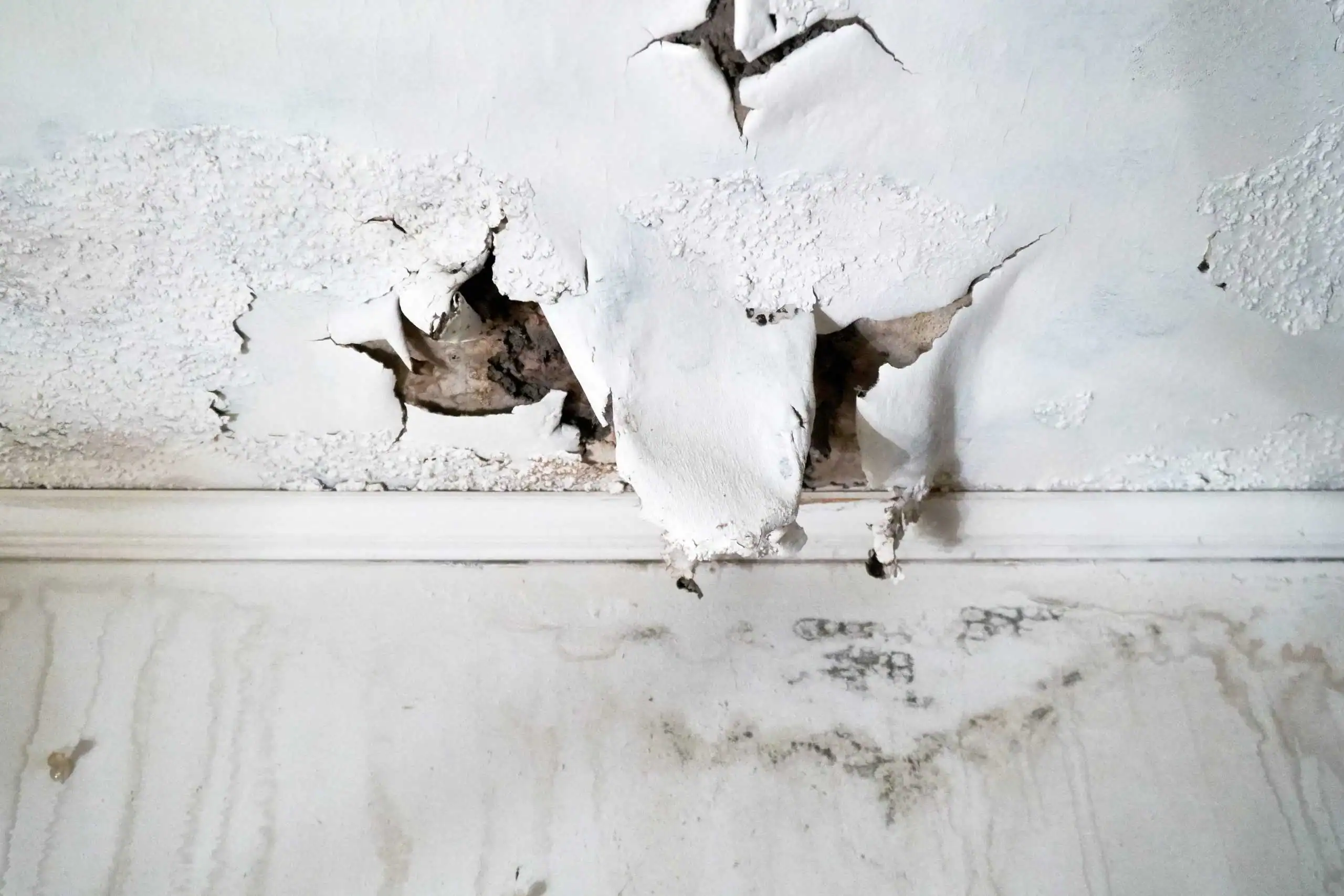
The visible damage you see — wet carpet, stained drywall, standing water — is only part of the picture. Moisture that migrates into wall cavities and under flooring can feed mold growth for weeks without any visible sign on the surface. By the time you smell it or see it, the colony is already established. That’s why response time matters so much, and why moisture mapping at the start of a job is not optional — it’s the only way to know whether the drying is actually complete.
Does homeowners insurance typically cover basement flooding from heavy rain in Westchester County?
Standard homeowners insurance policies generally do not cover flooding caused by surface water or groundwater entering through the foundation — which is exactly what happens during the kind of heavy rain events that affect the Saw Mill River watershed and Mount Kisco’s basement-level properties. That type of damage typically requires a separate flood insurance policy, often through the National Flood Insurance Program (NFIP). If your basement flooded because a sump pump failed or a pipe burst, that’s a different category and is more likely to be covered under a standard policy, depending on your specific terms.
The honest answer is that coverage varies significantly by policy, and the only way to know what you’re entitled to is to review your policy and file a claim. We bill insurance directly and handle the documentation process on your behalf — so if there is coverage, we make sure it’s applied properly. If coverage is limited or denied, our 0% APR financing up to $200,000 means the repair doesn’t have to wait while you sort out the claim.
What should I do immediately after discovering water damage in my home?
The first thing to do is stop the source if you can — shut off the water supply if it’s a burst pipe, or stop using any drain connected to a sewage backup. After that, don’t wait. Every hour of delay allows water to move further into building materials, and in an older home with original flooring and plaster walls, absorption happens fast. Do not run fans and assume the problem is handled — surface airflow does not dry wall cavities or subfloor assemblies.
Call a licensed restoration contractor before you start pulling up carpet or cutting into drywall. In Mount Kisco’s pre-1980 housing stock, disturbing building materials without knowing what’s inside them can create a hazardous situation. Vinyl floor tiles, pipe insulation, and joint compound from that era commonly contain asbestos — and once those materials are disturbed, you’re dealing with a regulated abatement situation, not just a cleanup. A professional assessment first protects both your health and your ability to file an insurance claim without complications from improper remediation.
Does water damage repair require a permit from the Town of Mount Kisco?
It depends on the scope of the work. Surface-level cleanup, drying, and dehumidification don’t require a permit. But once the restoration involves replacing structural components — drywall, subfloor, framing, or anything that affects the structural integrity of the building — you’re in permit territory. The Town of Mount Kisco Building Department governs this through local housing maintenance standards, and work that goes beyond surface restoration requires a building permit before structural repairs begin.
This is one of the reasons it matters who you hire. A contractor who pulls permits correctly protects you from future complications when you sell the home or file an insurance claim. Work done without required permits can create legal and financial headaches down the road that far exceed the cost of doing it right the first time. We handle permit coordination as part of the restoration process — it’s not something you’ll need to chase down on your own.
How much does water damage restoration typically cost in Mount Kisco, NY?
The national average for water damage restoration sits around $3,800 to $4,000 for a standard job, but that number moves significantly based on what’s actually involved. In Mount Kisco, where a meaningful share of homes were built before 1970, it’s not uncommon for a basement water event to involve more than just drying. If asbestos-containing materials are present — which is a real possibility in homes built before 1980 — abatement adds to the scope and the cost. If mold has already established, remediation is an additional phase. Severe cases with structural damage routinely reach $10,000 to $16,000 or more.
That range isn’t meant to alarm you — it’s meant to give you an honest picture so you can plan accordingly. Insurance may cover a portion depending on the cause of the damage and your policy terms. For the portion that isn’t covered, or for homeowners who need to move before the claim is resolved, financing up to $200,000 at 0% APR is available. The goal is to make sure cost doesn’t cause you to delay a repair that gets more expensive the longer it waits.
Does Green Island Group handle both water damage and mold remediation in Mount Kisco?
Yes — and the reason that matters is that water damage and mold remediation are rarely separate problems. In the Saw Mill River valley geography where Mount Kisco sits, basement flooding is a recurring seasonal reality, not a one-time event. Homes that have experienced repeated moisture intrusion over the years — even minor events that were dried out quickly — often have mold already present in wall cavities, behind insulation, or under flooring before a major water event even happens. Finding that during a restoration job is common.
New York State requires a dedicated mold remediation license under Labor Law Article 32 for any contractor performing mold work. We hold that license, which means when mold turns up during a water damage job — and it often does — the work continues without bringing in a separate company, negotiating a second contract, or waiting on a second mobilization. For homeowners in a town with the housing age profile of Mount Kisco, having one licensed contractor who can handle water damage, mold, and asbestos abatement under one roof isn’t a convenience. It’s the only version of the job that actually gets finished.