In New Square, where most housing is multi-unit and walls are shared, water doesn’t stay in one apartment for long. We respond 24/7 to water damage repair calls across the village — with direct insurance billing and financing up to $200,000 at 0% APR.
I needed a professional consultation explanation of procedure for safe removal of Asbestos in my apartment complex. Without having an account yet, I was very impressed with the caring, knowledgeable and generous advice offered by Jessica, and will look forward to doing business in the future. Thank you so much! I feel much more informed about a sometimes scary endeavor. Peace. Nancy Silva Mineola, NY.
Mia Munoz
Used this company to clean up some water flood in my house. They were fast and easy to work with.very professional, Would recommend to anyone!
Nini Valle
Great company, had a flood and they responded quickly and efficiently. Billed my insurance company directly. I highly recommend this company!
joe colapietro, jr
I had pipe freeze in my basement right before a snow storm and they made to within an hour to help start the clean up process. They we by our side throughout the entire process and even helped with the insurance company. They did such a great job with the cleanup, repair, remidiation, I contracted them to perform the repairs and finishes in the basement. They came with enough manpower and material to get the job done. Leo and Jessica were nothing but a pleasure to deal with!!
Cristian Arredondo c
I had some water damage in my home and Green Island was able to take care of my issue quickly and effectively. I am very pleased with the work they did. They responded quickly and were very professional.
Michael M
Outstanding service! From the office to the field crew everyone was friendly, helpful and responsive. I highly recommend Green Island Group.
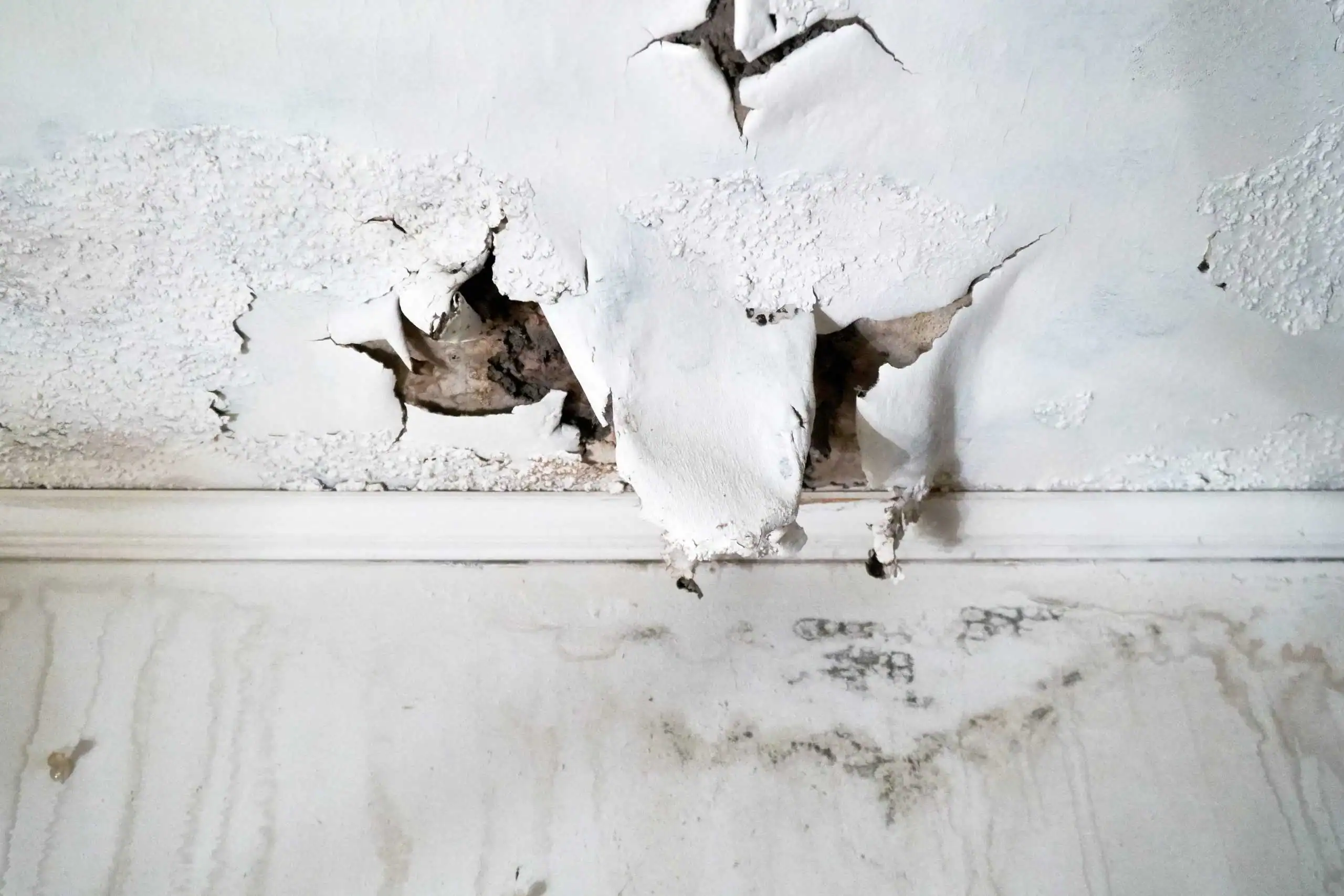
Water damage in New Square isn’t a single-family problem. Most of the housing here is multi-unit — shared walls, shared plumbing, shared risk. When a pipe bursts or a basement floods, the water doesn’t wait for business hours, and it doesn’t stop at your front door. It moves laterally through the building, soaks into subfloors, climbs behind drywall, and creates the exact conditions mold needs to take hold — usually within 24 to 48 hours.
What changes after a proper restoration isn’t just the absence of standing water. It’s the absence of hidden moisture that would have quietly turned into a mold problem over the next two weeks. It’s walls that are actually dry — confirmed by moisture meters, not guesswork. It’s your family back in a safe, livable space without the lingering smell, the warped floors, or the health concerns that come from a cleanup that only addressed the surface.
New Square’s oldest housing blocks date back to the late 1950s. Pipes installed in that era are well past their expected lifespan, and when they fail — especially during a Rockland County winter — the damage can be significant. Getting it handled completely the first time, by a team equipped for the full scope of what older construction presents, is what actually protects your home long-term.
We’ve been handling water damage, mold remediation, and environmental restoration across the New York metro area for over 12 years. That includes New Square and the broader Rockland County region — through the July 2023 flooding emergency that sent over 150 water-related calls across the county in a single event, through the storm remnants that hit the Ramapo area year after year, and through the everyday pipe failures and basement floods that don’t make the news but still displace families in New Square and surrounding villages.
We hold NYS and NYC M/WBE Certified Contractor status and work with the NYS Office of General Services — credentials that require real vetting, not just a business license. We carry full liability insurance and workers’ compensation coverage, which matters especially in New Square’s multi-unit buildings where property managers need to know the team on-site is fully covered.
This isn’t a franchise with templated processes and rotating crews. We’re a full-service restoration team that handles water damage, mold, asbestos abatement, and structural repairs under one roof — so nothing falls through the cracks between contractors.
It starts with a call — any time, any day. When you reach out, our goal is to get a team to your location as fast as possible, because the first few hours after a water event are when the most damage control is possible. In a densely built village like New Square, where one unit’s problem can quickly become three units’ problem, fast response isn’t just a selling point — it’s the difference between a contained restoration and a building-wide remediation.
Once on-site, we do a full assessment using professional moisture detection equipment. This step matters because water hides. It gets behind walls, under flooring, and into structural cavities that look dry on the surface. In older buildings — and New Square has plenty of housing built before 1980 — that assessment also includes checking for asbestos-containing materials in pipe insulation, floor tiles, or ceiling finishes before any demolition begins. New York State has strict regulations around asbestos abatement, and skipping that step isn’t an option.
From there, the process moves through water extraction, structural drying, and any necessary mold remediation — all handled by our team, not handed off to subcontractors. Before the job is closed, every affected area is re-tested for moisture to confirm it’s actually dry. You get documentation, you get a clear explanation of what was done, and the insurance claim gets handled directly so you’re not left navigating that process alone.
Built for Multi-Unit Buildings and Older Construction
Water damage restoration in New Square covers a lot more ground than it does in a typical suburban town. The housing stock here — dense, multi-family, and in many cases 60 to 70 years old — creates a specific set of challenges that not every restoration company is equipped to handle. Our full-service model is built for exactly this environment.
Our core service includes emergency water extraction, industrial drying, structural moisture assessment, mold testing and remediation under a valid New York State mold remediation license, and full documentation for insurance purposes. In pre-1980 construction, that also means asbestos testing and licensed abatement when disturbed materials are present — a capability that most local providers simply don’t have. New York State requires a dedicated mold remediation license for projects in buildings with 10 or more units, which is directly relevant to New Square’s apartment buildings and attached townhouses.
For property managers overseeing multiple units in New Square, we can assess and document damage across an entire building in a single engagement. For individual residents, the 0% APR financing up to $200,000 means a major restoration doesn’t have to become a financial crisis on top of everything else. No competing provider identified in the Rockland County market offers any financing option — making this one of the most practical advantages available to New Square families facing an unexpected restoration bill.
How quickly can water damage spread through a New Square apartment building?
Faster than most people expect. Water follows the path of least resistance — through subfloor seams, along wall cavities, and down through ceiling assemblies into the unit below. In New Square’s multi-family buildings with shared plumbing chases and continuous floor assemblies, a single pipe failure can affect two or three adjacent units within a matter of hours, especially if the source isn’t identified and shut off quickly.
The 24 to 48 hour window is the critical threshold. That’s how long it takes for mold to begin colonizing wet materials under typical indoor conditions. In New Square’s denser housing blocks, where ventilation between units is limited and moisture has fewer places to escape, that window can close even faster. The most important thing you can do is call us immediately — not after you’ve tried to dry it yourself, and not after waiting to see if it gets better on its own. It won’t.
Does homeowners or renters insurance cover water damage repair in New York?
It depends on the cause. Most standard homeowners and renters insurance policies in New York cover sudden and accidental water damage — a burst pipe, an appliance failure, an overflow from a fixture. What they typically don’t cover is damage from flooding caused by external groundwater, which requires a separate flood insurance policy through the National Flood Insurance Program.
For New Square residents, this distinction matters during Rockland County’s heavier rain seasons. If your basement floods because of a sewer backup or a failed sump pump, coverage depends on whether you have a sewer backup rider on your policy — that’s a separate endorsement, not standard. We bill insurance companies directly and help document the damage in a way that supports the claim, which makes a real difference when you’re dealing with an adjuster for the first time and aren’t sure what’s covered.
What does water damage restoration actually cost in Rockland County?
The national average for water damage restoration runs around $3,864, but that number can climb quickly depending on the scope. A contained single-room event with clean water might come in under $2,000. A multi-room event involving gray or black water — like a sewage backup, which is a real risk in Rockland County’s older sewer infrastructure during heavy rain — can reach $10,000 to $16,000 or more once mold remediation and structural repairs are factored in.
In New Square specifically, older construction adds another layer. Pre-1980 buildings may require asbestos testing before demolition work begins, and if asbestos-containing materials are disturbed, licensed abatement is required by New York State law before restoration can proceed. That adds cost and time, but it’s not optional. The good news is that we offer financing up to $200,000 at 0% APR — so the total cost doesn’t have to come out of pocket all at once, and you’re not forced to cut corners to make the numbers work.
Does mold remediation in New Square require a licensed contractor?
Yes — and this is one area where New York stands apart from most other states. New York requires a separate, dedicated mold remediation license for contractors performing mold remediation work. This isn’t the same as a general contractor license or a restoration certification. It’s a state-issued credential specifically for mold work, and it’s required by law for any mold remediation project exceeding 10 square feet in buildings with 10 or more units.
That regulation is directly relevant to New Square’s multi-family housing stock. If water damage in your building leads to mold — which it often does when moisture sits for more than 48 hours — the contractor handling the remediation needs to hold a valid NYS mold remediation license. We hold this credential. Hiring someone who doesn’t, whether intentionally or out of ignorance, creates legal exposure for the property owner and doesn’t guarantee the mold is actually gone. Ask for the license number before any remediation work begins.
What are the most common causes of water damage in New Square homes?
Burst pipes during winter are the single biggest driver of emergency restoration calls in New Square and the broader Ramapo area. Rockland County winters regularly push temperatures well below freezing, and housing built in the 1950s and 1960s — which makes up a significant portion of New Square’s older blocks — doesn’t always have the pipe insulation standards of newer construction. When temperatures drop fast and stay low, pipes in exterior walls and unheated spaces are the first to go.
Beyond burst pipes, the other common causes are appliance failures (washing machines, dishwashers, water heaters), sewage backups in basement units during heavy rain events, and roof or window leaks that go unnoticed until water has already penetrated wall cavities. The July 2023 flooding event in Rockland County — which produced over 150 water-related emergency calls across the county — was a reminder that even a single storm can create widespread damage across an entire neighborhood in a matter of hours. Having our number saved before something happens is always the smarter position.
Can Green Island Group handle water damage across multiple units in one building?
Yes — and this is one of the more important questions for anyone managing or living in New Square’s multi-unit buildings. Most residential restoration calls involve a single unit, but in a densely built apartment building or attached townhouse complex, a single water event can affect multiple floors and multiple families simultaneously. A restoration company that’s only set up for single-unit residential work will struggle with the scope, the coordination, and the documentation that a multi-unit event requires.
We operate at a commercial scale and have experience working with property managers, building administrators, and institutional clients — including work with the NYS Office of General Services. That means we can assess damage across an entire building in one engagement, produce documentation for multiple insurance claims, and coordinate the full remediation without requiring the property manager to bring in separate contractors for different parts of the job. In a community like New Square, where many residents share buildings and building administrators carry responsibility for multiple families at once, that kind of single-team, full-scope capability is exactly what a complex water event demands.