When the Saw Mill Floods Your Basement, Here's Who Answers
Pleasantville homeowners know the drill — a hard rain, the Saw Mill River watershed backs up, and suddenly you’re dealing with water damage that can’t wait until morning. We respond 24/7 with a team that handles everything from emergency extraction to full restoration, so your home gets back to normal fast.
I needed a professional consultation explanation of procedure for safe removal of Asbestos in my apartment complex. Without having an account yet, I was very impressed with the caring, knowledgeable and generous advice offered by Jessica, and will look forward to doing business in the future. Thank you so much! I feel much more informed about a sometimes scary endeavor. Peace. Nancy Silva Mineola, NY.
Mia Munoz
Used this company to clean up some water flood in my house. They were fast and easy to work with.very professional, Would recommend to anyone!
Nini Valle
Great company, had a flood and they responded quickly and efficiently. Billed my insurance company directly. I highly recommend this company!
joe colapietro, jr
I had pipe freeze in my basement right before a snow storm and they made to within an hour to help start the clean up process. They we by our side throughout the entire process and even helped with the insurance company. They did such a great job with the cleanup, repair, remidiation, I contracted them to perform the repairs and finishes in the basement. They came with enough manpower and material to get the job done. Leo and Jessica were nothing but a pleasure to deal with!!
Cristian Arredondo c
I had some water damage in my home and Green Island was able to take care of my issue quickly and effectively. I am very pleased with the work they did. They responded quickly and were very professional.
Michael M
Outstanding service! From the office to the field crew everyone was friendly, helpful and responsive. I highly recommend Green Island Group.
Your Home Dried, Documented, and Protected — Not Just Mopped Up
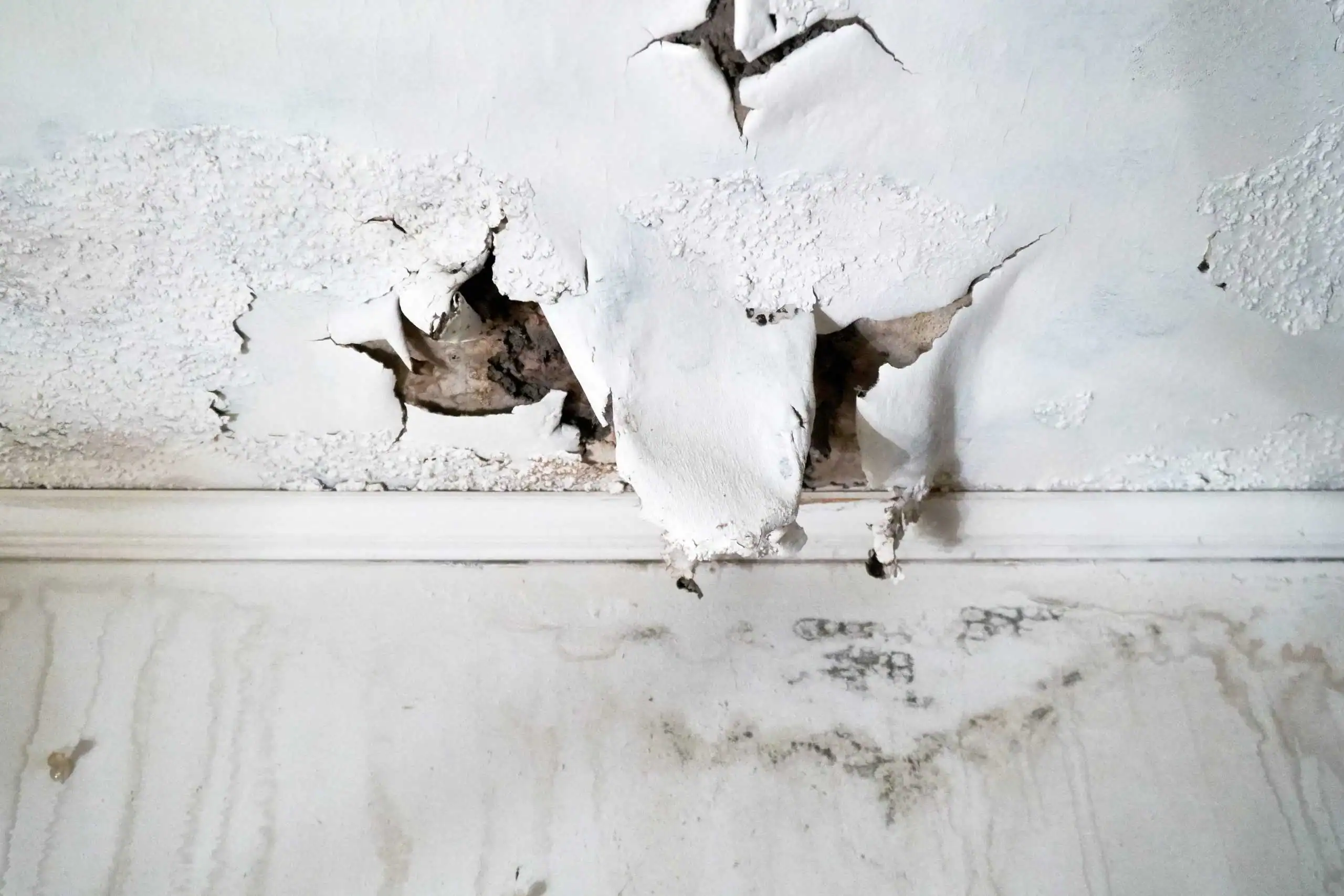
The real cost of water damage isn’t always the water itself — it’s what happens if it’s handled halfway. Moisture left inside walls, under subfloors, or behind older plaster doesn’t dry on its own. In Pleasantville, where a significant number of homes predate 1980, that hidden moisture becomes mold within 24 to 48 hours. And mold in an older home isn’t just a health issue — it’s a resale issue, a permit issue, and a much bigger bill down the road.
What you actually need after a water event is someone who measures what they can’t see, not just cleans up what they can. We use industrial moisture meters and commercial-grade dehumidification to verify that structural materials — not just surfaces — are back to safe levels before the job is called done. That’s the difference between a restoration and a temporary fix.
There’s also the reality of what Pleasantville homes are made of. Many properties in the village center and surrounding streets have original pipe insulation, old floor tiles, and ceiling materials that may contain asbestos. When water damage disturbs those materials, you need a contractor who can assess and handle both problems in one engagement — not one who finishes the drywall and leaves you to figure out the rest. That’s a capability most restoration companies in this market simply don’t have.
12 Years In, Government-Certified, and Built for Pleasantville's Older Homes
We’ve been doing environmental restoration work in the New York metro area for over 12 years — not as a franchise, not as a seasonal operation that shows up after storms and disappears. We’re a fully independent, NYS and NYC M/WBE Certified Contractor that has been vetted and approved to work directly with the NYS Office of General Services — the same standard required for state agency contracts.
For Pleasantville homeowners, that credentialing matters. This is a community of professionals who research before they hire, and M/WBE certification isn’t a badge you print yourself — it’s a formal government designation that requires documented qualifications, verified insurance, and compliance with state procurement standards. No competitor currently ranking for water damage restoration in the 10570 ZIP code holds that status.
We carry full liability insurance and workers’ compensation, offer a 100% satisfaction guarantee, and handle direct insurance billing — confirmed not just by policy, but by real customer reviews. If you’re near The Flats and your basement took on water, or you’re in the village center dealing with a burst pipe in an older home, we show up, do the job completely, and don’t leave you holding a half-finished project.
From First Call to Final Inspection — No Guesswork, No Gaps
It starts the moment you call. Our 24/7 emergency response means someone picks up whether you’re calling at 6 a.m. before you catch the Harlem Line into the city or at 9 p.m. when you walk in the door and find your finished basement underwater. A team is dispatched, and the first priority is stopping the damage from spreading — water extraction, containment, and an honest assessment of what you’re actually dealing with.
From there, the process moves into drying and documentation. Industrial air movers and dehumidifiers are brought in, moisture readings are taken throughout the affected area — walls, floors, subfloor — and those readings are logged. This documentation matters for two reasons: it gives you verifiable proof that the job was done correctly, and it supports your insurance claim. We bill your insurance company directly and work alongside you through the claims process, not just the physical work.
If the damage involves structural materials — drywall, framing, subfloor — the work requires a building permit through the Village of Pleasantville’s Building Department at 80 Wheeler Avenue. We handle that process. Village code also requires that remediation work commence immediately upon notice and be completed within 30 days, so there’s no benefit to waiting. Once the structure is dry and verified, repairs are completed and a final inspection closes the job out. You get your home back — not a work in progress.
Water Damage Repair Services near Pleasantville, NY
Full Restoration, Not Just the Easy Parts
Water damage restoration in Pleasantville isn’t a one-size situation. A finished basement in The Flats that flooded during a Saw Mill River stormwater event looks different from a burst pipe in a Victorian-era home near the village center, which looks different again from a sewage backup in a multi-unit property near the Pace University campus. We handle all of it — water extraction, structural drying, mold assessment, mold remediation, and asbestos abatement when older materials are involved.
The asbestos piece is worth understanding. Homes built before 1980 — and there are many in Pleasantville — commonly contain asbestos in pipe insulation, floor tiles, ceiling tiles, and drywall compound. When water damage disturbs those materials, federal and state regulations require proper abatement before restoration work can continue. Most water damage contractors refer that out, which means coordinating a second company, a second timeline, and a second round of disruption to your home. We handle abatement in-house, which keeps the project on one timeline and one set of hands.
On the financial side, restoration costs for significant water damage can run anywhere from several thousand dollars into the mid-five figures depending on scope. We offer financing up to $200,000 at 0% APR — a resource no competitor currently serving Pleasantville offers. Whether insurance covers the full scope or leaves a gap, you have a clear financial path forward that doesn’t require making a rushed decision under pressure.
Does homeowners insurance cover basement flooding in Pleasantville, NY?
It depends on the cause, and that distinction matters more than most people realize. Standard homeowners insurance typically covers water damage from sudden and accidental events — a burst pipe, a failed appliance, an ice dam that forces water through the roof. What it generally does not cover is flooding caused by surface water or groundwater entering from outside, which is what happens when the Saw Mill River watershed backs up during a heavy storm and water comes in through your foundation or basement windows. That type of flooding requires a separate flood insurance policy, typically issued through FEMA’s National Flood Insurance Program.
The complicating factor is that many homeowners don’t know which category their damage falls into until an adjuster weighs in — and adjusters work for the insurance company, not for you. We handle direct insurance billing and work alongside homeowners throughout the claims process, helping document the damage correctly from the start. Getting the documentation right on day one is often the difference between a fully covered claim and a disputed one.
How fast does mold start growing after water damage in a Pleasantville home?
Mold can begin colonizing within 24 to 48 hours of a water event under the right conditions — and the right conditions are exactly what a wet basement or water-damaged wall provides: moisture, organic material like drywall or wood framing, and limited airflow. In Pleasantville’s older housing stock, where original plaster walls and wood subfloors are common, moisture gets absorbed quickly and releases slowly. That makes the window between water event and mold growth shorter in practice than the 48-hour figure suggests.
This is why same-day response matters beyond just stopping the immediate damage. The faster professional drying equipment is running, the less opportunity mold has to establish itself. If mold does take hold before remediation begins, the scope of the project — and the cost — increases significantly. Established mold colonies require a separate remediation process, additional containment, and in some cases, removal of structural materials that could have been saved with faster intervention.
Does Pleasantville require permits for water damage restoration and repair work?
Yes, and it’s worth understanding before work begins. The Village of Pleasantville’s Building Department, located at 80 Wheeler Avenue, requires building permits for any restoration work that involves structural changes — replacing drywall, subfloor, framing, or any load-bearing element. The village also has a specific Flood Damage Prevention Permit category, which applies to repairs made in response to flood events. Work done without the appropriate permits can create complications when you go to sell or refinance the property, and in some cases, unpermitted work may need to be removed or legalized at your expense.
Village code also specifies that remediation and abatement work must commence immediately upon notice and be completed within 30 days. Extensions can be granted when there’s documented intent to comply, but the baseline expectation is prompt action. We navigate the permit process as part of the restoration work — pulling what’s required, meeting inspection timelines, and making sure the final product passes review. For a Pleasantville homeowner protecting a home worth close to or above $1 million, that regulatory compliance is part of what you’re paying for.
My Pleasantville home was built before 1980 — do I need asbestos testing before water damage repairs?
In most cases involving older homes in Pleasantville, the honest answer is yes — or at minimum, the possibility needs to be assessed before any demolition or removal work begins. Asbestos-containing materials were commonly used in homes built before 1980 in pipe insulation, floor tiles, ceiling tiles, textured coatings, and drywall joint compound. When water damage requires removing or disturbing any of these materials, federal EPA regulations and New York State Department of Labor requirements apply. Work cannot legally proceed on those materials without proper testing and, if asbestos is confirmed, licensed abatement.
The practical issue is that most water damage contractors aren’t licensed asbestos abatement contractors. That means they either skip the assessment — which creates legal and health liability for the homeowner — or they stop work and refer you to a separate company, which adds time, cost, and coordination burden to an already stressful situation. We hold asbestos abatement capability in-house, which means the assessment, abatement if needed, and restoration all happen under one roof without the project stalling in the middle.
What's the average cost of water damage restoration in Pleasantville, NY?
The honest range is wide because the scope of water damage varies significantly. A contained water event — say, a washing machine supply line that failed and was caught within a few hours — might run in the $3,000 to $5,000 range for extraction, drying, and minor repairs. A more serious event involving a burst pipe in a finished basement that went undetected for hours while the homeowner was commuting into the city, or a basement flood from a stormwater backup, can reach $10,000 to $16,000 or more once structural drying, drywall replacement, and any mold remediation are factored in.
In Pleasantville specifically, two factors can push costs higher than the regional average: older construction materials that require more careful handling and potentially asbestos assessment, and the permit and inspection requirements of the Village Building Department, which add compliance steps that simpler markets don’t require. We offer financing up to $200,000 at 0% APR, which means cost uncertainty doesn’t have to become a reason to delay — and delaying is where the real cost escalation happens.
How do I choose a water damage restoration company in Pleasantville, NY?
Start with insurance and licensing. Any contractor working in your home should carry general liability insurance and workers’ compensation — and you should ask for current documentation, not just a verbal confirmation. Workers’ compensation specifically protects you: if a crew member is injured on your property and the contractor doesn’t carry it, you may be personally liable for medical costs and lost wages. That’s a real legal exposure that Pleasantville homeowners — many of whom have professional backgrounds in law, finance, and institutional fields — understand once it’s explained clearly.
Beyond that, look for verifiable credentials over marketing language. Government-issued certifications like NYS M/WBE status require documented compliance with state standards — they’re not self-reported. Ask whether the contractor pulls permits through the Village Building Department or skips that step. Ask whether they handle insurance billing directly or hand you a bill and leave the claims process to you. And if your home was built before 1980, ask whether they’re licensed for asbestos abatement — because in Pleasantville’s older housing stock, that question comes up more often than most homeowners expect.