When Mountain Runoff Hits Your Basement, You Need More Than a Fan
Pomona’s position at the foot of the Ramapo Mountains isn’t just scenic — it puts your home directly in the path of runoff, snowmelt, and flash flooding that overwhelms basements fast. We provide water damage repair in Pomona with 24/7 emergency response and the equipment to actually finish the job.
I needed a professional consultation explanation of procedure for safe removal of Asbestos in my apartment complex. Without having an account yet, I was very impressed with the caring, knowledgeable and generous advice offered by Jessica, and will look forward to doing business in the future. Thank you so much! I feel much more informed about a sometimes scary endeavor. Peace. Nancy Silva Mineola, NY.
Mia Munoz
Used this company to clean up some water flood in my house. They were fast and easy to work with.very professional, Would recommend to anyone!
Nini Valle
Great company, had a flood and they responded quickly and efficiently. Billed my insurance company directly. I highly recommend this company!
joe colapietro, jr
I had pipe freeze in my basement right before a snow storm and they made to within an hour to help start the clean up process. They we by our side throughout the entire process and even helped with the insurance company. They did such a great job with the cleanup, repair, remidiation, I contracted them to perform the repairs and finishes in the basement. They came with enough manpower and material to get the job done. Leo and Jessica were nothing but a pleasure to deal with!!
Cristian Arredondo c
I had some water damage in my home and Green Island was able to take care of my issue quickly and effectively. I am very pleased with the work they did. They responded quickly and were very professional.
Michael M
Outstanding service! From the office to the field crew everyone was friendly, helpful and responsive. I highly recommend Green Island Group.
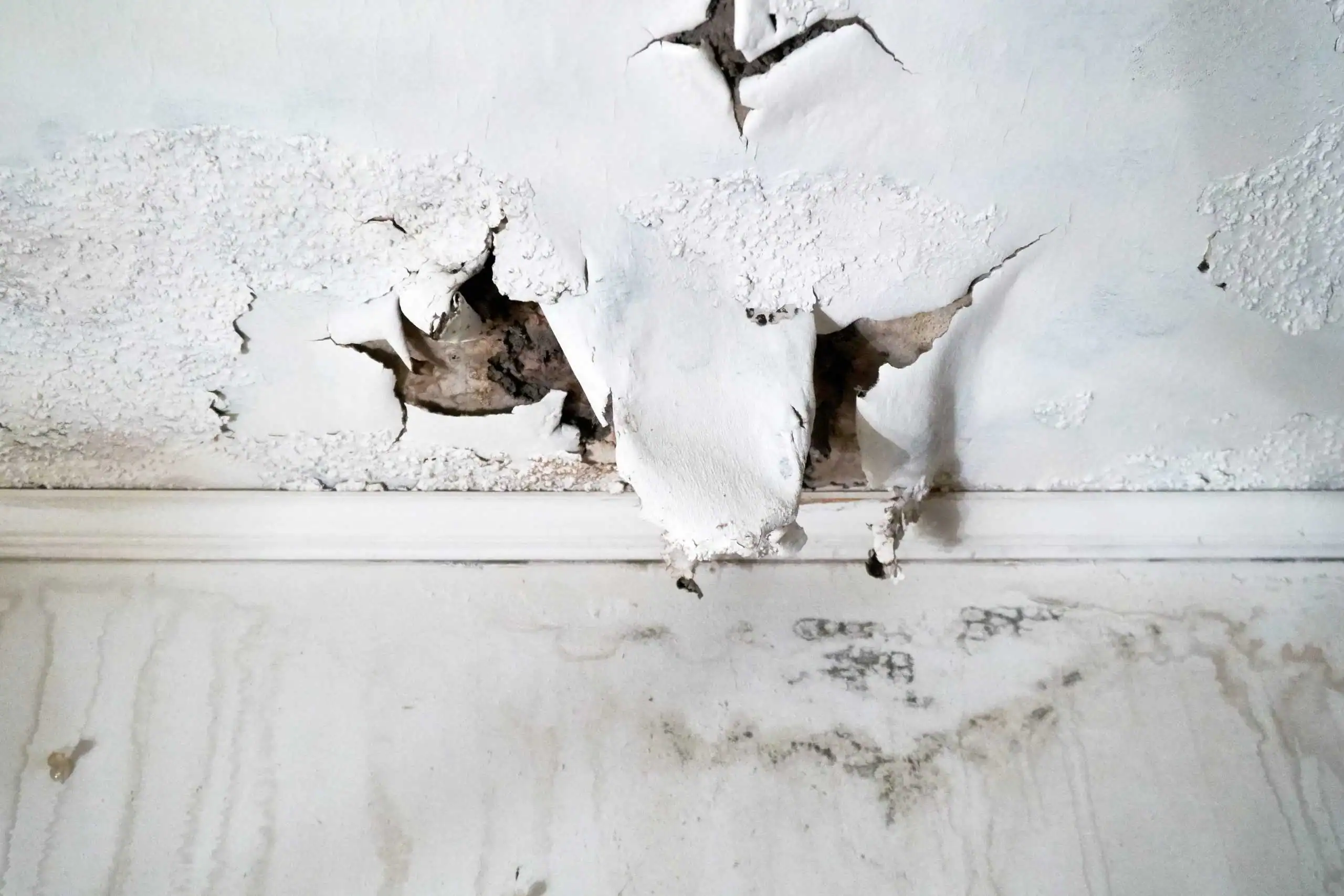
Water damage doesn’t give you much time. Mold starts growing within 24 to 48 hours of an intrusion event — and in a home that’s been sitting with moisture inside the walls, under the floors, or behind baseboards, that window closes fast. What you get when the job is done right isn’t just a dry house. It’s the confidence that nothing is quietly growing behind the drywall six weeks from now.
For Pomona homeowners specifically, that matters more than most people realize. A significant portion of homes in this village were built in the late 1960s through the 1980s — construction that used materials we now know to be hazardous. When water damage forces open a wall or disturbs old flooring in a home like that, you’re not just dealing with moisture anymore. You may be dealing with asbestos. Most water damage companies stop there and refer you out. We handle both — water extraction, drying, mold remediation, and licensed asbestos abatement — without handing you off to a second contractor or adding weeks to the timeline.
The other thing you get is a clear path through the insurance process. Rather than spending your evenings on hold with your adjuster, you hand that off too. The restoration gets started, the documentation gets handled, and you get your home back.
12 Years In. Still Doing the Work Franchises Won't.
We’ve been operating in the New York metro area for over 12 years. That’s not a franchise location that opened last spring — it’s a real track record across Rockland County, built on jobs that required more than a surface dry and a handshake.
Pomona sits in a part of Rockland County where the work gets complicated. Homes on Cheesecote Mountain often run on private septic systems, which means a water intrusion event can cross into sewage backup territory fast — and that’s a Category 3 situation requiring full sanitation, not just extraction. Properties in the lower sections of the village deal with runoff from the terrain above them. The conditions here are specific, and the company handling your home needs to understand that.
We hold NYS and NYC M/WBE certification, carry full liability and workers’ compensation insurance, and have worked directly with the NYS Office of General Services. That’s the level of accountability you’re working with.
When you call, someone answers — not a voicemail, not a callback queue. The first conversation is about what happened, where the water came from, how long it’s been sitting, and what’s at risk. That determines the response. For most Pomona homes, the timeline from call to on-site is measured in hours, not days, because mold doesn’t care about business hours and neither do we.
On-site, the first priority is stopping the source if it hasn’t been stopped already — a burst pipe, a failed sump pump, a backed-up drain line. Then it’s extraction: industrial-grade equipment pulling standing water out of the space, followed by moisture mapping to find what you can’t see. This is where most DIY attempts and underprepared contractors fall short. A surface that feels dry to the touch can still be holding moisture inside the wall cavity or beneath the subfloor. Moisture meters confirm what eyes can’t.
From there, drying equipment goes in — high-speed air movers, commercial dehumidifiers — and the space is monitored until readings confirm complete drying. If the work uncovers anything that looks like asbestos-containing material, which is a real possibility in Pomona’s older housing stock, that gets assessed and addressed under the same engagement rather than paused while you find another contractor. Before the job closes, everything is documented for your insurance claim.
Most water damage companies do one thing: extract water and set up drying equipment. When they find mold, they stop. When they find something that might be asbestos, they definitely stop. You’re then left coordinating between multiple contractors, managing separate timelines, and watching your home sit in a half-restored state while you wait.
That’s not how we work. We cover the full scope — water extraction and structural drying, mold remediation under a New York State mold remediation license (a credential New York actually requires, unlike most states), and licensed asbestos abatement for homes where disturbing old materials is part of the job. For homes in Pomona built before 1980, that last piece isn’t a rare edge case. It’s a realistic part of the conversation.
If you’re in the Cheesecote Mountain section of the village and dealing with a septic-related backup, that’s handled too. Category 3 black water events require full sanitation and antimicrobial treatment — not just drying. We’re equipped for it. And if cost is a concern while you wait on insurance, we offer financing up to $200,000 at 0% APR. No local competitor in this area offers that. You don’t have to choose between starting the job now and waiting to see what your policy covers.
Does homeowners insurance cover water damage from basement flooding in Pomona, NY?
It depends entirely on the source of the water. Homeowners insurance in New York typically covers sudden and accidental water damage — a burst pipe, a washing machine failure, an appliance leak. What it usually does not cover is flooding from outside the home, which requires a separate flood insurance policy, or damage from gradual seepage that built up over time without being reported.
For Pomona homeowners, this distinction matters a lot. The village’s terrain — sitting at the base of the Ramapo Mountains with runoff flowing down toward lower-lying properties — means some basement flooding events look like flood damage, when they may actually be caused by a sump pump failure or a backed-up drain line, both of which can be covered under a standard policy. The source of the water determines your coverage. That’s why documentation from the moment of discovery matters. We work directly with insurance companies, help establish what happened, and handle the billing side so you’re not navigating that process alone while also managing a disrupted home.
How quickly can mold grow after water damage in a Rockland County home?
Mold can begin establishing itself within 24 to 48 hours of a water intrusion event, and in older homes with original insulation and plaster walls — common throughout Pomona’s housing stock — moisture gets absorbed and held in ways that accelerate that process. The material matters. Modern drywall dries differently than the construction materials used in homes built in the 1970s, and what feels dry on the surface may still be holding moisture inside the wall assembly.
The practical implication is that waiting to see if things dry out on their own is a real risk. By the time visible mold appears, it’s already been growing for days. At that point, you’re not dealing with a drying job anymore — you’re dealing with a remediation job, which is more invasive, more time-consuming, and more expensive. Getting a professional assessment quickly, even if you’re not sure how serious it is, is almost always the better call. The inspection itself takes far less time than the remediation you’re trying to avoid.
Should I be worried about asbestos if water damage affects my older Pomona home?
If your home was built before 1980, it’s a reasonable question to ask — and the honest answer is yes, it’s worth knowing before work begins. Homes built in Pomona during the late 1960s and 1970s commonly used asbestos-containing materials in floor tiles, pipe insulation, drywall joint compound, ceiling materials, and attic insulation. Most of the time, those materials are stable and don’t pose a risk. The problem is when water damage forces you to open walls, remove flooring, or disturb insulation — that’s when intact asbestos-containing material can become a hazard.
New York State’s Industrial Code Rule 56 governs how asbestos must be handled during any renovation or remediation work, and Rockland County falls squarely under that jurisdiction. A contractor who isn’t licensed for asbestos abatement is required to stop work when they encounter it — which means your project pauses, you find a separate specialist, and the timeline extends. We’re licensed to handle both the water damage restoration and the asbestos abatement under one engagement, so the job doesn’t stall when something unexpected turns up inside the wall.
What is the difference between water mitigation and water damage restoration?
Mitigation is the first phase — stopping the damage from getting worse. That means extracting standing water, removing saturated materials that can’t be saved, and getting drying equipment in place as fast as possible. The goal of mitigation is to stabilize the situation and prevent secondary damage like mold growth or structural deterioration. It’s urgent, it’s time-sensitive, and it’s where the 24/7 response matters most.
Restoration is what comes after. Once the space is dry and stabilized, restoration covers the work of bringing the home back to its pre-damage condition — replacing drywall, repairing flooring, addressing any structural issues that were uncovered during the drying process. In Pomona’s older homes, that restoration phase sometimes involves more than expected: subfloor assemblies from the 1970s, original hardwood that absorbed water unevenly, or materials that turn out to require abatement before they can be replaced. A company that handles both phases — and everything that comes up in between — keeps the project moving without requiring you to manage multiple contractors across a drawn-out timeline.
How does the water damage repair process work when a pipe bursts in winter near Cheesecote Mountain?
Burst pipes are the most common water damage emergency call during winter months in this part of Rockland County, and homes in the Cheesecote Mountain section of Pomona are particularly exposed. The elevation means colder temperatures than lower-lying parts of the county, and many of those properties are on larger lots with older construction that wasn’t built with modern insulation standards. When a pipe lets go — often in the middle of the night during a cold snap — the water can run for hours before anyone notices.
The response process starts with stopping the source, which sometimes means working with a plumber simultaneously if the pipe repair hasn’t happened yet. From there, it’s extraction, moisture mapping, and getting drying equipment positioned throughout the affected space. In a home where the water has been running for several hours, that can mean multiple floors, wall cavities, and subfloor assemblies are all involved. The job is scoped based on what the moisture readings actually show — not what’s visible — so nothing gets missed and declared dry before it actually is. Documentation of the event, the timeline, and the drying process is captured throughout for the insurance claim.
Does Green Island Group offer financing for water damage repair in Pomona, NY?
Yes — we offer financing up to $200,000 at 0% APR. The reason that matters in a situation like this is practical: insurance claims take time. Adjusters have their own timelines, coverage determinations aren’t always immediate, and waiting on that process while your home sits with moisture in the walls isn’t a real option when mold is on a 24 to 48 hour clock.
Financing means the work starts now, not when the check clears. For Pomona homeowners dealing with a significant water event — a finished basement, a multi-floor pipe burst, a sewage backup on a property with a private septic system — the scope of the job can reach well into five figures. Having the option to move forward without depleting savings or waiting on insurance proceeds removes the one thing that most often delays a restoration from starting on time. No other water damage restoration company identified in the Pomona and broader Rockland County market offers financing at this level. It’s a practical answer to a real problem that comes up in almost every major restoration job.